
Embroidery has become more than just a craft; it’s a growing and profitable business opportunity. From personalized gifts to corporate branding, custom apparel, and sports team uniforms, the demand for high-quality embroidery continues to rise every year. Many aspiring entrepreneurs are now exploring how to start a commercial embroidery business and turn it into a sustainable source of income.
Starting a commercial embroidery business can feel overwhelming at first, especially when choosing machines, materials, and marketing strategies. However, with careful planning, the right equipment, and a clear workflow, you can turn this craft into a successful business, even from home. This guide will walk you through every step, from selecting your niche to scaling your operation for higher profits.
How to Start a Commercial Embroidery Business?
A commercial embroidery business offers several advantages:
- High Demand: Businesses, schools, sports teams, and individuals all need embroidered products.
- Low Startup Costs: Compared to many manufacturing businesses, embroidery requires relatively small initial investments.
- Flexibility: You can start from home or a small studio and expand gradually.
- Scalability: With the right commercial embroidery machine, you can scale to handle bulk orders, corporate clients, and larger projects.
Whether your goal is a side hustle, a small full-time business, or a creative outlet with profit potential, embroidery offers an excellent balance of creativity and revenue.
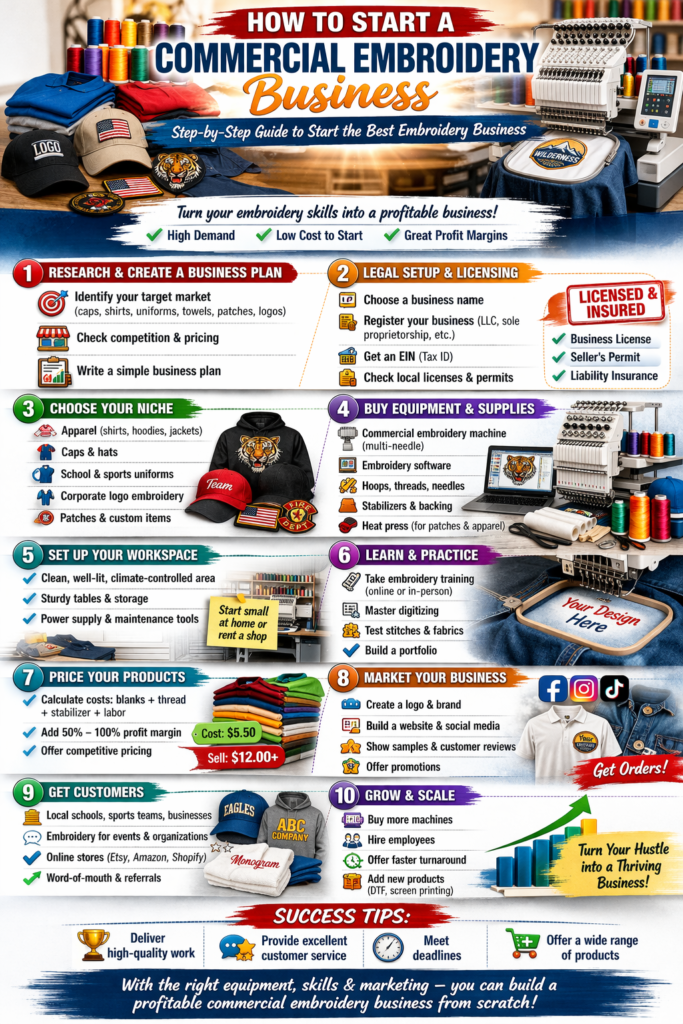
Step 1: Decide Your Niche
Before buying a machine or supplies, determine your niche. Some common options include:
- Corporate logos and branding: T-shirts, jackets, hats for businesses
- Custom hats and caps: Popular for sports teams, events, and merchandise
- Personalized gifts: Baby clothes, towels, bags, or home decor
- Sports teams and schools: Uniforms, hoodies, or hats
- Fashion apparel: Branded or custom embroidery for clothing lines
Choosing a niche helps you focus on the right equipment, marketing strategy, and materials. It also makes it easier to target your first customers effectively.
Step 2: Create a Business Plan
A strong business plan is essential to success. Include the following:
- Target market: Who will buy your embroidery products? Local clients, online customers, or businesses?
- Budget: Initial investment for machines, threads, fabrics, and workspace
- Pricing and revenue projections: Estimate cost per product and expected profit
- Marketing strategy: How will you attract customers? Social media, local advertising, or B2B sales?
Your business plan will help guide decisions and avoid common mistakes that new embroidery entrepreneurs make.
Step 3: Register Your Business
Legal requirements vary by location, but generally, you should:
- Choose a business name that is unique and memorable
- Decide on a legal structure (sole proprietorship, LLC, etc.)
- Obtain local permits or licenses if required
- Set up tax registration and business insurance to protect your investment
Proper registration ensures you can operate legally and build trust with customers.
Step 4: Choose the Right Commercial Embroidery Machine
Selecting the right machine is critical. Here’s what to consider:
- Single Head vs Multi-Head Embroidery Machine: Multi-Head machines are faster for multicolor designs
- Production speed: Faster machines help complete bulk orders efficiently
- Embroidery area: Larger hoops allow bigger designs on hats, jackets, and uniforms
- Durability: Commercial embroidery machines are built for heavy daily use
- Accessories: Hoops, stabilizers, needles, and thread selection
A reliable machine is the foundation of your business. Choosing wisely saves time, reduces mistakes, and increases profit potential.
Step 5: Set Up Your Workspace
A functional workspace is essential for efficiency and comfort. You’ll need:
- A sturdy table or desk for your machine
- Proper lighting for detail work
- Storage for threads, fabrics, and designs
- Comfortable seating with good ergonomic support
Organizing your space reduces mistakes and improves workflow, especially when handling multiple orders daily.
Step 6: Learn the Technical Skills
Even with the best machine, you need the right skills:
- Embroidery software: Digitize designs for your machine
- Thread and fabric selection: Understand which materials work best
- Machine operation: Learn to operate controls, adjust tension, and switch threads
- Maintenance: Keep your machine clean, oiled, and properly calibrated
Practice is key. Start with sample items to build confidence and improve quality before selling.
Step 7: Create Your Product Line
Decide which products to offer first:
- Start small with simple items like caps, t-shirts, or bags
- Test designs on sample products for quality and consistency
- Consider pricing for small versus bulk orders
- Focus on products that match your chosen niche
Having a focused initial product line helps attract your first customers and maintain high-quality output.
Step 8: Marketing and Finding Customers
Marketing is essential to get your first orders:
- Local marketing: Flyers, schools, sports teams, local businesses
- Online marketing: Etsy, Shopify, Instagram, Facebook
- Networking: Connect with businesses needing uniforms or branded apparel
- Portfolio: Show high-quality images of your work to potential clients
Consistency in marketing builds trust and helps establish your brand in the embroidery community.
Step 9: Pricing Your Products
Calculate pricing carefully:
- Include material costs, machine wear, labor, and shipping
- Research competitors’ prices
- Offer bulk discounts for larger orders
- Ensure your pricing allows a reasonable profit margin
Pricing correctly ensures your business is sustainable while staying competitive.
Step 10: Scale Your Business
Once you gain traction:
- Hire additional staff or subcontract work
- Invest in more machines to increase capacity
- Expand your product line and niche markets
- Take larger B2B or online orders
Scaling gradually ensures quality remains consistent while increasing revenue.
Common Mistakes to Avoid
1. Choosing the Wrong Machine
Many beginners either overspend on advanced machines they don’t need or buy low-quality equipment that can’t handle production. Start with a machine that fits your business size and growth plans.
2. Ignoring Proper Training
Jumping in without learning how to operate and maintain your machine can lead to poor-quality work and costly mistakes. Take time to understand your equipment and software.
3. Underpricing Your Services
Setting prices too low to attract customers can hurt your profits. Factor in thread, stabilizer, machine wear, time, and overhead costs when pricing your work.
4. Skipping Maintenance
Failing to clean and maintain your embroidery machine regularly can cause breakdowns and downtime. Consistent maintenance is key to long-term success.
5. Not Testing Designs First
Running designs directly on final products without testing can result in wasted materials. Always do a test stitch on similar fabric.
6. Poor Quality Materials
Using cheap thread, needles, or stabilizers can ruin your final product and damage your reputation. Invest in quality supplies.
7. Overcomplicating Designs
Complex designs with too many colors or stitches can slow production and increase errors. Keep designs efficient, especially in the beginning.
8. Ignoring Marketing
Even with great work, customers won’t come without visibility. Use social media, local marketing, and online platforms to promote your business.
9. Taking on Too Many Orders Too Soon
Overloading yourself early can lead to missed deadlines and poor quality. Grow at a manageable pace.
10. Not Understanding Your Target Market
Trying to serve everyone can dilute your brand. Focus on a niche like uniforms, custom apparel, or promotional items.
FAQs
1. How much does it cost to start a commercial embroidery business?
The cost can range from $5,000 to $20,000 depending on the machine, software, and supplies you choose. Entry-level setups are more affordable, while multi-needle machines increase the investment.
2. What equipment do I need to start an embroidery business?
You’ll need an embroidery machine, digitizing software, threads, stabilizers, needles, hoops, and a computer. Additional tools like a heat press can also be useful.
3. Is embroidery a profitable business?
Yes, embroidery can be profitable with the right pricing, niche, and consistent orders. Profit margins improve as you scale and optimize production.
4. Do I need experience to start an embroidery business?
No, but learning the basics of machine operation, digitizing, and maintenance is essential to produce quality work and avoid costly mistakes.
5. What is the best embroidery machine for beginners?
A single-head, multi-needle machine is often the best choice for beginners because it balances affordability with efficiency and versatility.
6. How do I find customers for my embroidery business?
You can attract customers through social media, local businesses, online marketplaces, and word-of-mouth referrals. Offering samples and promotions can help.
7. How long does it take to learn embroidery?
Basic skills can be learned in a few days, but mastering embroidery and digitizing may take several weeks or months of practice.
8. What products can I sell with embroidery?
Common products include t-shirts, hats, uniforms, hoodies, tote bags, and promotional items for businesses and events.
9. Do I need a license to start an embroidery business?
This depends on your location. Most areas require a basic business license, so check local regulations before starting.
10. Can I run an embroidery business from home?
Yes, many embroidery businesses start from home. Just ensure you have enough space, proper ventilation, and comply with local zoning rules.
Conclusion
Starting a commercial embroidery business can be a rewarding and profitable venture when approached with the right strategy and preparation. By choosing the right equipment, learning essential skills, and understanding your target market, you can build a strong foundation for long-term success. Paying attention to quality, pricing your services correctly, and maintaining your machine regularly will help you deliver consistent results and keep customers coming back.
As you grow, focus on improving efficiency, expanding your product offerings, and marketing your services effectively. With patience, practice, and smart decision-making, your embroidery business can scale from a small startup into a reliable and thriving operation.
