
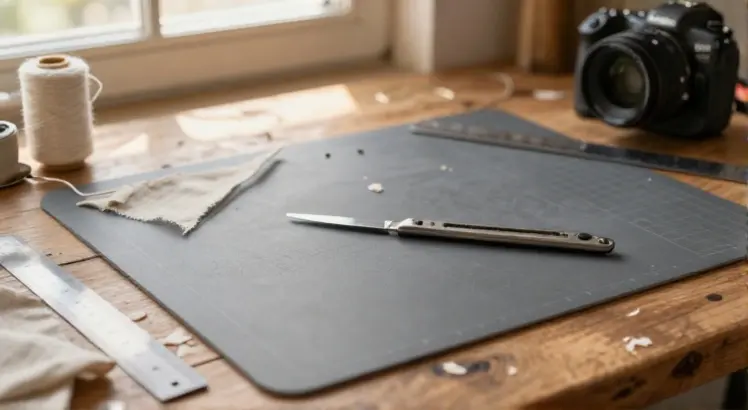
Every sewist eventually stares at a stack of uncut fabric and wonders, Is a cutting mat worth it? If you’ve been using the dining table, a cardboard box, or even the floor to chop your yardage, you’ve likely faced wobbly lines, nicked surfaces, and dull scissors. A quality cutting mat isn’t just a pretty green board, it’s a foundational tool that protects your workspace, extends blade life, and transforms how you cut. Whether you’re piecing a quilt, hemming jeans, or just tired of crooked cuts, the right mat makes the entire process safer, faster, and far more precise.
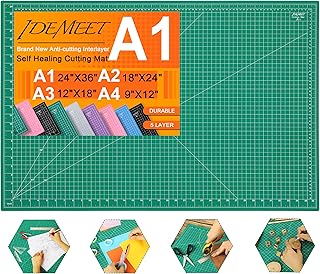
Density-upgraded 24″ x 36″ Large Self Healing Sewing Mat, Idemeet Rotary Cutting Mat 5-Ply Cut Board for Crafts Hobby Project, Scale Size 24″ x 36″, A1, Green
Check PriceWhat Exactly Is a Cutting Mat?
A cutting mat is a durable surface designed to absorb the impact of rotary cutters, craft knives, and scissors without damaging the underlying table. Most sewing mats use a self-healing material, tiny PVC particles that close up after a blade passes through, so cuts don’t turn into permanent grooves. You’ll find them in sizes from small A4 desk mats to massive 36″ x 48″ boards that cover an entire worktable. The standard thickness runs about 1.5mm to 3mm; thicker mats add durability and rigidity, while thinner ones save a bit of money but may warp over time.
Self-Healing Technology Demystified
Self-healing doesn’t mean the mat magically regenerates. Instead, the soft PVC layers are constructed so that the blade separates the particles rather than permanently severing them. The material naturally rebounds, which hides cut lines and prevents deep channels from forming. This keeps the surface flat and consistent, so your fabric glides smoothly over it cut after cut. Cheaper mats often skimp on this layer, leading to visible score marks that can catch fabric and cause uneven cuts.
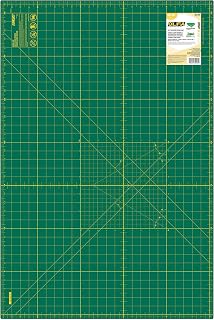
OLFA 24×36″ Self-Healing Rotary Cutting Mat (RM-MG) – Double-Sided, Green | Self-healing, triple-layer, double-sided grid, rotary cutter safe – Large quilting projects – Quilters and Crafters
Check PriceKey Benefits: Why a Cutting Mat Is a Sewing Room Game-Changer
If you’re still on the fence about is a cutting mat worth it, the advantages become obvious the moment you use one. Here’s what you gain:
- Protects your tables and counters. Rotary blades and knives can scar wood, chip laminate, and dull instantly on hard surfaces. A mat absorbs the blade and keeps your furniture pristine.
- Extends rotary blade life. Cutting on glass, metal, or untreated wood destroys a blade’s edge in a few passes. A self-healing mat provides a forgiving surface that reduces blade wear significantly, many sewists notice their blades last two to three times longer.
- Prevents fabric slipping. Quality mats have a slightly tacky, non-slip surface that grips cotton, linen, denim, and even slippery silks. Combined with a ruler, this grip means you cut where you intend, not where the fabric slides.
- Built-in measurement grid and angles. Most mats include a printed grid in inches or metric, 30°, 45°, and 60° angle lines, and often clear registration marks. You can square up a quilt block or align a pattern piece without grabbing a separate ruler every time.
- Faster, straighter cuts. With a slip-free base and visible guidelines, you work in a continuous motion, less stopping, repositioning, and second-guessing. If you cut large numbers of strips for a quilt or bias tape, the time saved adds up quickly.
Cutting Mat vs. Alternatives: Can You Sew Without One?
Plenty of beginners start without a mat, using makeshift surfaces. Let’s compare them honestly.
Wooden table or kitchen counter: Blades damage the surface, dull instantly, and the hard substrate makes controlling a rotary cutter nearly impossible. You’ll often get jumpy cuts and frayed edges.
Cardboard or chipboard: A common budget hack, but cardboard leaves rough papery debris on fabric, offers zero grip, and develops deep ruts after two or three cuts. It also throws off your blade alignment because the surface isn’t completely flat.
Old plastic placemats or thin vinyl sheets: They might protect the table, but they lack a self-healing core and a non-slip backing. They warp, slide, and still dull blades quickly.
A proper self-healing mat: Designed for the job. It gives consistent resistance, preserves blades, grips fabric, and provides a reliable measurement grid. For anyone using a rotary cutter at all, the mat is not a luxury, it’s a necessity.
When Is a Cutting Mat Absolutely Worth It?
anezus Self Healing Sewing Mat, 12inch x 18inch Rotary Cutting Mat Double Sided 5-Ply Craft Cutting Board for Sewing Crafts Hobby Fabric Precision Scrapbooking Project
Check PriceIf any of these describe you, the answer to is a cutting mat worth it is a firm yes:
- You use a rotary cutter. A rotary blade requires a self-healing surface to function safely and accurately. Without it, you’ll struggle for control and chew through blades.
- You quilt or piece blocks. Precision is everything. A gridded mat lets you align pieces at the exact 1/4″ seam allowance and cut multiple layers simultaneously.
- You sew garments from patterns. Pattern pieces often have long, curving edges. A large mat lets you keep the fabric flat and cut the entire piece without shifting.
- You value your time and money. Blades are pricey, a pack of high-quality rotary replacement blades can cost more than a mid-range mat. A mat that extends blade life pays for itself within months.
- You have back or joint pain. Cutting on a proper height table with a mat keeps you from hunching over a low coffee table. The smoother motion also reduces strain on wrists and shoulders.
When You Might Skip the Cutting Mat
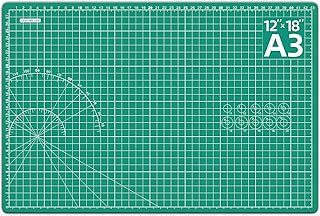
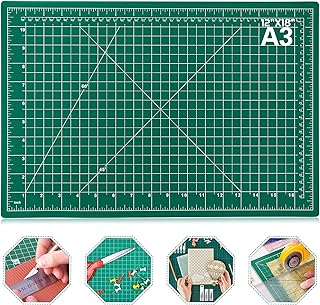
DIYSELF 12in×18in Cutting Mat for Sewing, A3 Self Healing Cutting Craft Mat | A3 Green Cutting Mat for Rotary Cutter, Sewing, Fabric, Quilting, 5-Ply Hobby Craft Mat Double Side for Home, Studio and DIY
Check PriceOf course, there are a few scenarios where a mat isn’t a must-have, at least not right away.
- Exclusive hand sewer who only uses scissors. If you never touch a rotary cutter and work with small snips only, a basic cutting board or even a thick magazine under fabric can suffice for occasional projects. Just know you’ll still risk nicking surfaces.
- Extremely tight budget and minimal space. A compact A3 mat (about 12″ x 18″) can feel cramped. If you literally only mend clothes and cut tiny patches, you might hold off. But even then, a small mat is inexpensive and worth the $10-$15 to protect your table and keep cuts straight.
For most sewists, however, the small upfront cost is dwarfed by the long-term savings and improved results. You don’t need the biggest, most expensive mat. Start with a medium size (18″ x 24″) and upgrade later.
What to Look for in a Cutting Mat
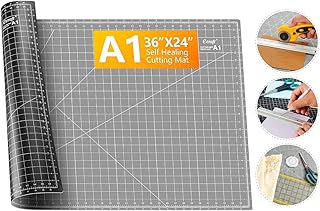
Large Self Healing Cutting Mat: 24″ x 36″ Double Sided 5-Ply Hobby Mat, A1 Rotary Cutting Sewing Mat for Crafts, Fabric,Sewing,Quilting,Scrapbooking,Projects,Grey/Black
Check PriceNot all mats are created equal. Before you buy, consider these features:
- Thickness. A 3mm mat provides better longevity, lies completely flat, and resists warping. 1.5mm mats work but can curl at the corners over time.
- Self-healing quality. Look for triple-layer construction with a solid PVC core. Olfa, Fiskars, and Alvin are trusted brands among quilters. Generic unbranded mats often harden or peel.
- Grid and markings. A grid at least on one side is essential. Double-sided mats with different color contrasts (green/yellow, blue/white) help on light and dark fabrics. Verify the marks are accurate, some cheap mats have noticeable warping right out of the package.
- Non-slip backing. The best mats stay put on a smooth table. If yours slides, you can put a rubber shelf liner underneath, but integrated grip is much more convenient.
- Heat resistance. A cutting mat is not an ironing pad, but quality mats can handle a warm rotary cutter blade and occasional incidental heat. Avoid placing hot irons directly on the mat, as it will warp and melt.
Cost vs. Value: Is It a Smart Investment?
Elan Cutting Mat 36×60 Green, Extra Large Self Healing Cutting Mat 36 x 60 Inch, 5-Ply Craft Board Green, Hobby Board for Sewing and Quilting
Check PriceLet’s talk numbers. A good 18″ x 24″ self-healing mat costs between $15 and $30. Premium 24″ x 36″ mats run $35 to $50. Meanwhile, a single 45mm rotary replacement blade often costs $5-$10, and dull blades can ruin a $15 yard of fabric in one bad cut. If a mat extends blade life by three times and helps you avoid miscuts on two projects, it has effectively paid for itself.
Add in the value of saved time, the frustration of crooked squares, and the damage to a kitchen table you cherish, and the mat becomes one of the highest-ROI accessories in your sewing room. When I upgraded from a warped craft store mat to a thick, gridded quilter’s mat, my piecing speed jumped by nearly 30% simply because I wasn’t constantly readjusting fabric. If you pair it with a high-quality rotary cutter (we’ve tested many and shared our top picks in our guide to the best rotary cutters for quilting), you’ll get razor-sharp precision every time.
How to Care for Your Cutting Mat to Make It Last
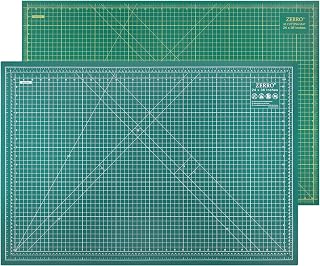
ZERRO Self Healing Cutting Mat 24″ x 36″, Double Sided & Non-Slip | Professional 5-Ply Rotary Mat for Scrapbooking, Fabric, Quilting, Sewing, Crafts (A1)
Check PriceWith minimal care, a decent mat can serve you for years. Follow these tips:
- Store it flat and away from direct sunlight or heat vents. Prolonged leaning or heat warps the material permanently.
- Clean with lukewarm water and a few drops of gentle dish soap. Use a soft cloth or sponge, never abrasive cleaners. A mixture of white vinegar and water (1:1) can refresh grip and remove residue.
- Rotate the mat occasionally so you don’t always cut along the same grid lines, which helps even out wear.
- Avoid using seam rippers, heavy box cutters, or serrated knives on the mat; they gouge the surface.
Real Sewing Scenarios: Cutting Mat in Action
Imagine you’re cutting a dozen 2.5″ fabric strips for a jelly roll quilt. On a bare table, you’d pin, measure each strip, worry about slipping, and still end up with slight V-cuts from the rotary wobble. With a gridded mat, you align the fabric along a horizontal line, butt a quilting ruler against the vertical marking, and glide the rotary cutter in one smooth motion. Each strip comes out exactly 2.5″ wide, and you save at least 20 minutes over the course of the cutting process. For more precise cutting tips, check out our article on how to cut fabric straight every time.
Garment sewists benefit too. Cutting an A-line skirt on a large mat lets you pivot the fabric without moving the entire piece, preserving the grainline. And cutting bias strips becomes foolproof when you can follow the 45° lines printed right on the mat.
According to essential cutting mat safety tips from The Spruce Crafts, a proper mat isn’t just about precision, it’s also about preventing accidents. A stable, non-slip surface keeps the rotary cutter exactly where you intend, drastically reducing the chance of a slip that could cut fabric, or your fingers.
Frequently Asked Questions About Cutting Mats
Do I really need a cutting mat if I only use scissors?
If you exclusively cut small pieces with shears and never touch a rotary cutter, you can technically get by without one. But scissors still press down on the table, and a mat absorbs that pressure and protects your surface. Even a small mat gives you a flat, non-slip area and handy reference grid, making scissor work more accurate.
Can I use a cutting mat as an ironing pad?
No. Cutting mats are heat-sensitive. A hot iron will warp, melt, and buckle the PVC immediately. If you need a portable pressing surface, invest in a wool pressing mat, it withstands heat and steam while providing a firm, flat base. Never place a hot iron on your cutting mat.
What size cutting mat should I get?
An 18″ x 24″ mat covers most home-sewing needs, large enough for pattern pieces and quilt blocks, yet compact enough to store flat under a bed or behind a door. If you regularly cut full-width dress panels or huge quilts, step up to a 24″ x 36″ or larger. Petite 12″ x 18″ mats are perfect for travel or small mending stations.
Are self-healing mats truly self-healing?
They self-heal only if you use a properly sharp rotary cutter and don’t press excessively hard. The material re-closes micro-cuts, but deep or repeated gouges from dull blades, craft knives, or seam rippers will eventually scar the surface. A quality mat can last 5-10 years with moderate use before the grid fades or the surface becomes too textured.
How long does a good cutting mat last?
With proper care, a mid-range to premium mat (Olfa, Fiskars, Alvin) can easily last five years of regular sewing. Signs it’s time to replace: deep grooves that catch your ruler, a grid that’s no longer readable, or edges that curl and won’t lie flat. Rotating the mat and storing it correctly will maximize its life.
The Bottom Line: Is a Cutting Mat Worth It for You?
After years of sewing without one, and then with a proper mat, I can’t imagine going back. The investment is modest, but the daily dividends in blade longevity, cutting accuracy, and sheer workflow smoothness are huge. Your back, your blades, and your fabric will all thank you. If you ever plan to use a rotary cutter, quilt, or cut more than a tiny patch, a self-healing mat moves from a nice to have to an essential. Pick the right size, treat it gently, and let it transform how you cut. Once you experience cutting with a grid under your fabric and zero table damage, you’ll wonder why you ever questioned whether a cutting mat was worth it.
