
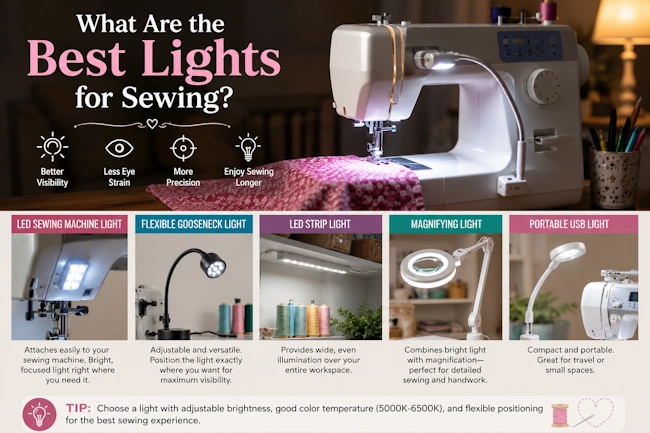
If you have ever squinted at a dark seam, struggled to match navy thread to dark denim, or ended a long sewing session with a pounding headache and dry eyes, you already know why proper lighting matters. As a sewer with over 12 years of experience working on everything from delicate silk chiffon to heavyweight canvas, I have tested dozens of lighting setups to answer the question: What are the best lights for sewing? The right lighting can transform your workspace from a strain-inducing zone to a productive, comfortable craft area that you actually want to spend time in.
Whether you are hemming jeans, embroidering intricate lace patterns, or piecing a queen-size quilt, good lighting reduces eye fatigue, improves stitch accuracy, and even makes tedious tasks like threading needles feel less frustrating. Below, we break down everything you need to know to choose the right lighting for your skill level, project type, and workspace.

Sewing Machine Light LED Lighting (30LEDs) 6 Watt Multifunctional Flexible Gooseneck Arm Work Lamp with Magnetic Mounting Base for Workbench Lathe Drill Press 2 Pack Silver
Check PriceWhy Proper Sewing Lighting Matters
Eye Health and Sewing
Most sewers spend hours hunched over their machines, focusing on tiny stitches, thin threads, and detailed patterns. Poor lighting forces your eyes to work harder to focus, leading to digital eye strain (also called computer vision syndrome) even if you are not looking at a screen. Symptoms include dry eyes, blurred vision, headaches, and neck pain from leaning in closer to see your work.
Per the American Optometric Association’s guidance on reducing eye strain, proper task lighting is one of the top ways to prevent long-term vision issues for people who do detailed close work. Investing in good sewing lights is not just about convenience — it is about protecting your eyesight for years of sewing to come.
Stitch Accuracy and Fabric Matching
Even the most experienced sewers make mistakes when they cannot see clearly. Dark fabrics like black velvet or navy wool are notoriously hard to sew in dim light, as you may skip stitches, sew crooked seams, or accidentally cut into the fabric. Proper lighting also helps with color matching: if your light has a yellow tint, white thread may look cream, leading to mismatched repairs or projects.
For sewers who work with tricky lightweight or slippery fabrics, bright, even light is essential to avoid snagging or misaligning layers. You will notice fewer mistakes, less ripped-out stitching, and faster project completion times with the right setup.
Types of Sewing Lights to Consider

LED Sewing Machine Light,POWKER 30 LED Magnetic Mount Drill Press Light with Flexible Silone Coating Gooseneck for Sewing Machine, Drill Presses, Desks, Music Stands, Craft, Workbenches, Lathes Lamps
Check PriceLED Task Lights for Sewing Machines
These are the most popular option for sewers, as they clip directly onto your sewing machine’s body or sit on your machine’s extension table. Most use cool white LEDs that mimic natural daylight, reducing glare and eye strain. They are energy-efficient, stay cool to the touch (unlike old incandescent bulbs that get hot enough to burn your fingers), and last for thousands of hours.
If you want to skip the research, check out our roundup of the best sewing machine lights for pre-vetted options that fit most standard machines, including heavy-duty models like the Singer 4452 or Janome HD1000.
Magnifying Lamps for Detailed Work
Magnifying lamps combine bright LED lighting with 2x to 5x magnification, making them ideal for sewers who do embroidery, cross-stitch, hand sewing, or work with tiny details like zipper installations or buttonholes. The magnification eliminates the need to lean in close to your work, reducing neck strain and eye fatigue. Many models have adjustable arms so you can position the light exactly where you need it.
For sewers who focus on embroidery or hand-stitched details, we recommend browsing our guide to the best magnifying lamps for needlework to find options with glare-free lenses and dimmable brightness settings.
Overhead Workshop Lights
If you have a dedicated sewing room, overhead LED panel lights or track lighting can provide even, shadow-free light across your entire workspace. Look for overhead lights with a color temperature of 4000-5000K (cool white) to mimic natural daylight. Avoid warm yellow overhead lights, as they can distort fabric colors and cause eye strain over time.
Portable Clip-On Lights
These small, battery-powered or USB-rechargeable lights clip onto your sewing machine, embroidery hoop, or even your collar if you do hand sewing on the go. They are affordable, easy to move between workspaces, and great for sewers who travel to classes or sew in multiple rooms. The downside is they often have lower brightness than dedicated task lights, so they work best as a supplement to your main lighting.
How to Choose the Best Light for Your Sewing Setup

Sewing Machine Light, Dimmable Touch Control Bright Daylight,LED Light for Decorative Purposes,Quilting Sewing Craft Accessories, Universal Fit for Most Sewing Machines,1 Pack
Check PriceBrightness and Color Temperature
Brightness is measured in lumens, not watts (watts measure energy use, not brightness). For sewing task lighting, aim for 500-1000 lumens for small projects like hemming pants, and 1000-1500 lumens for detailed work like embroidery or quilting. Color temperature is measured in Kelvin (K): cool white light (4000-5000K) is best for sewing, as it mimics natural daylight and shows true fabric colors. Warm white light (2700-3000K) has a yellow tint that can make it hard to match threads or see dark stitches.
Adjustability and Positioning
You want a light that you can position directly over your work area, not shining in your eyes or casting shadows. Look for lights with adjustable necks, swivel heads, or clamp mounts that let you move the light as needed. If you switch between machine sewing and hand sewing, choose a light with a long adjustable arm that can reach your lap or embroidery hoop.
Energy Efficiency and Lifespan
LED lights are the most energy-efficient option, using 75% less energy than incandescent bulbs and lasting up to 25 times longer. Avoid halogen or incandescent bulbs, as they get very hot, use more energy, and need to be replaced frequently. Most LED sewing lights last for 50,000+ hours, which is equivalent to 10+ years of regular use.
Compatibility with Your Workspace
Consider how much space you have: if you sew on a small folding table, a clamp-on light is better than a bulky floor lamp. If you have a large sewing table, a floor-standing task light or overhead light may work better. Also check if the light is compatible with your machine: some clip-on lights do not fit over the thick bodies of heavy-duty machines like the Janome HD1000 or Singer Heavy Duty 4452.
Top Picks: Best Lights for Sewing in 2026

30 LED Sewing Machine Light with Flexible Silicone Neck, Magnetic Base Work Lamp for Sewing Machines, Drill Press, Desk, Music Stand, Crafts, Workbench, Non-Flicker, Eye-Caring Design
Check PriceBased on our testing, these are the top options for most sewers:
- Best Overall: Brightech Litespan LED Floor Lamp — 2000 lumens, adjustable arm, cool white light, works for both machine and hand sewing.
- Best for Machines: Sewing Machine LED Strip Light — clips onto any machine, 1200 lumens, flexible positioning, no glare.
- Best for Detailed Work: OttLite Flex Arm Magnifying Lamp — 2x magnification, 500 lumens, dimmable, glare-free lens.
- Best Budget: Woputne Clip-On LED Light — 800 lumens, USB rechargeable, 3 color temperature settings, under $20.
Common Sewing Lighting Mistakes to Avoid
- Relying on overhead room lights alone: these cast shadows from your hands and machine, making it hard to see your work.
- Using warm yellow light: this distorts fabric colors and causes more eye strain than cool white light.
- Positioning lights behind you: this casts a shadow over your work area. Always position lights in front or to the side of your workspace.
- Skipping dimmable options: if you sew at night, bright light can feel harsh. Dimmable lights let you adjust brightness to your comfort level.
Frequently Asked Questions
What color light is best for sewing?
Cool white light with a color temperature of 4000-5000K is best for sewing. It mimics natural daylight, shows true fabric and thread colors, and reduces eye strain. Avoid warm yellow light (2700-3000K) as it distorts colors and makes dark fabrics hard to see.
How many lumens do I need for sewing?
For general sewing tasks like hemming or garment construction, aim for 500-1000 lumens. For detailed work like embroidery, quilting, or hand sewing, 1000-1500 lumens is better. If you sew in a very dark room, you may need up to 2000 lumens for your main task light.
Can I use regular desk lamps for sewing?
You can, but most regular desk lamps are not designed for task lighting. They often have warm bulbs, cast shadows, and are not adjustable enough to position over your sewing machine. Dedicated sewing lights are brighter, cooler, and more adjustable for craft work.
Do I need a magnifying light for sewing?
Only if you do detailed work like embroidery, cross-stitch, or hand-sewing tiny details. If you only sew garments on a machine, a standard LED task light is sufficient. Magnifying lights are also helpful for sewers with vision issues who struggle to see small stitches.
Conclusion: What Are the Best Lights for Sewing
Choosing the right lighting is one of the most impactful upgrades you can make to your sewing workspace. If you are still wondering what the best lights for sewing are, start with a cool white LED task light that clips onto your machine, and add a magnifying lamp if you do detailed work. Prioritize adjustability, brightness between 500-1500 lumens, and energy-efficient LEDs that will last for years.
Remember: good lighting is not just about convenience. It protects your eyes, improves your stitch quality, and makes sewing more enjoyable for years to come. Take the time to assess your workspace, project needs, and budget, and you will find a lighting setup that works for you.
