
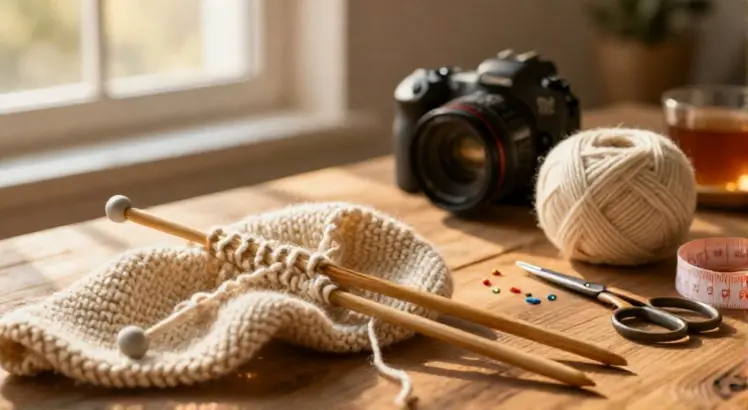
Picking up a pair of knitting needles for the first time feels a bit like learning to drive a manual car. There are different sizes, materials, and styles, and making the wrong choice can lead to a stalled engine, or in this case, dropped stitches and sore hands. The right tools don’t just make the job easier; they make the learning process enjoyable. If you have ever found yourself staring at a wall of bamboo, metal, and plastic in a craft store, this guide will demystify the world of knitting needles for beginners and set you on a smooth path to crafting cozy scarves and snuggly hats.
Understanding the Basics: What Are Knitting Needles Made Of?
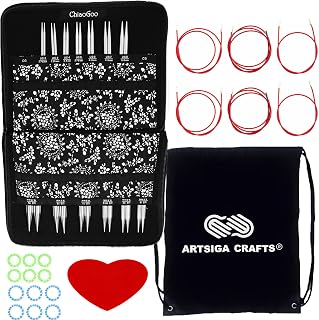
ChiaoGoo Twist Red Lace 5-inch Complete 7500-C Interchangeable Set
Check PriceThe first decision you will face is the material. This isn’t just a matter of aesthetics; the material directly impacts your tension, speed, and comfort. For beginners, choosing the wrong texture is often the fastest route to frustration.
Bamboo and Wooden Needles: The Beginner’s Best Friend
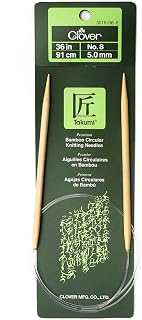
Clover Takumi Bamboo Circular 36-Inch Knitting Needles, Size 8
Check PriceIf you walk into a beginner class, nine times out of ten you will be handed bamboo or wooden needles. There is a solid, physical reason for this: friction. Wood and bamboo knitting needles have a natural grip that clings gently to the yarn. This is a safety net for new learners.
- Warmth and Comfort: These materials warm up in your hands, reducing cramping during long practice sessions.
- Stitch Control: The slight drag prevents stitches from sliding off the tip unexpectedly, which is the number one cause of dropped stitches for shaky hands.
- Quiet Operation: Unlike metal, wood doesn’t click loudly, which makes for a calming learning environment.
Metal Needles: The Need for Speed
You will often see advanced knitters whizzing through projects with shiny aluminum or stainless steel needles. These are designed for speed, not precision learning. The surface is slick and unyielding. While durable and excellent for intricate colorwork later on, a beginner using metal often finds their stitches sliding into the abyss because the needles accelerate the yarn movement unnaturally fast. They are also colder to the touch and can feel heavier on the wrists.
Plastic and Acrylic Options
Plastic needles are generally the cheapest option on the market. They are lightweight, which sounds good in theory, but they often bend under the tight tension of a stressed beginner. They also generate static electricity with certain synthetic yarns like acrylic, causing your project to literally stick and squeak. While they are useful as a travel backup, they rarely provide the satisfying experience that builds a lasting hobby.
Choosing the Right Shape: Straight, Circular, or Double-Pointed?
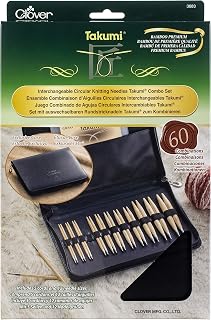
Clover Takumi Combo Interchangeable Circular Knitting Needles
Check PriceThe silhouette of the needle dictates what kind of project you can make. Walk down the notion aisle and you will see three main structural types. As a beginner, one is clearly the superior starting point.
The Classic Straight Needles
These are the iconic long sticks with a stopper at the end. They are used for flat knitting, meaning you finish a row, flip the work, and go back. This back-and-forth motion is the fundamental rhythm of knitting. Straight needles allow you to focus entirely on forming the knit and purl stitch without managing a heavy project weight. The stopper prevents the yarn from sliding off the blunt end, acting as a safety guardrail.
The Versatile Circular Needles
Circular needles consist of two short needle tips connected by a flexible cable. They are mandatory for making seamless tubes like hats and sweaters, but they can also be used for flat projects. In fact, many experts recommend starting with a 16-inch or 24-inch circular needle simply because the flexible cord places the weight of the project in your lap, rather than on your arms. This drastically reduces “knitter’s elbow” and fatigue during your first scarf.
Double-Pointed Needles (DPNs)
You will encounter sets of four or five needles with points on both ends. These are used for tiny circumferences, like the toe of a sock. They look like a game of pick-up-sticks and are statistically proven to make beginners sweat. It is best to set these aside until you have mastered tension control on straight or circular needles.
The Size Matters: Decoding the Numbers
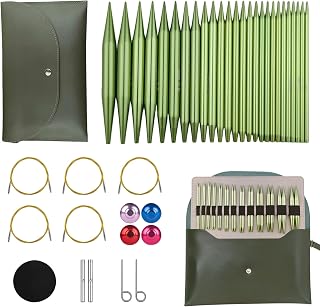
4-inch 13 Pairs Aluminum Interchangeable Circular Knitting Needles Set
Check PriceNeedle size directly correlates to the gauge of your fabric. The American system uses numbers (0-50), while the metric system uses millimeters. The larger the number or millimeter, the thicker the needle. For those asking which exact tool to buy first, the answer lies wrapped around your yarn label.
The Goldilocks Zone: US 8 (5mm)
If you buy only one pair of generic needles without a specific pattern, purchase a US Size 8 (5mm) or US Size 9 (5.5mm). Here is why this is the sweet spot for knitting needles for beginners:
- Yarn Compatibility: This size pairs perfectly with worsted weight yarn, the most common and widely available yarn weight on the planet.
- Stitch Visibility: The loops created are large enough to see the anatomy of a stitch clearly, allowing you to identify mistakes like twisted stitches.
- Project Speed: Medium-sized needles strike a balance between too-tiny-doll-clothing-speed and too-bulky-arm-knitting-strain, giving you a satisfying finished scarf in a reasonable timeframe.
Types of Points: Blunt vs. Sharp
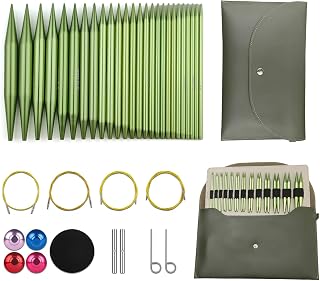
Hzkokon 13 Pairs 4 Inch Interchangeable Circular Knitting Needles Set
Check PriceThis is a subtle detail that the internet often glosses over, but the tip profile can make or break your early attempts. Lace needles have sharp, surgical points designed to dig into complex decreases. Standard beginner needles have slightly blunted, rounded tips.
Why rounded tips? A sharp lace tip often stabs through the split of the yarn strand, fraying it and making it impossible to slide off the needle. A rounded tip separates the fibers without piercing them. For a first-timer still mastering the scooping motion required to pull a new loop through, a blunt tip prevents painful finger-poking and yarn shredding.
Interchangeable Sets vs. Fixed Needles
As you browse stores or online shops like those reviewed for sewing project convenience, you might see luxurious interchangeable sets where tips screw onto different cables. While these are the ultimate investment, a beginner should resist the urge to splurge immediately.
Fixed needles are solid and risk-free. Interchangeable sets introduce the risk of the tip unscrewing mid-row, losing stitches in the process. You need a specific “key” to tighten them properly, and it is a distraction from learning the core movements. Start with a fixed pair. Once you have completed a few projects without dropping stitches, you will know exactly which material and size you prefer, making your eventual investment in a set much wiser.
How to Hold Knitting Needles: The Two Schools of Thought
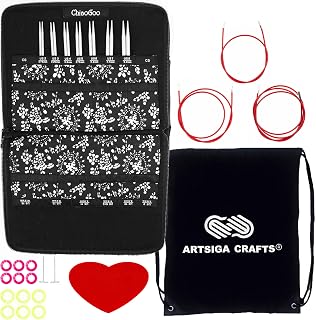
ChiaoGoo Twist Red Lace 4-inch Small 7400-S Interchangeable Set
Check PriceYour tool will influence your method, and vice versa. There is no “wrong” way, but the standard distinctions are English and Continental.
- English (Throwing): You hold the yarn in your right hand and wrap it around the needle. Short, straight bamboo needles are historically favored here because the blunt end can be tucked under the arm for stability. This method is often considered easier for teaching kids the mechanics of the stitch.
- Continental (Picking): You hold the yarn in your left hand and pick it up with the needle tip. Smooth metal needles are often preferred here by advanced knitters for speed, but a wooden needle with a sharp-ish tip works well to grab the yarn without sliding out.
Practical Tips for Choosing Your First Pair
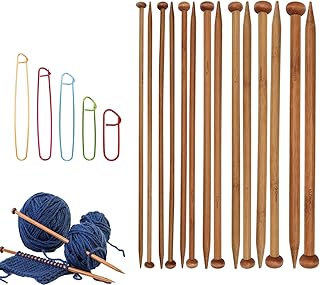
7 Pairs Bamboo Knitting Needles Set, Single Point Straight Wood Needles
Check PriceBefore you swipe your credit card, run through this checklist. The goal is to eliminate variables that cause common rookie errors.
- Choose Light Colors: If buying wooden needles, avoid dark ebony wood. A light-colored bamboo needle creates contrast against the yarn, making it much easier to count stitches under low light.
- Check the Finish: Run your thumbnail along the shaft. It should feel glassy smooth, not gritty. A microscopic splinter in a bamboo needle will snag animal fibers like wool and drive you crazy.
- Match the Ergonomic Profile: If you have arthritis or hand stiffness, look for square needles (cubics) or ergonomic needles with a soft grip at the base. These prevent the needle from rotating in your hand and reduce the grip strength required to hold it.
Yarn and Needle Harmony
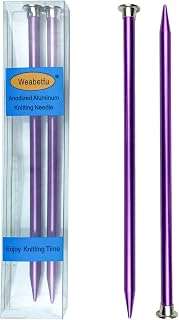
Weabetfu Aluminum Straight Single Pointed Knitting Needles Size US 11
Check PriceThe needle does not exist in a vacuum; it is half of a dynamic duo. A grippy wooden needle paired with a sticky, fuzzy mohair yarn is a nightmare. The friction becomes too high, and you cannot move the stitches. Conversely, a slick metal needle with silky bamboo yarn results in stitches falling off if you even breathe on them.
For your absolute first project, pair light-colored bamboo needles with a plied, light-colored wool or acrylic yarn in a worsted weight. The plies stay together, the color lets you see mistakes, the needle grips the yarn, and the size is easy to manipulate. For external guidance on the best available sets that meet these criteria, resources like the Craft Yarn Council offer excellent standards on yarn weight compatibility that correlate directly to needle size charts.
Frequently Asked Questions: Knitting Needles for Beginners
Is it better to learn on straight or circular needles?
It is often better to learn on circular needles, even for flat projects. The flexible cable reduces the weight stress on your wrists, and you can never drop a needle on the floor because they are physically connected. However, some find straight needles psychologically simpler because the motion is strictly left-to-right. Both are valid; try a low-cost version of each.
What size knitting needles are the easiest to use?
Size US 8 (5mm) to US 10 (6mm) is the easiest. These sizes create fabric quickly, giving you rapid positive feedback, and they are large enough that you don’t need fine motor skills to grab the yarn. Avoid needles thinner than US 6 (4mm) as a complete novice; the tension required to manage tiny stitches leads to extremely tight knitting and hand cramps.
How do I stop my knitting needles from squeaking?
Squeaking happens due to friction between the needle and the yarn, often caused by a high mineral content in the metal needles or the coating on plastic. To fix this, you can gently wipe the needles with a dryer sheet to deposit a micro-thin layer of lubricant. You can also rub wooden needles lightly with wax paper. Ensure you are not pulling the yarn too tightly, as a death-grip on the tension inevitably amplifies the squeak.
Can I bring knitting needles on a plane?
Bamboo and plastic needles are generally permitted by the TSA, though the final decision rests with the individual officer as noted in our guide on whether knitting needles are allowed on planes. Metal needles and sharp-tipped lace needles are flagged more often. Always carry a self-addressed stamped envelope in your knitting bag so you can mail your project home if security confiscates the needles. Circular needles made of wood are the safest bet for air travel.
Why do my stitches keep falling off the needle?
This usually happens when the needle material is too slick (like metal) for the chosen yarn, or when you are using straight needles that are too short for the number of stitches. If you cast on 30 stitches on a 9-inch straight needle, they compress like an overstuffed suitcase and pop off the ends. Switch to longer needles or wooden materials to fix this.
Building Your Confidence, One Stitch at a Time
The universe of knitting can sometimes feel overwhelming, but your choice of gear creates the foundation for every skill you will build. By selecting a medium-sized, light-colored, fixed bamboo or wooden needle, you are stacking the deck in your favor. You are choosing control over speed and comfort over flashiness.
Do not be swayed by the shiny, surgical-steel needles that promise speed. Speed comes later. Your first goal is security, the satisfying rhythm of the yarn wrapping around the needle without slipping, snapping, or squeaking. Pick up a pair of quality bamboo straight or circular needles in a size 8, find a comfortable chair, and simply focus on the movement. The rest will follow naturally.
