
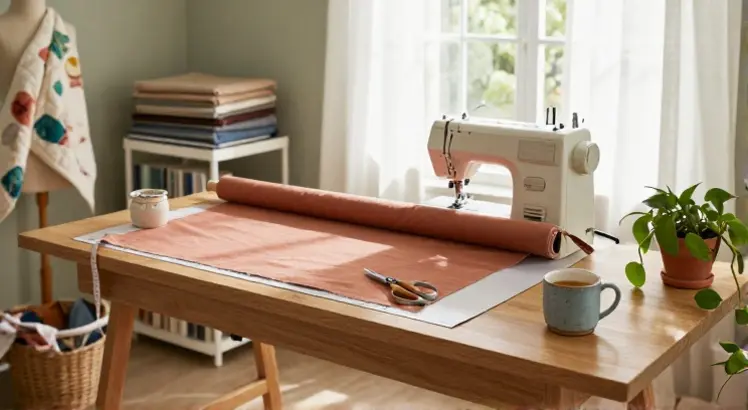
If you’re setting up a sewing space, one of the first questions you’ll ask is: what is the ideal sewing table size? The answer isn’t one-size-fits-all: it depends on your sewing style, the projects you tackle most often, your room dimensions, and even your height. A table that’s too small will leave you cramped when cutting pattern pieces or managing bulky quilts, while one that’s too large might crowd a small apartment or spare bedroom. For a full roundup of options, check out our list of top-rated sewing tables for every budget, which includes models in every standard size range.
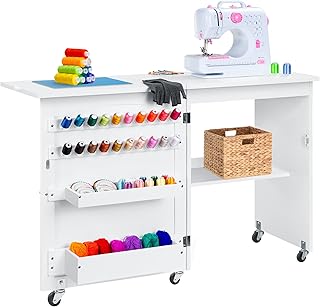
Best Choice Products Folding Sewing Table Multipurpose Craft Station & Side Desk with Compact Design, Wheels, Shelves, Storage Trays, Pegs, Magnetic Doors, Metal Doorknobs – White
Check PriceStandard Sewing Table Dimensions (Most Common Sizes)
Most ready-made sewing tables follow industry-standard dimensions that work for 80% of home sewists. These sizes are designed to balance workspace with fit for average-sized spare bedrooms, home offices, and craft rooms. Below, we break down the three core measurements you need to know: width, depth, and height.
Width: How Much Workspace Do You Need?
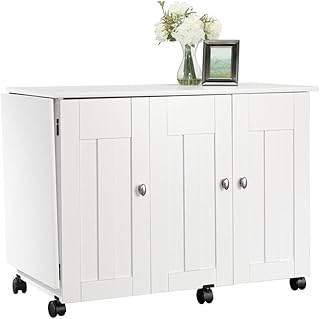
Sauder Folding SewingTable & Craft Cart Storage Cabinet, in Soft White
Check PriceWidth refers to the left-to-right measurement of your table surface. This is the most critical dimension for handling fabric: you need enough space to lay out pattern pieces, support long lengths of fabric, and keep your sewing machine centered with room for accessories on either side.
Standard sewing table widths fall into three categories:
- Compact (36–40 inches): Best for small spaces or sewists who only work on small projects like hemming, scrunchies, or kids’ clothes. You’ll fit a standard sewing machine with 6–8 inches of extra space on either side.
- Standard (48–60 inches): The most popular size for home sewists. This fits a sewing machine plus a serger, with 12–18 inches of workspace on either side for cutting small pattern pieces or laying out fabric for garments.
- Large (72+ inches): Designed for quilters, upholstery sewists, and people who work on large-scale projects. You’ll have enough space to lay out a full quilt block or cut 2-yard fabric lengths without overhang.
Depth: Avoiding Cramped Cutting and Sewing
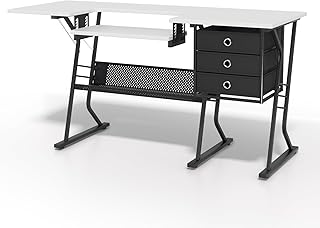
Athena Collection Sewing Table with Sotrage Shelf & Drawers, Adjustable Height Sewing Machine Tabletop with Folding Deak for Crafting, Heavy-Duty Metal Frame for Home Bedroom
Check PriceDepth is the front-to-back measurement of the table surface. This matters most for how close you can sit to your machine, and how much space you have to support fabric as it feeds through the machine. If your table is too shallow, fabric will slide off the back as you sew, leading to uneven stitches or tangled thread.
Standard depth ranges:
- Shallow (18–20 inches): Common for fold-down or wall-mounted sewing tables. Only suitable if you sew with very small fabric pieces, as most standard sewing machines are 12–15 inches deep, leaving little extra room.
- Standard (24–27 inches): The most common depth for free-standing sewing tables. This leaves 9–15 inches of space behind your machine to support fabric as you sew, and enough front space to rest your hands comfortably.
- Deep (30+ inches): Preferred by quilters and people who cut fabric directly on their table. You can lay a 24-inch cutting mat on the surface with room to spare, and support even king-size quilt tops as you sew.
Height: The Ergonomic Factor Most People Ignore
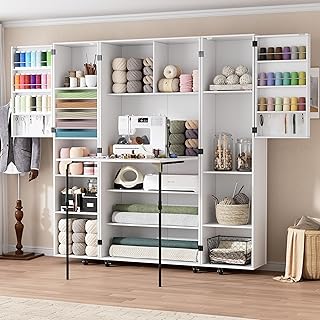
PAKASEPT Folding Sewing Table with Storage, Craft Storage Cabinet and Multipurpose Sewing Machine Table with Lockable Wheels, Magnetic Doors & Hidden Storage
Check PriceTable height is the #1 cause of back, neck, and shoulder pain for regular sewists. A table that’s too high will force you to hunch your shoulders, while one that’s too low will make you lean forward, straining your lower back. Follow OSHA’s ergonomic workspace guidelines to set a height that keeps your elbows at a 90-degree angle when your hands are on the sewing machine bed.
Standard height ranges:
- Standard fixed height (29–30 inches): Fits people 5’4” to 5’10” tall. Most ready-made tables come in this range.
- Adjustable height (26–36 inches): Ideal if multiple people use the table, or if you’re shorter than 5’4” or taller than 5’10”. Many adjustable models also let you raise the table for standing sewing sessions.
Ideal Sizes for Different Sewing Projects
Your most frequent projects should drive your size choice more than general standards. A sewist who only makes dog bandanas has very different needs than someone who quilts king-size blankets. Below are tailored size recommendations for common sewing niches:
Quilting and Large-Scale Crafts
Quilters need maximum surface area to lay out blocks, support bulky quilt tops, and use large cutting mats. The ideal size here is a table at least 60 inches wide and 30 inches deep, with a height that lets you sit comfortably while reaching across the surface. If you work on king-size quilts, look for tables 72–84 inches wide, or consider a modular setup with two tables pushed together.
Garment Sewing and Tailoring
Garment sewists need enough space to lay out pattern pieces (which can be up to 60 inches wide for adult garments) and support long lengths of fabric like denim or silk. A 48–60 inch wide, 24–27 inch deep table is perfect here. You’ll want extra space on the left side of your machine to support sleeves or pant legs as you sew, and enough surface area to press small pieces with a mini iron.
Embroidery and Machine Embroidery
Embroidery machines are often larger than standard sewing machines, and you need space for hoops, thread racks, and stabilizer. A table at least 50 inches wide and 27 inches deep works best. You’ll also want a flat, stable surface to avoid vibration that can ruin embroidery stitches. If you use a multi-needle embroidery machine, look for tables with reinforced legs to support the extra weight.
Small-Space and Apartment Sewing
If you’re sewing in a studio apartment or shared bedroom, prioritize compact sizes that fold away when not in use. Look for tables 36–40 inches wide, 18–20 inches deep, that fold down to 6 inches of wall space. Many small-space tables have built-in storage for your machine and tools, so you don’t need extra floor space for organizers. Avoid tables over 24 inches deep, as they’ll block walkways in tight rooms.
How to Measure Your Space for a Sewing Table
Before you buy, you need to confirm the table will fit in your room with enough clearance to move around comfortably. Follow these three steps to avoid buying a table that’s too big or too small:
Step 1: Map Your Room Layout
Use painter’s tape to mark the exact footprint of the table you’re considering on your floor. Include the table’s full width and depth, plus 24 inches of clearance on all sides where you’ll sit or walk. If the tape overlaps with a door swing, closet, or other furniture, the table is too large for the space.
Step 2: Account for Chair and Movement Clearance
You need at least 30 inches of clearance behind your sewing chair to push back and stand up comfortably. If you use a rolling sewing chair, add an extra 6 inches to account for the chair’s depth. For walkways around the table, aim for at least 36 inches of clearance so you can carry fabric bolts or quilt tops without bumping into walls.
Step 3: Test With Temporary Markers
Once you’ve taped the footprint, set up your sewing machine and a cutting mat on the marked area. Sit in your sewing chair and reach for your tools, lay out a mock project, and simulate sewing for 10 minutes. If you feel cramped, or if the mat hangs over the edge, you need a larger table. If you have more than 12 inches of empty space on all sides, you can size down to save floor space.
Adjustable vs Fixed Size Tables: Which Is Better?
One of the biggest decisions you’ll make is whether to buy a fixed-height table in a standard size, or an adjustable table that lets you change dimensions. Here’s a quick comparison:
- Fixed tables: More stable, cheaper, and often have more built-in storage. Best if you are the only person using the table, and you fall into the 5’4”–5’10” height range. Downside: you can’t adjust height for standing sewing, or share the table with taller/shorter family members.
- Adjustable tables: More versatile, better for ergonomics, and work for multiple users. Many models let you adjust height from 26 to 36 inches, and some even have adjustable width with extension leaves. Downside: more expensive, and some models wobble slightly at full height extension.
Common Sizing Mistakes to Avoid
Even experienced sewists make these sizing errors that lead to frustration:
- Buying a table that matches your room, not your projects: A tiny table might fit your apartment, but if you quilt regularly, you’ll regret the lack of workspace. Prioritize project needs first, then find a size that fits your room.
- Ignoring machine size: Industrial or heavy-duty machines are often 20+ inches wide. Measure your machine’s full footprint (including the arm) before buying a table, to make sure it fits with room to spare.
- Forgetting about extension leaves: If you’re between sizes, buy a table with a pull-out leaf. You can keep it tucked away for small projects, and extend it for quilting or cutting large pieces.
- Skipping height checks: A table that’s the right width and depth but wrong height will cause pain after 30 minutes of sewing. Always test the height with your chair before buying.
Frequently Asked Questions
We get these questions all the time from sewists looking for the right table size:
Is a 48-inch wide sewing table big enough?
For most garment sewists and hobbyists, yes. A 48-inch wide table fits a standard sewing machine plus a serger, with 10–12 inches of workspace on either side. It’s only too small if you quilt large projects or cut full 60-inch fabric bolts on your table.
What is the standard height for a sewing table?
Most ready-made sewing tables are 29–30 inches tall, which fits people 5’4” to 5’10” tall. If you’re outside that height range, look for an adjustable model to avoid ergonomic strain.
Can I use a regular dining table as a sewing table?
Yes, but only if it’s the right size. Most dining tables are 30–36 inches deep, which is deeper than needed, but they’re often 60–72 inches wide, which works for most projects. The main downside is that dining tables are often too high (30–31 inches) for shorter sewists, and they lack storage for sewing tools.
How much clearance do I need around my sewing table?
Aim for 24 inches of clearance on all sides where you’ll reach for tools, and 36 inches of clearance for walkways. You’ll need 30 inches of clearance behind your chair to stand up comfortably.
Conclusion
Figuring out what is the ideal size for a sewing table comes down to balancing three factors: your most frequent projects, your available space, and your ergonomic needs. Start by measuring your room and your machine, then pick a size that gives you enough workspace to sew comfortably without crowding your home. If you’re stuck between options, our step-by-step guide to picking a sewing table covers additional factors like storage, material, and budget to help you make the right choice. Remember: a table that’s too small will limit your creativity, while one that’s too large will crowd your space. Take your time to measure, test, and pick the size that works for you.

Disclosure: As an Amazon Associate, we earn from qualifying purchases at no extra cost to you. Our posts are created with AI tools and human editing.