
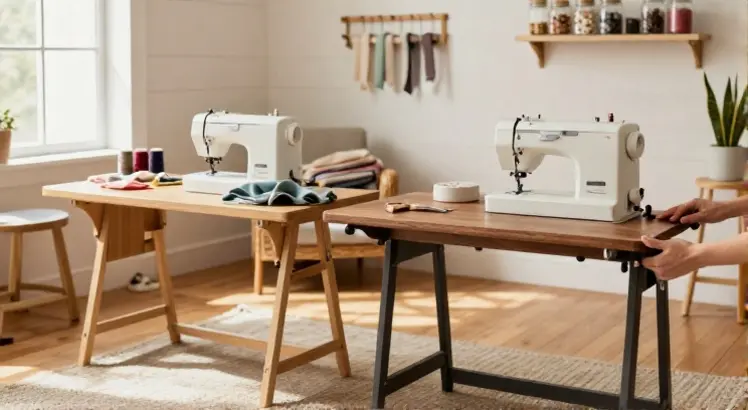
If you’re setting up a new sewing space or upgrading your current setup, learning how to choose a sewing table is one of the most impactful decisions you’ll make for your craft. A poorly chosen table can lead to chronic back pain, cramped workspaces, and frustration when tackling large projects like quilts or denim garments, while the right table will make every stitch feel effortless.
Unlike a standard desk, a purpose-built sewing table is designed to support the weight of your machine, minimize vibration, and keep your tools within arm’s reach. Whether you’re a beginner working on small crafts or an advanced sewist quilting king-size blankets, this guide will walk you through every factor to consider before making a purchase.
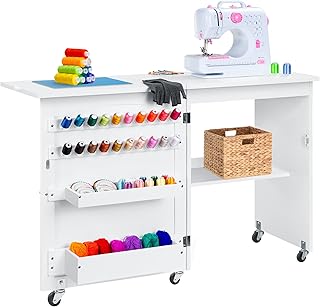
Best Choice Products Folding Sewing Table Multipurpose Craft Station & Side Desk with Compact Design, Wheels, Shelves, Storage Trays, Pegs, Magnetic Doors, Metal Doorknobs – White
Check PriceKey Factors to Consider When Choosing a Sewing Table
Every sewist has unique needs, but these core factors apply to almost every buyer. Prioritize the ones that align with your most frequent projects first.
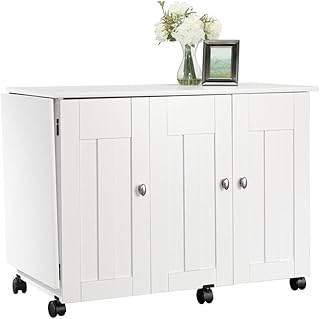
Sauder Folding SewingTable & Craft Cart Storage Cabinet, in Soft White
Check Price1. Available Space and Room Layout
Measure your dedicated sewing area before you even start browsing. Note the length, width, and height of the space, including any doorways, closets, or baseboards that might block a large table. If you’re working in a small apartment, a foldable table that tucks into a closet when not in use will be far more practical than a large cabinet.
For dedicated craft rooms, you can opt for a stationary table with built-in storage. Don’t forget to account for chair clearance: you’ll need at least 24 inches of space behind the table to push your chair back comfortably.
2. Your Primary Sewing Projects
The type of projects you sew most often will dictate the size and features you need. If you mostly sew small items like hair scrunchies or zipper pouches, a compact table with a 24×16 inch surface will suffice. Quilters, however, need tables with at least 36×60 inches of surface area to lay out large fabric cuts without them dragging on the floor.
Sewists who work with heavy materials like leather or denim need tables with high weight capacities (at least 50 pounds) to support industrial machines and thick stacks of fabric.
3. Table Height and Ergonomics
Ergonomics are non-negotiable if you sew for more than 30 minutes at a time. The ideal table height lets you keep your elbows at a 90-degree angle when seated, with your shoulders relaxed. Standard table heights range from 28 to 30 inches, but if you’re taller or shorter than average, an adjustable height table is a must. Official ergonomic workspace guidelines recommend testing table height with your sewing machine placed on top, as machines add 6-12 inches of height to your work surface.
4. Surface Material and Durability
Sewing tables take a lot of wear and tear: fabric scissors, rotary cutters, and pins can scratch soft surfaces, while spilled coffee or water can warp untreated wood. Look for tables with laminate, melamine, or tempered glass surfaces, which are stain-resistant and easy to wipe clean.
Avoid unfinished wood or thin particleboard, which will dent and warp within months of regular use. If you use a rotary cutter on your table, add a self-healing cutting mat to protect the surface – most sewing tables have flat surfaces that fit standard 18×24 inch mats.
5. Storage and Organization Features
Built-in storage can save you hours of time hunting for tools. Look for tables with drawers, shelves, or cubbies to store thread, scissors, measuring tapes, and extra machine feet. Some high-end sewing cabinets include retractable thread racks and built-in electrical outlets, which eliminate tangled cords and keep your workspace clutter-free. If you prefer a minimalist table, pair it with a rolling cart that fits under the table when not in use – this adds storage without taking up extra floor space.
6. Portability and Foldability
If you take your sewing projects to classes, retreats, or friends’ houses, a portable table with foldable legs and a carry handle is essential. Most portable tables weigh under 20 pounds and fold down to 4 inches thick, making them easy to fit in a car trunk. For home use, foldable tables are also great for multi-purpose rooms: you can use them as a dining table or desk when you’re not sewing, then set them up in minutes when you’re ready to craft.
7. Budget and Long-Term Value
Sewing tables range from $50 for basic folding models to $2,000+ for custom cabinets. Set a budget before you start shopping, but don’t sacrifice quality for a lower price: a $150 table that lasts 10 years is cheaper than a $50 table that needs replacing every 2 years.
Look for tables with warranties of at least 1 year, which indicates the manufacturer stands behind their product. If you’re on a tight budget, check secondhand marketplaces for gently used sewing cabinets – many sewists upgrade to larger tables and sell their old ones for a fraction of the retail price.
Sewing Table Types: Which Fits Your Needs?
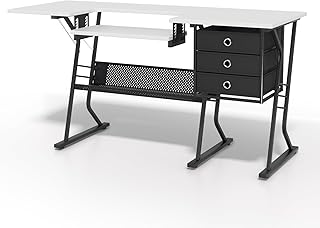
Athena Collection Sewing Table with Sotrage Shelf & Drawers, Adjustable Height Sewing Machine Tabletop with Folding Deak for Crafting, Heavy-Duty Metal Frame for Home Bedroom
Check PriceNow that you know what features to look for, let’s break down the most common sewing table types to help you narrow down your options.
Basic Folding Sewing Tables
These are the most affordable option, typically costing between $50 and $150. They have foldable legs and a lightweight frame, making them easy to store and transport. Most have a 24×16 inch surface, which is large enough for small projects but too small for quilting. They usually have a weight capacity of 20-30 pounds, so they only support lightweight home sewing machines. Best for: beginners, occasional sewists, and those with very small spaces.
Adjustable Height Sewing Tables
These tables let you raise or lower the surface from 24 to 34 inches, making them suitable for sewists of all heights. Many also have tilt-adjustable surfaces, which let you angle the table toward you to reduce neck strain when working on detailed projects. Weight capacities range from 30 to 50 pounds, and surfaces are usually 30×20 inches. We’ve reviewed the top tested height-adjustable models to help you find one that fits your budget.
Sewing Cabinets and Dedicated Workstations
These are stationary, furniture-grade tables designed specifically for sewing. They often include built-in storage, retractable machine platforms that lower your machine to be flush with the table surface (reducing fabric drag), and locking casters for easy repositioning. Weight capacities are typically 75+ pounds, so they support heavy embroidery machines and industrial models. Best for: dedicated craft rooms, advanced sewists, and those who sew daily.
Quilting-Specific Sewing Tables
Quilting tables have extra-large surfaces (up to 40×72 inches) to accommodate large quilt tops and backing fabric. Many have extension leaves that fold out to add even more space, and some include a quilt frame mount for hand quilting. The surface is usually smooth and low-friction to let quilt layers glide easily as you sew. Best for: quilters, sewers who work on large home decor projects like curtains or duvet covers.
Heavy-Duty Sewing Tables for Leather/Denim
These tables are built to support industrial sewing machines that weigh up to 100 pounds. They have reinforced steel frames, thick MDF surfaces, and rubber feet to prevent vibration when sewing through thick materials like leather, denim, or canvas. Many have a cutout for a serger or second machine, so you can switch between machines without moving your main setup. Best for: sewists who work with heavy fabrics, upholstery professionals, and those with industrial machines.
Common Mistakes to Avoid When Buying a Sewing Table
Even experienced sewists make these errors when shopping for a new table. Steer clear of these pitfalls to avoid buyer’s remorse.
Ignoring Weight Capacity
Always check the maximum weight capacity of the table, then add 10 pounds to account for your machine, fabric, and tools. A table that’s overloaded will wobble, vibrate, and eventually break. For reference, most home sewing machines weigh 15-25 pounds, while industrial machines weigh 40-80 pounds.
Overlooking Vibration Dampening
Vibration can cause skipped stitches, uneven seams, and noise that disturbs others in your home. Look for tables with rubber feet, reinforced frames, or weighted bases to minimize vibration. If you buy a lightweight table that vibrates, place a non-slip rug pad under the legs to stabilize it.
Forgetting About Machine Cutouts
A machine cutout (or platform) that lowers your sewing machine so it’s flush with the table surface is a game-changer. It eliminates fabric drag, which is especially important when sewing large projects like quilts. If the table you want doesn’t have a cutout, you can buy an aftermarket adjustable platform that fits most machines.
Skipping Stability Checks
Wobbly tables are frustrating and dangerous: they can tip over if you lean on them, or cause your machine to fall off. When testing a table in-store, push on the corners and sides to check for wobble. For online purchases, read reviews specifically mentioning stability – if multiple reviewers say the table wobbles, skip it.
How to Test a Sewing Table Before Buying
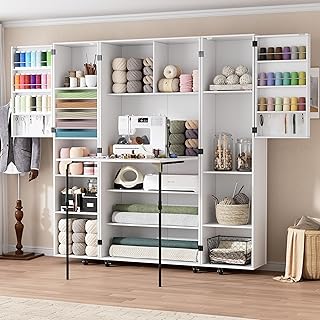
PAKASEPT Folding Sewing Table with Storage, Craft Storage Cabinet and Multipurpose Sewing Machine Table with Lockable Wheels, Magnetic Doors & Hidden Storage
Check PriceIf possible, test the table in person before purchasing. Here’s what to check:
- Place your sewing machine on the table and turn it on to the highest speed to check for vibration.
- Sit in your sewing chair and check that your elbows are at a 90-degree angle when your hands are on the machine.
- Lay out a large piece of fabric (like a quilt top) to see if it fits on the surface without dragging.
- Open and close all drawers and storage compartments to check for smooth operation.
- Push on the table from all sides to check for wobble or instability.
Frequently Asked Questions
Is a sewing table better than a regular desk?
Yes, in almost all cases. Regular desks are not designed to support the weight of sewing machines, and they often have edges that catch on fabric. Sewing tables have flat, smooth surfaces, higher weight capacities, and often include features like machine cutouts and built-in storage that regular desks lack.
What is the standard height of a sewing table?
Standard sewing table height is 28-30 inches, which fits most adults between 5’4” and 5’10” tall. If you’re shorter or taller, opt for an adjustable height table to avoid back and neck strain.
Can I use a folding table as a sewing table?
Basic folding tables from big-box stores are not recommended: they have low weight capacities, wobble easily, and have surfaces that scratch easily. However, purpose-built folding sewing tables (like the ones in our curated list of top-rated sewing tables) are designed for sewing and are a great option for small spaces.
How much should I spend on a sewing table?
Budget at least $100 for a table that will last more than 2 years. Beginners can get a quality folding table for $100-$200, while advanced sewists may spend $300-$800 on an adjustable or cabinet-style table. Heavy-duty tables for industrial machines start at $500.
Do I need a sewing cabinet or a table?
If you have a dedicated craft room and sew daily, a cabinet is worth the investment: it offers more storage, better stability, and a flush machine surface. If you sew occasionally or have limited space, a table is more practical and affordable.
Conclusion
Learning how to choose a sewing table doesn’t have to be overwhelming if you prioritize your unique needs. Start by measuring your space and listing your most frequent projects, then use our factor checklist to narrow down your options. Don’t rush the process: a good sewing table will last a decade or more, so it’s worth taking time to find the right fit. With the right table, you’ll spend less time fighting with your workspace and more time enjoying your craft.

Disclosure: As an Amazon Associate, we earn from qualifying purchases at no extra cost to you. Our posts are created with AI tools and human editing.