
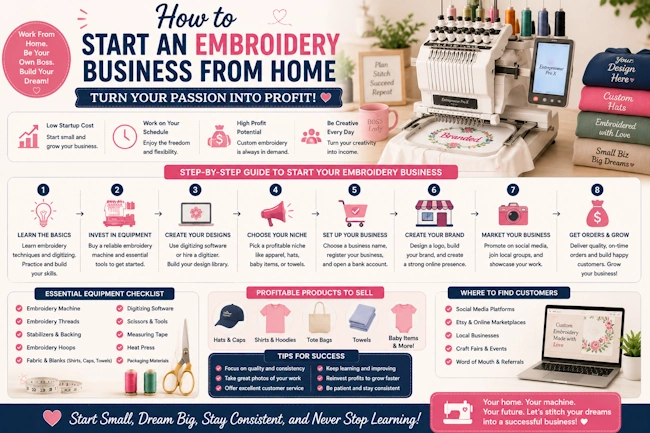
Dream of turning your love for stitching into a steady income stream? Learning how to start an embroidery business from home is one of the most accessible ways to monetize a creative hobby, with low startup costs and flexible hours that fit around your existing schedule. Whether you’re already comfortable with a needle and thread or you’re just getting familiar with embroidery machines, this guide breaks down every step you need to take to launch a successful home-based embroidery venture.
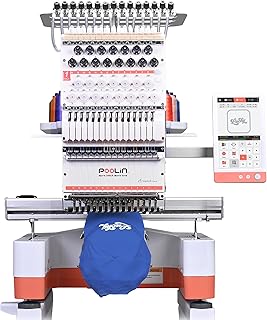
Poolin EOM 15-Needle Commercial Embroidery Machine
Check PriceIs a Home-Based Embroidery Business Right for You?
Before investing in equipment, it’s worth evaluating if a home embroidery business aligns with your goals and lifestyle. Unlike brick-and-mortar shops, home-based ventures let you skip expensive rent and commute costs, but they also require self-discipline to stick to a work schedule when your couch or kitchen are just steps away.
Home embroidery businesses work best for people who:
- Enjoy repetitive, detail-oriented creative work
- Have a dedicated space in their home to set up equipment
- Want to start small and scale gradually as demand grows
- Are comfortable handling basic customer service and marketing tasks
Demand for custom embroidery has grown steadily over the past 5 years, driven by small businesses needing branded merchandise, event planners ordering custom decor, and individual customers looking for personalized gifts. This steady demand makes it a low-risk business to test while keeping your full-time job.
Essential Equipment to Launch Your Home Embroidery Business
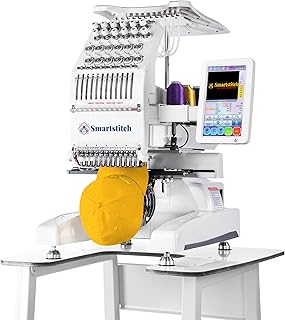
Smartstitch S-1201 Compact Embroidery Machine
Check PriceYou don’t need a warehouse full of equipment to start taking orders. Most home-based embroidery businesses launch with a single multi-needle embroidery machine, basic supplies, and design software. For a full list of beginner-friendly machine options, check our recommended embroidery machines for new business owners.
Core equipment you’ll need includes:
- Embroidery machine: Single-head, 4-6 needle machines are best for home use, with prices ranging from $500 for entry-level models to $3,000 for machines with larger embroidery fields and automatic thread cutting.
- Stabilizer: Tear-away stabilizer works for woven fabrics like cotton and linen, while cut-away stabilizer is essential for stretchy fabrics like t-shirts and spandex to prevent puckering.
- Thread: Polyester embroidery thread is more durable and fade-resistant than cotton, making it the standard for commercial embroidery. Buy in bulk to save on recurring costs.
- Hoops: A range of hoop sizes (4×4, 5×7, 6×10 inches) lets you handle everything from small logo patches to large jacket backs.
- Digitizing software: This converts image files (like JPEGs or PNGs) into embroidery machine-readable formats. Entry-level software like Embrilliance Essentials starts at $150, while professional tools like Wilcom cost over $1,000.
- Basic tools: Embroidery scissors, seam rippers, bobbin thread, and extra needles round out your starter kit.
Calculate Your Embroidery Business Startup Costs
One of the biggest advantages of a home embroidery business is low barrier to entry. Most founders spend between $1,200 and $5,000 to launch, depending on how high-end their initial equipment is.
One-Time Startup Expenses
- Embroidery machine: $500 – $3,000
- Digitizing software: $150 – $1,000
- Initial supply stock (thread, stabilizer, hoops): $200 – $500
- Business registration and legal fees: $100 – $300
- Basic marketing materials (business cards, sample portfolio): $100 – $200
Recurring Monthly Costs
- Electricity and internet (allocated portion for business use): $50 – $100
- Restocking supplies: $100 – $300
- Marketing (social media ads, Etsy fees): $50 – $200
- Business insurance: $30 – $80
Keep track of all expenses using free accounting tools like Wave or QuickBooks Self-Employed to simplify tax filing later.
Register Your Business and Meet Legal Requirements
Even home-based businesses need to follow local and federal regulations to operate legally. For a full walkthrough of general registration steps, refer to our comprehensive embroidery business launch guide, which covers commercial and home-based registration in detail.
Core legal steps include:
- Choose a business structure: Sole proprietorships are simplest for solo founders, but LLCs offer better personal liability protection for a small annual fee.
- Register your business name: File a DBA (Doing Business As) if you’re operating under a name other than your legal name.
- Get an EIN: An Employer Identification Number from the IRS is free and required if you plan to hire employees or open a business bank account.
- Apply for permits: Most cities require a home occupation permit for home-based businesses, and you’ll need a sales tax permit if you sell to customers in your state.
- Buy insurance: General liability insurance protects you if a customer claims your embroidery damaged their item, while business property insurance covers your equipment if it’s stolen or damaged.
The SBA’s official guide to home-based business registration offers free, state-specific checklists to make sure you don’t miss any local requirements.
Choose a Profitable Embroidery Niche
Generic “custom embroidery” services are hard to market, because customers won’t know what you specialize in. Niching down to a specific type of product or customer makes your marketing far more effective, and lets you charge higher rates for specialized work.
Top-performing home embroidery niches include:
- Corporate branded merchandise: Small businesses need embroidered polos, hats, and tote bags for employees and promotional events. This niche offers bulk orders and recurring revenue.
- Pet accessories: Embroidered dog collars, bandanas, and beds are popular personalized gifts for pet owners, with high profit margins on small items.
- Bridal and event decor: Custom embroidered table runners, napkins, and ring bearer pillows for weddings and baby showers command premium prices.
- Custom apparel for niches: Embroidered hats for sports teams, dance studios, or school clubs are steady sellers with loyal customer bases.
Test 2-3 niches initially to see which has the most demand in your area, then double down on the most profitable one after 3 months.
Set Up Your Dedicated Home Workspace
Embroidery machines are loud and take up space, so you’ll need a dedicated area that doesn’t disrupt your household. A spare bedroom, finished basement, or garage workspace works well, as long as it has stable electricity and good lighting.
Key workspace requirements:
- Sturdy table: Embroidery machines vibrate during use, so a solid wood or metal table prevents shifting that can ruin designs.
- Proper lighting: Daylight-spectrum LED lamps reduce eye strain during long stitching sessions.
- Storage: Organize thread by color, and keep stabilizer and hoops within arm’s reach to minimize downtime between orders.
- Ventilation: Machines generate heat during long runs, so a window fan or small AC unit keeps the space comfortable.
Price Your Embroidery Services for Profit
Underpricing is the most common mistake new embroidery business owners make. To set sustainable rates, calculate your true cost per item, then add a 30-50% profit margin.
Your cost per item includes:
- Cost of materials (thread, stabilizer, blank item if you supply it)
- Labor cost (your hourly rate multiplied by time spent stitching and prepping)
- Overhead allocation (monthly business costs divided by number of items produced)
For example: A custom embroidered hat uses $3 of materials, takes 20 minutes to stitch at a $20/hour labor rate ($6.67), and has $2 of allocated overhead. Total cost: $11.67. Adding a 40% profit margin brings the final price to $16.34, which is competitive with local embroidery shops.
Avoid racing to the bottom on price. Customers associate very low prices with poor quality, so focus on marketing your reliability and attention to detail instead of being the cheapest option.
Market Your Home Embroidery Business
You don’t need a big marketing budget to get your first 10 customers. Focus on low-cost strategies that target your ideal niche first.
- Social media: Post time-lapse videos of your stitching process on TikTok and Instagram Reels, and create Pinterest boards of your past work to attract brides and event planners.
- Local partnerships: Partner with local boutiques, gift shops, and event planners to display your samples, and offer them a 10% commission on referrals.
- Google Business Profile: Claim your free profile so local customers searching for “embroidery near me” can find your business, and ask happy customers to leave reviews.
- Etsy shop: List bestselling items like personalized pet bandanas or embroidered onesies to reach national customers looking for unique gifts.
Offer a 10% discount to first-time customers, and send follow-up emails to past clients 3 months after their order to remind them of your services for holiday gifts or new team merchandise.
Scale Your Business Over Time
Once you have a steady stream of orders, you can scale your business to increase revenue without working more hours. Common scaling steps include:
- Upgrading to a 10-15 needle embroidery machine to stitch multi-color designs faster
- Hiring a part-time helper to handle hooping, threading, and customer service
- Wholesaling your products to local retailers who want to stock custom embroidered items
- Adding digitizing services to other embroiderers who don’t have design software
Frequently Asked Questions
How much does it cost to start an embroidery business from home?
Most founders spend between $1,200 and $5,000 to launch, with the biggest cost being your embroidery machine. You can keep costs under $1,000 by buying a refurbished entry-level machine and using free digitizing software trials initially.
Do I need a business license to run an embroidery business from home?
Yes, most cities require a home occupation permit for home-based businesses, and you’ll need a sales tax permit if you sell to customers in your state. Check with your local city clerk’s office for specific requirements.
Can I start an embroidery business with a regular sewing machine?
Yes, but it’s far slower than using a dedicated embroidery machine. You’ll need an embroidery foot and stabilizer, and each design will take 2-3x longer to stitch. This is a good option to test demand before investing in a dedicated machine.
How long does it take to make consistent money with a home embroidery business?
Most owners see consistent monthly profit within 3-6 months, if they focus on niche marketing and deliver high-quality work. Building a repeat customer base is the key to long-term stability.
What are the most profitable embroidery niches?
Corporate branded merchandise and bridal embroidery have the highest profit margins, with some orders bringing in $500+ for a single wedding order. Pet accessories have lower margins per item but higher volume, making them a good steady income source.
Final Tips to Launch Your Home Embroidery Business
Starting a home embroidery business is a low-risk way to turn your creative skills into a steady income stream. The key to success is starting small: buy a reliable entry-level machine, test a few niches to see what sells, and focus on delivering exceptional quality to every customer.
Don’t wait for perfect conditions to launch. Order 10 blank hats, stitch custom designs for friends and family at a discount to build your portfolio, and list your services on local Facebook groups to get your first few paid orders. With consistent effort, your home embroidery business can grow into a full-time income that lets you work from the comfort of your own home.
