
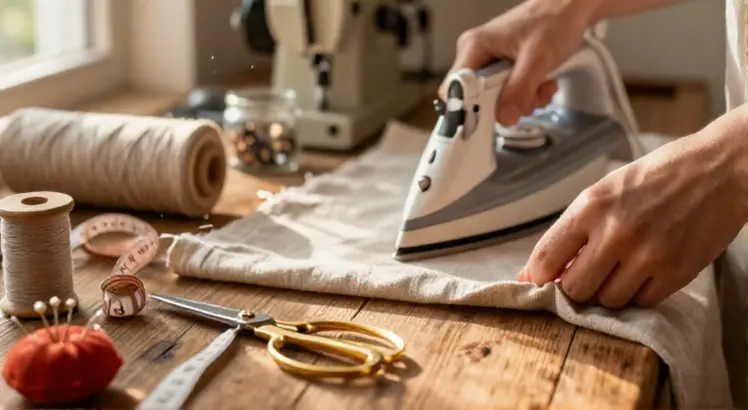
Learning how to make a tablecloth is one of the easiest ways to refresh your dining space without spending a fortune. A custom tablecloth fits your table perfectly, matches your decor, and lets you control the quality of the fabric. This guide walks you through fabric choice, measuring, cutting, hemming, and no sew alternatives for beginners.
Even if you have never sewn before, making a simple rectangle tablecloth is a low risk project. You only need straight lines and a basic hem. Once you learn the process, you can make tablecloths for holidays, outdoor picnics, and formal dinners.
Below you will find step by step instructions, practical tips, common mistakes, and answers to the most frequently asked questions about DIY tablecloths.
Why Make a Tablecloth Instead of Buying One
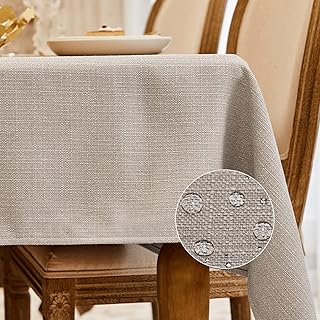
BALCONY and FALCON Rectangle Table Cloth Waterproof Beige 118 x 57 Inch
Check PriceStore bought tablecloths often come in limited sizes and patterns. Making your own solves several problems at once.
- Custom fit for unusual table sizes
- Full control over fabric, color, and pattern
- Lower cost for high quality materials
- Easy to wash and reuse
- A beginner friendly sewing project
What You Need to Make a Tablecloth
BALCONY and FALCON Rectangle Table Cloth Waterproof Beige 118 x 57 Inch
Check PriceGather these basic supplies before you start. Most items are already in a standard sewing kit.
- Fabric of your choice
- Measuring tape
- Fabric scissors or rotary cutter
- Sewing machine or fabric glue
- Thread that matches fabric
- Iron and ironing board
- Pins or sewing clips
- Fabric chalk or washable marker
For a no sew tablecloth, replace the thread and sewing machine with fusible web tape or permanent fabric glue.
How to Choose the Best Fabric for a Tablecloth
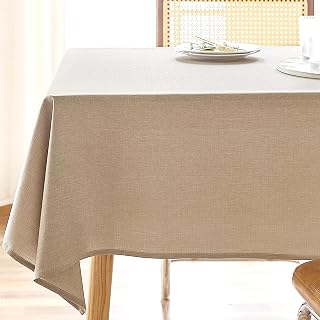
AUSSPVOCT Textured Linen Tablecloth 60 x 84 Inch
Check PriceFabric choice affects how the tablecloth drapes, how easy it is to clean, and how long it lasts. For daily use, pick washable fabrics. For formal settings, choose something with a soft drape. For outdoor tables, look for water resistant options.
Best Fabrics for Tablecloths
- Cotton: Soft, breathable, easy to sew, and machine washable. Great for casual dining.
- Linen: Elegant and natural but wrinkles easily. Best for formal or rustic settings.
- Polyester or poly cotton blend: Durable, stain resistant, and affordable. Holds color well.
- Oilcloth or vinyl: Wipe clean surface. Ideal for outdoor use or messy family meals.
- Flannel backed vinyl: Protects the table surface and adds a soft backing. No hem needed if cut carefully.
If you are not sure which material suits your needs, read this choosing the best fabric for a tablecloth guide before you buy.
Fabric Width and Yardage Basics
Most apparel fabrics come in widths of 44 to 45 inches. Home decor fabrics often come in 54 to 60 inch widths. Wider fabric means fewer seams. For a large table, you may need to piece two panels together to get the right width.
Before shopping, know your total tablecloth dimensions. Then check the fabric width and calculate how many yards you need. For exact math and examples, see this how many yards of fabric for a tablecloth article.
Measuring Your Table Correctly
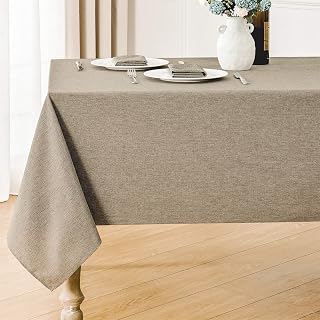
Veblandy Rectangle Tablecloth Linen Textured 60 x 104 Inch
Check PriceAccurate measurements prevent a tablecloth that is too short, too long, or uneven. Always measure the tabletop with the tape measure pulled tight and flat.
Standard Drop Lengths
The drop is the part of the tablecloth that hangs over the edge of the table. The right drop depends on the occasion and table style.
- Casual dining: 8 to 10 inches
- Formal dining: 12 to 15 inches
- Floor length: 29 to 30 inches
Square and Rectangle Table Measurement
Follow these steps to find your fabric size.
- Measure the tabletop length and width.
- Add twice the drop to each measurement.
- Add 2 inches total for hem allowance, or 1 inch per side.
- Example: A 60 inch long by 40 inch wide table with a 10 inch drop needs fabric 82 inches by 62 inches, including hem allowance.
Round Table Measurement
For a round table, measure the diameter across the widest point. Add twice the drop plus hem allowance. For example, a 48 inch round table with a 10 inch drop needs a circle of fabric about 70 inches across, including hem allowance.
Step by Step: How to Make a Tablecloth
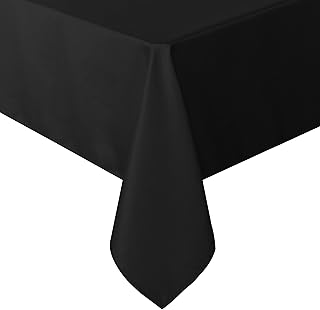
sancua Rectangle Tablecloth 60 x 84 Inch Black
Check PricePreparing the Fabric
Always prewash cotton, linen, and other natural fiber fabrics before cutting. Fabric can shrink after the first wash. If you skip this step, your finished tablecloth may become too small later.
- Wash and dry the fabric according to care instructions.
- Iron the fabric to remove wrinkles and creases.
- Lay the fabric flat on a large cutting surface or clean floor.
Cutting the Fabric
Cutting straight is the most important skill in this project. Use a rotary cutter, quilting ruler, and self healing mat if you have them. Otherwise, fabric scissors and a steady hand work fine.
- Measure and mark the cutting lines with fabric chalk or a washable marker.
- Use a long ruler or yardstick to connect the marks.
- Cut slowly along the marked lines.
- If the fabric edge is uneven, square it up first before measuring.
Sewing a Basic Hem
A double fold hem is the easiest and most durable finish for a tablecloth.
- Fold each raw edge over 1/4 inch toward the wrong side and press with an iron.
- Fold the edge over again 1/2 inch and press to create a clean hem.
- Pin or clip the hem in place.
- Sew with a straight stitch close to the inner folded edge.
- Backstitch at the start and end to secure the thread.
- Press the finished hem one final time.
Making a Round Tablecloth
A round tablecloth uses the same hemming method, but cutting the circle requires a simple trick.
- Fold the fabric in half, then in half again to create a quarter fold.
- Tie a string to a fabric marker or chalk pencil.
- Hold the loose end of the string at the folded corner.
- Pull the string taut and draw an arc across the folded fabric.
- The string length should equal the radius of the circle plus hem allowance.
- Cut along the arc through all four layers.
- Open the fabric and hem with a narrow double fold or bias tape.
Hemming Options and Finishing Choices
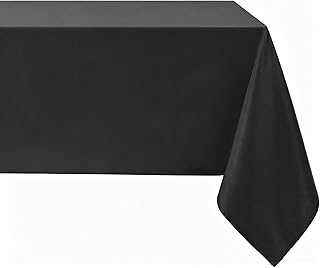
Softalker Rectangle Tablecloth 60 x 84 Inch Black
Check PriceSewn Hem
A sewn hem is the most durable choice and works for cotton, linen, and polyester blends. Use a straight stitch for woven fabrics. For knit or stretchy fabrics, use a narrow zigzag stitch to allow the hem to stretch without popping.
No Sew Hem with Fusible Web
If you do not have a sewing machine, fusible web tape gives a clean finish without stitching. Fold the hem, place the tape between the fabric layers, and press with a hot iron according to package directions. This method works best on lightweight to medium weight fabrics such as cotton and poly cotton.
Rolled Hem with Serger
If you own a serger, a rolled hem creates a narrow, professional edge. It is faster than a double fold hem and works especially well on napkins and lightweight tablecloths.
For more detailed inspiration and visual examples, check this Martha Stewart tablecloth sewing tutorial.
Common Mistakes to Avoid
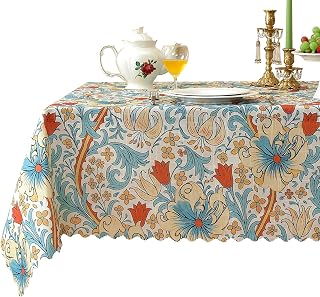
HOMOHEINI Rectangle Waterproof Tablecloth 52 x 70 Inch Vine Bloom
Check Price- Skipping prewash leads to shrinkage after the first wash.
- Adding the drop only once instead of twice.
- Using dull scissors or a dull rotary blade causes frayed edges.
- Not pressing the hem before sewing creates wavy or uneven lines.
- Choosing fabric that is too narrow for large tables without planning seams.
- Forgetting hem allowance when calculating yardage.
Frequently Asked Questions
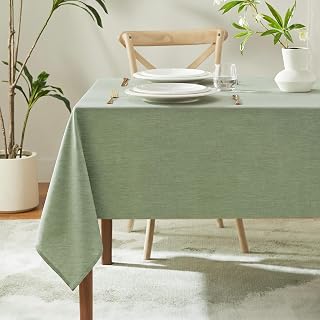
IVAPUPU Textured Linen Rectangle Table Cloth Sage Green 52 x 70 Inch
Check PriceHow much drop should a tablecloth have?
For everyday use, an 8 to 12 inch drop looks casual and is easy to manage. For formal dining, 15 inches adds elegance. Floor length tablecloths usually have a 29 to 30 inch drop.
Can I make a tablecloth without a sewing machine?
Yes. Use fusible web tape or permanent fabric glue to secure the hem. Some fabrics such as oilcloth and vinyl can be cut and used without hemming because the edges do not fray.
What is the easiest fabric for a beginner?
Cotton is the easiest fabric to cut, sew, and press. A poly cotton blend is also great because it resists wrinkles and stains while remaining simple to handle.
How do I make a round tablecloth without a pattern?
Fold the fabric in quarters, tie a string to a fabric marker, and draw an arc from the folded corner. Cut along the line and hem. This string method gives you a perfect circle without a bought pattern.
How do I keep fabric from shifting while cutting?
Use pattern weights or heavy books to hold the fabric down. A rotary cutter on a self healing mat also reduces movement. If using scissors, keep the lower blade on the cutting surface and slide the fabric carefully.
Is it better to buy extra fabric?
Yes. Buy at least 10 percent extra fabric to account for shrinkage, pattern repeat, and cutting errors. If you plan to match stripes or plaids, buy more to align the pattern at the seams.
Conclusion
Now you know how to make a tablecloth from start to finish. Start with a simple rectangle in cotton, measure carefully, and press every hem. Once you master the basics, try round shapes, linen fabrics, and specialty finishes. Your custom tablecloth will fit better, look more personal, and save money compared to store bought options.
Pick your fabric, wash it, cut straight, and hem with confidence. The first one takes a little patience, but each project gets faster and more polished.
