
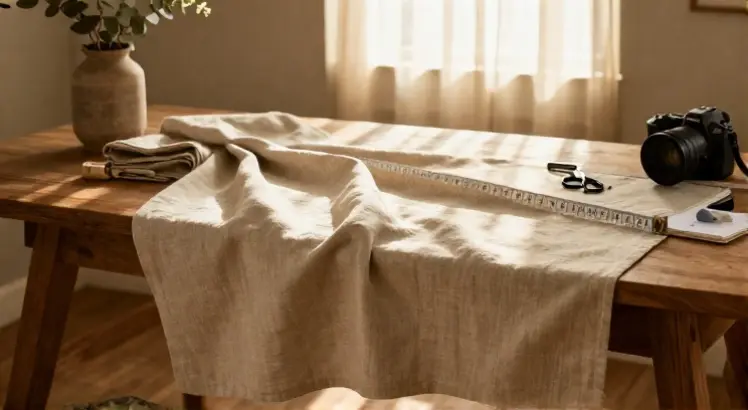
Figuring out how many yards of fabric for a tablecloth stops feeling like guesswork once you break it into a few clear steps. You need the table measurements, the drop length you want, the hem allowance, and the width of the fabric you plan to use. With those numbers, simple math gives you the yardage, even for round or oval tables. This guide walks you through every formula and shares a quick-reference chart and tips that save time and money. Before you shop, it also helps to know which tablecloth fabrics work best for different looks and laundry habits.
What You Need Before You Calculate
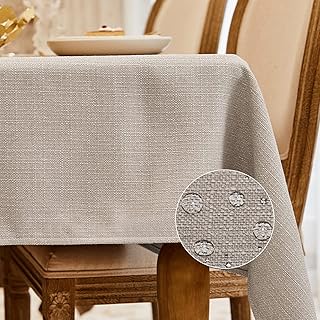
BALCONY and FALCON Rectangle Table Cloth Waterproof Beige 118 x 57 Inch
Check PriceGrab a flexible tape measure, a notepad, and the exact table dimensions in inches. If your table has removable leaves, measure the size you will use most often when the tablecloth is on. For dining tables, that is usually the fully extended holiday size. For kitchen tables, measure the everyday setup. Write down each number. You will also need to know your preferred drop length and the width of the fabric bolt you intend to buy. Standard fabric widths run 44-45 inches, 54-60 inches, and occasionally 108 inches for sheeting and quilt backing.
Measure Table Dimensions Correctly
- Rectangular and oval tables: measure the longest length and widest width across the top surface only.
- Square tables: measure one side, since all sides are equal.
- Round tables: measure straight across the center for the diameter.
Pick the Right Drop for Your Setting
Pureegg Rectangle Table Cloth 60 x 84 Inch
Check PriceThe drop is how much fabric hangs over the edge. Shorter drops of 6 to 8 inches feel casual and are easy to manage. Drops of 10 to 12 inches feel balanced for semi-formal dining. Floor-length drops (usually 15 inches or more) create a dramatic look for weddings or banquets but require much more fabric. Measure the distance from the tabletop to the floor if you want a full-length cloth, and add that as your drop. Remember you will add the drop twice (once each for opposite sides) to each dimension.
Yardage Formulas for Every Table Shape
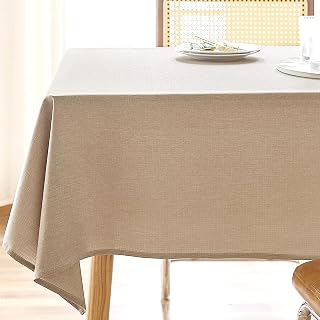
AUSSPVOCT Textured Linen Tablecloth 60 x 84 Inch
Check PriceRectangular and Square Tables
Calculate the needed fabric piece dimensions first. Add a hem allowance of 1 to 1.5 inches per raw edge. For a double-fold hem, 1.5 inches is safe. So for a rectangular table:
- Cut width = table width + (drop x 2) + (hem allowance x 2)
- Cut length = table length + (drop x 2) + (hem allowance x 2)
Example: A 72 inch long by 36 inch wide table with a 10 inch drop and 1.5 inch hems needs a piece 82 inches long (72 +20 +3) and 59 inches wide (36 +20 +3).
Round Tables
- Required diameter = table diameter + (drop x 2) + (hem allowance x 2)
Cut a square of fabric where each side equals that diameter. Later you will round off the corners. For a 48-inch round table with 12-inch drop and 1-inch hems, you need a 74×74 inch square.
Oval Tables
Measure the full length and full width, add double drop and hems just like a rectangle. The resulting rectangular piece gets its corners trimmed into curves after cutting. No extra fabric is needed beyond that rectangle.
Converting Inches to Yards Based on Fabric Width
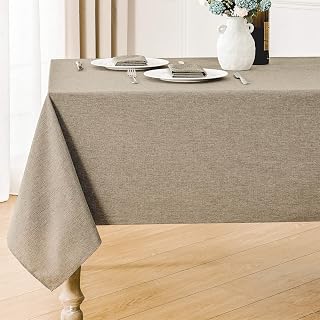
Veblandy Rectangle Tablecloth Linen Textured 60 x 104 Inch
Check PriceThe most common mistake is converting the piece length straight to yards without considering how many panels you need across the width. Always check the usable fabric width (selvage to selvage minus about 1 inch). If your required cut width is greater than the fabric width, you must sew lengths together side by side.
Single-Panel Scenario
If your needed width is equal to or less than the usable fabric width, only one length of fabric is needed. Yards = (required length in inches) divided by 36. Round up to the nearest eighth of a yard, or simply buy to the next quarter yard.
Multi-Panel Scenario
When your needed width exceeds the fabric width, decide how many full-length panels you must join. For 45-inch fabric with a needed width of 59 inches, you need two panels. Multiply the required cut length by the number of panels, then divide by 36. Using the example above with an 82-inch cut length, two panels total 164 inches, which is about 4.55 yards. Always round up to 4.75 or even 5 yards to allow for pattern matching and straightening grain. A reliable tablecloth sizing guide also recommends ordering a little extra for unexpected shrinkage.
Using Wide 108-Inch Fabric
For seamless large cloths, 108-inch wide backing or sheeting is a game changer. For the same 72×36 table with 10-inch drop, your cut width of 59 inches fits easily in 108 inches. You only need one panel of 82 inches length, which is about 2.3 yards. Buy 2.5 yards for safety. That is less fabric and zero middle seams. Our complete guide to sewing a tablecloth shows how to handle wide fabrics cleanly.
Yardage Cheat Sheet for Common Tables
Veblandy Rectangle Tablecloth Linen Textured 60 x 104 Inch
Check PriceThese estimates use a 10-inch drop, 1.5-inch hem, and standard 44/45-inch wide fabric. Panels are counted when needed. Always verify against your own table and fabric width.
- 24 x 24 square: 1.5 yards (one panel, length about 60 inches)
- 30 x 48 rectangle: 2.5 yards (one panel if width fits; check width needed = 48+20+3=71 inches, which requires two 45-inch panels; total length about 2.8 yards, round up to 3 yards)
- 36 x 60 rectangle: 3.75 yards (two panels needed, each 60+20+3=83 inches; 166 inches total, 4.6 yards, round to 4.75 or 5 yards)
- Round 42-inch diameter: 3 yards (cut square 74×74, two 45-inch panels each 74 inches long=148 inches, 4.1 yards, round to 4.25 yards)
- Round 60-inch: 5.5 yards (cut diameter 84 inches for a 10-inch drop? Actually 60+20+3=83, 83×83 square, two panels each 83, total 166 inches, 4.6 yards; with 60-inch fabric still need two panels; so around 4.75 yards)
Fabric-Purchasing Tips That Save Yards and Headaches
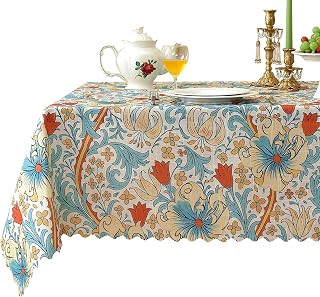
HOMOHEINI Rectangle Waterproof Tablecloth 52 x 70 Inch Vine Bloom
Check Price- Pre-wash your fabric if it is cotton or linen. Shrinkage can ruin a carefully measured cloth. Buy a quarter yard extra if you suspect shrinkage.
- Add a pattern repeat allowance. For large florals or stripes, add one vertical repeat per panel. Check the selvage for the repeat length.
- Square up the cut ends. Fabric is often cut crookedly at the store. Buy a few extra inches to even out the edges before your final cut.
- Consider directional prints. If your fabric has a one-way design, all panels must run the same direction, which may require more yardage than non-directional prints.
- Round up generously. Fabric is relatively inexpensive compared to the time you invest. Having a little leftover is always better than coming up short.
Frequently Asked Questions
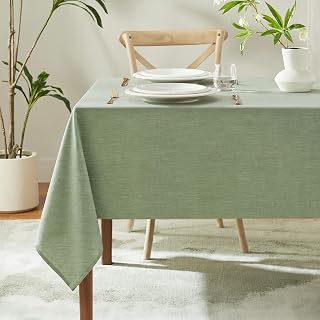
IVAPUPU Textured Linen Rectangle Table Cloth Sage Green 52 x 70 Inch
Check PriceHow Many Yards of Fabric Do I Need for a 60-Inch Round Tablecloth?
For a 60-inch round table with a 10-inch drop, you need a fabric square about 83 inches on each side. With standard 45-inch fabric, you will piece two lengths of 83 inches each, totaling about 4.6 yards. Round up to 4.75 or even 5 yards to be safe.
Does the Fabric Width Really Change the Yardage That Much?
Yes. Using 108-inch wide fabric can slash yardage nearly in half for larger tables because you skip the side seams. The same 60-inch round example with wide fabric would only need about 2.5 yards instead of 5.
Should I Add Extra for Mitered Corners?
Mitered corners on rectangular tablecloths do not require extra yardage; they just use the existing hem allowance folded at an angle. You already account for hem allowance in the width and length, so no separate addition is needed.
How Do I Convert Inches to Yards Quickly?
Divide the total inches of fabric length needed by 36. For example, 164 inches divided by 36 equals 4.55 yards. Always round up to the nearest practical fraction, like 4.75 or 5 yards.
Bring It All Together and Start Cutting
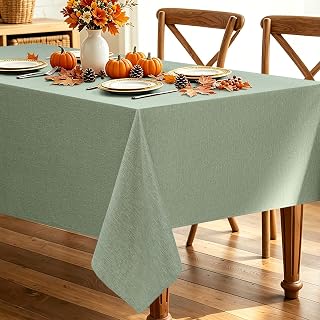
Decorelia Sage Green Linen Textured Table Cloth 52 x 70 Inch
Check PriceKnowing how many yards of fabric for a tablecloth is a skill that pays off every holiday and every casual dinner. By measuring your table, committing to a drop, and respecting the fabric width, you can walk into any fabric store with a clear number. Whether you are sewing a breezy cotton square for the kitchen or an elegant floor-length round for a wedding, the formulas stay the same. Always buy a little more than the raw math suggests, and pre-wash your yardage to prevent surprises. With a solid yardage plan and quality fabric, your handmade tablecloth will drape beautifully and last for years.
