
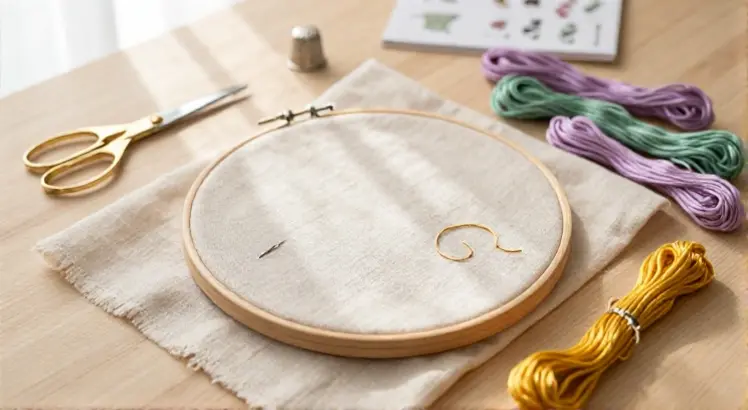
Picking up a needle for the first time can feel intimidating, but the right embroidery kits for beginners take all the guesswork out of learning. These all-in-one packages come with pre-printed fabric, floss, and instructions so you can focus on mastering basic stitches without hunting down separate supplies. Whether you want to unwind after a long day or add a personal touch to home decor, a thoughtfully designed hand embroidery kit is the smoothest way to start your stitching journey.
This guide walks you through everything you need to know before you buy. You will learn how to spot high-quality components, understand different kit styles, and avoid common frustrations that trip up newcomers. By the end, you will feel ready to choose a project that matches your skill level and actually finish it with pride.
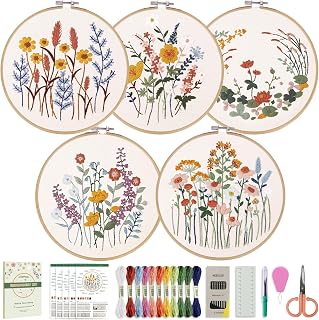
CYANFOUR 5 Pack Beginner Embroidery Kit for Adults with Video
Check PriceWhy an Embroidery Kit Beats Buying Supplies Separately
When you browse craft store aisles, the sheer variety of threads, needles, and fabrics can overwhelm a beginner. Kits eliminate that decision fatigue. A reputable brand curates every item to work together. The fabric is already cut to size, the color palette is balanced, and the needle matches the floss count. This ensures you are not fighting against materials that simply do not cooperate.
- Pre-selected floss colors that complement each other without guesswork
- A properly sized embroidery hoop that holds fabric taut right from the start
- Clear, illustrated stitch guides that show exactly where to place each needle entry
- No wasted money on tools you may never use again
Even if you later decide to build your own stash, starting with a kit teaches you what quality feels like. You can compare floss thickness, needle sharpness, and fabric weave on a small scale before investing in larger quantities.
What to Look for in Quality Embroidery Kits for Beginners
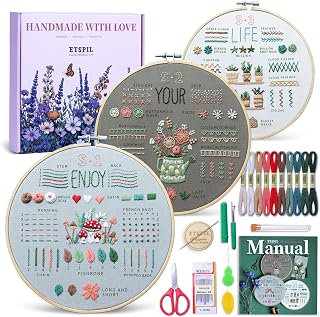
ETSPIL Embroidery Kit for Beginners, 4K Step-by-Step Video
Check PriceFabric That Forgives Mistakes
The base fabric impacts your entire experience. Many beginner kits use cotton or linen blends because they are stable and forgiving. A tight, even weave prevents floss from slipping through holes and makes every stitch look tidy. Avoid stretchy or sheer fabrics until you have built confidence. For a deeper look at how fiber choice affects your stitching, read our guide on choosing the right fabric for hand embroidery.
Pre-Printed vs Stamped Patterns
Pre-printed designs use wash-away or heat-erasable ink that disappears after finishing. Stamped patterns, on the other hand, feature permanent markings meant to be covered by stitches. For beginners, wash-away printed patterns are often less stressful because any stray guidelines vanish completely. If you prefer a crisper guide that stays visible while you work, a stamped kit can work, but make sure your stitches fully conceal the blue or grey lines.
High-Quality Floss and Needles
Look for kits that include six-strand cotton embroidery floss from known brands like DMC or Anchor. Cheap, unbranded floss can fray, tangle, and bleed color when washed. The needle should have a sharp point and a large eye that stranding cotton passes through easily. A size 3 to 7 embroidery needle suits most first-time projects. If the kit skimps on floss length, you risk running out mid-project, so check reviews for remarks about sufficient supplies.
Clear Instructions and Video Support
The finest kit includes a printed stitch guide with diagrams, plus a link to video tutorials. Written instructions alone can confuse visual learners. A brand that pairs its kit with online stitch libraries gives you the best chance at success. For an extensive library of stitch techniques, refer to a comprehensive guide to fundamental embroidery stitches from The Spruce Crafts.
Popular Types of Embroidery Kits for Beginners
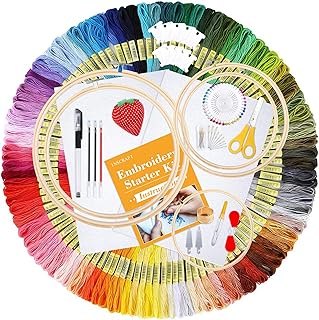
INSCRAFT 304 Pack Embroidery Kit, 200 Colors Threads
Check PriceModern Sampler Kits
A sampler kit is built around teaching you multiple stitches in one design. You might practice backstitch, satin stitch, French knots, and lazy daisies within a single hoop. Because the pattern intentionally rotates through techniques, you develop a well-rounded skill set fast. Samplers are perfect if your goal is to learn rather than to create a standalone decor piece.
Outline and Minimalist Kits
These focus on simple line drawings, often floral stems, leaves, or inspirational words. They rely primarily on backstitch and stem stitch, making them the least intimidating entry point. You can finish one in a single afternoon, which boosts motivation to tackle the next project.
Full-Fill Kits
Once you are comfortable with outlines, full-fill kits invite you to cover shapes with satin stitch or long and short stitch. They take more patience but produce vibrant, painterly results. Look for kits marked as easy or beginner if you want to try color filling early on.
If you would rather see a handpicked roundup that saves you hours of searching, take a look at our handpicked selection of beginner embroidery sets. Each option has been evaluated for instruction clarity and material quality.
How to Start Stitching with Your First Kit
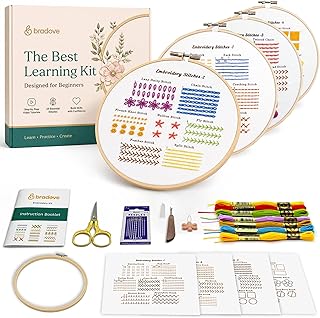
Bradove Classic Embroidery Learning Kit for Adults and Kids
Check PriceOpening a new embroidery kit is exciting, but a few simple steps set you up for a frustration-free experience.
- Read the entire instruction booklet before threading the needle.
- Separate floss strands rather than using all six at once; many patterns call for two or three strands.
- Press the fabric gently with an iron if it arrived folded, so the design lies flat.
- Secure the fabric in the hoop with the printed side facing you and the outer ring tightened just enough to hold without slipping.
- Start stitching from the center of the design outward to avoid puckering.
If a stitch confuses you, watch it demonstrated. Pause the video, mimic the motion slowly, and do not worry about perfection. Every stitcher has a slightly different tension, and that is what gives handwork its charm.
Common Beginner Mistakes and How to Prevent Them
Embroidery Machine Starter Kit – Everything Needed to Do Machine Embroidery
Check PriceEven the best embroidery kits for beginners cannot save you from some classic missteps. Knowing them in advance keeps your progress steady.
- Using floss that is too long: Cut strands to about 18 inches. Longer lengths twist and knot easily.
- Skipping the hoop: While you can embroider without a hoop, a beginner should use one for consistent tension.
- Pulling stitches too tight: Let the floss lay gently on the fabric surface. Over-tightening distorts the weave and puckers the design.
- Not washing hands before stitching: Oils and lotions transfer to fabric and floss, causing stains that cannot be removed later.
- Leaving a messy back: You do not need to achieve perfection, but avoid carrying threads across large open areas. It can show through on the front.
Caring for Your Finished Embroidery Piece
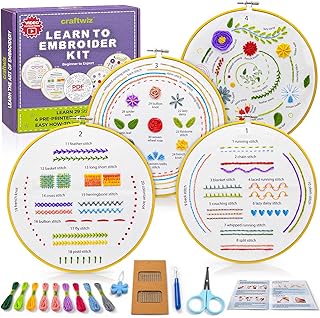
Craftwiz 4-Piece Starter Embroidery Kit for Beginners and Expert
Check PriceOnce the final knot is tied, treat your work gently. Hand wash in cool water with a tiny drop of mild detergent. Roll the embroidery in a clean towel to absorb moisture, then lay it flat to dry away from direct sunlight. Iron from the back side while the fabric remains slightly damp. If you used a wash-away printed kit, the guide lines should disappear entirely during the rinse process. For stamped designs, double-check that all markings are hidden under stitches before displaying.
Frequently Asked Questions
CYANFOUR 5 Pack Beginner Embroidery Kit for Adults with Video
Check PriceWhat should a complete beginner embroidery kit include?
A complete kit includes pre-printed fabric, an embroidery hoop, embroidery floss in required colors, a needle, and an instruction booklet with stitch diagrams. Some also include a needle threader or a practice piece.
Which is better for beginners, printed or stamped kits?
Printed kits with washable or heat-erasable patterns are easier for most beginners because the guidelines vanish after finishing. Stamped kits require you to cover markings completely, which can cause anxiety if stitches do not cover the lines perfectly.
How long does it take to complete a beginner embroidery kit?
Simple outline designs can be finished in two to four hours. Sampler kits with multiple stitch types might take a few evenings. Your speed improves with practice, and slowing down actually helps build muscle memory.
Can I wash my embroidered piece after finishing?
Yes, most hand embroidery done with quality cotton floss can be hand washed gently in cool water. Avoid wringing or twisting. Always check the floss label for colorfast warnings before wetting your piece.
What if I make a mistake?
Mistakes are part of the learning process. You can unpick stitches carefully with a seam ripper or small scissors if the error bothers you. Small inconsistencies often become invisible once the whole design is complete. The forgiving nature of hand embroidery makes it a low-risk hobby.
Start Your Stitching Journey with Confidence
Embroidery kits for beginners offer a curated path into a calming, creative craft that rewards patience. By selecting a kit with quality fabric, clear instructions, and well-matched floss, you eliminate the obstacles that stop many people before they even begin. The feeling of finishing that first hoop is incredible, and it often sparks a lifelong passion. Pick a design that excites you, set aside a quiet hour, and let the rhythm of the needle do the rest.
Once you complete your first project, you will have the confidence to explore more intricate patterns and even design your own. The stitches you practiced on a simple floral stem build the foundation for heirloom pieces. So open that kit, thread your needle, and take the first stitch. It is simpler than you think and far more satisfying than scrolling through your phone.
