
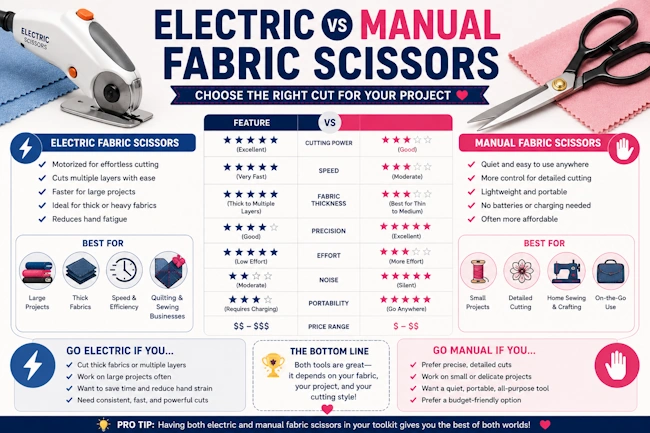
If you’re building or upgrading your sewing toolkit, the debate between electric vs manual fabric scissors is likely at the top of your mind. Whether you’re cutting delicate chiffon for a flowy summer dress or thick 12oz denim for work pants, the right cutting tool can make or break your project. In this guide, we’ll break down the key differences between these two popular tool types, share real-world use cases from beginner to advanced sewing projects, and help you pick the perfect pair for your workflow, budget, and physical needs.

Worx Zipsnip Cordless Electric Scissors, Rechargeable Cardboard Box Cutter, 4V Powerful Fabric Scissors with 2 Safety Blades & Storage Bag WX082L.2
Check PriceWhat Are Manual Fabric Scissors?
Manual fabric scissors are the traditional handheld cutting tools most sewers are familiar with. They rely entirely on hand strength to open and close the blades, with no battery or electrical components. The most common type are dressmaking shears, which have angled handles to keep fabric flat on the cutting surface, but there are dozens of specialized variants for different tasks. For a deep dive into the best options for your toolkit, check out our guide to top-rated manual fabric scissors for sewers.
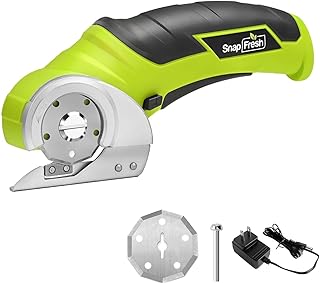
SnapFresh Cordless Electric Scissors, 4V Electric Mini Box Cutter, Carpet & Cardboard Cutter Tool with a Replacement Blade/Charger, Rotary Cutter for Cardboard Packages Leather Plastic (Green)
Check PriceCommon Types of Manual Fabric Scissors
- Dressmaking Shears: The gold standard for cutting large fabric pieces, these have 8-10 inch blades and angled handles to prevent fabric from bunching as you cut.
- Pinking Shears: Blades with zig-zag edges that prevent fraying on woven fabrics, ideal for finishing seams without a serger.
- Embroidery Scissors: Small, 4-5 inch blades with sharp points for trimming thread, cutting jump stitches, and working on detailed needlework.
- Heavy Duty Shears: Reinforced blades designed to cut through thick materials like leather, canvas, and denim without dulling quickly.
- Thread Snips: Spring-loaded small scissors that automatically open after each cut, perfect for quick thread trimming.
Pros of Manual Fabric Scissors
Manual scissors have been the sewer’s go-to for centuries for good reason. They offer unmatched precision for detailed work, and you never have to worry about charging a battery or finding an outlet. Below are the key benefits most sewers love:
- Unmatched Precision: You control the exact speed and pressure of every cut, making them ideal for detailed work like cutting notches, trimming seams, or working with delicate fabrics like silk and lace.
- No Power Required: Manual scissors work anywhere, from your sewing room to an outdoor craft fair, with no batteries or cords to manage.
- Long Lifespan: A high-quality pair of manual shears can last decades with proper care, making them a one-time investment for most sewers.
- Affordable Entry Point: Basic manual fabric scissors start at under $10, while professional-grade options rarely cost more than $60.
- Lightweight and Portable: Most manual shears weigh less than 8 ounces, so they’re easy to toss in a sewing kit or travel bag.
Cons of Manual Fabric Scissors
For all their benefits, manual scissors aren’t perfect for every sewer or project. The biggest drawback is hand fatigue, especially for sewers who work on large projects or have arthritis or carpal tunnel. Other cons include:
- Hand Fatigue: Cutting through thick fabrics like denim or multiple layers of quilting cotton requires significant hand strength, which can lead to cramping or pain over long sessions.
- Inconsistent Cuts on Thick Materials: If you don’t apply even pressure, manual scissors can leave jagged edges on heavy fabrics, which ruins the finish of your project.
- Slower for Large Projects: Cutting a king-size quilt top or 5 yards of canvas for a tote bag takes significantly longer with manual scissors than electric options.
- Dull Blades Require Maintenance: Manual scissors need regular sharpening (every 6-12 months for regular use) to stay effective, which adds to long-term costs.
What Are Electric Fabric Scissors?
SnapFresh Cordless Electric Scissors, 4V Electric Mini Box Cutter, Carpet & Cardboard Cutter Tool with a Replacement Blade/Charger, Rotary Cutter for Cardboard Packages Leather Plastic (Green)
Check PriceElectric fabric scissors (also called power scissors or handheld electric cutters) use a small motor to open and close the blades automatically, so you only need to guide the tool along your cutting line. They run on rechargeable batteries or corded power, and most have a safety lock to prevent accidental activation. If you’re considering switching to electric, our roundup of our tested picks for electric fabric cutters breaks down the top options for every budget.
How Electric Fabric Scissors Work
Most electric scissors use a small, high-torque motor that drives a gear system to move the blades at 100-300 strokes per minute. You simply press a trigger (similar to a power drill) to activate the blades, then guide the tool along your fabric. Many models have adjustable speed settings, so you can slow down for delicate work and speed up for thick materials.
Pros of Electric Fabric Scissors
- Reduced Hand Fatigue: Since the motor does the work of opening and closing the blades, you don’t strain your hand muscles, even when cutting through thick layers for hours.
- Faster Cutting Speeds: Electric scissors can cut through 5 layers of denim in seconds, making them ideal for large projects like quilts, curtains, or upholstery.
- Consistent, Clean Cuts: The motor applies even pressure every time, so you get straight, fray-free edges even on thick or slippery fabrics.
- Works on Tough Materials: Most electric scissors can cut through leather, canvas, multiple layers of fleece, and even thin wood or plastic sheets for craft projects.
- Adjustable Speed Settings: Many models let you switch between slow (for delicate lace or chiffon) and fast (for heavy denim) cutting speeds.
Cons of Electric Fabric Scissors
- Higher Upfront Cost: Basic electric scissors start at $30, while professional-grade models can cost $150+, which is a bigger investment than most manual options.
- Less Precision for Detailed Work: The motorized blades move quickly, making it harder to cut small notches, trim jump stitches, or work on intricate embroidery details.
- Power Dependency: Cordless models need regular charging, and corded models limit your movement, which can be frustrating if you’re working on a large cutting table.
- Heavier and Bulkier: Most electric scissors weigh 1-2 pounds, which is significantly heavier than manual shears, and can be tiring to hold for very long detailed sessions.
- Maintenance and Repair Costs: If the motor or battery fails, repairs can be expensive, and many budget models are not designed to be repaired at all.
Electric vs Manual Fabric Scissors: Side-by-Side Comparison
To make the choice easier, we’ve broken down the key differences between electric vs manual fabric scissors across the most important factors for sewers:
- Price: Manual scissors start at $8, electric start at $30.
- Precision: Manual offers better control for detailed work; electric is better for straight, long cuts.
- Hand Fatigue: Manual causes more fatigue; electric eliminates most hand strain.
- Speed: Electric is 3-5x faster for large projects; manual is faster for small, detailed tasks.
- Portability: Manual is fully portable; electric requires power or charged batteries.
- Lifespan: Manual lasts 10+ years with care; electric lasts 3-5 years on average.
- Best For: Manual is best for delicate fabrics, detailed work, and small projects; electric is best for thick fabrics, large projects, and sewers with hand pain.
When Should You Choose Manual Fabric Scissors?
Manual scissors are still the best choice for most sewers, especially if you fall into one of these categories:
- You primarily work with delicate fabrics like silk, chiffon, or lace, where precision is more important than speed.
- You do a lot of detailed work, like embroidery, quilting, or garment tailoring that requires cutting small notches or trimming tight seams.
- You have a limited budget and don’t want to spend more than $50 on cutting tools.
- You sew in multiple locations (e.g., classes, craft nights) and need a tool that works without power.
- You’re a beginner sewer who wants to learn proper cutting technique before investing in power tools.
When Should You Choose Electric Fabric Scissors?
Electric scissors are a game-changer for sewers who face specific challenges or work on certain types of projects:
- You have arthritis, carpal tunnel, or other hand pain that makes using manual scissors uncomfortable or impossible.
- You regularly work with thick, heavy fabrics like denim, canvas, leather, or multiple layers of quilting cotton.
- You work on large projects like quilts, curtains, upholstery, or bulk sewing orders that require cutting yards of fabric at once.
- You want to reduce project time significantly – electric scissors can cut large pieces 3x faster than manual options.
- You do cosplay or costume sewing that requires cutting thick foam, multiple fabric layers, or rigid interfacing.
Expert Tips for Maintaining Your Fabric Scissors
No matter which type you choose, proper care will extend the lifespan of your tools and keep them cutting smoothly. These tips come from 10+ years of professional sewing experience:
- Never cut paper with fabric scissors: Paper dulls blades instantly, and even one cut through printer paper can ruin the edge of your shears. Keep a separate pair of cheap scissors for paper crafts.
- Store scissors in a protective case: Manual shears come with blade covers for a reason – dropping them or letting them bang around in a drawer will nick the blades and ruin their alignment.
- Sharpen manual scissors annually: Professional sharpening costs $10-$20 and will make your shears cut like new. Avoid cheap home sharpeners, which can damage the blade angle. For more care tips, refer to trusted sewing tool reviews from industry experts which includes maintenance guidance from professional tailors.
- Clean electric scissors after each use: Fabric lint and thread can get stuck in the motor or blade mechanism, so wipe them down with a dry cloth after every project.
- Charge cordless electric scissors after every use: Letting the battery drain completely will shorten its lifespan. Store them with a full charge when not in use for long periods.
Frequently Asked Questions
Are electric fabric scissors worth the extra cost?
They are if you struggle with hand pain, work with thick fabrics regularly, or need to cut large projects quickly. For casual sewers who only work with light fabrics occasionally, manual scissors are a better value.
Can I use electric scissors on delicate fabrics like silk?
Yes, if the model has adjustable speed settings. Set the speed to low, and test on a scrap piece first to make sure the blades don’t snag the fabric. Manual scissors are still a safer choice for very delicate materials like chiffon or lace.
How long do electric fabric scissors last?
Most mid-range electric scissors last 3-5 years with regular use, while professional-grade models can last up to 7 years. Manual shears can last 10+ years with proper sharpening and care.
Can I sharpen electric fabric scissors at home?
No, the motorized blades require professional sharpening to maintain their alignment. Attempting to sharpen them at home can damage the motor or blade mechanism, voiding the warranty.
Do I need both electric and manual fabric scissors?
Many experienced sewers keep both: manual shears for detailed work and delicate fabrics, and electric scissors for thick materials and large projects. If you’re on a budget, start with manual shears and upgrade to electric if you find you need the extra speed or strain relief.
Conclusion
Choosing between electric vs manual fabric scissors ultimately comes down to your personal sewing needs, physical comfort, and budget. Manual scissors remain the gold standard for precision and portability, while electric options are unmatched for speed and reducing hand fatigue. Take stock of the types of projects you work on most, any physical limitations you have, and how much you’re willing to spend. Remember, even the most expensive scissors won’t perform well if you don’t take care of them – follow our maintenance tips to keep your tools cutting smoothly for years. If you’re still unsure, start with a mid-range pair of manual shears, and upgrade to electric if you find your hand cramping or projects taking longer than you’d like.
