
Crafting a T-shirt quilt is one of the most meaningful sewing projects you can undertake. You are transforming a collection of worn concert tees, college memories, and sports jerseys into a cozy functional blanket. However the moment you start cutting into that soft knit fabric you will face a crucial question: do T-shirt quilts need fusible interfacing? This is not just a technicality.
It is the difference between a quilt that puckers and warps over time and one that lies flat with sharp polished blocks. In this guide we dive deep into the why the how and the must know exceptions to help you decide what is right for your project.
Why T-Shirt Fabric Stretches and Distorts During Quilting
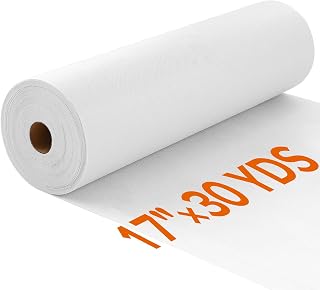
ZOMONETI Light Weight 17in x 30yd White Iron On Non-Woven Fusible Interfacing
Check PriceThe panels you cut from T-shirts are fundamentally different from quilting cotton. Knit fabrics are structured with interconnected loops that give them that signature stretch and recovery. When you handle raw knit edges during piecing they can morph out of shape like taffy. Even the gentle pressure from your sewing machine”s feed dogs can tug the fabric into a wavy nightmare.
Without stabilzation a 12 inch block of a beloved band tee can easily end up measuring 11.5 inches on one side and 11 inches on another. That quarter inch discrepancy adds up across an entire quilt top causing misaligned seams and a puckered finish that will break your heart after hours of work.
Knits also tend to roll at the edges. The more you press and handle them the more they curl. This makes accurate seaming nearly impssible. You could spend more time fighting your fabric than actually sewing,. So before you even thread your needle think about control. Fusible interfacing acts like a temporary cast fusing the knit loops into a stable woven like sheet that behaves predictably under your presser foot.
Many quilters wonder if they can just use a walking foot or lots of pins. Those tools help but they do not address the root cause,. The internal structure of the knit itself needs reinforcement. Understanding this stretchy nature is the first step to mastering memory quilts and the reason interfacing is discussed at every quilting bee.
What Exactly Is Fusible Interfacing?
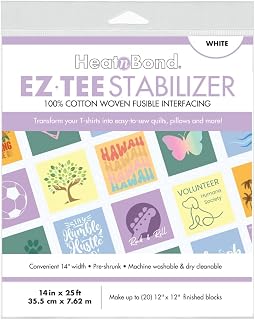
Heatonbond EZ TEE Cotton Woven Iron-on Fusable T-Shirt Quilt Interfacing Stabilzer
Check PriceFusible interfcing is a textile layer with a heat activated adhesive on one side. According to textile experts at Bsewinn this adhesive is typically a thermoplastic resin that melts under an iron gluing the interfacing directly to the wrong side of your fabric. The result is a composite material that combines the drape of your original T-shirt with the rigid ease of a non stretch canvas. It comes in various weights from sheer tricot that disappears behind white tees to sturdy woven cotton that gives structure to heavyweight hoodies.
There are two main categories you will encounter. Non woven interfacing is made of compressed fibers akin to pressed felt and has no grain line. You can cut it in any direction making it economical. Woven or knit interfacing has a grain line that matches your main fabric.
For T-shirt quilts a woven cotton interfacing is often preferred because it moves ln harmony with the knit while still stopping stretch along the straight of grain. However non woven options are popular for cost effective large projects. Knowing the difference will save you from a common heartbreak: stiff crunchy quilts that feel more like cardboard than a snuggle blanket.
The adhesive side is usually dull or has a slight texture. Always place the shiny or bumpy side down against the fabric before ironing. That magical bond is what halts the stretch cold. Once fused the fabric becomes a dream to cut with a rotary cutter and the edges will not curl under your fingers. You now have a stable tile that sews just like quilting cotton.
The Critcal Role of Interfacing in T-Shirt Quilts
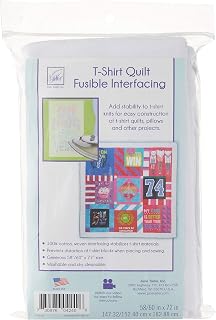
June Tailor T-Shirt Project Fusible Interfacing
Check PriceStabilization is not just about convenience. It is structural engineering for your keepsakes. When you fuse interacing onto the back of a T-shirt print you create a single non stretch unit. This ensures that the graphic stays centered and the fabric does not distort under the embroidered or screen printed design. Graphics that are off grain can look slanted even if your seams are straight.
Interfacing locks the grain. Moreover the added layer protects the thinner knit from the stress of the stitching line. Without it the quilting stitches can pull at the delicate loops of the jersey creating tiny runs or holes over the years.
From a piecing perspective standardized blocks are the holy grail. Interfacing guarantees that every block measures exactly the same size before you sew them into rows. This is essential if you are working with a modern geometric pattern like a postage stamp quilt or a traditional lattice. The professional flat look of a longarm quilting job also depends entirely on a stable top free of stretchy ripples. Longar machinges use high tension and can turn an unstabilized knit quilt into a gathered mess. So yes for heirloom quality the answer leans heavily in favor of using interacing.
We recommend also pairing a good interfacing with quality threads to avoid seam breaks later. You can read our breakdown of the best options in this guide on best threads for quilting. The combination of stable fabric and strong thread is what turns a craft project into a legacy piece.
Can You Make a T-Shirt Quilt Without Fusible Interfacing?
Moukeren 14″ X 50 ft T-Shirt Quilt Fusible Interfacing Stabilizer
Check PriceTechnically yes you can construct a T-shirt quilt without any fusible product. Is it advisable for a project you want to last? That depends on your tolerance for imperfection and the style of quilt. One alternative approach is to use a foundation piecing method. You take a square of muslin or a light cotton fabric and you sew the T-shirt piece directly onto that backing. The woven muslin acts as the stabilizer.
This method creates a thicker double layer block which some quitters love for a weighted blanket feel. However it does not stop the T-shirt layer on top from stretching laterally as you stitch it down. You may still end up with a wavy surface. Another option is to use a walking foot meticulously and press heavily with starch,. You can flatten knits temorarily but once you wash the quilt the starch washes out and the fabric can revert to its stretchy shape.
There is also the no sew quilting style where you tie the layers together with yarn or embroidery floss. For these projects you might skip interfacing if you enjoy a crinkled boho look. But if you are sewing precise squares or strips omitting interfacing will consistently lead to frustration. Most experienced T-shirt quilters will tell you that the hour spent ironing on interfacing saves you ten hours of ripping out wobbly seams. So while possible the question is not can you but should you and the resounding answer for a polished durable quilt is a firm yes.
Choosing the Right Type of Fusible Interfacing for Your Prroject
11.6″x30yd Medium Weight Fusible Interfacing for Sewng Iron on Interfacing
Check PriceThe choice can make or break the cuddliness factor of your blanket. Lightweight interfacing is ideal for thin vintage tees that are ultra soft. It prevents the shadow of the interfacing from showing through the front. A product like a cotton woven fusible feels almost like nothing once applied giving you a fabric that handles like a crisp cotton shirt. Medium weight interfacing is the workhorse for standard unisex tees.
It adds enough body to prevent seam puckering without making the quilt feel like a tablecloth. For thick fabrics like hoodies or sweatpants you might even consider a heavy weight version. However never default to the heaviest option thinking it means stronger stability. The drape of the T-shirt is part of the quilt’s charm. You want to preserve it not obliterate it.
We have curated a comprehensive test of top stabilizers specifically for memory quilts which you can explore in our dedicated article on the best fusible interfacing for T-shirt quilts. This will help you compare fiber content shrink rates and user experiences. Remember that pre shrinkin your interacing is critical.
Cotton woven interfacings can shrink when washed. A quick soak in hot water and line dry before fusing will prevent a crinkled finish after the quilt’s first birthday wash. Never skip this step. Cut the interfacing with a rotary cutter after shrinking to ensure straight lines that keep those blocks square.
Step by Step: How to Apply Fusible Interfacing to T-Shirts
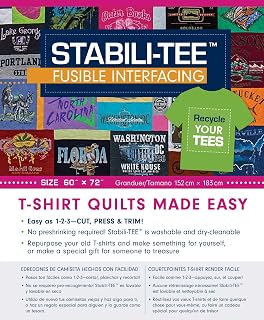
Stabili-TEE Fusible Interfacing Pack, 60″ x 72″: T-Shirt Quilts Made Easy
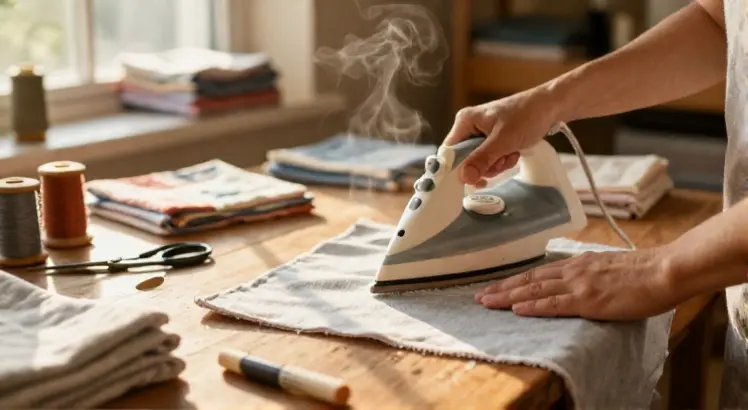
Check PriceProper application is a ritual of patience. First cut your T-shirts apart at the side seams and collar. You want a flat piece of fabric with no bumps. Press the shirt well using a dry iron no steam. Steam can cause the knit to shrink instantly creating a missshapen block. Lay the shirt front facing down on your ironing board. Place the interfacing with the adhesive side touching the wroong side of the fabric.
Ensure the grain lines are aligned. For non woven interfacing you have no grain but you must make sure the square covers the entire design area leaving at least half an inch margin around where your final seams will be. Cover with a pressing cloth. A thin cotton tea towel works wonders to protect the iron’s soleplate from any adhesive ooze.
Set your iron to the cotton setting with no steam. Press firmly and hold for 10 to 15 seconds in each section. Do not glide the iron back and forth like you are ironing a shirt. That shifts the layers. Lift and press, lift and press, methodically covering every square inch. The heat needs to penetrate the knit and melt the resin completely. Let the block cool flat on the board before moving it.
This cooling period sets the bond. After the block is cool you can use your rotary cutter and acrylic ruler to trim it to the exact size. The difference between a perfect block and a wobbly one often comes down to lifting the iron and trusting the cooling time.
Test the adhesion by gently tugging at a corner. If it peels up your iron was not hot enough or you did not hold it long enough. Reapply heat. Once fused the fabric should feel uniform with no bubbles. Those bubbles are places where the interfacing did not bond and they will create weak spots in your quilt top later. Smooth them out immediately with the tip of the iron.
Common Mistakes When Using Interfacing and How to Avoid Them
11.6″x30yd Lightweight Fusible Interfacing Fabric for Sewing Interfacing
Check PriceEven experienced sewists fall into traps. The most frequent error is using an iron that is not hot enough. The adhesive needs a specific temperature range. If you are using a home iron that fluctuates you may create a weak bond. A separate iron thermometer ensures accuracy. Another pitfall is the glue residue build up on the pressing cloth. If you do not change your cloth you can transfer sticky brown residue onto the front of a white T-shirt.
Always inspect the cloth and switch to a clean one regularly. Cutting the interfacing slightly smaller than the shirt piece is also a classic blunder. If the interfacing does not extend all the way to the edge of the seam allowance that raw knit edge will stretch and ripple. Always cut interfacing half an inch bigger than the final block size and trim it down with the shirt after fusing.
Pulling the shirt off the ironing board while still hot distorts the shape. Hot glue is plastic and can stretch. Let it cool completely. Trying to fuse over thick screen printed ink can also cause glossy scorch marks unless you use a double layer of pressing cloth.
Some folks skip the pressing cloth entirely which is a quick way to ruin the face of a vintage tee with a permanent shiny iron footprint. The key is to treat the T-shirt like a delicate fabric even though you are adding structure. A little extra care in the prep means the difference between a stunning quilt and a sticky irreparable mess.
Comparing Interfacing Options: Non-Woven vs Woven vs Tricot
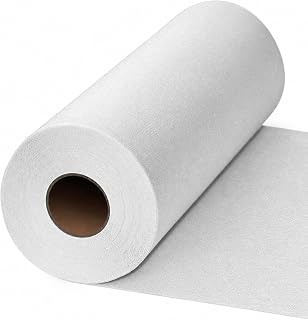
PLANTIONAL 11.6″x30yd Medium Weight Iron on Non-Woven Fusible Interfacing
Check PriceWhen you stand in the notion aisle the three options can feel overwhelming. Non woven interfacing is budget friendly and has no grain. You can cut it any direction which reduces waste. It is stiff and crinkles like paper when crumpled. This can give a quilt a rigid board like feel if you use a heavy version. It is perfectly adequate for a wall hanging or a display quilt but for a snuggle blanket you might want something softer. Woven cotton interfacing has a grain that you align with the lengthwise grain of your T-shirt.
It retains softness and creates a quilt that feels like tradition quilting cotton. The breathability is superior especially for a bed quilt. Tricot interfacing is nearly invisible. It is a fine knit with a soft stretch perpendicular to the grain. It is often used for knits in apparel and can work for T-shirts where you want to maintain a bit of two way movement. However tricot is trickier to fuse without bubbling. For a beginner working with mid weight woven cotton is the safest path to a professional result because it is forgiving and sturdily flat.
Consider the lifecycle of the quilt. Will it be washed monthly? Non woven interfacing can pill or separate in the wash over time. Woven interfacing tends to age more gracefully blending into the cotton fabric. The decision often comes down to feel. Do you want a pillow like stiffness or a drapable throw? Always feel a sample swatch at the store before committing to a large project. Your hands will tell you more than the package can.
How Much Interfacing Do You Need? A Practical Calculation
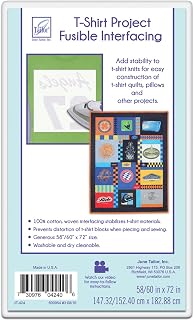
June Tailor T-Shirt Project Fusible Interfacing-60inX72in
Check PriceRunning out of interfacing halfway through is a buzzkill that halts momentum. To calculate yardage accurately first decide your finished block size. Suppose you want 12 inch finished squares sashed or not. Your shirts will be cut into maybe 13 inch squares to allow for a half inch seam allowance all around. You need interfacing pieces at least 13 inches square or a bit larger to trim.
Most interfacing bolts come in 20 inch or 45 inch widths. For a 40 T-shirt queen size quilt you will need roughly 40 squares of interface. If you buy the more popular 20 inch wide interfacing you can fit one square per 20 inch length piece. That means 13 inches of length per block plus a bit for squaring up. Roughly 14 inches per block times 40 is 560 inches about 15.5 yards.
A 20 inch by 15 yard bolt covers that comfortably. If you use wider interfacing like 60 inch you can often fit three 13 inch squares across saving on length. Measure twice buy once. Always add 10% extra for mistakes or heat shrinkage during pre wash. It is far better to have a leftover scrap for patching later than to run out on the weekend when shops are closed.
For partial quilts with large back panels of woven fabric you only interface the stretchy tee blocks so the total requirement drops. Mapping your layout on graph paper and tracing interfacing coverage is a fun pre sewing game that eliminates guesswork. The time spent calculating means no frantic Amazon orders mid project.
Preserving the Softness of Your Quilt While Using Interfacing
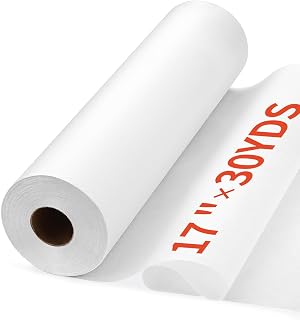
White Light Weight Fusible Interfacing for Sewing 17″ X 30yd
Check PriceA common complaint is that interfacacing makes the quilt too stiff. This can be avoided with a few tricks. First choose the lightest weight interfacing that will still stop the stretch. For most tees a featherweight woven cotton is all you need. Second manipulate the layout. You do not have to interface the entire front of the shirt if you are using it as a background fabric.
You can fuse interfacing only to the seam allowance area and leave the center soft. This creates a framed effect without ruining drape. However this advanced technique requires careful tracing so beginners might want to stick to full coverage while they build skills.
Fabric softener can be a friend. After the quilt is finished a trip through the wash with a gentle fabric softener can relax the fibers of the woven interfacing. The glue bond remains but the cotton yarns lumper up slightly. Also consider quilting density. If you quilt the three layers very heavily like a grid every inch you are compressing the interfacing layer into flatness.
A looser quilting design like large organic waves or simple stitch in the ditch leaves the blocks with room to breathe and flex. Combining a lightweight stabilzer with open quilting yields a blanket that still feels like a hug not a board.
Alternate Stablizers to Fusible Interfacing?
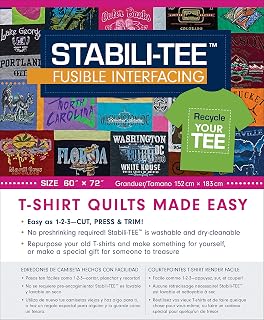
STABILI-TEE Fusible Interfacing Pack 60″X72″ 100% Polyeste
Check PriceIf you are allergic to adhesives or want a more eco conscious route consider terry temporary spray adhesive combined with teer away stabilizer. You can lightly spray the wrong side of a T-shirt block and stick it to a piece of thick teer away embroidery stabilzer. This provides rigidty for cutting and sewing. After you sew the seams you tear away the excess leaving only the thinnest bit in the seam allowances.
The bulk of the tee remains soft and unstiffened. This technique requires a delicate hand. If you pull too vigorously you can rip the seam threads. It works best for wall hangings or projects that will not be heavily washed. Another alternative is to serge a lightweigt stabilzer tape along the seam lines only. This stops the stretch exactly where the needle strikes without coating the entire panel.
It is a professional apparel trick used for shoulder seams on T-shirts that can translate very well to memory quilts. However the time involved in precisely placing tape on 40 blocks is often greater than just fusing a sheet and trimming. Many quitters start with tape and eventually graduate to interfacing for the ease it brings.
FAQ: Do T-Shirt Quilts Need Fusible Interfacing?
Moukeren 43″ x 16ft T-Shirt Quilt Fusible Interfacing Stabilizer
Check Price- Will interfacing ruin my vintage T-shirt print? No. The interfacing is applied to the back side. As long as you use a pressing cloth and do not overheat the ink the design stays pristine. Some shiny plastisol inks can be heat sensitive so a cooler iron with longer hold time is safer.
- Can I use fusible fleece instead of interfacing? Fusible fleece adds loft and is designed for bags not flat patches. It will make your quilt bulky and difficult to sew through at intersections. Stick to products labled as interfacing or stabilizer specifically for knits.
- Does the interfacing wash out eventually? Quality fusible interfacing forms a permanent bond. It will not wash out or peel off unless it was improperly applied. Even after dozens of washes the bond holds. That’s why pre shrinking is vital because the interfacing will not shrink later but the shirt might, causing puckers if you skipped that step.
- Is it tacky to see the interfacing through a thin white shirt? It can be. To avoid the show through use an extra lightweight fusible tricot or a white woven cotton that blends. Always test a scrap first. If the shirt is extremely sheer consider backing it with another layer of white quilter’s cotton instead.
Final Verdict and Expert Recommendations
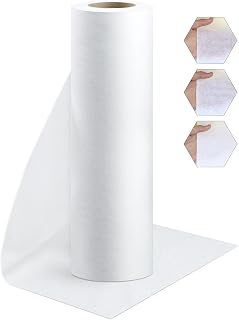
PLANTIONAL Light Weight Woven Cotton Fusible Interfacing, 16.1″ X10 Yd
Check PriceSo, do T-shirt quilts need fusible interfacing? For a quilt that will be treasured, layered on beds, and passed down, the answer is a resounding yes. The science of knit fibers demands stabilization to ensure your geometric precision and the longevity of seam lines. The minimal investment in time and material pays back tenfold in the quilting process and the final look.
Choose a lightweight woven cotton interfacing that matches the hand of your tees, pre shrink it, and fuse it with methodical patience. Avoid the temptation to forge ahead with raw knits unless you are deliberately creating a crinkled primitive style piece where perfection is not the goal. The beauty of a T-shirt quilt lies in the crisp frames around soft memories, and interfacing is the tool that makes those frames possible.
As you build your quilt, refer to our detailed comparison of the best fusible interfacing for T-shirt quilts to select the perfect match for your fabric weight. With the right stabilizer in hand your stack of tees will transform into a flat flawless masterpiece that celebrates every story you stitched into it.
