
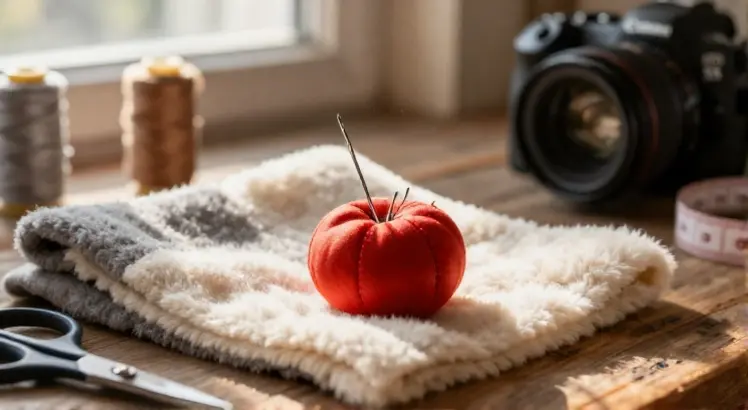
Fleece is a beloved fabric for cozy blankets, jackets, and accessories, but its soft, knitted structure demands the right needle choice. If you pick the wrong needle, you might end up with skipped stitches, snagged threads, or even a damaged machine. The good news is that finding what size needle for sewing fleece is straightforward once you understand a few basic principles. This guide covers machine needles, hand sewing needles, and all the expert tips you need for a smooth sewing experience.
Understanding Fleece: A Knit Fabric
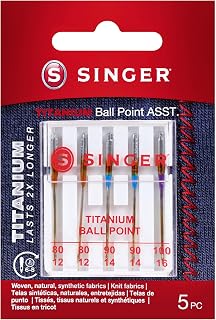
SINGER Titanium Ball Point Needles, 80/11-100/16, 5Ct, for Knit Fabric
Check PriceFleece is constructed with tiny loops and knitted yarns, making it a nonwoven knit fabric. Unlike tightly woven cottons or linens, fleece has a pile surface and a lot of stretch. That stretch is why needle selection matters so much. A sharp point can pierce and tear the yarns, leading to holes or runs. The right needle pushes the fibers apart instead of cutting them. Whether you are working with anti pill fleece, microfleece, or plush sherpa, always treat it as a knit. This rule is your starting point for picking the correct needle type. If you are new to fleece sewing, fleece can be tricky but very rewarding with the right tools.
The Anatomy of a Sewing Machine Needle
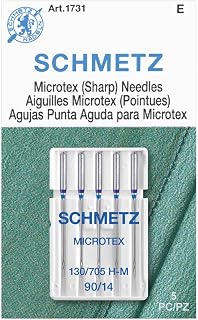
SCHMETZ Microtex Sharp Sewing Machine Needles – Quilting & Topstitching Supplies, Size 90/14, 5-Needle Card, Pack of 1
Check PriceBefore jumping into sizes, it helps to recognize the parts that define a needle. The eye carries the thread. The shaft and point do the work of penetrating fabric. For knits like fleece, the point geometry is everything. A sharp point is designed for woven fabrics, while a ball point has a slightly rounded tip. That rounded tip slips between the knit loops instead of piercing them.
The shank is the flat side that fits into the machine. Needle size is indicated by two numbers, such as 90/14. The first number is the metric size (European), and the second is the American size. Both refer to the diameter of the blade, so a higher number means a thicker, stronger needle. Knowing this helps you match the needle to the fabric weight.
The Best Needle Type for Fleece: Ball Point
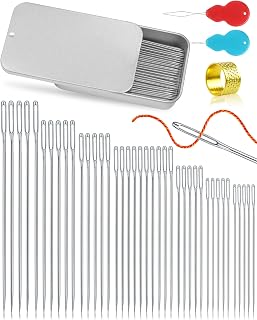
FIVEIZERO 80/40 PCS Premium Stainless Steel Sewing Needles, 7 Sizes Large Eye Sewing Sharp Needles, Leather Needle Embroidery Thread Needle with Threaders for Handsewing Art Crafts
Check PriceThe universally recommended needle for fleece is a ball point needle, sometimes labeled as a jersey needle. Its rounded tip gently opens the knitted loops without damaging them. This dramatically reduces skipped stitches and prevents that annoying popping sound.
Ball point needles come in a range of sizes, so you can use them for lightweight microfleece or heavier polar fleece. Many sewists keep a selection of ball point needles in their kit just for knit projects. If you sew fleece often, investing in a quality set like titanium coated ball points will save you time and fabric. For a deeper dive into needle recommendations, explore our best needle for sewing fleece guide.
What Size Needle for Sewing Fleece: Machine Needle Sizes
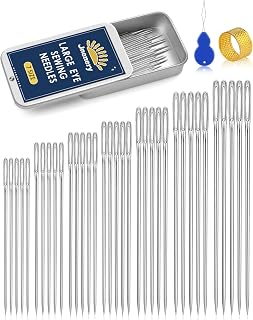
JNENERY Large Eye Sewing Needles 7Sizes Stainless Steel Needles Hand Sewing
Check PriceSo exactly what size needle for sewing fleece should you use? The answer depends on the weight of your fleece. For standard medium weight anti pill or polar fleece, a size 90/14 ball point needle works beautifully for most sewing machines. If you are working with lightweight microfleece or thin performance fleece, step down to a size 80/12 or 75/11. This finer needle minimizes the risk of leaving visible holes.
On the other hand, if you are sewing thick plush fleece, sherpa, or multiple layers like a double sided blanket, switch to a size 100/16 ball point needle. The thicker shaft can handle the bulk without bending or breaking. Always test on a scrap of your project material; no two fleeces are exactly alike. Use these size recommendations as a starting point and adjust based on how the machine feeds and forms stitches.
Stretch Needles for High Stretch Fleece
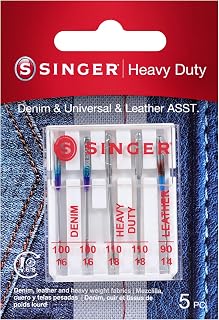
SINGER Heavy Duty Needles 90/14 100/16 110/18 Denim Leather 5-Count
Check PriceSome fleece fabrics, especially those with spandex or a high stretch percentage, benefit from a stretch needle. While a ball point needle works well for standard knits, a stretch needle has a special scarf and a deeper groove that prevents skipped stitches on super stretchy materials. If you ever notice your machine producing loops under the fabric or missing stitches entirely on a stretch fleece, try a stretch needle in a size 75/11 or 90/14.
The eye of a stretch needle is designed to handle the elongation of the thread as the fabric stretches and recovers. This makes it an excellent alternative for sewing cuffs, waistbands, or athletic wear made with fleece backed spandex. Stretch needles are not required for every fleece project, but they are a powerful tool for specific performance fabrics.
Universal Needles: Can You Use Them?
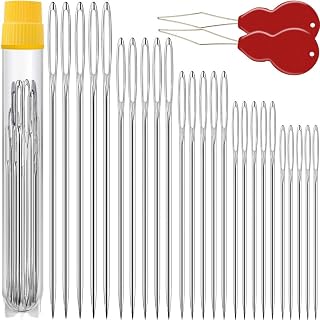
Premium Large Eye, Large Gauge Needles for Hand Sewing – Assorted Sizes, Including Embroidery – 25/50 PCs with 2 Threaders
Check PriceUniversal needles have a slightly rounded point, but they are not as rounded as a true ball point. They are designed as a compromise for both woven and knit fabrics. While you might get away with a universal needle on a tightly woven fleece or a lightweight anti pill variety, it is not the ideal choice. Many sewists report more skipped stitches and a higher chance of thread shredding when using universal needles on fleece.
If a ball point needle is not available and you need to finish a small project, a size 90/14 universal needle can work short term. However, for consistent, professional results, a dedicated ball point or stretch needle is always recommended. Think of the universal needle as a temporary backup, not a primary tool for knitting projects.
Microtex Sharp Needles: Not Recommended
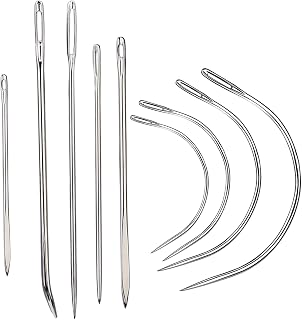
Veroave Sewing Needles, 9 PCS Curved Needle, Upholstery Needle
Check PriceMicrotex sharp needles should be avoided for fleece. These needles have an acute, slim point that easily penetrates densely woven fabrics like silk or microfiber. On a knitted fleece, that sharp point can cut the yarns and create permanent runs or holes. The damage may not be immediately visible, but after a few washes the integrity of the fabric can break down around the stitching line. If you love the precision of Microtex needles, save them for quilting cotton, poplin, or tightly woven satins. For fleece, keep a set of ball point needles on hand to prevent fabric injury. Choosing the right needle point is just as important as the size, especially with plush fabrics.
Hand Sewing Needle Types for Fleece
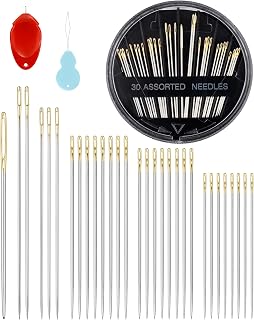
FIVEIZERO 30-Count Steel Needles for Hand Sewing, 6 Sizes Large Eye Embroidery and Hand Quilting Needles Kit with Threaders for Art & Craft Projects
Check PriceNot all fleece projects are made on a sewing machine. You might need to close a small opening on a stuffed toy, attach a decorative trim, or repair a blanket by hand. For these tasks, select a needle with a rounded tip and a large eye. Chenille needles are an excellent choice because they have a sharp enough point to pass through fleece but a generous eye to accommodate thicker threads or yarn.
Tapestry needles, with their blunt tips, can also be used for weaving in ends or stitching on fleece without snagging. Avoid using thin, very sharp embroidery needles (crewel needles) on fleece unless you are working with a single strand of lightweight thread on a tightly knitted surface. The right hand needle makes the process smoother and protects the fabric.
Ideal Hand Needle Sizes for Fleece
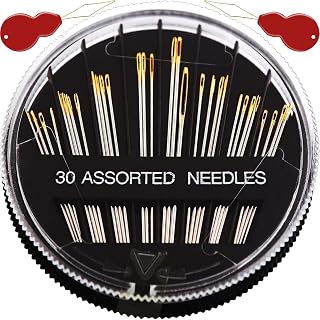
Premium 30/60 Pack Sewing Needles for Hand Sewing Repair with 2 Threaders, 6 Sizes Assorted Large Eye Stitching Needles for Embroidery and Handsewing
Check PriceWhen hand sewing fleece, the size of the needle should match the thread thickness and the fabric weight. For general mending or closing seams on medium weight fleece, a hand sewing needle in size 5 to 7 (embroidery or chenille) works well. These are sturdy enough to push through the bulk without bending.
If you are using a thicker thread, such as pearl cotton or a lightweight yarn, choose a size 3 or 4 chenille needle, which has an even bigger eye. For delicate touch ups on microfleece, a size 8 or 9 sharp needle can be used if handled carefully. Always test the needle on a hidden area. The needle should glide through without requiring excessive force and should not visibly stretch the fabric around the puncture. A good hand sewing needle kit with assorted sizes gives you flexibility for any fleece project.
Choosing the Right Thread
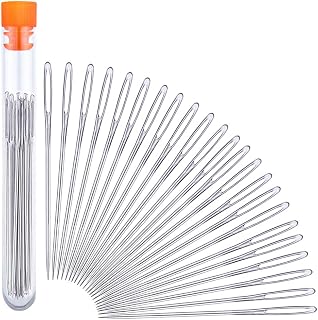
JNENERY 23 PCS Large Eye Sewing Needles, 2.36in Sewing Sharp Needles
Check PriceA fluffy fabric like fleece pairs best with a smooth, strong thread. All purpose polyester thread is the top choice because it has a slight stretch and excellent durability. Cotton thread can be used, but it lacks give and may snap when the fleece stretches. For topstitching on a thick polar fleece jacket, use a heavier thread such as topstitching or buttonhole twist, paired with a size 100/16 topstitch needle.
The needle must have an eye large enough to let the thicker thread pass freely without shredding. Always match thread weight to needle size. A good rule of thumb: the thread should fill about 40 percent of the needle eye. This combination prevents tension issues and thread breakage while keeping your seams strong and flexible.
Sewing Machine Settings for Fleece
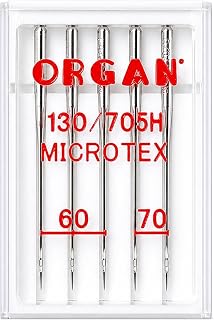
Organ Microtex Needles 5-Pack, 60/8 & 70/10, Ultra Sharp for Silk
Check PriceBeyond the needle, a few machine adjustments make fleece sewing a breeze. Set your stitch length to 2.5 to 3.5 mm. A slightly longer stitch prevents the fabric from being punched too many times and keeps seams flat. Reduce the presser foot pressure if your machine allows it; too much pressure can stretch the top layer of fleece as it feeds. Use a walking foot or dual feed mechanism to grip both layers evenly.
A standard zigzag stitch or a narrow lightning stitch works great for seams that need to stretch. Always sew a test sample with your chosen ball point needle and thread to check the tension. Fine tune these settings and you will avoid wavy seams and puckered edges, leaving you with a professional finish every time.
Troubleshooting Common Fleece Sewing Issues
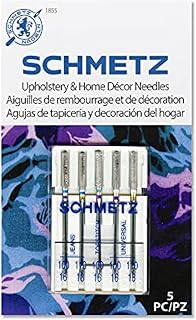
SCHMETZ Upholstery & Home Decor Needles
Check PriceEven with the correct needle size, you may encounter skipped stitches, looping thread, or fabric bunching. Most problems trace back to the needle. A bent or dull needle should be replaced immediately. Needles for fleece dull faster than those used on lightweight cottons because the pile is abrasive. Change your needle after every large project or about every eight hours of sewing.
If the machine is skipping stitches, first rethread both the top and bobbin, then try a new ball point needle of the appropriate size. If the fabric is being pushed down into the needle plate, switch to a straight stitch plate or use a piece of tear away stabilizer underneath. Also check that your needle is fully inserted and the flat side of the shank is facing the back of the machine.
