
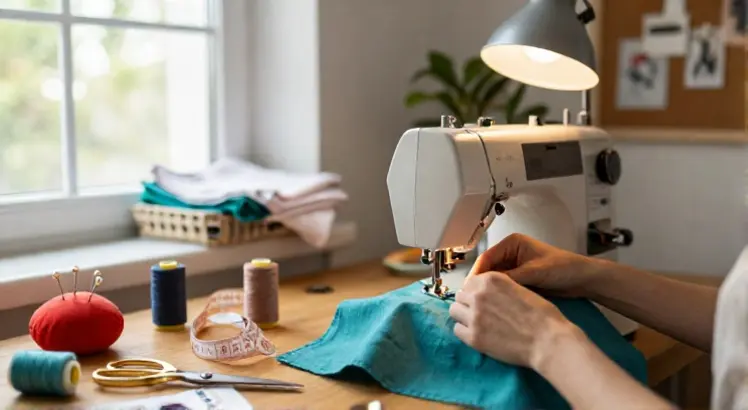
Good lighting transforms your sewing experience. It protects your eyes, sharpens your accuracy, and reveals true fabric colors. Many sewists focus on machines and fabric but overlook the light above their workspace. Poor illumination leads to squinting, miscut patterns, and mismatched threads. Knowing what lighting is best for sewing helps you avoid all that. Whether you hand sew intricate embroidery or race through a quilt on a machine, your light setup matters. This guide breaks down color temperature, brightness, lamp styles, and placement so you can create a clear, comfortable sewing station.
Sewing under dim, yellow light strains your vision. After an hour, headaches creep in, and mistakes happen. High quality sewing light reduces eye strain and boosts precision. You will thread needles faster, match seam lines accurately, and spot loose threads before they unravel. When you start choosing the best lighting for your sewing room, you invest in your craft and your health.
Why Proper Lighting Matters for Sewing
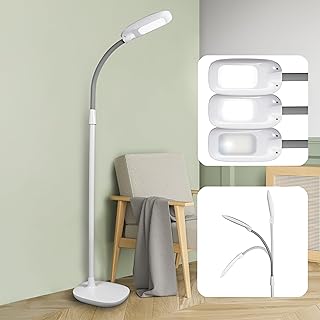
OttLite ClearSun LED Floor Lamp
Check PriceYour eyes work extra hard during fine needlework. Without enough light, the ciliary muscles tense up. This leads to fatigue, dryness, and blurry vision. In sewing, tiny details like a 2mm stitch length or a subtle shadow on dark fabric become invisible under weak bulbs. Daylight mimics help enormously. Natural spectrum light reveals contrast and depth, so you can distinguish navy blue from black without guessing.
Color accuracy also depends on light. A thread that looks gray under warm incandescent light might be olive green in daylight. Sewing under the wrong lamp means you could attach a mismatched zipper or topstitch with an off-white thread that jars against pure white fabric. Good sewing lighting renders colors faithfully so your finished garment looks exactly as you planned.
Beyond eyesight, proper illumination boosts your posture. When you can see clearly, you do not hunch over the needle plate. You sit back comfortably, reducing neck and shoulder strain. A well lit sewing room invites you to sew longer and enjoy it more. The right lamp becomes a companion, not just a tool.
Key Factors to Consider When Choosing Sewing Lights
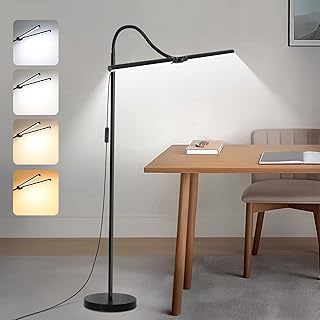
Bright Dual-Head LED Floor Lamp
Check PriceBefore buying a lamp, evaluate several core features. Brightness, measured in lumens, tops the list. For sewing, aim for at least 800 lumens directly on your work surface. Many sewists find 1000 to 1500 lumens ideal for detailed tasks. A dimmable lamp lets you adjust output for different fabrics and times of day. Dual head designs, like the Bright Dual-Head LED Floor Lamp, spread light evenly and reduce harsh shadows.
Color temperature tells you whether the light appears warm or cool. Measured in Kelvin, lower numbers like 2700K give a cozy yellow glow, while 5000K and above deliver crisp, bluish white light. For sewing, 4000K to 5000K is the sweet spot. It mimics noon daylight and keeps you alert without feeling clinical. Many advanced lamps offer multiple color modes so you can switch between warm and cool.
Color Rendering Index, or CRI, rates how accurately a light source reveals colors compared to natural daylight. A CRI of 90 or above is essential for sewing. High CRI lamps prevent fabric and thread color shifts. Look for CRI ratings in product specs; most cheap bulbs do not list this number. Full spectrum LEDs usually score well and are worth the investment.
Adjustability matters just as much. A gooseneck or articulated arm lets you aim light precisely at the needle or cutting mat. Height adjustment helps when you move between a low sewing machine table and a high cutting counter. A heavy, stable base prevents tipping. Compact clamp on designs save floor space and attach right to your table edge, giving focused light exactly where you need it.
Color Temperature and Brightness Explained
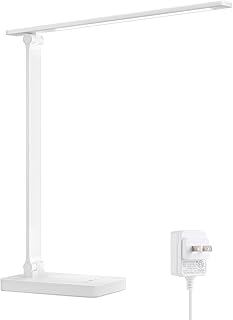
Lepro LED Desk Lamp
Check PriceWalk into any sewing studio and you will hear talk about 5000K daylight lamps. That is not just a trend. Cool white light with a blue tinge mimics the sun at high noon. It penetrates shadows and reveals thread fluff, ink marks, and fabric texture. For aging eyes, cooler light improves contrast sensitivity. This means you can see the edge of a dark lining against a dark outer fabric more easily.
Warm light, around 3000K, feels restful but can hide details. It casts a yellowish tint, making whites appear creamy and dulling bright colors. While pleasant for a living room, it is not practical for sewing dark denim or matching embroidery floss. A lamp like the Lepro LED Desk Lamp offers stepless dimming and adjustable color temperature from warm to cool. You can tweak the setting based on your project and time of day.
Lumens and lux also deserve attention. Lumens measure total light output, while lux measures how much light falls on a surface. A 1000 lumen lamp placed 12 inches from your needle may deliver around 800 lux, which is excellent for sewing. Position matters. The closer the lamp, the higher the lux. Just make sure the bulb does not generate heat that makes your hands uncomfortable. LEDs stay cool and are safe at close range.
CRI ties everything together. A high lumen, cool white light with a low CRI will still wash out colors. Check for a CRI of 95 if possible. Reputable brands often advertise CRI ratings prominently. When you pair bright, adjustable, high CRI light with a stable arm, you eliminate guesswork and frustration from your sewing sessions.
Best Types of Lighting for Sewing Rooms
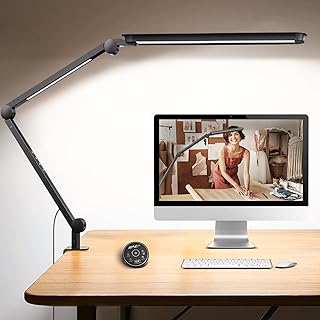
Clamp-On LED Desk Lamp with Dual Light
Check PriceSewing lights come in several forms, and each serves a purpose. Floor lamps shine from above and cover a wide area. They work well behind your sewing table, casting light over your shoulder without blocking your hands. Look for adjustable height and a swiveling head. Many floor lamps also have a separate reading or task light arm.
Desk lamps and clamp on lights offer focused, portable illumination. The Clamp-On LED Desk Lamp with Dual Light attaches directly to your sewing desk edge, conserving floor space. Its dual head design lets you aim one beam at the needle and the other at the presser foot area. This type of lamp is ideal for small sewing nooks or shared spaces where a floor lamp might get in the way.
Magnifying lamps combine light with magnification, a great option for hand embroidery, beadwork, and mending. Built in LEDs ring the lens to cast shadow free light directly onto your work. Some models come with a clamp base, others sit on a desktop stand. For sewists with low vision or those doing heavy detail work, a magnifying lamp can be transformative.
Sewing machine specific lights attach directly to your machine or sit on the work table. They illuminate the needle plate and throat space from inches away. Many are LED strips with magnetic bases that stick to the machine head. These supplement overhead lighting beautifully. Pair a small machine light with a broader floor lamp for layered illumination that banishes all shadows.
Task Lighting vs Ambient Lighting for Sewing
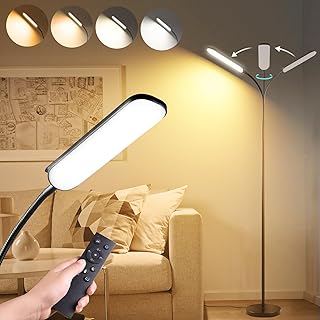
marctronic Floor Lamp
Check PriceMany sewists assume one bright bulb will do the job. Actually, a combination works best. Ambient light fills the room and reduces harsh contrast between the bright work area and a dark surrounding. This prevents eye fatigue from constant pupil adjustments. Overhead ceiling fixtures, soft wall sconces, or a tall floor lamp pointing upward create a gentle overall glow. A marctronic Floor Lamp with dimmable settings can serve as ambient light when you lower brightness and angle the head toward the ceiling.
Task light zeroes in on your needle, cutting mat, or ironing board. It should be 3 to 4 times brighter than ambient light. A dedicated sewing task lamp like those discussed earlier gives you the crisp detail you need. When you pair ambient light with task light, you see the entire garment without losing focus on the stitch. This layered approach mimics professional tailoring shops and reduces mistakes dramatically. To learn how to light your sewing space effectively, start with a balanced two source system.
Placement is key. Avoid pointing a single bright lamp directly at a glossy fabric, which can create glare. Instead, position the light from the side or slightly behind your shoulder. If you are right handed, place the task light on your left so your hand does not cast a shadow across the needle. Left handed sewists should position light on the right. Adjust until you see clear, shadow free illumination on the sewing machine bed.
Placement Tips for Optimal Sewing Illumination
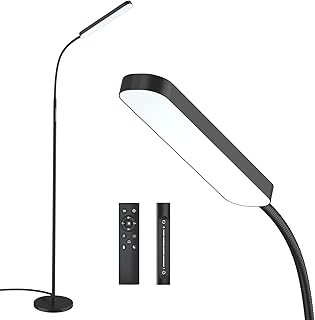
Wio-Mio Floor Lamp
Check PriceEven the best lamp underperforms if it is misaligned. The Wio-Mio Floor Lamp, with its flexible gooseneck, lets you direct light precisely where you need it. Start by positioning the lamp about 12 to 18 inches from your needle. Angle the head so light washes across the sewing surface at roughly 45 degrees. You want the beam to cover the presser foot zone and a few inches of fabric beyond.
For cutting tables, mount a clamp light or position a floor lamp overhead. Center the beam on the cutting line. If you use a rotary cutter, a shadow from the ruler can obscure the edge. Placing two smaller lamps on opposite sides eliminates this problem. Dual head lamps naturally reduce shadow by hitting the area from two angles.
Height also matters. A tall floor lamp behind your chair can cast a shadow of your head and shoulders onto the work. Move it to the side or slightly forward. Gooseneck lamps allow you to arch the light over your shoulder without blocking your view. Test your setup by sewing a long seam on dark fabric. If you lose sight of the needle tip, adjust your light until it stays clearly visible.
Frequently Asked Questions About Sewing Lighting
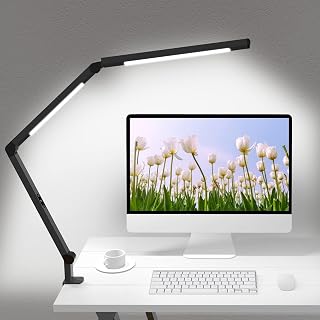
Architect Clamp-On Dual Light LED Desk Lamp
Check Price- What is the best color temperature for sewing? 4000K to 5000K closely resembles daylight and enhances contrast. This range keeps you alert and shows true colors.
- How many lumens do I need? Aim for 800 to 1500 lumens on your work area. Dimmable models let you fine tune for different fabrics and times of day.
- Can I use a regular desk lamp? A standard desk lamp helps only if the bulb offers high CRI and a cool white option. Replace old bulbs with full spectrum LED bulbs rated 5000K and CRI 90+.
- Are LED lights safe for long sewing sessions? Yes. LEDs emit very little heat and no UV radiation. Choose flicker free models to protect your eyes.
- Do I need a magnifying lamp? If you do fine embroidery, mend tiny stitches, or have vision challenges, a magnifying lamp with built in LEDs is a game changer.
- Where should I position the light for sewing machine work? Place the light on the opposite side of your dominant hand about 12 to 18 inches away. Tilt the head to illuminate the needle plate without shadows.
Lighting is not a one size fits all fix. Experiment with placement and brightness until your eyes feel relaxed and your stitches look crisp. The Architect Clamp-On Dual Light LED Desk Lamp, for example, clamps securely and provides dual adjustable heads, making shadow free lighting easy to achieve. Many sewists own multiple lamps for different tasks cutting, ironing, and machine work and that strategy pays off.
Remember that good sewing lighting is an investment in your craft. It protects your vision, elevates your precision, and makes every project more enjoyable. By choosing the right color temperature, brightness, and lamp type, you turn your sewing corner into a professional workspace that supports you for years to come.
