
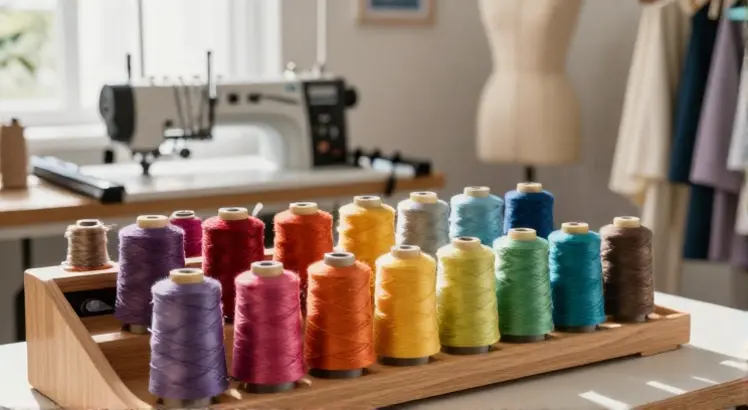
If you own a serger or overlocker, you know that these machines are thirsty for thread. Unlike a standard sewing machine that uses one or two spools, an overlocker typically requires four, sometimes five, cones at once. This means that over time, your collection of high-quality overlocker thread can quickly grow, leading to a messy workspace. Learning how to store overlocker threads correctly is essential not just for organization, but for preserving the integrity of your materials and ensuring your next project starts without a hitch.

Sew Tech Thread Rack for 60 Spools or 30 Cones, Wall Mounted Large Thread Holder
Check PriceWhy Proper Thread Storage Matters
Many sewers underestimate the impact of their environment on their sewing supplies. Thread might seem durable, but it is actually quite sensitive to its surroundings. Proper storage prevents several common issues that can affect your sewing projects.
Protecting Thread Integrity
Thread is made of fibers—whether polyester, cotton, or nylon—that can degrade over time. Exposure to sunlight can fade the color, while humidity can weaken the fibers or cause mildew. Dust and lint can also settle into the grooves of the thread, eventually making their way into your overlocker’s tension discs and internal mechanisms. By storing your threads properly, you extend their lifespan and maintain their tensile strength.
Efficiency and Workflow
There is nothing more frustrating than reaching for a spool of black thread only to find it tangled with a neighboring spool or covered in a layer of grime. An organized system allows you to find the color you need instantly, match shades for multi-color projects, and keep your sewing area safe from tripping hazards caused by loose threads.
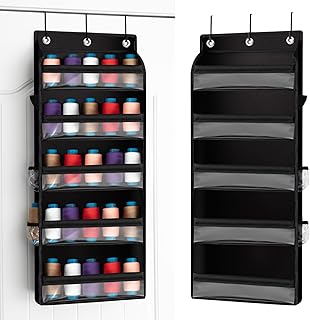
Tegeme 5-Tier Hanging Thread Holder with PVC Window & Side Pockets
Check PriceBest Practices for Storing Overlocker Threads
When deciding on a storage solution, you need to consider three main enemies: light, dust, and gravity. Here are the most effective ways to keep your thread collection in top condition.
1. Use Airtight or Lidded Containers
The best way to protect thread from dust and humidity is to keep it in a container with a lid. Many sewers use large plastic storage bins or specialized thread boxes. If you live in a humid climate, consider adding a small silica gel packet to the container to absorb excess moisture. This is particularly important for natural fiber threads like cotton, which are more susceptible to moisture damage than synthetics.
2. Vertical vs. Horizontal Storage
Overlocker threads usually come on large cones or small spools. For cones, vertical storage is often best to prevent them from rolling around. However, for standard spools, horizontal storage on pegs or dowels is the most space-efficient. The key is to ensure the thread isn’t “flopping” over, which can cause it to unwind and tangle. If you stack spools on top of each other, ensure they are secure so they don’t tip over and unravel.
3. Keep Threads Away from Direct Sunlight
UV rays are the enemy of colorfastness. If you store your threads on a sunny windowsill or an open shelf in a bright room, the colors will eventually fade. More importantly, sunlight can heat up the fibers, causing certain types of thread to become brittle. Always store your threads in a dark cupboard, a drawer, or a closet. If you prefer to display your threads for inspiration, use a cabinet with a door or a curtain to block the light when not in use.
4. Labeling and Categorization
As your collection grows, finding a specific shade of navy blue among twenty similar spools can be a nightmare. Use a labeling system. You can organize by color family (all reds together, all blues together) or by thread type (polyester in one bin, wooly nylon in another). Some sewers even use a digital inventory app to track exactly what they have, preventing unnecessary duplicate purchases.
Top Storage Solutions for Overlocker Cones
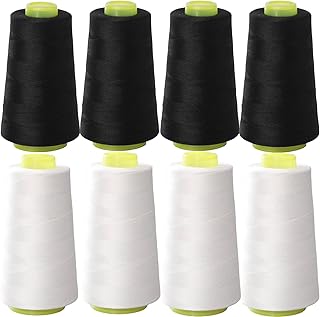
Black & White Sewing Thread 8PCS Serger Thread
Check PriceBecause overlocker cones are larger and heavier than regular spools, they require specific storage solutions. Here are a few popular options for keeping your thread spools organized and accessible.
- Thread Trees or Racks: These are vertical stands with multiple arms. They allow you to hang several cones on each arm. This is great for visibility, but you must keep the rack covered with a cloth to protect against dust.
- Stackable Plastic Bins: Many sewers use clear, stackable plastic drawers. These are affordable and keep dust out while allowing you to see your colors through the plastic.
- Pegboards with Baskets: A pegboard on the wall of your sewing room allows you to customize your space. Use small wire baskets to hold cones. This keeps them off your work surface but within arm’s reach.
- Shoe Organizers: An over-the-door shoe organizer with clear pockets is an ingenious, budget-friendly way to store overlocker cones. Each pocket can hold several cones, and you can see every color at a glance.
Common Mistakes to Avoid
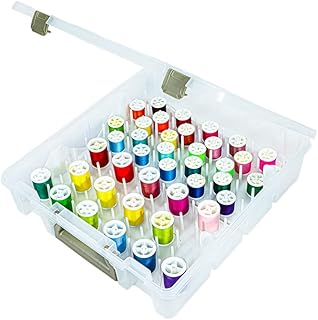
ArtBin Super Satchel Thread Box – Versatile Thread Storage for Sewing, Embroidery, and Quilting
Check PriceEven experienced sewers make mistakes when it comes to storage. Avoid these pitfalls to ensure your thread remains usable for years.
Storing Loose Threads
Never leave a thread tail hanging loose. When a spool is jostled in a drawer or bin, that loose tail can wrap around the spool or neighboring cones, creating a massive “bird’s nest” of tangles. Always use a thread net (the little mesh socks that often come with serger cones) or a small piece of tape to secure the tail.
Ignoring Temperature Fluctuations
Avoid storing your thread in places that experience extreme temperature changes, such as an uninsulated garage or a damp basement. Heat can melt synthetic fibers, and cold can make them brittle. A consistent, room-temperature environment is ideal for thread longevity.
Frequently Asked Questions (FAQ)
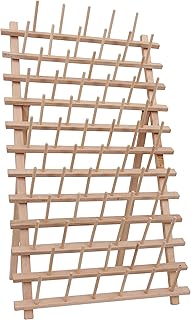
Threadart 66 Large Spool Cone Wood Thread Rack | Made of Hardwood
Check PriceCan overlocker threads go bad?
Yes, thread can go bad. Most threads have a lifespan of about 5 to 10 years if stored properly. If your thread feels rough, looks fuzzy, or snaps easily when you give it a gentle tug, it is likely past its prime and should be discarded.
Is it better to store thread in a drawer or on a shelf?
Both are fine as long as the environment is stable. Drawers are generally better because they offer more protection from light and dust. If you use open shelves, you should invest in covers or keep the room relatively dark.
Should I keep the plastic wrappers on new thread?
It is a matter of personal preference. Keeping the wrapper on can provide an extra layer of dust protection, but it makes it harder to see the actual color of the thread. If you remove the wrapper, just make sure the thread is stored in a clean, enclosed space.
Conclusion
Storing your overlocker threads doesn’t have to be a chore. By implementing a system that protects against dust, light, and moisture, you not only keep your sewing room tidy but also ensure that your threads perform flawlessly every time you sit down at your machine. Whether you choose a high-tech serger thread rack or a simple set of plastic bins, the most important thing is consistency. Take a few minutes after each project to put your threads back in their designated spot, and you’ll save yourself hours of frustration in the long run.

Disclosure: As an Amazon Associate, we earn from qualifying purchases at no extra cost to you. Our posts are created with AI tools and human editing.