
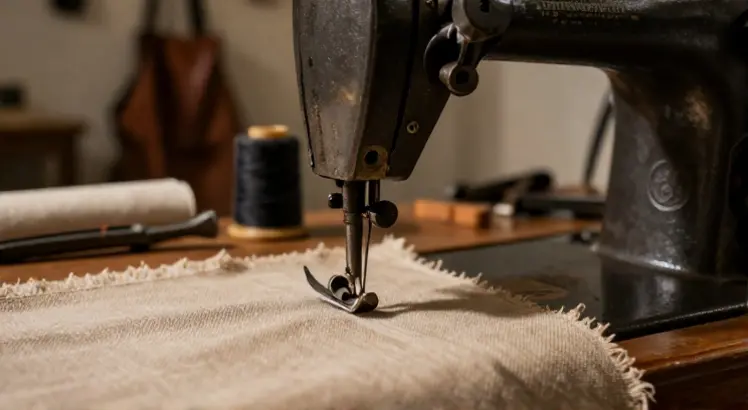
Have you ever wrestled a thick canvas tote under a standard sewing machine and heard that awful clunk? You are not alone. The question what sewing machine will sew canvas is one of the most common dilemmas for makers who are ready to move beyond lightweight cottons into the world of bags, outdoor gear, and home decor. Canvas is notoriously stubborn.
It is dense, often layered, and can quickly humble a machine that lacks the right motor, needle plate, and presser foot design. Choosing the wrong model can lead to skipped stitches, snapped needles, and a very frustrating afternoon.
This guide cuts through the confusion. We will walk you through exactly what to look for in a machine that can handle canvas consistently, from motor strength and presser foot pressure to the right needle and thread combinations. You will also find a curated selection of machines that actually deliver on their heavy duty promises, each one suited to different project scales and budgets.
Whether you plan to sew a simple canvas apron or launch a line of waxed canvas backpacks, understanding these fundamentals will save you time, money, and spoiled fabric. For a closer look at the most highly recommended machines, you can explore our dedicated roundup of the best sewing machines for canvas right here.
Understanding Canvas and Its Demands on a Sewing Machine
Canvas is not a single, uniform material. It comes in various weights, typically measured in ounces per square yard. A lightweight 7 oz canvas behaves very differently from a hefty 18 oz or 24 oz variety used for heavy duty tarps and outdoor gear. Most home sewing projects, like tote bags, zipper pouches, and throw pillows, use canvas in the 10 oz to 12 oz range. As you begin layering seams, adding interfacing or sewing through webbing straps, the thickness multiplies rapidly. A machine that can sew two flat layers of 10 oz canvas might choke on a hem where eight layers converge at a corner.
The primary challenge is resistance. Canvas is tightly woven and stiff, which means the needle has to punch through with considerable force. The feed dogs must grip the coarse surface firmly and advance the fabric evenly without stalling. Lightweight machines with plastic internal frames may flex under this stress, causing timing problems and inconsistent stitch length.
You need a machine built with a metal internal frame, a high torque motor, and feed dogs that can be raised or adjusted for thicker materials. If you are curious about the manual side of things, our article on how to sew canvas offers practical tips that complement any machine choice.
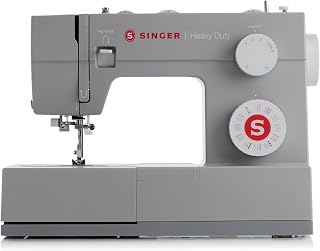
SINGER 4452 Heavy Duty Sewing Machine
Check PriceKey Features to Look for in a Canvas Sewing Machine
When evaluating a sewing machine for canvas, looking at the sticker on the box that says heavy duty is not enough. You need to examine the engineering beneath the shell. A metal interior frame is the single most critical feature. It provides the rigidity that prevents the machine from flexing or vibrating out of alignment when pushing through dense layers.
Machines that rely on a plastic chassis, even if marketed for denim, will struggle after a few projects. The motor should be powerful, ideally rated at a higher amp draw compared to a standard home machine, and it must deliver consistent piercing power at low speeds. Canvas requires slow, deliberate stitching, and a weak motor often stalls just when you need control the most.
Equally important is the presser foot system. Look for a machine that allows you to adjust the presser foot pressure manually. This lets you increase the downward force to hold thick canvas stacks securely, or lighten it for a single layer so the feed dogs do not mar the fabric. A high presser foot lifter is a blessing; it gives you that extra millimeter of clearance to slide a bulky seam under the needle.
Stitch quality adjustments, such as the ability to fine tune needle position and stitch length, are also necessary. A straight stitch plate, or a needle plate with a very narrow hole, helps prevent the fabric from being pushed down into the bobbin area, a common problem called flagging. Finally, the availability of specialized feet like a walking foot or a roller foot can transform your experience. According to the sewing experts at Sewing & Craft Alliance, using the correct presser foot for the job is a fundamental step toward professional results.
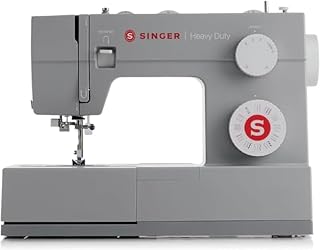
SINGER 4432 Heavy Duty Sewing Machine
Check PriceMotor Power and Stitch Speed: Why They Matter
The motor inside your sewing machine dictates how much torque is available, and torque is what punches the needle through tough canvas without stopping. Many standard home machines have motors rated around 0.5 to 0.7 amps, which are adequate for quilting cotton but weak for canvas. A machine suited for canvas often has a motor rated at 1.0 amp or higher.
This higher amperage translates directly into penetration force. However, a spec sheet can be misleading. The real test is low speed control. Canvas demands that you sew slowly around curves, over topstitching lines, and across seam intersections. A motor that provides full torque even at the slowest speed setting is a mark of quality engineering. Cheaper machines rely on a simple rheostat that reduces power as you lower the speed, resulting in stalled needles just when you need strength the most.
Stitch speed, measured in stitches per minute (SPM), is more of a marketing number. A high maximum speed, such as 1,100 SPM, is not particularly useful for canvas. You will rarely sew canvas faster than a slow, controlled crawl. Focus instead on the motor’s ability to maintain consistent stitch length under load. If you set the stitch length to 3.0 mm, it should deliver exactly 3.0 mm whether you are sewing through two layers or six.
Inconsistent feeding is a sign of a machine that is physically struggling. For this reason, many sewists prefer mechanical machines with direct drive systems over computerized ones that rely on stepped motors for the feed, as the mechanical linkages often provide a simpler, more rugged power transmission path.
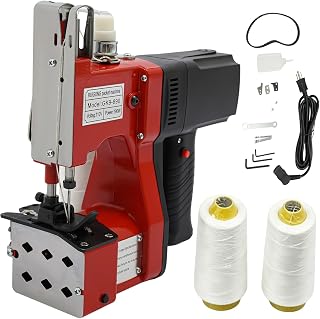
Leather Heavy Duty Industrial Sewing Machine
Check PriceHeavy Duty vs. Industrial Machines: Which One Suits Your Projects?
A common misunderstanding is equating heavy duty home machines with true industrial machines. They are vastly different beasts, and picking the right class will define the scope of your sewing. A heavy duty home machine, like those from Singer’s Heavy Duty line or Brother’s Strong and Tough series, has a reinforced internal frame and a more powerful motor than a standard domestic model.
It sits on a table, is portable, and uses standard home sewing machine needles. It can comfortably sew canvas ranging from 10 oz to 14 oz for extended periods, and can occasionally punch through a 16 oz layer with careful handling. This class is ideal for hobbyists, small craft business owners, and anyone who sews canvas project bags, aprons, and simple upholstery on a weekly basis.
An industrial machine is a completely different investment. These are mounted on dedicated work tables with an external clutch motor or servo motor. They are designed to run for eight hours a day, sewing thick stack after thick stack without overheating. The needle system is different, they often use a compound feed (needle feed plus walking foot), and they are built for one primary task, such as straight stitching or zigzag, rather than offering 100 decorative stitches.
If you plan to manufacture canvas tents, heavy tool belts, or leather and canvas mixed goods as a full time business, an industrial lockstitch machine is the unavoidable answer. However, for most users, a well built heavy duty home machine offers the best balance of versatility, space, and cost. You only need to consider a dedicated industrial if your weekly canvas output exceeds dozens of bulky items.
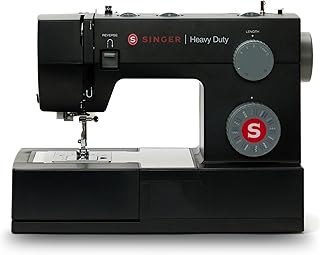
SINGER 4432 Black Heavy Duty Sewing Machine
Check PriceNeedle and Thread Essentials for Sewing Canvas
Even the mightiest sewing machine will fail if you pair it with the wrong needle. For canvas, you must use sharp, strong needles designed for densely woven fabric. Universal needles are a poor choice; their slightly rounded point is made for knits and general wovens, and they will skip stitches on canvas or, worse, deflect and break. Instead, choose a jeans or denim needle for medium weight canvas.
These have a sharp, acute point and a reinforced blade that resists bending. For heavier canvas or when sewing through multiple layers that include webbing, a leather needle with a cutting point can slice cleanly through without pushing fibers aside. Sizes typically range from 90/14 for light canvas to 110/18 for heavy 18 oz canvas. You should change the needle after every major project, as canvas rapidly dulls the point.
Thread choice is equally crucial. All purpose polyester thread may snap under the tension required for tight canvas seams. A heavy duty thread like bonded nylon or polyester, specifically Tex 70 or higher, provides the necessary tensile strength.
Bonded nylon is exceptionally strong and abrasion resistant, ideal for outdoor gear. Polyester offers similar strength with a bit more UV resistance and is widely available in the domestic market. Always test your thread and needle combination on a scrap of your project’s seam allowance. Adjust the top tension so the knot is balanced in the middle of the layers; canvas often requires slightly higher tension than lightweight fabrics. Wind the bobbin evenly and do not fill it too full, as thick thread can cause bobbin case jams.
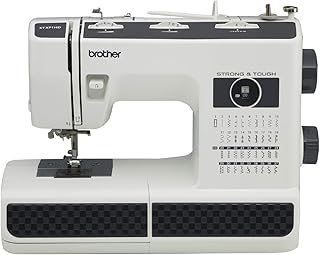
Brother ST371HD Sewing Machine
Check PriceTop Home Sewing Machines That Can Handle Canvas
Several home sewing machines have earned a reputation for reliable canvas performance without crossing into industrial pricing. The Singer 4452 Heavy Duty is a frequent starting point. It features a sturdy metal frame, a motor with 50% more power than standard Singer models, and a top speed of 1,100 stitches per minute.
The stainless steel bedplate allows canvas to glide smoothly, and the adjustable presser foot pressure gives you control over bulky feeds. Its 32 built in stitches include a one step buttonhole, which is helpful for bag closures. It handles multiple layers of 12 oz canvas with consistency, though it may need a walking foot accessory for very thick assemblies.
Another strong contender is the Brother ST371HD. This machine is targeted at heavy fabric use, with a metal needle plate, a powerful motor, and 37 built in stitches. It includes a walking foot in the box, a significant advantage for canvas. The feed system is robust enough to pull through up to six layers of medium weight canvas without hesitation.
For those seeking a computerized experience, the Singer 6800C Heavy Duty Computerized model offers a large extension table, a drop feed capability for free motion work, and an extra high pressure foot lifter. It provides the precision of a computerized machine while maintaining a frame designed for stiffer fabrics. All these choices are excellent for someone who asks what sewing machine will sew canvas for home or small studio use.
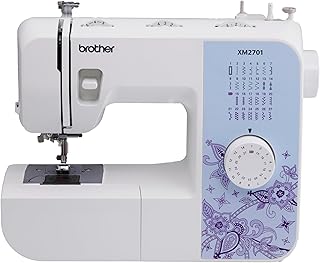
Brother XM2701 Sewing Machine
Check PriceIndustrial Options for Frequent Canvas Work
If your canvas sewing output is commercial, or if you simply refuse to deal with the limitations of a domestic machine, moving to an industrial straight stitch or lockstitch machine is a game changer. These machines are designed around a high speed lockstitch mechanism with a walking foot built into the head, ensuring that all layers of canvas, webbing, and even leather move together without shifting.
The VEVOR Industrial Lockstitch Sewing Machine is a popular entry point, featuring a servo motor that runs quietly and gives precise speed control from a single stitch per second up to full speed. It handles up to medium heavy canvas with ease and comes with a table that stabilizes large projects.
For even thicker assemblies, a model like a Leather Heavy Duty Industrial Sewing Machine with a compound feed can sew through up to 10 mm of material. These machines use larger needles (often system 135×17) and heavier threads up to Tex 90. They require permanent floor space and a learning curve for threading and tension adjustment.
However, once dialed in, they will sew canvas day in and day out with virtually no skipped stitches. The Leather Heavy Duty Industrial Bag Closer is a portable handheld alternative for sealing canvas bags, though it is not a substitute for flatbed sewing. Industrial machines are a commitment, but if your bread and butter depends on canvas products, they are the most reliable answer to the question of what sewing machine will sew canvas without compromise.
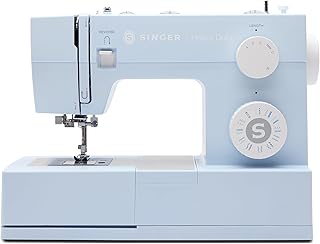
SINGER 4423 Heavy Duty Sewing Machine
Check PricePortable and Compact Choices for Occasional Canvas
Not everyone needs a dedicated canvas workhorse. If your projects involve the occasional tote bag, a set of canvas placemats, or a waxed canvas dopp kit, a full size heavy duty or industrial machine might be overkill. In this case, some surprisingly compact machines can handle the task if you choose your fabric weight carefully and use topstitching enthusiasts’ techniques.
The Brother XM2701 is a lightweight, portable machine that includes a walking foot and a number of utility stitches. While its interior is not fully metal, the powerful motor and included walking foot allow it to sew through two to three layers of lightweight canvas (7 oz to 10 oz) with acceptable consistency. It is an excellent option for crafters who prioritize storage space and occasional use.
Another interesting category is the handheld portable bag closer, like the Leather Heavy Duty Industrial Bag Closer. This tool is not a sewing machine in the traditional sense; it is designed to quickly sew open ended bags shut on the production line. However, for creative makers, it can be used to stitch flat canvas seams for simple projects like grocery totes or rag rugs.
The stitch quality is not as refined as a machine, and it can be finicky to control, but it is an ultra portable solution that runs on a battery or hand crank. For truly minimal, infrequent canvas sewing where you just need a line of stitching to hold something together, it is a niche but viable option. Just remember that for anything more than the simplest seam, a proper tabletop machine with feed dogs is far more practical.
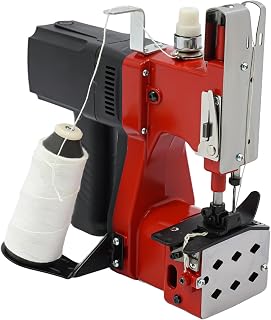
Leather Heavy Duty Industrial Bag Closer
Check PriceHow to Set Up Your Machine for Canvas Sewing
Proper setup prevents most frustrations before the first stitch. Begin by thoroughly cleaning the feed dog area and bobbin case of lint. Canvas produces more dust than you would expect. Insert a fresh denim or microtex needle of the appropriate size for your canvas weight. Thread the machine with a bonded nylon or heavy polyester thread, making sure the thread path is smooth and the tension disk is engaged.
Use a matching thread in the bobbin, wound slowly and evenly to prevent stretching. Raise the presser foot lifter to its maximum height and position your canvas. If your machine has a dual feed system or you are attaching a walking foot, do it now; this is the single most effective accessory for canvas.
Set the stitch length to around 3.0 mm to 3.5 mm. A shorter stitch clumps up too many perforations in the stiff fabric, weakening the seam. Test on a doubled scrap of your project fabric. Hold the thread tails to start, then begin sewing at a slow, consistent speed. If you see the bobbin thread pooling on the underside, increase the top tension slightly.
If the needle seems to struggle or the machine makes a knocking sound, stop immediately. You may need to increase the needle size or reduce the number of layers. Always hand crank the needle through the first stitch of a thick intersection to ensure it pierces cleanly. This patience at setup translates directly into professional looking topstitching and seams that will last for years.
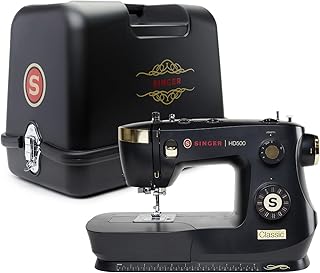
SINGER Heavy Duty 500 Sewing Machine
Check PriceMaintenance Tips to Keep Your Canvas Sewing Machine Running Smoothly
Canvas is unforgiving on a machine. It sheds fibers that mix with oil and create a grinding paste if not removed regularly. After every substantial canvas project, unplug the machine, remove the needle plate, and brush out all the lint using the small brush that came with your machine.
Compressed air is not recommended because it can blow lint deeper into the machine. A tiny drop of sewing machine oil on the hook race and other points specified in your manual will keep the metal parts moving freely. If your machine has wicks or felt pads, ensure they are saturated but not dripping.
Pay attention to the needle bar and presser foot mechanism. Canvas’s stiffness can sometimes knock the presser foot alignment slightly out of true. If you notice the needle grazing the presser foot, stop and realign. The feed dogs should be checked for sharpness; dull feed dogs will slip on canvas, leading to irregular stitch length. A qualified technician can sharpen or replace them.
Every six months, take your machine in for a professional service, especially if you sew canvas regularly. The timing belt and hook timing must be perfect for the needle to pass through the canvas and catch the bobbin thread without deflection, and only a pro with the right tools can set that precisely.
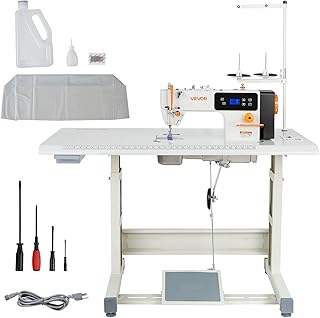
VEVOR Industrial Lockstitch Sewing Machine
Check PriceTroubleshooting Common Issues When Sewing Canvas
Skipped stitches are the number one complaint. This almost always traces back to the needle. If the needle is dull, bent, or the wrong type, it will deflect as it hits the dense weave and miss the hook. Swap it out first. If skipping persists, re thread the machine completely, ensuring the presser foot is up when threading the top tension so the thread seats properly. Another issue is the machine not feeding fabric.
Canvas can be slippery against smooth metal feed dogs. Cleaning the feed dogs and increasing the presser foot pressure usually solves this. A walking foot will eliminate the problem altogether. If your thread keeps breaking, check the needle size. If the thread is too thick for the needle eye, it will shred. Tex 70 thread requires a size 100/16 or 110/18 needle.
Uneven stitch length often results from pulling the fabric through the machine. With canvas, you need to guide the material but let the feed dogs do the work. Another cause is the presser foot hopping when it encounters a bulky seam. To overcome this, use a hump jumper tool or fold a scrap of fabric under the back of the presser foot to level it before climbing over the hump.
Finally, if you hear a loud thud and the machine jams, you have likely hit a seam that is too thick for the machine’s clearance. Back off, use the hand wheel to manually walk the needle through the thickest part, and if that fails, your project thickness has exceeded the machine’s limits. This is your signal that you need a machine with a higher presser foot lift.
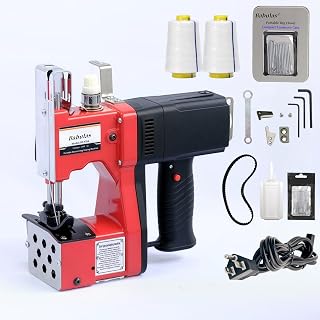
Bag Sewing Machine Portable Stitching Machine
Check PriceCanvas Sewing Projects and Best Practices
Once your machine is dialed in, canvas opens up a world of durable, satisfying projects. Tote bags are the classic entry point. They require flat seams, boxing corners, and often topstitching along straps. Use clips instead of pins to hold canvas, as pins can leave permanent holes and bend easily.
When hemming the top edge of a bag, sew from the center outwards to distribute any puckering evenly. Waxed canvas adds water resistance but can gum up needles; wipe your needle with a little rubbing alcohol before starting and clean it frequently. Home decor items like canvas slipcovers, pillow covers, and table runners are also excellent projects that showcase the fabric’s character.
A best practice is to always sew a complete test seam on your exact stack of materials before committing to your project. This means layering your canvas, interfacing, webbing, and lining exactly as they will be in the final seam allowance, then testing stitch length, tension, and needle performance. Press seams open with a wood clapper to flatten the thick fibers. Steam and pressure work better than high heat alone.
For crossbody bags and backpacks, consider double stitching stress points or using a rivet press to reinforce where straps attach. Canvas rewards patience and preparation; the stitched result is incredibly strong and will hold up to daily abuse far better than fashion fabrics ever could.
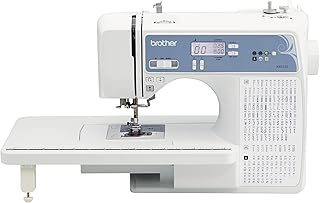
Brother XR9550 Sewing and Quilting Machine
Check PriceFrequently Asked Questions
Can a regular sewing machine sew canvas?
A standard home sewing machine can sew lightweight canvas (around 7 oz to 10 oz) if equipped with a sharp needle, like a denim needle, and used with patience. However, it will struggle with heavier weights and multiple layers. A machine labeled heavy duty with a metal frame is recommended for reliable results.
What needle should I use for sewing canvas?
Use a denim or jeans needle for medium canvas, sizes 90/14 to 100/16. For thick, heavy canvas or multiple layers, a size 110/18 denim or a microtex needle works. A leather needle can be used for very dense waxed canvas. Always replace the needle after a large canvas project.
Is a walking foot necessary for canvas?
A walking foot is not strictly necessary for every seam, but it is a game changer. It prevents the top layer of canvas from shifting ahead of the bottom layer, keeping seams aligned and stitch length even. For projects with many layers or topstitching, a walking foot is highly recommended.
What is the difference between heavy duty and industrial sewing machines for canvas?
Heavy duty home machines have a reinforced frame and stronger motor for moderate canvas use, are portable, and run on standard household power. Industrial machines are built into tables, have external motors with higher torque, use specialized needles, and are designed for continuous daily use on heavy canvas and leather.
What thread is best for sewing canvas?
Bonded nylon or heavy duty polyester thread in Tex 70 or higher provides the strength needed for canvas seams. Avoid all purpose thread, as it can snap under the tension. Use the same thread in the bobbin for balanced seams.
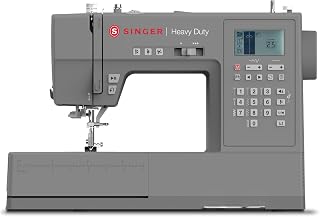
SINGER 6800C Heavy Duty Computerized Sewing Machine
Check PriceFinding the right machine to sew canvas is about matching your project volume and fabric weight to a machine engineered for the task. Whether you choose a capable heavy duty home model or invest in a dedicated industrial workhorse, the key is respecting the fabric’s density and using the correct needles, thread, and presser feet. With the right setup, you can confidently create canvas gear that is as beautiful as it is durable.
