
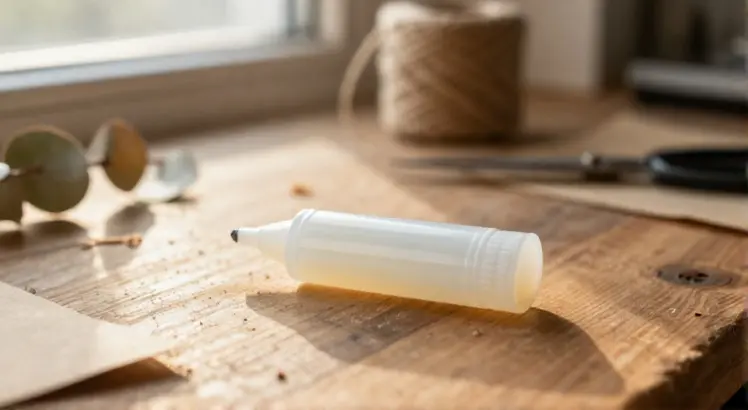
If you have ever picked up a glue gun for a craft project, a home repair, or a quick sewing fix, you have probably asked yourself: What is a hot glue stick, and why does it work so well? A hot glue stick is a solid, thermoplastic cylinder designed to be melted inside a glue gun and applied as a liquid adhesive that hardens as it cools. It has become a staple in sewing rooms, maker studios, and household toolkits because it bridges the gap between instant grab and lasting hold. This guide breaks down everything from the chemistry inside the stick to choosing the right type for delicate fabric or heavy wood, so you can use hot glue with confidence and precision.
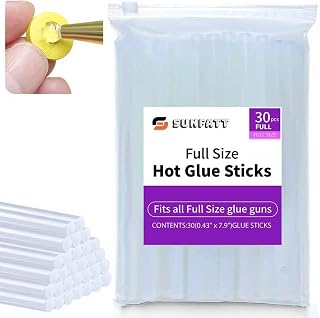
Full Size Hot Glue Sticks 30 Pack
Check PriceWhat Is a Hot Glue Stick Made Of?
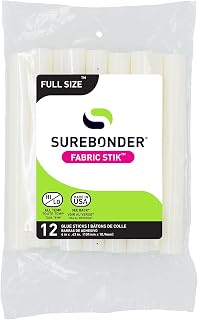
Surebonder Fabric Hot Glue Sticks
Check PriceAt its core, a hot glue stick is a blend of thermoplastic polymers, tackifying resins, and waxes. The exact formula varries by brand and purpose, but most sticks share a backbone of ethylene-vinyl acetate (EVA), polyolefins, or polyamides. These materials are solid at room temperature, melt into a fluid state between 250°F and 400°F (120°C to 200°C), and then set quickly as they lose heat. The result is a bond that is strong yet flexible enough to handle movement, vibration, and temperature swings without cracking.
The Chemistry Behind the Melt
Hot glue belongs to a family called hot-melt adhesives. They are thermoplastic, meaning they can be melted, reshaped, and cooled repeatedly without significant chemical change. When you pull the trigger on a glue gun, a heating element softens the stick and a mechanical feed pushes the molten adhesive out of the nozzle. On contact with the surfaces you are bonding, the glue wets the material, then solidifies through physical cooling. No water or solvent evaporation is needed, which is why hot glue sets so fast. For a deeper dive into the science, you can explore this overview of hot-melt adhesive technology.
Common Additives and Fillers
- Tackifying resins increase surface stickiness and initial grab.
- Waxes lower viscosity for smoother flow and control the open time.
- Antioxidants prevent the stick from yellowing or degrading after repeated heating.
- Pigments and glitter add color or sparkle for decorative work, though they may slightly reduce bond strength.
How Does a Hot Glue Stick Work?
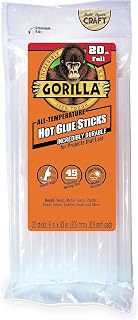
Gorilla Hot Glue Sticks Full Size
Check PriceUnderstanding the melt-and-set process helps you get better results. When the solid stick enters the gun, the heated chamber turns it into a liquid with a consistency similar to thick honey. The adhesive then leaves the nozzle and immediately begins to cool. You have only a handful of seconds, often 10 to 30, to position your pieces before the glue skins over. After full cooling, typically within a minute or two, the bond reaches its ultimate strength. The bond is mechanical as well as chemical; the glue flows into microscopic pores and irregularities on the surface, then locks in place as it hardens.
The Role of Temperature
Hot glue sticks are formulated for three temperature ranges: low (around 250°F/120°C), high (around 380°F/195°C), and dual temperature. Low-temperature sticks are safer for heat-sensitive materials like thin fabric, foam, or lace, while high-temperature sticks deliver stronger bonds on metal, glass, and wood. Using a stick at the wrong temperature causes poor flow, weak bonds, or even scorching of delicate fabrics. Always match the stick to your gun’s setting and the material you are joining.
Types of Hot Glue Sticks
Full Size Hot Glue Sticks 30 Pack
Check PriceThe variety of sticks on the market can be overwhelming, but they generally fall into a few clear categories. Choosing the right one depends on your project surface, the strength needed, and whether aesthetics matter. Here are the main types you will encounter.
Standard Clear Sticks
Most all-purpose sticks are translucent and yellowish to water-clear. They bond paper, cardboard, light wood, and some plastics well and are the go-to for general crafting. For sewing-adjacent projects like attaching embellishments to tote bags or securing ribbons, a standard clear stick works, but it may stiffen fabric if applied too thickly.
Colored and Glitter Sticks
These are purely aesthetic. They match or complement the color of your project and are popular for scrapbooking, card making, and holiday decor. The pigments can affect adhesion slightly, so they are best for lightweight materials and decorative accents rather than structural joints.
Low-Temperature and High-Temperature Sticks
Low-temp sticks are often used in compact craft guns and are ideal for fabrics, lace, and foam. They reduce the risk of burns and scorching. High-temp sticks require a full-size gun and deliver industrial-strength bonds on wood, metal, ceramic, and hard plastics. Dual-temperature all-purpose sticks give you flexibility, but always verify the recommended range on the packaging.
Specialty Sticks for Fabric, Wood, and Metal
Some sticks are engineered for specific materials. Fabric sticks remain flexible after cooling, move with the textile, and survive gentle washing. Wood sticks have extra tack and gap-filling ability. Metal and glass sticks often include a primer-like additive for smoother surfaces. If you are using hot glue alongside sewing projects, explore our guide on the best hot glue sticks for fabric to find options that bond without bleeding through or stiffening your cloth. For a deeper look at how fabric and glue interact, read about does hot glue work on fabric and the conditions where it excels.
Hot Glue Stick Sizes and Forms
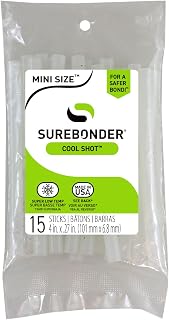
Surebonder Clear Cool Shot Low-Temp Mini Sticks
Check Price- Full-size sticks: 7/16 inch (11 mm) diameter and either 4 or 10 inches long. They fit standard full-size glue guns.
- Mini sticks: 5/16 inch (7–8 mm) diameter, usually 4 inches long. Used in low-temperature and detail guns.
- Jumbo sticks: 1/2 inch (12 mm) or larger, designed for industrial or high-output guns.
- Glue slugs: Oval or square sticks for specialized manufacturing equipment.
Always check your glue gun’s specifications. A mini stick in a full-size gun will not feed properly, and forcing a large stick into a small gun can damage the tool.
Key Factors When Choosing a Hot Glue Stick
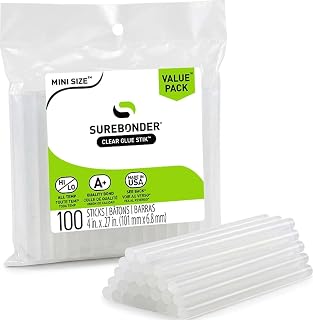
Surebonder All Purpose Mini Size 100 Pack
Check PriceSelecting the right stick is not just about grabbing the nearest pack. Pay attention to these variables to avoid weak bonds and messy results.
Bond Strength and Open Time
Open time is the window you have to reposition parts before the glue skins over. High-temp sticks typically give you 10–20 seconds; low-temp versions may offer up to 30 seconds. If you need instant hold for a vertical surface, choose a high-tack formula. If you are assembling a complex piece that requires alignment, opt for a slower-setting stick or work in small sections.
Compatibility with Your Materials
Porous materials like wood, paper, and uncoated fabric absorb the adhesive and create a strong mechanical lock. Smooth, non-porous surfaces such as glass, metal, and some plastics require sticks with higher cohesion and sometimes a primer. Always test a small area first. For sewists, fabric-friendly sticks formulated to stay flexible and resist washing are the best choice, as covered in our internal resources.
Hot Glue Stick vs. Other Adhesives
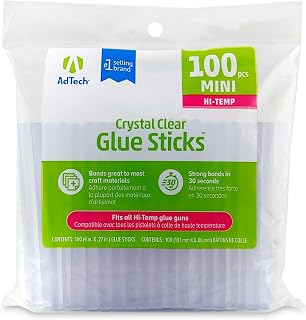
AdTech Hi-Temp Mini Hot Glue Sticks
Check PriceHow does a hot glue stick compare with alternatives like fabric glue, super glue, or double-sided tape? Here is a quick breakdown:
- Fabric glue: Remains flexible and is often machine-washable, best for hemming and permanent clothing repairs. Hot glue can stiffen fabric but sets faster.
- Super glue (cyanoacrylate): Provides a brittle, high-strength bond on small areas but has no gap-filling ability. Hot glue fills gaps and handles uneven surfaces better.
- Double-sided tape: Clean and instant, but lacks the shear strength and durability of hot glue for weight-bearing joints.
- Wood glue: Produces a stronger, more permanent wood bond than hot glue, but requires clamping and drying time.
For quick mockups, temporary holds, or mixed-material craft projects, hot glue is often the most convenient choice because of its speed and ease of use.
Safety Tips and Common Mistakes
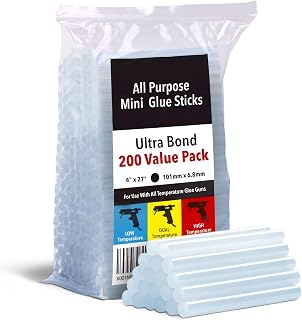
Artellius Mini Hot Glue Sticks 200 Pack
Check PriceWhile hot glue is user-friendly, a few precautions go a long way. The melted adhesive and the metal nozzle can cause burns. Keep a bowl of cold water nearby for quick cooling if you accidentally touch the glue. Work in a well-ventilated area, especially when using high-temperature sticks that may emit a faint odor. Never leave a plugged-in glue gun unattended. Common errors include using too much glue, which causes squeeze-out and a messy finish, and not holding the pieces together until the glue sets, leading to weak bonds. A simple stand or silicone mat protects your work surface and keeps the gun upright.
Frequently Asked Questions
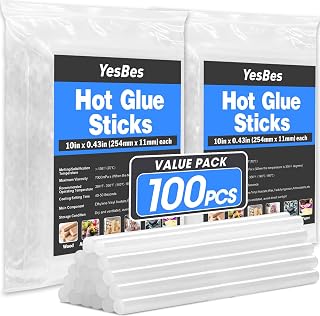
YesBes Full Size Clear Hot Glue Sticks
Check PriceCan I paint over a hot glue stick bond?
Yes, but you should lightly sand the hardened glue to create a profile for paint. Acrylic and latex paints adehre better than oil-based products. A primer designed for plastics can improve results.
How long does a hot glue stick bond last?
The bond can last for years indoors if the materials are not under constant stress or exposed to extreme heat. Over time, some yellowing may occur on clear sticks, but the mechanical strength often remains stable.
Does hot glue stick to silicone or polyethylene?
No. Hot glue does not bond well to silicone, polyethylene (PE), or polypropylene (PP) because of their low surface energy. Special surface primers or sticks formulated for low-energy plastics are available.
Can I remove hot glue without damaging fabric?
You can often remove it by applying rubbing alcohol around the edges of the glue blob and gently peeling it away once loosened. Heat from a hairdryer can soften the adhesive, but test the fabric for heat tolerance first. For delicate textiles, always use a low-temperature fabric stick to minimize damage.
Are all glue sticks the same diameter?
No. Full-size sticks are usually 7/16 inch, mini sticks are 5/16 inch, and industrial sticks can be larger. Using the wrong diameter wastes adhesive and can damage your glue gun.
Conclusion
A hot glue stick is a remarkably simple and versatile adhesive that belongs in every maker’s kit. By understanding the materials inside, matching the stick type to your project, and using the right temperature, you can achieve fast, durable bonds on everything from fabric and wood to ceramics. Whether you are hemming a costume piece, building a prototype, or repairing a broken toy, the right hot glue stick saves time and frustration. Bookmark this guide for your next craft session, and do not hesitate to experiment with specialty sticks tailored to your unique materials.
