
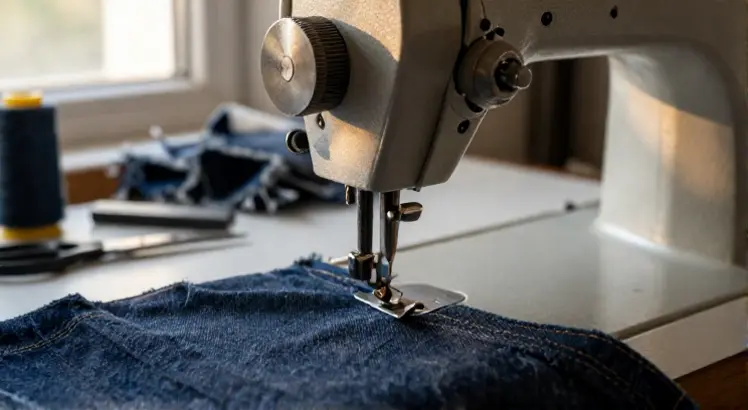
Denim is one of the most rewarding fabrics to sew, but it has a reputation for pushing home sewing machines to their limits. Breaking a needle on thick seams or wrestling with skipped stitches can feel frustrating, especially when you are eager to finish a pair of jeans or tailor a denim jacket.
The difference between a puckered mess and crisp, factory-quality topstitching almost always comes down to one thing: your sewing machine settings for denim. This guide breaks down exactly which needle, tension, stitch length, and presser foot choices will give you professional results on heavy denim, and it is designed for beginners and intermediate sewists who want confidence at every seam.
Understand Your Machine Before You Change Settings
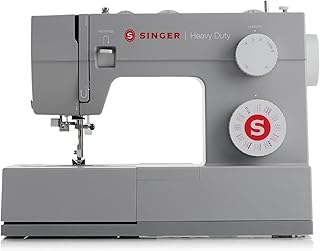
SINGER 4452 Heavy Duty Sewing Machine
Check PriceBefore you twist any dials, know what kind of machine you are working with. An older all-metal mechanical machine often handles denim more gracefully than a lightweight computerized model, but both can be tuned to succeed. The goal is to balance power, feed, and the resistance of densely woven cotton twill. If your machine struggles on six layers of denim, it is not a sign of failure. It simply means you need to adjust a few critical settings and use the correct accessories.
Needle Selection: The Foundation of Good Stitches
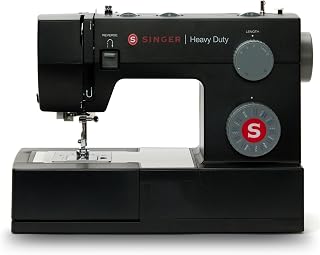
SINGER 4432 Heavy Duty Sewing Machine
Check PriceNothing affects your denim sewing more than the needle. A universal needle that works fine on quilting cotton will bend, break, or skip stitches when it hits the dense weave and thick intersections of denim. You need a sharp, sturdy needle designed to pierce heavy fabric cleanly without pushing fibers down into the bobbin case.
For most denim projects, your baseline should be a size 90/14 or 100/16 jeans needle. Lighter denim (up to 8 oz) can sew beautifully with a 90/14, but as soon as you join two flat-felled seams or cross a hem, you will want the extra strength of a 100/16. For heavyweight 14 oz and above denim, especially when constructing belts or bar tacks, move up to a size 110/18. Keep a fresh needle for every new denim project. A dull point will cause skipped stitches, shred your topstitching thread, and strain your machine’s timing.
Topstitching Needles Make Details Pop
A topstitching needle has an extra-long eye and a deeper groove, which allows thick topstitching thread to flow without fraying. When you want those signature contrasting stitches along a jeans side seam or pocket, switch to a size 90/14 or 100/16 topstitching needle and pair it with a quality polyester or cotton-wrapped poly topstitching thread. This small switch solves 80% of frustration with broken threads and uneven stitch appearance.
For more fabric-specific needle advice, guide on sewing denim explains how needle selection interacts with different denim weights, and it is a helpful external reference alongside your machine manual.
Thread Tension Settings for Denim
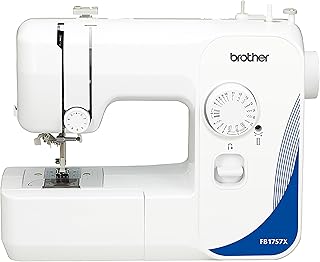
Brother FB1757X Mechanical Sewing Machine
Check PriceTension is the most misunderstood part of sewing machine settings for denim. On lighter fabrics, the default automatic tension (usually around 4) works well. Denim throws that balance off because the fabric thickness prevents the top thread from pulling the bobbin thread up into the fabric layers correctly. The result is often loops on the underside or a seam that feels flat and weak.
- Start with a tension setting between 4 and 5 on a standard 0-9 dial
- Sew a test seam on the actual fabric layers you will use, including interfacing if present
- If tiny loops appear on the bottom, increase top tension one half-step at a time
- If the fabric puckers and the top thread looks tight and rigid, lower the tension slightly
Many sewists forget that bobbin tension also matters. On drop-in bobbin machines, the factory setting is usually fine, but if you are using extra-thick thread in the bobbin, you might need a dedicated bobbin case adjusted for heavier thread. Always mark it separately and only tweak the small screw in tiny (quarter-turn) increments. A correctly balanced stitch on denim will interlock neatly inside the fabric layers, invisible from both sides.
Stitch Length and Type for Strong Seams
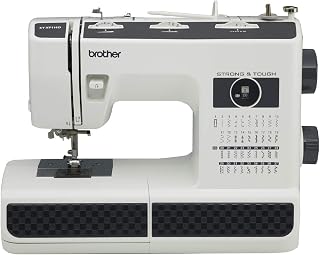
Brother ST371HD Strong & Tough Sewing Machine
Check PriceThe default stitch length of 2.5 mm is too short for denim. Short stitches perforate the fabric too aggressively and can weaken the seam over time. Instead, lengthen your stitch to 3.0 mm to 3.5 mm for construction seams. Topstitching can go even longer, up to 4.0 mm, to look authentic and decorative. A longer stitch reduces the number of needle penetrations, letting the fabric keep more of its natural strength.
- Construction seams: straight stitch, 3.0 to 3.5 mm
- Topstitching: straight stitch, 3.5 to 4.0 mm
- Seams needing stretch (stretch denim): narrow zigzag, 1.0 mm width, 3.0 mm length
For stretch denim, a tiny zigzag stitch preserves elasticity and prevents popped seams. Avoid using a stitch width wider than 1.5 mm unless you are doing a decorative hem. You do not want the zigzag to show on the right side. Always reinforce crotch seams and pocket corners with a backstitch or a separate bar tack stitch if your machine has it.
Presser Foot Pressure and Walking Feet
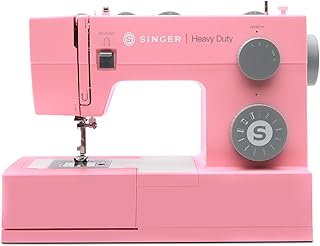
SINGER 4411 Pink Heavy Duty Sewing Machine
Check PriceThe standard presser foot exerts even pressure on thin fabrics, but when you stack six layers of denim at a hem, the foot tends to push only on the top layers. This causes the feed dogs to move the bottom fabric faster than the top, resulting in shifted seams and puckers. Many machines allow you to reduce presser foot pressure through a dial or digital setting. Lighten the pressure so the foot glides over the humps without shoving fabric forward.
A walking foot or an even feed foot is a game-changer for denim. It adds a second set of feed teeth on top, gripping the fabric from both sides and advancing all layers together. When topstitching a jeans hem or sewing belt loops, engaging a walking foot eliminates the drag that causes wavy seams. If your machine does not have a built-in dual feed, a snap-on walking foot is an affordable accessory that you will reach for again and again.
Bobbin and Feed Dog Settings
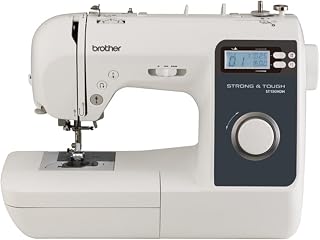
Brother ST150HDH Strong and Tough Sewing Machine
Check PriceFeed dogs play a quiet but critical role. When sewing over thick seams, especially flat-felled ones, the presser foot can tilt and lift off the fabric, reducing contact between the feed dogs and the fabric. This is when you hear the machine stitching in place. One trick is to use a Jean-a-ma-Jig or a folded piece of fabric behind the needle to level the foot as you aporoach the hump. This keeps the feed dogs engaged and prevents skipped stitches.
Do not forget to clean out your bobbin area before you start a big denim project. Denim produces a surprising amount of lint, which quickly packs into the feed dog teeth and slows their grip. A quick brush-out and a drop of sewing machine oil (for machines that require it) will keep your feed moving evenly. If your machine has a drop-feed function, make sure it is set to normal feeding, not darning position, unless you are free-motion qulting.
Machine Power and Speed Considerations
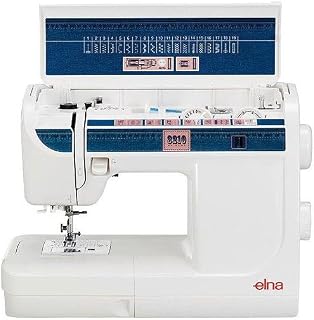
Elna 3210 Jeans Sewing Machine
Check PriceSewing thick denim demands patience with the foot pedal. Racing over a bulky seam is the fastest way to break a needle or nock your machine timing out of alignment. Use a slow to medium speed, and let the motor’s torque do the work. If you must sew over the thikest part of a crotch seam, turn the handwheel manually to pierce the fabric one stitch at a time. This protects your machine’s gears and gives you ultimate control.
Some domestic machines have a power or heavy-dutty mode that adjusts the needle penetration force. If yours includes this setting, turn it on for denim. The extra punch drives the needle through dense weave without stalling. On machines without this feature, a sharp new needle combined with slower sewing will achieve the same result.
Test on Scrap Fabric Before You Start
The mistake sewists repeat most often is jumping straight from settings to the final garment. Denim varies wildly, even within the same labeled weight. A rigid raw denim and a brushed twill with spandex need different tension, needle, and presser foot setups. Cut a few small rectangles from your project leftovers, stack them to the same thickness as your thikest seam, and sew a test strip. Check both sides for puckers, loops, and thread tension. Only then should you move to the real piece.
Troubleshouting Common Denim Sewing Problems
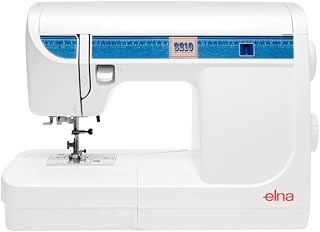
Elna 3210 Jeans Mechanical Sewing Machine
Check Price- Skipped stitches: Replace the needle with a fresh jeans needle size 100/16, rethread the top and bobbin, and sew at a slower speed.
- Needle breaking: The needle is too fine or you are pulling the fabric. Switch to a 110/18, let the feed dogs do the work, and use a hump jumper over thick seams.
- Thread bunching underneath: Rethread with the presser foot up so the thread seats in the tension discs. Check if the bobbin is inserted in the correct direction.
- Uneven topstitching: Install a topstitching needle, lengthen the stitch to 4.0 mm, use a walking foot, and slow down.
- Fabric puckering or shifting: Decrease presser foot pressure, baste critcal seams by hand first, or use wash-away double-sided tape to hold layers together before sewing.
For a deeper dive into handling rigid denim and constructing professional-looking jeans, have a look at our practical tips for handling heavy denim. It walks you through preparation, cutting, and seaming techniques that complement these machine settings perfectly. And if you are ready to build a pair from scratch, our complete tutorial on how to sew jeans will guide you through every step with photos.
Frequently Asked Questions About Sewing Machine Settings for Denim
Can I sew denim with a regular sewing machine?
Yes, absolutely. A standard home sewing machine can handle medium-weight denim with the right needle, thread, and tension settings. Avoid pushing your machine through extreme layer counts without hand-walking the needle, and heavy-dutty models will last longer, but a well-maintained regular machine is capable and safe.
What is the best stitch length for topstitching jeans?
A stitch length of 3.5 to 4.0 mm gives you that authentic, ready-to-wear look without weakening the fabric. Pair it with a topstitching needle and heavier thread for the most professional result.
Do I need a special presser foot for sewing denim?
A walking foot or even feed foot is highly recommended because it prevents the layers from shifting. At minimum, use a standard zigzag foot and reduce presser foot pressure. For hemming thick jeans, a hump jumper or a folded shim is a lifesaver.
Should I use a different bobbin thread for denim?
For most projects, all-purpose polyester thread in both top and bobbin works well. If you are using heavy topstitching thread on top, keep a regular weight thread in the bobbin to avoid bobbin tension issues and reduce bulk. Only use a matching heavy bobbin thread if you need a chain-stitch look on the inside.
Why does my machine skip stitches only on thick denim seams?
When the presser foot tilts at a seam hump, the needle may deflect and miss the bobbin hook. A dull needle makes this worse. Level the foot with a seam jumper, switch to a fresh size 100/16 jeans needle, and sew slowly. Cleaning the feed dogs and race area also improves reliability.
Final Thoughts on Dailing In Your Denim Settings
Perfect sewing machine settings for denim are not a one-size-its-all formula; they are a conversation between your fabric, your machine, and your ears and eyes. When the stitch sounds smooth and the needle punches through without hesitation, you have found the sweet spot. Start with a 100/16 jeans needle, a tension of 4 to 5, a stitch length of 3.0 to 3.5 mm, and a walking foot if you have one. Test on scraps, adjust one variable at a time, and soon the hum of a well-behaved machine over denim will be one of your favorite sounds in the sewing room. Every heavy fabric project you tackle from this point on will feel more controlled and less intimidting.
