
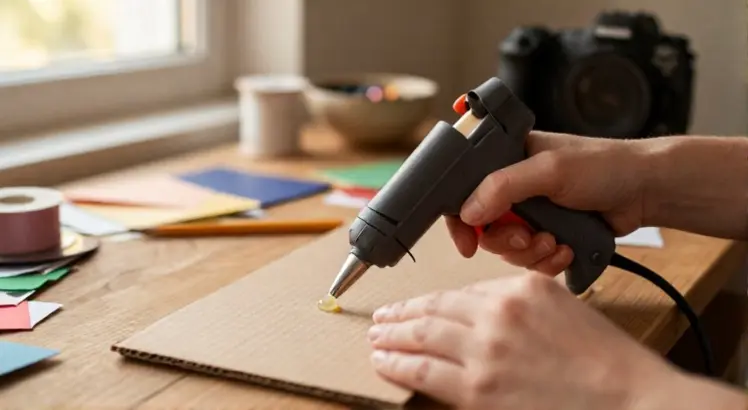
Picking up a hot glue gun for the first time feels equal parts exciting and intimidating. You have visions of quick fixes, craft projects, and impressive repairs, but the hot tip and molten glue can be daunting. The good news is that learning how to use a glue gun for first time is straightforward when you break it down into simple, safe steps. This guide will walk you through everything from setup to final bonding, so you can melt, stick, and create with confidence.
What is a Hot Glue Gun and How Does It Work?
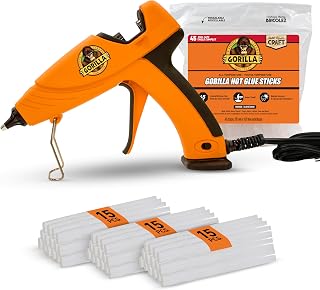
Gorilla Hot Glue Gun Kit, Dual Temp, Full Size
Check PriceA hot glue gun is a handheld tool that melts solid adhesive sticks and dispenses them as a liquid bonding agent. Inside the gun, a heating element warms up when you plug it in. You push a glue stick into the back, pull the trigger, and the melted glue flows out of the nozzle onto your project. As the glue cools and solidifies, it forms a strong, durable bond.
Understanding how to use a glue gun for the first time starts with knowing the two main types: low-temperature guns that melt glue around 250 degrees Fahrenheit and high-temperature guns that reach about 380 degrees Fahrenheit. Some dual-temperature models let you switch between both settings. Low-temp guns are safer for delicate materials like foam or lightweight fabric, while high-temp versions work best on wood, plastic, and heavy-duty repairs.
Essential Safety Precautions Before You Start
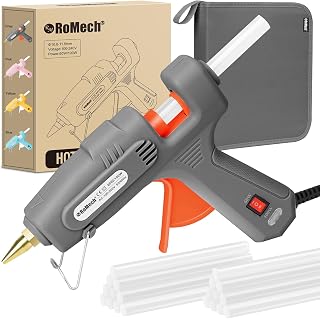
ROMECH Full Size Hot Glue Gun with 60/100W Dual Power
Check PriceBefore you even plug in your tool, safety is the top priority when using a hot glue gun for the first time. Always place the gun on its built-in wire stand or a non-flammable surface like a silicone mat. Never lay it on its side while hot, as the nozzle may touch your worktable and cause a burn or fire. Keep a bowl of cold water nearby in case of skin contact, and work in a well-ventilated area because some glue fumes can be irritating.
Wear safety glasses if you are gluing overhead or working with materials that may splatter. Remember that the metal nozzle gets extremely hot; avoid touching it while the gun is on or shortly after unplugging it. For more detailed safety precautions for hot glue guns as recommended by experts, follow established guidelines to protect your skin and workspace.
Choosing the Right Glue Sticks for Your Project
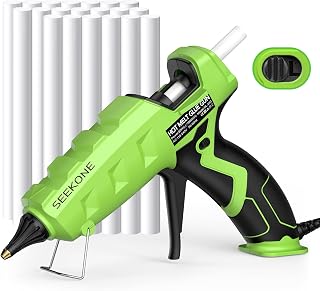
SEEKONE Full Size Hot Glue Gun 60/100W Dual Power
Check PriceNot all glue sticks are created equal, and matching the stick to both the gun and the material is critical when learning how to use a glue gun for first time. Standard hot glue sticks come in a range of diameters, with 7/16-inch (full-size) and 5/16-inch (mini) being the most common. Full-size guns use full-size sticks. Check your gun’s manual to confirm compatibility. Adhesive formulations vary, too. General-purpose clear sticks work for most household fixes.
Specialty sticks include slow-setting formulas that give you more positioning time, extra-strength sticks for outdoor use, and colored or glitter sticks for crafts. If you are bonding fabric, consider sticks designed for textiles, and visit our best hot glue gun for fabric guide to see which adhesives deliver flexible, washable results. Always keep glue sticks clean and free of dust to avoid nozzle clogs.
Setting Up Your Workspace: Tools and Materials
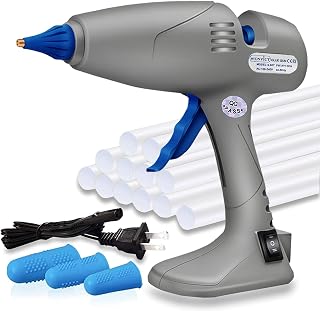
MONVICT Full Size Hot Glue Gun, 120 & 80W Dual Temp
Check PriceA well-prepared workstation makes any first time using a glue gun smoother and safer. Clear your table of flammable items like paper, fabric scraps, or alcohol-based cleaners. Cover the surface with a silicone mat, parchment paper, or a non-stick craft sheet to protect against drips.
Gather your materials: the glue gun, the correct glue sticks, the items you will bond, a piece of scrap cardboard to catch excess glue, and a toothpick or craft stick for pressing down glue without burning your fingers. Have a stand or protective tray ready for the hot gun between uses. If you plan to work on detailed crafts, a hot glue gun for crafting with a precision nozzle will give you better control. Good lighting is also important so you can see exactly where the molten glue lands.
Step-by-Step Guide: Using a Glue Gun for the First Time
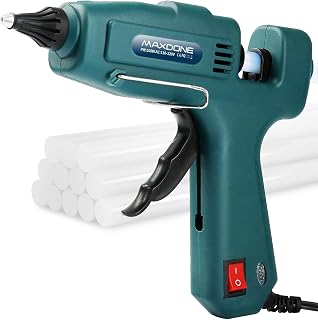
MAXDONE Fireproof 100W Hot Glue Gun Kit
Check PriceNow it is time to put everything into practice. Follow these clear actions for how to use a glue gun for the first time.
- Insert a fresh glue stick into the back of the gun until it stops.
- Plug the gun in and set it on its stand. Let it heat for 3 to 5 minutes, or until a tiny bead of glue appears at the nozzle tip.
- Test the glue flow on a scrap surface first. Squeeze the trigger gently; the trigger advances the stick, pushing molten glue out.
- Apply glue to one surface only, in a line, dots, or a zigzag pattern, depending on the bond area.
- Press the two pieces together firmly and hold them in place for 30 to 60 seconds. Avoid sliding the parts around; a steady press creates a stronger seam.
- If glue strings appear, wait a moment before lifting the gun away or use a scrap cardboard to catch them. You can twist the gun slightly to break the strand.
After you finish, unplug the gun and let it cool completely on its stand. Never pull a partially used glue stick out from the back; this can damage the feed mechanism. Simply leave the stick in place for your next session.
Understanding Dual Temperature Settings
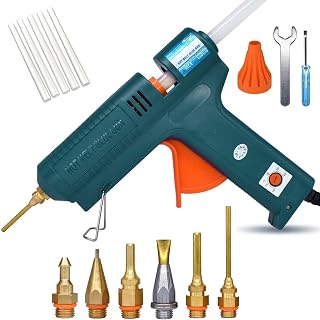
BOSWELL 150W Full Size Hot Glue Gun with 6 Copper Nozzles
Check PriceMany modern glue guns include a switch that lets you choose between high and low temperature. Knowing which setting to pick is a key part of learning how to use a glue gun for the first time. Low temperature works well on heat-sensitive materials such as floral foam, delicate fabrics, lace, or childrens craft supplies. It reduces the risk of melting or scorching your base material.
High temperature creates a deeper, stronger bond on wood, ceramics, metal, and heavy cardboard. If your gun features dual power, as several full-size models do, start with the low setting for practice. You can always step up to high once you feel comfortable. Always confirm that your glue sticks are compatible with your chosen temperature; some sticks are formulated only for low or high melt conditions.
Techniques for a Strong and Clean Bond
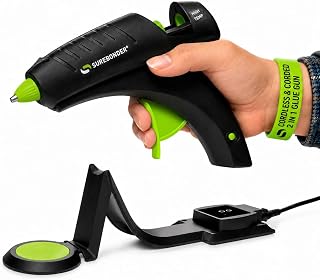
Surebonder Cordless Hot Glue Gun CL-800F
Check PriceMastering the squeeze is about more than just pulling the trigger. When you use a glue gun for the first time, you may discover that hot glue thickens as it exits, making it easy to create messy blobs. For a clean finish, keep the gun at a 45-degree angle and apply steady, light pressure on the trigger. Move the nozzle smoothly along the surface, much like piping icing on a cake.
To avoid unsightly strings, release the trigger a second before you stop moving, and then dab the nozzle on a scrap pad. Pressing the two substrates together gently but firmly pushes out air bubbles and creates a flatter joint. If you need to bond a large area, work in sections rather than trying to glue everything at once because hot glue sets quickly.
Common First-Time Mistakes and How to Avoid Them
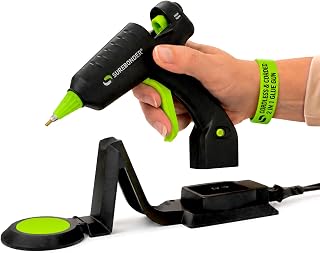
Surebonder Cordless/Corded Mini Hot Glue Gun CL-195F
Check PriceEven with a simple tool, beginners tend to repeat a handful of errors. The biggest one is applying too much glue. More adhesive does not mean a stronger hold; it just makes a mess and extends drying time. Another mistake is not allowing the gun to fully preheat. Patience is your friend; wait until the glue flows freely and consistently before you begin.
Some people attempt to glue dirty, oily, or dusty surfaces, which prevents proper adhesion. Always wipe your project pieces clean first. Also avoid touching the hot glue with bare fingers. A silicone finger cap or a wooden stick will let you shape the glue safely. Lastly, pulling the gun away too fast often creates long spiderweb strands. Slow down and twist the gun slightly to break the bond cleanly.
Cooling and Curing: How Long Does Hot Glue Take to Dry?
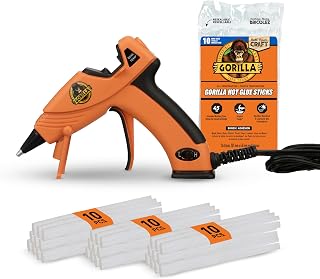
Gorilla Mini Hot Glue Gun Kit, Dual Temp
Check PriceWhen you use a glue gun for the first time, it helps to know exactly how fast the bond sets. Hot glue skins over within 10 to 30 seconds and reaches about 80 percent of its strength within a minute or two. However, full curing, where the adhesive reaches maximum hardness, can take up to 24 hours, especially with thicker beads.
Environmental factors like room temperature and humidity play a role; cooler spaces accelerate the set time, while hot, humid air may delay it. For critical projects, let the bond rest undisturbed for at least an hour before handling it. If you accidentally bump the joint, you can reheat the glue with a heat gun or hairdryer to soften and reposition it.
Removing Excess Glue and Cleaning Your Glue Gun
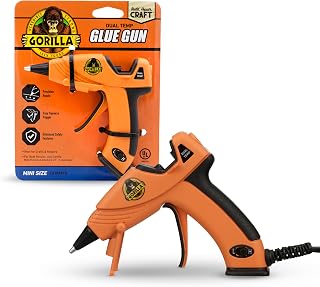
Gorilla Dual Temp Mini Hot Glue Gun
Check PriceCleaning up spills and maintaining your tool will make every subsequent use easier. Once the gun has cooled completely, peel off dried glue drips from the nozzle and body by hand. You can use a cotton swab dipped in rubbing alcohol to wipe away any residue on the cool tip. Never use water or abrasive scrubbers on a hot nozzle. If excess glue lands on your project, let it harden completely, then gently pry it off with a fingernail or a plastic scraper. For delicate surfaces, a hairdryer can soften the glue enough to lift it without damage. Storing the gun with a glue stick inside is perfectly safe; just make sure the tool is unplugged and resting on its stand.
Storage Tips to Prolong Glue Gun Life
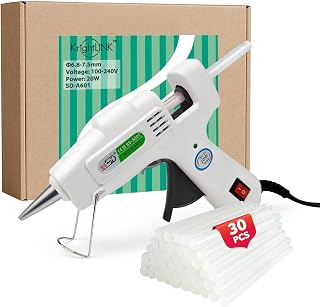
Krightlink Mini Hot Glue Gun Kit with 30 Glue Sticks
Check PriceProper storage keeps your glue gun ready for your next project and extends its lifespan. After the gun has cooled, store it upright in a dry environment, away from direct sunlight and moisture. Avoid wrapping the cord tightly around the handle; the stress can fray internal wires. Instead, coil the cord loosely and secure it with a twist tie. Keep spare glue sticks in a sealed container to prevent dust accumulation, because dirty sticks can introduce debris into the heating chamber and clog the nozzle. If you own multiple guns, label them by temperature range or project type so you always grab the right one when you want to remember how to use a glue gun for the first time with each new tool.
Advanced Applications: Beyond Basic Crafts
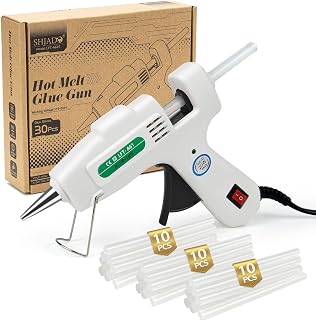
SHJADE Hot Glue Gun with 30 Glue Sticks
Check PriceOnce you are comfortable with the basics, a hot glue gun becomes a versatile problem solver. You can use it to temporarily hold seams together for sewing, secure wig caps to mannequin heads, build textured surfaces on mixed-media art, or even create waterproof seals on outdoor gear. Hot glue can also serve as a removable assembly aid; apply a few small dots to hold parts while you drill or nail them permanently.
Some crafters use colored hot glue to make custom embellishments by extruding the molten adhesive into silicone molds. Remember that hot glue is not a substitute for structural adhesives in load-bearing applications, but for countless around-the-house fixes, knowing how to use a glue gun for the first time opens the door to endless possibilities.
Frequently Asked Questions About Using a Glue Gun
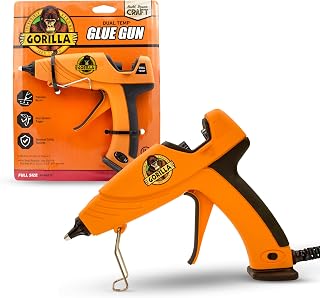
Gorilla Dual Temp Full Size Hot Glue Gun
Check PriceHow do I know when the glue gun is ready to use?
A small drip of glue forming at the nozzle tip is the universal sign that the gun has reached operating temperature. Wait a few minutes and test the flow on scrap material.
Can I leave a glue stick in the gun when not in use?
Yes, it is perfectly fine to leave a glue stick inside the cool, unplugged gun. Do not try to pull a partially melted stick out backward, as that can damage the mechanism.
Why does my glue gun keep dripping even when I do not pull the trigger?
Light dripping is normal as the glue inside the chamber expands with heat. If dripping is excessive, you may be using a higher temperature than needed or a stick of slightly smaller diameter. Rest the gun on its wire stand so drips fall on a protective mat.
Is hot glue waterproof?
Most standard hot glue sticks are water-resistant and can handle occasional moisture, but they are not fully waterproof for continuous submersion. Look for specially formulated outdoor or marine-grade sticks if you need a permanent seal.
How can I prevent glue strings when I pull the gun away?
Release the trigger a moment before you finish the bead and then twist the gun slightly. Keeping the nozzle clean also minimizes stringing.
Conclusion
Using a glue gun for the first time does not have to end with singed fingertips or a sticky disaster. By choosing the right size, heating the tool completely, and practicing a gentle trigger squeeze, you set the stage for clean bonds on paper, fabric, wood, and more. The safety steps are simple but essential: protect your surface, keep water nearby, and always unplug the gun when you take a break. Once you have absorbed these habits, you will be amazed at how fast you can repair, assemble, and decorate.
Your glue gun is more than a hot stick of plastic; it is a gateway to creative problem-solving. Stock a few extra glue sticks, bookmark the rules, and dive into that first project. Before long, you will be reaching for the tool without a second thought, turning raw materials into finished pieces with the confidence of a seasoned maker.
