
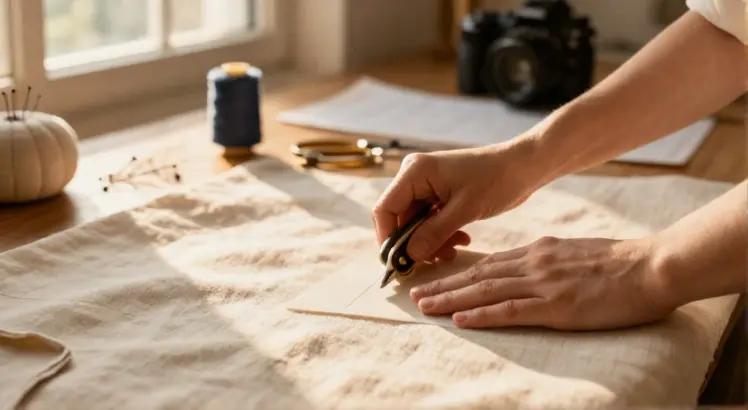
Transferring pattern markings onto fabric might seem like a minor step in the sewing process, but skipping it almost guarantees a wonky garment. Misaligned darts, forgotten pocket placements, and uneven buttonholes are often the result of guessing rather than marking. Learning how to use dressmakers carbon paper is the classic solution to this problem. This technique, favored by professional tailors and home sewists alike, provides a quick, accurate, and reliable method to transfer construction details from a tissue pattern directly to your fabric before you even thread your needle.
While fabric markers and tailor’s tacks have their place, dressmakers carbon paper remains the gold standard for precision and speed on stable fabrics. It eliminates the guesswork and gives you a clear roadmap for stitching. In this guide, we will walk you through the entire process, from selecting the right supplies to mastering the pressure technique that ensures crisp, clean lines without damaging your material.
What is Dressmakers Carbon Paper
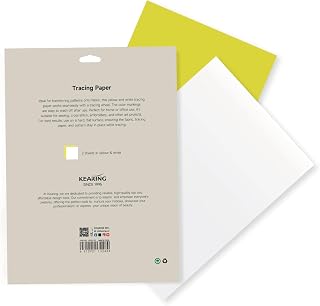
KEARING 32″x22″ Fabric Tracing Paper – Yellow & White Pattern Transfer
Check PriceDressmakers carbon paper, often called tracing paper by sewists, is not the same as the graphite carbon paper used in offices. It is a specialized waxy or chalk-coated paper designed specifically for fabric. The coating transfers a fine line of color to the fabric when pressure is applied. Unlike office carbon paper, which leaves greasy, permanent stains, a quality dressmakers carbon paper is designed to be removed easily, usually by washing or brushing, without ruining your project.
It typically arrives in packs containing several sheets of different colors. The most common colors are blue, white, yellow, and red. Having multiple colors is essential because you must match the paper color to your fabric to ensure visibility. You would not use yellow paper on light beige linen or white paper on a pale cotton blend because the lines would be invisible against the background.
Essential Tools for the Job
Hemline Dressmakers Carbon Paper
Check PriceBefore you start marking, gathering the correct tools ensures a smooth process. There is a tendency to grab whatever is nearby, but using the wrong tool directly ruins fabric or causes inaccurate lines. Here is what you should prepare.
Choosing the Right Tracing Wheel
The tracing wheel is the engine of the operation. You press and roll it along the pattern lines to transfer the wax. Selecting a specific wheel makes a massive difference in the final result. Here are the two main types:
- Needle Point (Spike) Wheel: This one has sharp spikes. It is aggressive and leaves tiny puncture holes. Reserve this for sturdy, tightly woven fabrics and interfacing. Do not use it on delicate fabrics like silk or rayon, as the spikes will snag or permanently damage the fibers.
- Smooth (Blunt) Edge Wheel: This option has a smooth, non-serrated disc. It is the universal choice for most fabrics. It presses the carbon coating onto the fabric without breaking fibers. It is safe for light wovens and synthetics and is the recommended tool for beginners learning how to use dressmakers carbon paper effectively.
- Double Tracing Wheel: This specialized tool has two adjustable wheels. It is perfect for marking seam allowances simultaneously, as it draws the cutting line and the stitching line at the same time.
Picking the Perfect Carbon Color
The rule of thumb is simple: contrast, but do not stain. Use a light color on dark fabric and a dark color on light fabric.
- White or Yellow: Use these on dark denim, navy wool, heavy black suiting, or deep jewel tones.
- Blue or Red: Best for pale cottons, light linens, cream silks, and pastels. Always test blue and red on a scrap first. On some polyesters, these colors become permanent if ironed or steamed before washing.
The Pressing Surface
Do not perform the transfer on a flimsy dining table without protection. You need a firm, smooth, but slightly yielding surface to make the carbon bite the fabric. Working directly on a polished wood table can damage the table and skip marks on the fabric. Place a self-healing cutting mat, a piece of heavy cardboard, or a sheet of template plastic under your work. This provides the right traction for the tracing wheel to transfer perfectly.
Step-by-Step Guide on How to Use Dressmakers Carbon Paper
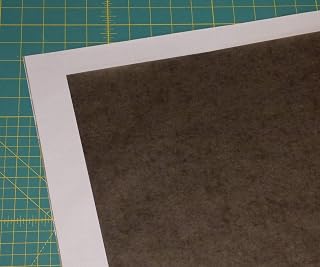
Sewing Pattern Carbon Tracing Paper by CRE
Check PriceSpeed and sloppiness are the enemies of accuracy here. Taking your time during the transfer saves frustration later. Three primary methods apply depending on your pattern’s state and the specific markings you need. Each method demands specific placement and pressure control.
Method 1: Transferring After Cutting (The Standard Method)
Most sewists transfer marks after cutting the pattern pieces out of fabric. This limits the carbon placement to specific spots and avoids wasting paper.
- Press the Fabric: Your fabric must be ironed completely flat. Wrinkles distort the lines and cause the carbon to drift.
- Insert the Carbon: Place the coated side of the carbon paper facing down against the wrong side of your fabric. For darts and lines that matter on the construction side, always mark the wrong side. To mark two pieces at once, sandwich the carbon between two layers of fabric, with the coated side touching both.
- Position the Pattern: Place the tissue pattern piece on top of the carbon paper.
- Secure the Layers: Use pattern weights, heavy washers, or tape to anchor the stack. This prevents shifting, which causes double lines.
- Trace the Lines: Roll the tracing wheel along the exact lines you need. Use a ruler for straight lines like darts and grainlines. Apply firm, even pressure.
Method 2: Transferring Patterns Before Cutting (The Full Transfer)
This technique is useful for marking entire motifs for embroidery or marking layout lines on uncut yardage. It requires accurate pressure because you are moving across large surfaces.
- Lay the fabric, right side up, on your mat.
- Place the carbon paper, coating face down, onto the fabric.
- Place the pattern sheet on top.
- Trace the cutting lines and all internal markings.
Method 3: Marking Darts and Internal Details
Darts require perfect accuracy. To mark a dart, visualize its shape. You need to transfer the two legs of the dart and the fold line. Some sewists prefer marking the dots at the end of the dart legs rather than long lines. Others trace the entire folding line. If using wax carbon, fold the fabric along the dart line to check that the marks align before removing the paper.
Marking the Right Side vs. The Wrong Side
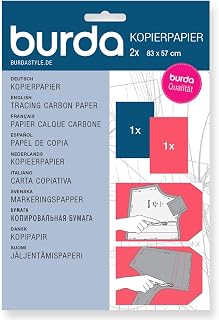
Burda Tracing Carbon Paper 1 x Blue 1 x Red by Burda
Check PriceA common mistake is marking the decorative side of the fabric and discovering the chalky lines will not come out. In most cases, you should mark the wrong side of the fabric. If you need a guide on the right side, for instance, for topstitching or pocket placement ensure you are using a brand labeled ‘removable’ or ‘air/water-soluble’.
If you need marks on the right side, place the carbon face up, with the fabric right side down, so you trace from the back. Or, use a wax-free tracing paper specifically designed for direct application. Testing on a scrap is the single most important piece of advice when learning how to use dressmakers carbon paper on finished surfaces.
How to Remove Dressmakers Carbon Marks
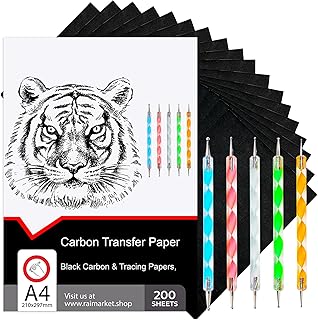
200 Sheets Black Carbon Paper for Tracing On Fabric
Check PriceThe removal method dictates the success of your project. Nothing is worse than finishing a dress and ironing it only to set a bright blue mark permanently into white cotton. Different coatings react differently to cleaning.
Wax-Based Carbon Removal
This is the most old-school type. It usually vanishes with a wash cycle in warm water and detergent. However, pressing with a hot iron melts the wax into the fibers. If you iron over wax marks before washing, the stain sets. To remove stubborn wax marks, dab the area with rubbing alcohol or use a fabric eraser gently before laundering.
Chalk-Based and Water-Soluble Carbon
Modern quick-release papers often use a chalk coating. A quick swish in water erases these instantly. A damp cloth can also remove specific spots without washing the entire garment. This is safer for items that will be pressed heavily before sewing. Always brush off excess chalk before using an iron.
Common Mistakes and Troubleshooting
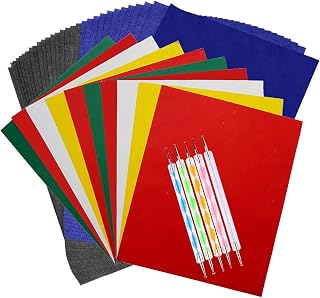
100 Sheets Carbon Transfer Paper,Tracing Paper Carbon Graphite Copy Paper
Check PriceEven experienced sewists occasionally run into issues. Identifying the root cause quickly saves the fabric from the trash bin. If you find a lack of clear lines or discover broken marks, checking a few variables helps correct the course.
Faint or Skipped Lines
This happens when the surface underneath has too much give. If you layered a thick wool on a plush ironing board grid, the fabric bounces against the tracing wheel. Move to a hard, smooth mat surface. It also happens if the carbon paper is old and the coating has dried out. Pressing harder compensates somewhat, but old paper should be replaced.
Stains That Will Not Budge
If a mark resists washing, you likely used a wax paper on a synthetic that is holding static. Try blotting with a paper towel and a low-heat iron to lift the wax onto the towel. Alternatively, a specialty fabric eraser can physically remove the surface wax. Avoid using office-grade carbon paper at all costs, as that ink is permanent.
Fabric Snags
Switch from a needlepoint wheel to a smooth edge immediately. If using a smooth wheel still catches, check the wheel for burrs. A dropped tool can develop sharp dents that catch silk. Replace damaged wheels immediately.
Dressmaker Carbon Paper vs. Other Transfer Methods
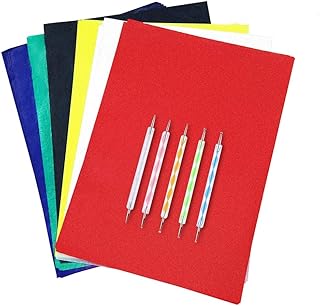
120pcs A4 Transfer Paper with 5pcs Embossing Stylus
Check PriceIs carbon paper always the right choice? It depends on the project timeline and fabric pile. Comparing it with modern alternatives clarifies its superiority for specific tasks.
- Disappearing Ink Pens: Excellent for quick marks on the right side, but the ink can evaporate before you finish the project in dry climates, or conversely, reappear in cold temperatures.
- Tailor’s Chalk: Great for quick fitting adjustments. For detailed pattern transfers with tight darts, the edge of a chalk wedge is too thick. Carbon paper lines stay sharper for precise stitching.
- Tailor Tacks: The laser-guided option of the sewing world. It is the safest choice for cashmere, heavy woolens, and couture fabrics where chalk or wax is a liability. However, it is slow. For a fitted blouse with eight darts and pleats, carbon paper is exponentially faster.
Experience and Trust: Notes from the Workroom
120pcs A4 Transfer Paper with 5pcs Embossing Stylus
Check PriceHaving used these tools on everything from heavyweight denim to sheer silk chiffon, I have learned that the pressure applied is a muscle memory skill. You will inevitably roll too hard and shred the tissue and too light and see nothing. Practice on a folded fabric scrap to find the sweet spot. Trust the process, but verify the results. Always lift a corner of the pattern gently to check if the line is clear enough *before* unpinning the entire stack.
Furthermore, the quality of the paper matters dramatically. High-quality sheets like those from Clover or Saral transfer a fine, consistent powder coating. Cheap unbranded packs often feature spotty coating distribution, leading to frustration and wasted fabric. Investing in a good pack is part of treating your fabric with respect and authority.
External resources like the detailed history of pattern sewing illustrate how long these tools have been essential in garment construction, underscoring their enduring reliability.
Frequently Asked Questions

ASTARON 150 Sheets Black Carbon Copy Paper and Tracing Paper with Tool Set
Check PriceCan I use regular office carbon paper on fabric
No. Office carbon paper uses ink and graphite that are designed to be permanent. It will stain fabric irreversibly and smear into a greasy mess. You must use wax-free or chalk-coated carbon paper specifically labeled for dressmaking and sewing.
Which side of the dressmakers carbon paper goes down against the fabric
The coated, colored side goes face down against the fabric. If you put the glossy or matte uncoated side down, nothing transfers. You can test this by lightly scratching the paper, the color side scrapes off easily.
How do you get stubborn carbon marks out of silk
Avoid harsh rubbing. Try lifting the mark with a clean art gum eraser or a piece of fresh white bread rolled into a ball. Brushing with a soft toothbrush can also lift dry chalk residue without crushing the delicate fibers.
Can I iron over dressmakers carbon paper
You should remove the marks before ironing if possible. Heat sets many wax-based and some colored transfer papers permanently into the threads. Always test on a scrap first by pressing a marked corner piece. If the test darkens the mark, remove all visible tracing before construction pressing.
Conclusion

MyArtscape Graphite Transfer Paper Roll 17″ x 30ft Black Waxed
Check PriceMastering how to use dressmakers carbon paper bridges the gap between a commercial pattern and a custom-tailored fit. It takes the vague marks on tissue and translates them into exact stitching roadmaps on fabric. By selecting the correct color, pairing it with the right tracing wheel, and pressing on a hard smooth surface, you ensure your darts match and your pockets land exactly where they should.
Do not let the simplicity of the tool fool you; precision separates a hobbyist from a craftsperson. Gather some scraps, test your colors, and train your hands to deliver even pressure. Make marking a mandatory, non-negotiable part of your cutting routine. Once you experience the joy of perfectly matched seams directly flowing from those crisp carbon lines, you will understand why this old-school notion remains irreplaceable in the modern sewing room.

Disclosure: As an Amazon Associate, we earn from qualifying purchases at no extra cost to you. Our posts are created with AI tools and human editing.