
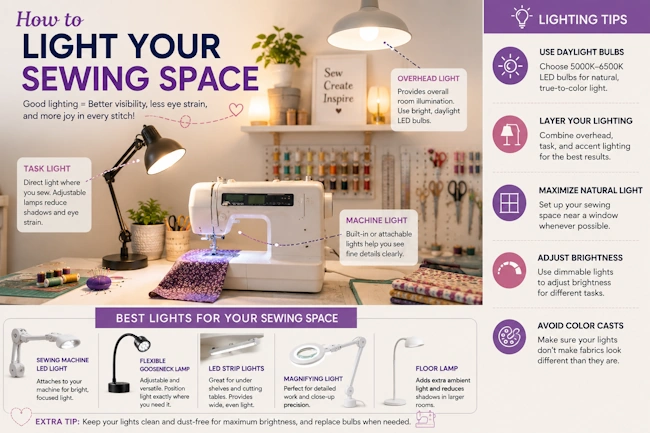
Getting the right light in your sewing space can make the difference between a relaxing hobby and a frustrating chore. Whether you are threading a needle, matching delicate seams, or following a complicated pattern, your eyes deserve clear, shadow‑free illumination. Many sewists start by relying on a single ceiling fixture only to find themselves squinting, missing snipped threads, or making stitching errors they would catch in better light. Learning how to light your sewing space properly protects your vision, raises your accuracy, and actually makes you want to sit down and create.
Why Lighting Your Sewing Space Matters More Than You Think
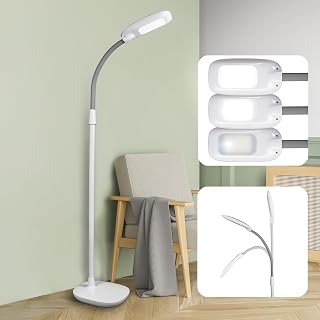
OttLite ClearSun LED Floor Lamp
Check PriceYour eyes are your most valuable sewing tool. Poor lighting forces them to work harder, leading to fatigue, headaches, and even neck pain from leaning in too close. Good lighting lets you see thread colors accurately, notice fabric grainlines, and catch tiny misalignments before you stitch. It is especially important if you work with dark fabrics, fine needles, or do hand embroidery. Without enough light, you risk skipped stitches, tension issues you cannot see, and finished garments that do not look quite right. A well‑lit sewing room also boosts your mood and keeps you sewing longer without discomfort.
Beyond comfort, lighting impacts safety. Poor visibility around moving machine parts, rotary cutters, and hot irons can lead to accidents. When you know how to light your sewing space correctly, every tool and surface becomes safer to use. Later in this guide you will see specific fixtures that help, plus links to articles on picking the right fixtures for your sewing room and adding dedicated machine lighting.
Understanding the Three Layers of Sewing Room Light
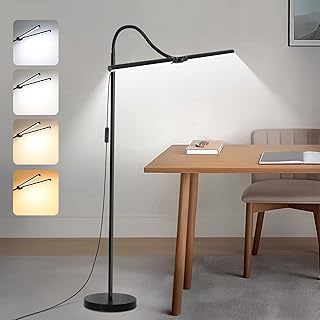
LED Floor Lamp with Double Head
Check PriceProfessional lighting designers build a room with three layers: ambient, task, and accent. You do not need all three, but combining at least two layers removes shadows and gives you consistent brightness. Let’s break down what each layer does for a sewing space.
Ambient Lighting: The Foundation
Ambient light fills the entire room and softens harsh contrasts. In a home sewing room this usually comes from a ceiling fixture, recessed cans, or natural daylight from windows. While ambient light alone is never enough for detailed work, it prevents the room from feeling like a cave. A good starting point is an overhead LED fixture that provides at least 3,000 lumens for a 10‑by‑10‑foot room. Choose a fixture with a diffuser or frosted cover to spread the light evenly rather than creating a single bright spot.
Task Lighting: Your Precision Partner
Task lighting directs focused illumination exactly where you need it. For sewists, this means a lamp aimed at the needle plate, a magnifying lamp over handwork, or an LED strip under a cabinet above the cutting table. The goal is to eliminate shadows cast by your hands or the sewing machine head. Task lights should be adjustable so you can change the angle as you switch between cutting, pinning, and sewing. Look for lamps with a long, flexible arm or a gooseneck that stays put without drooping.
When placing task lights, position them slightly to the side rather than straight in front of you. This prevents glare from bouncing off shiny fabric or a metallic throat plate. If you are right‑handed, place the light on the left so it does not cast a shadow under your hand as you feed fabric. Left‑handed sewists should place the light on the right. This small adjustment can drastically reduce eye strain and improve stitch visibility.
A high‑quality task lamp often uses LED bulbs because they stay cool during long sessions and you can get very high color accuracy. For hand sewing or embroidery, a magnifying lamp with a built‑in light is a game‑changer; the closer you can bring your work into view, the neater your stitches will be.
Accent Lighting: The Finishing Touch
Accent lighting is optional but useful. It highlights certain areas or creates a warm atmosphere. You might add a small picture light over a thread rack so you can spot the exact color spool quickly, or place a slim LED bar inside a cabinet that turns on when you open the door. While accent lighting does not replace task lighting, it makes your sewing space feel more inviting and organized.
Choosing the Right Color Temperature and Brightness
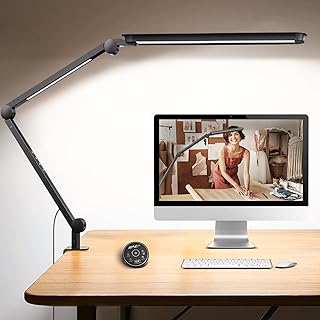
LED Desk Lamp with Clamp
Check PriceMany people grab any household bulb thinking light is light. But the color of light and how bright it is dramatically changes how you see fabric. Once you understand these two factors, you can shop for bulbs with confidence.
Color Temperature: Kelvin Ratings Made Simple
Measured in Kelvin (K), color temperature tells you whether light appears warm (yellow) or cool (blue). For sewing, you want a balanced daylight tone. Bulbs between 4000K and 5000K are ideal. At 4000K the light is neutral white, which is comfortable for long periods and renders colors fairly well. At 5000K you get a crisp, slightly cool white that mimics midday sun, which is excellent for distinguishing black from navy or dark brown, something fabric shoppers know is tricky. Avoid bulbs below 3000K (too warm, can make whites look dingy) and above 6000K (too clinical and harsh).
Brightness: Lumens Instead of Watts
Forget watts. Look at lumens, the real measure of brightness. For ambient ceiling lights, aim for 3,000‑4,000 total lumens in an average room. For your task lamp, a single LED bulb of 800‑1,100 lumens placed close to the work area is usually sufficient. More important than raw lumens is how the light is distributed. A focused beam of 900 lumens aimed at the needle will feel much brighter than a 2,000‑lumen ceiling fixture that scatters light everywhere. If you often sew with dark velvet or denim, lean toward the higher end of the brightness range.
Color Rendering Index (CRI) – The Secret to True Colors
CRI measures how accurately a light source reveals colors compared to natural daylight. The scale goes up to 100. For sewing, a CRI of 90 or above is recommended. Cheaper LEDs may have a CRI of 80, which can make thread colors look off and cause mismatching. A high‑CRI bulb allows you to see subtle shade variations and ensure your topstitching thread blends or contrasts exactly as intended. Many manufacturers now print the CRI on the packaging, so just look for a 90+ rating when buying sewing room bulbs.
Natural Light vs Artificial Light in the Sewing Room
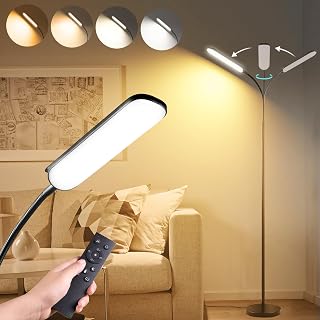
Marctronic Floor Lamp
Check PriceNothing beats daylight for color accuracy, so if your sewing space has a window, make the most of it. Position your sewing table perpendicular to the window, not directly facing it. Facing the window causes glare and forces your pupils to adjust constantly. Sitting sideways gets you bright, diffused light without the strain. However, daylight shifts constantly, so you still need consistent artificial lighting to fill in shadows on cloudy days or after sunset.
Use sheer curtains or adjustable blinds to soften direct sun, especially if you work with shiny fabrics that produce glare. If natural light is scarce, you can mimic it with high‑CRI, 5000K LED strips placed around the perimeter of the room. Many sewists report that a combination of natural light from one side and a task lamp on the opposite side creates the most comfortable, shadow‑free setup.
Best Light Fixtures for Different Sewing Stations
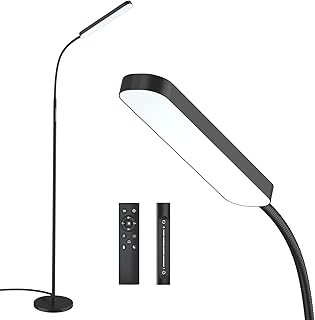
Wio-Mio Floor Lamp
Check PriceRather than buying one expensive lamp and hoping it works everywhere, think about your main activities: machine sewing, cutting, pressing, and handwork. Each station benefits from a slightly different fixture.
- Sewing machine station: A clip‑on or magnetic LED work light attached to the machine head shines directly on the needle plate. Combine it with a floor lamp behind your shoulder to wash the entire area with light. For built‑in brightness, many modern machines have LED strips near the needle; supplement those with an adjustable arm lamp if they are not sufficient.
- Cutting table: Use an overhead LED panel or two long LED under‑cabinet strips mounted above the table. The strips should run the length of the cutting surface so no shadow falls from the ruler or rotary cutter. If you cut large pieces, consider two parallel strips spaced 24‑30 inches apart for even light.
- Ironing board: A standing floor lamp with an adjustable arm lets you position light directly over the fabric without the cord getting in the way. Good visibility is crucial for pressing seams flat and checking for puckers.
- Hand sewing corner: A magnifying desk lamp with a built‑in daylight LED is the ultimate tool. It enlarges tiny stitches and provides instant shadow‑free illumination for counted cross‑stitch, mending, or beadwork.
- Thread and notion storage: Small LED puck lights or battery‑operated strip lights inside cabinets make it effortless to find the right spool or bobbin without hunting in the dark.
When buying any fixture, look for adjustable brightness (dimmable) and adjustable color temperature if possible. Being able to tweak the light for the specific fabric or time of day is a luxury that pays off in eye comfort.
How to Position Lights to Eliminate Sewing Shadows
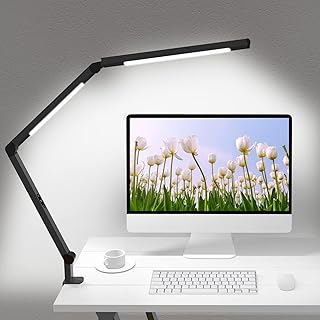
Architect Desk Lamp with Clamp
Check PriceShadow removal is the ultimate test of good lighting. Even with bright bulbs you can still have dark areas exactly where you need to see. Follow these placement principles:
- Keep the main task light between the dominant eye and the work, but off to the side by about 15‑30 degrees to avoid direct reflection.
- Use two light sources at different angles. For example, a daylight lamp on your left and a lower‑intensity lamp on the right washes out the shadow that the left lamp creates.
- Ensure the machine head itself does not block the light. A gooseneck lamp can be bent around the harp of the machine to aim at the presser foot from the front.
- Paint walls and the ceiling in a matte, light‑reflective color. White or soft cream walls bounce light around the room and reduce harsh shadows.
- Cover shiny tabletops with a cutting mat in a medium tone; a pure white mat can reflect too much glare, while a dark mat can absorb light.
Test your setup by placing a piece of plain white paper on the sewing machine bed and adjusting the lamp until the paper appears evenly bright with no dark fingertips cast over it when you pretend to sew.
LED, Fluorescent, and Halogen – Which Bulb Technology Is Best for Sewing?
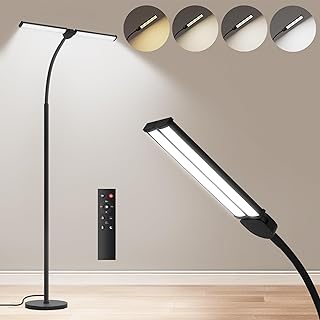
VrimNowit LED Floor Lamp
Check PriceLEDs dominate the market for a reason. They run cool, use little electricity, have a lifespan of 15,000‑50,000 hours, and come in a wide range of color temperatures and CRI values. Modern LEDs can render colors better than older compact fluorescents (CFLs). Halogen bulbs produce excellent light with a perfect CRI of 100, but they generate intense heat and are energy hogs.
A hot halogen lamp next to your face during summer sewing is uncomfortable, and the heat can damage delicate fabrics if left too close. Fluorescents tend to flicker as they age, which can cause eye strain, and many older models had poor color rendering. Today, if you buy a fixture, choose LED. Look for bulbs labeled as flicker‑free with a CRI above 90.
Special Considerations for Aging Eyes
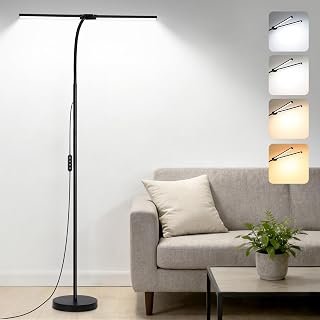
24W LED Floor Lamp with Dual Head
Check PriceAs we age, the lens inside the eye hardens and yellows, meaning we need more light to see the same detail and we struggle to differentiate dark shades. If you are over 50 or just find yourself straining, double the lumens in your task area. Use a magnifying lamp even if you do not think you need magnification; the extra size helps the brain process fine detail. Consider adding a portable magnifying light on a rolling stand that you can move between stations. And increase the general room brightness; older eyes take longer to adapt when moving from a bright area to a dim one, so keep the ambient level high enough that you do not experience sudden changes.
Frequently Asked Questions About Sewing Space Lighting
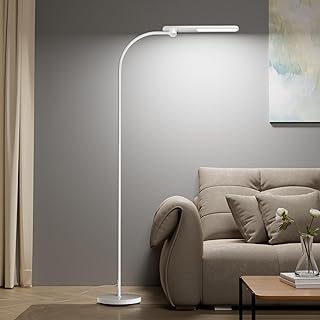
Honeywell LED Floor Lamp
Check PriceWhat is the best color temperature for a sewing room?
Aim for 4000K to 5000K. This range produces a neutral to slightly cool white light that renders colors accurately without being sterile.
How many lumens do I need for sewing?
For ambient room lighting, 3,000‑4,000 lumens total is a good baseline. Your focused task lamp should provide at least 800‑1,100 lumens directed at the needle area. For dark fabrics or detailed handwork, aim for the higher end.
Can I just use the built‑in light on my sewing machine?
Machine lights are a start, but they usually only illuminate a small circle at the needle. They do not light the surrounding table or help when you are pinning, cutting, or reading pattern instructions. Always supplement with an external task lamp.
Should I use a floor lamp or a desk lamp?
It depends on your space. A desk lamp with a clamp can attach directly to the sewing table, freeing up surface area. A floor lamp works well behind or beside you. A portable LED work light on a flexible arm gives you the most versatility.
How can I reduce glare on shiny fabric?
Position the light to the side rather than directly ahead. Use a diffuser or bounce the light off a nearby white wall or ceiling. Lowering the brightness slightly can also help, but do not sacrifice so much that you lose stitch visibility.
How do I reduce eye strain while sewing at night?
Use layered lighting, avoid a single harsh bulb, and add a dimmable task lamp at your machine. Take regular breaks and consider a magnifying lamp for fine hand sewing. Adjusting light levels and reducing glare can ease close work discomfort, as noted in vision comfort recommendations from eye care experts.
Simple Upgrades You Can Make This Weekend
Lighting your sewing space does not require a full remodel. Start by replacing old bulbs with high‑CRI LED daylight bulbs in your existing fixtures. Add a clip‑on LED lamp to your sewing machine; many models cost less than twenty dollars. Install an under‑cabinet LED strip above your cutting table using adhesive backing; this instantly banishes shadows. Move your ironing board so a nearby floor lamp shines directly on the pressing surface. Small changes add up to a dramatically clearer work environment.
Conclusion: Light Up Your Creativity
Knowing how to light your sewing space is one of the most practical skills for any maker. The right combination of ambient glow, a well‑placed task lamp, and daylight‑color bulbs transforms a dull corner into a precision studio. You will make fewer mistakes, enjoy longer sewing sessions, and protect your eyes for years to come. Start with the bulb swap, then gradually add dedicated fixtures as you notice where shadows linger. A well‑lit sewing room is an invitation to create your best work, so go ahead and brighten your space this week.
