
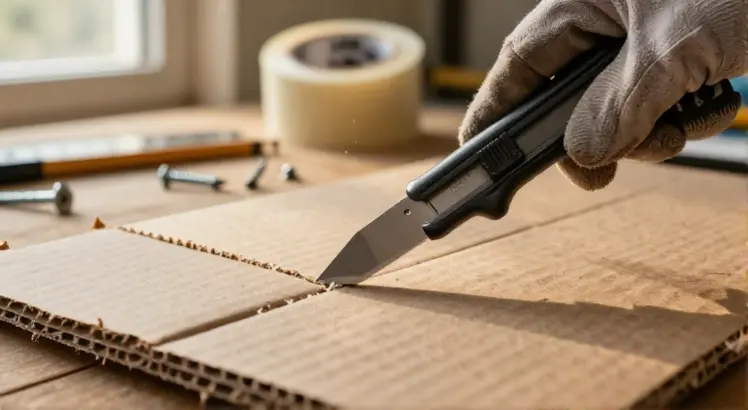
Learning how to cut cardboard easily at home can save you time, money, and frustration. Whether you’re breaking down boxes for recycling, creating a school project, or crafting custom organizers, the difference between a clean edge and a jagged mess usually comes down to the right tool and technique.
Cardboard varies from thin cereal-box stock to heavy-duty double-wall corrugated sheets, and not every method works for every thickness. In this guide, you’ll learn which everyday tools deliver crisp, straight cuts, how to work safely without hand fatigue, and which specialty helpers are actually worth owning.
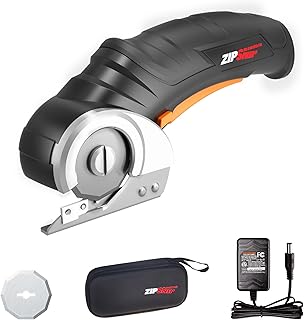
Worx Zipsnip WX082L.2
Check PriceWhy Cutting Cardboard Feels Harder Than It Should
Cardboard seems simple, yet it fights back in ways that surprise beginners. Corrugated cardboard contains a wavy inner layer (fluting) sandwiched between two liners. When you use dull scissors, the material bends and crushes rather than shearing cleanly. A blunt utility knife drags ragged fibres, and a weak cutting surface makes the knife slip. Understanding these pains helps you pick the right approach. Fortunately, a few small upgrades to your technique turn a tiring chore into a fast, clean process.
Essential Safety Gear for Cutting Cardboard Easily at Home
Before you pick up any blade, protecting yourself prevents the most common shop-at-home injury: cuts. Always wear cut-resistant gloves, lightweight level A3 or A4 gloves give excellent dexterity. Place cardboard on a self-healing cutting mat or a thick piece of scrap plywood, never on a dining table you want to keep scratch‑free. Use a metal ruler with a non-slip cork back to guide blades and keep fingers away from the cut line. Finally, keep a first-aid kit nearby, because even careful hands have accidents. For more in‑depth habits, check out this expert advice on cutting cardboard safely.
Best Tools to Master How to Cut Cardboard Easily at Home
You don’t need a workshop full of expensive gear. The six tools below cover everything from quick box breakdowns to precision craft cuts. Match the tool to the cardboard thickness and the finish you want, and you’ll wonder why you ever struggled.
1. Utility Knife (Box Cutter)
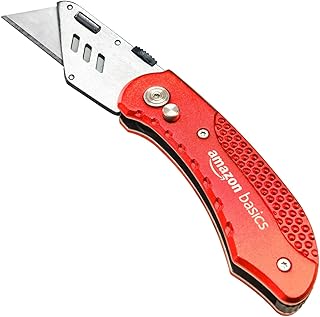
Amazon Basics Folding Utility Knife Box Cutter with Back-lock Mechanism
Check PriceFor most household jobs, a retractable utility knife with snap‑off blades is the champion. Fresh, sharp blades slice through corrugated cardboard effortlessly, leaving a smooth edge. Extend the blade just enough to pierce one layer; a shallow angle reduces drag. Always use a straight edge and make multiple light passes instead of forcing one deep cut. This tool is the foundation of learning how to cut cardboard easily at home, and it handles everything from single‑wall boxes to thick moving‑box material.
2. Heavy‑Duty Scissors
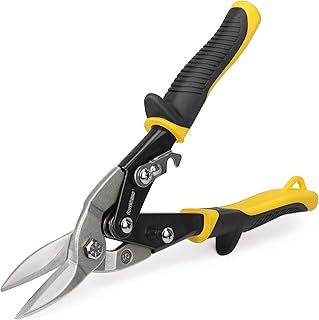
HURRICANE 10 inch Aviation Tin Snips
Check PriceQuality shears aren’t just for fabric. A pair of titanium‑coated, serrated‑blade scissors nibbles through thin to medium cardboard without jamming. They’re ideal for curved shapes, crafts, and cutting small pieces where a knife feels clumsy. Hold the cardboard close to the pivot point for maximum leverage. If you notice the cardboard folding instead of cutting, switch to a knife, scissors work best on single‑wall or thinner material.
3. Rotary Cutter
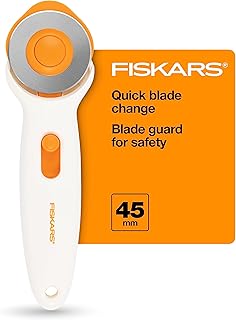
Fiskars 45mm Rotary Cutter for Fabric, Premium Steel Stick Fabric Cutter Cuts Through Multiple Layers
Check PriceBorrowed from the quilting world, a 45 mm or 60 mm rotary cutter gives astonishingly straight lines on cardboard up to 2 mm thick. Roll it along a metal ruler; the circular blade glides without snagging. It’s perfect for making multiple identically sized panels for drawer dividers or model bases. Replace the blade as soon as it starts skipping, dull rotary cutters are a fast track to uneven edges. If you already sew, your best rotary cutter may pull double duty here.
4. Electric Cardboard Cutter
Worx Zipsnip WX082L.2
Check PriceWhen you face mountains of boxes after a move or routinely process cardboard for crafts, an electric cutter saves hours of manual labour. These handheld power tools use a reciprocating or rotary blade to slice through double‑wall cardboard like butter. They’re lightweight, cordless, and rarely crush the fluting. If this sounds like your daily life, read our review of the best electric cardboard cutter for home use to find a model that balances speed, battery life, and comfort.
5. Craft Knife
For intricate patterns, stencils, or cutting out small cardboard windows, a hobby knife (X‑Acto style) is unbeatable. The fine‑point blade handles tight curves and delicate chipboard that would snap under a utility knife. Work on a cutting mat, change blades frequently, and always pull the knife toward you in slow, controlled strokes. It’s the detail‑oriented tool that completes your set for learning how to cut cardboard easily at home with precision.
6. Hand Saw or Jigsaw (for Extra‑Thick Cardboard)
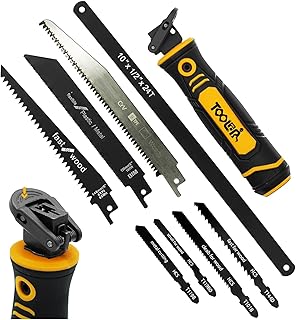
8-In-1 Multi Blades Hand Saw, Drywall Cutter
Check PriceTriple‑wall cardboard tubes, carpet roll cores, or compressed cardboard sheets may defeat even a fresh utility knife. A fine‑tooth pull saw or a jigsaw with a fine‑cut blade zips through these dense materials without tearing. Clamp the workpiece down tightly, wear safety goggles, and keep the saw at a low speed to avoid melting the cardboard if you use a power tool. This is an advanced step, but it works when nothing else will.
Still not sure which blade suits your exact project? We break down every option, manual and electric, in our essential guide to cardboard cutting tools, complete with side‑by‑side comparisons.
How to Make Perfectly Straight Cuts Every Time
Straight lines separate a professional‑looking project from a messy one. Follow this sequence to cut cardboard easily at home without waves or wobbles:
- Mark your cut line with a pencil and a clear acrylic ruler. For long lines, snap a chalk line or use a carpenter’s square.
- Place the metal ruler along the *inside* of the cut line so the blade won’t wander into your finished piece.
- Hold the ruler firmly with your non‑dominant hand, keeping fingertips well clear of the blade path.
- Press the knife against the ruler edge and draw it lightly along the line. Repeat 3‑5 times, deepening the score gradually rather than trying to cut through in one pass.
- If using a rotary cutter, run it steadily alongside the ruler in one fluid motion. Never roll back and forth.
Cutting Different Types of Cardboard Cleanly
Not all cardboard behaves the same. Adjust your approach based on the material:
Single‑Wall Corrugated (Standard Box)
This is the most forgiving. A utility knife or sharp scissors work fast. Cut with the fluting direction when possible; cutting against it can cause slight tearing. If you need a super‑smooth edge, lightly sand the cut with a fine‑grit sanding sponge.
Double‑Wall or Heavy‑Duty Moving Boxes
Two layers of fluting demand a heavy‑duty retractable knife with a fresh blade. Score one side, flip the cardboard, and score the other side along the same line. Then gently fold or tap along the score, it will snap cleanly. This technique reduces blade pressure and hand fatigue.
Chipboard (Cereal Boxes, Backing Pads)
Scissors or a rotary cutter make fast, neat cuts on thin chipboard. If using a knife, a light scoring is enough. Avoid an electric cutter on such thin stock; the aggressive action may tear it.
10 Tips to Cut Cardboard Easily Without Pain or Waste
Over years of moving, crafting, and building prototypes, I’ve gathered small habits that make the process smoother:
- Always snap off a fresh blade segment before a big job. A dull edge is your biggest enemy.
- Lubricate the blade by rubbing it against a beeswax block or a candle stub—this drastically reduces friction.
- Cut on a surface that “gives” slightly, like a self‑healing mat, to keep the blade tip from dulling against a hard countertop.
- Hold the knife at a low angle (about 30°) to let the blade slice rather than scrape.
- For long repetitive cuts, use a straight edge clamp to free up your non‑dominant hand.
- Score the cardboard’s outer paper layer first, then follow with deeper cuts—the initial score prevents tearing.
- If the cardboard starts to warp while cutting, you’re pressing too hard. Lighten up and add passes.
- Rotate the workpiece when cutting curves with scissors; turning the scissors twists your wrist unnaturally.
- Never cut toward your body. Always push the blade away or cut sideways, keeping your support hand behind the blade.
- Dispose of blades safely in a sealed sharps container—not loose in the trash.
Frequently Asked Questions About Cutting Cardboard at Home
Can I use kitchen scissors to cut cardboard easily?
Basic kitchen scissors can handle thin cardboard like cereal boxes, but they dull quickly on corrugated material. If you plan to cut more than a few pieces, invest in dedicated heavy‑duty scissors or a utility knife. You’ll get cleaner cuts with far less hand strain.
What’s the fastest way to break down lots of boxes at home?
An electric cardboard cutter is the fastest manual method short of power saws. It rips through double‑wall boxes in seconds. For a free workout, use a sharp utility knife with a fresh blade and cut the tape, then fold the box flat, it’s surprisingly quick once you find a rhythm.
How do I prevent the cardboard edges from getting fuzzy?
Fuzzy edges happen when a blade tears the fibres instead of slicing them. Use a brand‑new blade, cut with the fluting direction when possible, and apply a light rocking motion with a craft knife for a super‑clean finish. Light sanding with 220‑grit sandpaper also smooths out the fuzz.
Is there a way to cut curves precisely without a craft knife?
Yes, sharp, short‑blade scissors with micro‑serrations excel at gentle curves. For tighter turns, use tin snips or aviation shears, which are designed to cut sheet material without distorting it. Just be aware that compound leverage shears can leave a slightly wavy edge.
Can a rotary cutter go through thick corrugated cardboard?
A standard 45 mm rotary cutter can handle single‑wall corrugated cardboard with multiple passes. For double‑wall, upgrade to a 60 mm blade or use a utility knife. Pressing too hard with a rotary cutter damages the blade and the cutting mat.
Conclusion
Once you understand how to cut cardboard easily at home, the task flips from dreaded chore to quick win. Match the tool to the task: a fresh utility knife for boxes, a rotary cutter for repeat straight lines, or a cordless electric cutter when speed matters most. Always protect your work surface, keep even pressure, and let the blade do the work. With the right safety habits and a few practice cuts, you’ll produce clean, professional-looking edges every time. Start today by grabbing a new utility blade and that pile of boxes in the corner, you’ll be surprised at how smooth the job becomes.
