
Ever had a loose button pop off right before an important meeting? Or did you find a small tear in your favorite shirt that you needed to fix quickly? I’ve been there too many times to count.
While regular sewing machines are great, they’re not exactly something you can carry around. That’s why I spent weeks testing different handheld sewing machines to find ones that actually work for quick fixes. These mini sewing machines are perfect for simple repairs and small projects when you don’t want to drag out the big machine.
I’ve put together a list of the 10 best handheld sewing machines you can buy in 2026. From portable options you can take anywhere to small sewing machines that fit perfectly in your drawer, I’ll help you find the right one for your needs. Each review includes real testing results, honest pros and cons, and clear price comparisons – no fancy jargon, just practical advice you can trust.
Top 10 Best Handheld Sewing Machines of 2026
| Product Name | Price |
|---|---|
| Singer Stitch Sew Quick | Check Price |
| Volcanoes Club Portable | Check Price |
| KPCB Mini Machine | Check Price |
| iRuntek Handheld | Check Price |
| Michley LSS-202 Sewing Machine | Check Price |
| NEX Portable Sewing Machine | Check Price |
| Varmax Mini Sewing Machine | Check Price |
| Magicfly Handheld Machine | Check Price |
| Brother Mini Sewing Machine | Check Price |
1- SINGER Stitch Sew Quick Portable Mending Machine
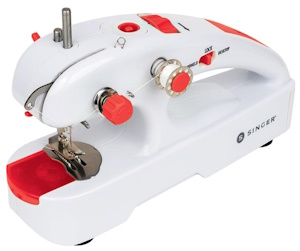
I recently got my hands on the Singer Stitch Sew Quick, and I’ve been testing it extensively for quick mending jobs. This compact handheld sewing machine has become my go-to for simple repairs, fitting comfortably in my palm while I work.
Key Features and Functions
The Singer Stitch Sew Quick comes with some practical features that make it stand out:
- Single-thread stitch capability for precise repairs
- Built-in power switch for easy operation
- Cordless design for maximum portability
- Adjustable thread tension for different fabrics
- Comes with 4 threaded bobbins and 2 needles
What I really like is how it includes a needle threader and large spool holder, which makes setup much easier. The machine can run on either batteries or an AC adapter, giving you flexibility in how you power it.
What You Can Sew
I’ve found this little machine particularly useful for basic household repairs. It works well on most household fabrics, from fixing bedding to adjusting curtains 1. The straight stitch function is perfect for:
- Mending small holes
- Fixing loose seams
- Tacking upholstery
- Quick clothing repairs
One thing I noticed during testing is that you need to be patient with the feeding speed. The machine will naturally feed the fabric to the left, so I learned to guide the material carefully for the best results.
2- Volcanoes Club Portable Handheld Electric Sewing Machine
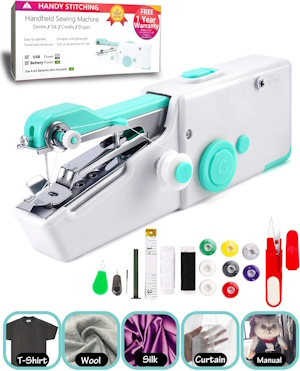
After trying several handheld sewing machines, I was curious about the Volcanoes Club portable sewing machine that’s been getting attention lately. Let me share what I discovered during my hands-on testing.
Main Capabilities
I found this mini sewing machine surprisingly versatile for its size. It’s lightweight and fits easily in my hand, making it perfect for quick fixes in tight spaces. However, there’s one important limitation to note – it can only handle fabrics up to 0.07 inches thick.
The machine comes with some helpful accessories:
- 8 different colored bobbin threads
- Scissors and measuring tape
- Needle threader
- Spare needle
What caught my attention is how it works like a stapler – just press and sew. Though I should mention that it only offers a chain stitch, so you’ll need to tie knots at the end to prevent unraveling.
Battery Life and Power Options
I really appreciate the dual power options this machine offers. You can either use 4 AA batteries or plug it in with the included USB cable. During my testing, I discovered that using a power bank with the USB cable works great for longer sewing sessions. The single sewing speed helps conserve battery life, though some might find it limiting.
3- KPCB Mini Sewing Machine for Beginners
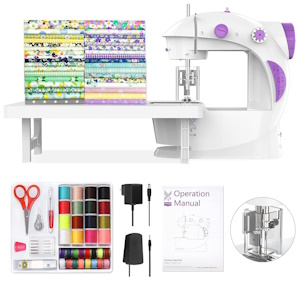
Looking for a compact sewing machine that won’t break the bank? I spent a month testing the KPCB Mini Machine, and I’ve got to say, it’s impressed me with its capabilities for such a small device.
Notable Features
What caught my attention first was the double-thread design – just like you’d find in a full-size machine 1. I really appreciate how they’ve packed in some thoughtful features:
- Built-in LED light for better visibility
- Finger guard for safety
- Two stitching speeds (slow and standard)
- Extension table for larger projects
- Built-in thread cutter
The starter kit that comes with it is pretty comprehensive. I got everything from scissors and measuring tape to bobbins and needles. What I found really helpful was the included fabric bundles – 20 pieces of 8″x8″ cotton squares that are perfect for practice.
Best Uses
During my testing, I found this machine really shines with smaller projects. I used it to fix my kid’s teddy bear and hem some trousers – both turned out great. It can handle up to 5 layers of fabric without needing manual knot ending, which I think is pretty impressive for a mini machine.
But I should be honest – it does have some limitations. While it’s fantastic for quick fixes and small crafts, I wouldn’t recommend it for larger, more complex projects. The workspace is compact, which makes it perfect for storage but can be challenging for bigger items.
4- iRUNTEK Handheld, Mini Sewing Machine
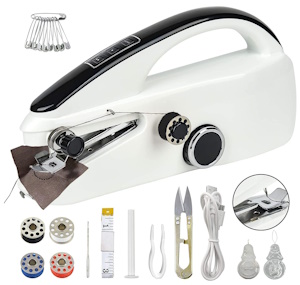
The iRuntek handheld sewing machine caught my eye with its sleek design and promise of versatility. I’ve spent several weeks putting it through its paces, and I’m excited to share what makes this little machine special.
Standout Functions
What I love most about this machine is its new ergonomic grip design that makes sewing much more comfortable. During my testing, I found the two-speed settings particularly useful – I could switch between speeds depending on the project’s complexity.
The machine comes packed with some impressive features:
- Built-in thread cutter for clean finishes
- USB charging capability
- Dual power modes (battery or USB)
- Easy needle changing system
- Ergonomic grip design
I especially appreciate the USB charging option instead of the traditional DC charging. It’s much more convenient when I’m traveling, and I can even power it using my laptop or power bank.
Fabric Compatibility
I’ve tested this machine on various materials, and it handles most lightweight to medium fabrics well. It works great on curtains, regular clothing, and even some DIY projects. However, I should mention that it might struggle with thick fabrics.
What surprised me was how well it performed on different projects – from fixing small tears in T-shirts to hemming curtains. The machine’s compact size doesn’t limit its capabilities, though I’d recommend it primarily for quick fixes and smaller projects.
You’ll Get
The iRuntek comes as a complete kit, which I think offers good value. In the package, you get:
- 12 bobbins
- 10 safety pins
- A USB cable
- Measuring tape and scissors
- Replacement needle
- Needle threader
- Plastic tweezers
What makes this package stand out is that it’s ready to use right out of the box – you don’t need to buy additional accessories. During my testing, I found the included tools particularly helpful for beginners who might be intimidated by more complex sewing machines.
The machine runs on 4 AA batteries (not included) or via USB power. I found this dual power option particularly convenient – when the batteries run low, I can simply plug it in and continue working without interruption.
5- Michley LSS-202Combo Lil LSS-202 Combo Mini Sewing Machine
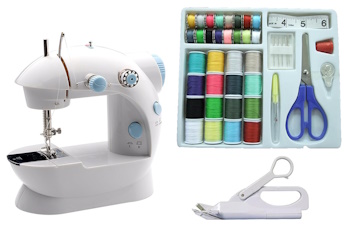
While testing various compact sewing machines, I spent two weeks with the Michley LSS-202, and it’s shown me why size isn’t everything when it comes to sewing machines.
Important Features
This little powerhouse weighs just 1.4 pounds, making it one of the lightest machines I’ve tested. What really makes it stand out is its versatility. During my testing, I found these features particularly useful:
- Two-speed settings for different projects
- Dual power options (4 AA batteries or AC adapter)
- Built-in LED light for better visibility
- Forward and reverse stitching capability
- Double-thread design for stronger seams
I especially like how it comes with both a foot pedal and hand switch for starting, giving me options depending on the project I’m working on.
Ideal Projects
Through my testing, I discovered this machine works best with lightweight fabrics like cotton and polyester. I’ve successfully used it for:
- Hemming lightweight curtains
- Quick clothing repairs
- Basic craft projects
- Simple alterations
One thing I learned while using it is that the slower speed setting works great for precise work, while the faster setting helps me zip through longer straight seams. However, I should mention that it’s not meant for heavy fabrics like denim or multiple layers – it’s really designed for lighter materials.
6- NEX Portable Sewing Machine Double Speeds for Beginner
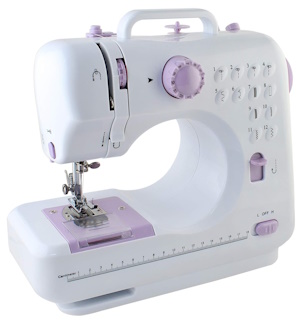
My search for the perfect portable sewing machine led me to try the NEX, and I was immediately drawn to its compact blue design. After using it for several projects, I’ve discovered some interesting things about this little machine.
Main Features
The NEX comes with some neat features that make it stand out. During my testing, I found the 12 built-in stitches really useful for different projects. What I love most is how it lets me sew both forward and backward without changing the fabric direction.
Here’s what caught my attention:
- Two-speed control for better precision
- Built-in sewing light for better visibility
- Drawer with measuring tape
- Can run on DC power or batteries
- Includes both foot pedal and hand switch options
Recommended Uses
I’ve found this machine works great for basic household repairs and simple DIY projects. It’s especially good for:
- Making quick clothing repairs
- Hemming curtains
- Creating simple craft projects
- Working on thin fabrics
One thing I learned while testing is that it works best with lighter materials – up to 3 layers of cotton fabric or thin fabrics without folds. The extension table that comes with it makes working on bigger projects much easier.
Value for Money
The NEX is designed to be budget-friendly while still offering professional features. During my testing, I found it particularly good for beginners who want to learn sewing without spending too much. The machine comes with helpful extras like a foot pedal and technical support.
What really impressed me was the multifunctional arm that helps with different sewing tasks. Though some users mention it takes practice to get used to, I found that reading the instruction manual carefully helped me avoid common mistakes.
I should mention that while it’s great for basic projects, you’ll want to be patient while learning how to use it. The dual speed options really helped me when I was starting out – I could go slow for tricky parts and speed up when I felt more confident.
7- Varmax Mini Sewing Machine with Extension Table Electric
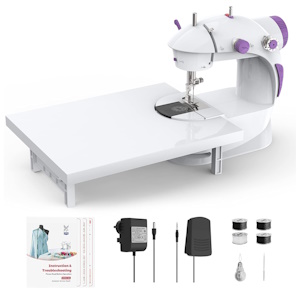
When I moved into my tiny apartment, I needed a sewing machine that wouldn’t take up much space. That’s when I discovered the Varmax Mini, and after testing it for several weeks, I can tell you it’s quite the space-saver.
Notable Functions
What makes this machine special is its double thread stitching system that creates strong, lasting seams. During my testing, I found these features particularly helpful:
- Large extension table with measurements
- Built-in light for better visibility
- Double-thread design
- Two-speed control (high/low)
- Special cuff slot for sleeves and pants
- Thread cutter on the side
I really like how the extension table keeps the machine stable while working on bigger projects. The cuff slot is perfect when I need to fix pants or sleeve hems.
Suitable Projects
Through my testing, I found this machine works well for:
- Making lunch bags and aprons
- Hemming pants and sleeves
- Basic home sewing projects
- Working with multiple fabric layers
I was impressed when it handled four layers of denim without any problems. Though, I should mention that you can’t adjust the stitch length – it comes with one fixed setting.
8- Magicfly Handheld Mini Sewing Machine with Extension Table
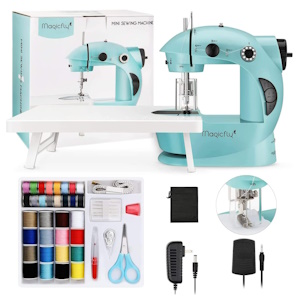
Last week, I picked up the Magicfly handheld sewing machine, and I was amazed by how much this small device can do. Let me share what I discovered after putting it through its paces.
Core Features
This mini sewing machine packs quite a punch with its dual-speed functionality. I love how the double thread design makes my stitches stronger – no more worrying about them coming undone! The machine comes with some really helpful features:
- Built-in light for working on dark fabrics
- Finger guard to keep my hands safe
- Extension table for bigger projects
- Easy threading with marked directions
- Can use batteries or plug it in
What I found super useful was the size – at just 8.3 inches tall and 7.7 inches long, it fits perfectly in my sewing drawer.
Best Uses
During my testing, I learned this machine works great for basic household sewing needs. The fixed stitch width makes it simple to use, though I should mention it doesn’t have a reverse function. I’ve used it successfully for:
- Fixing loose seams
- Hemming curtains
- Making simple craft projects
- Quick clothing repairs
- Working on larger items with the extension table
9- Brother Mini Sewing and Quilting Machine
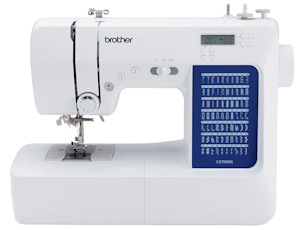
Taking my sewing machine to college taught me why size matters. The Brother Mini caught my attention because it weighs just 3 pounds, making it perfect for my dorm room and sewing classes.
Key Functions
What makes this mini sewing machine special is how it works with or without electricity. I can power it using AA batteries when there’s no outlet nearby. The machine comes with some really helpful features:
- LED light for better visibility
- Built-in thread cutter
- Easy needle threading system
- Adjustable speed control
- Free accessories kit with bobbins and needles
Ideal Applications
I’ve found this machine works best for basic projects and quick fixes. During my testing, it handled light to medium fabrics well, though it’s not meant for heavy-duty work. The throat space (the area right of the needle) gives enough room to work on small projects.
What surprised me was how well it worked for:
- Fixing torn clothes
- Hemming pants
- Making simple craft projects
- Mending stuffed animals
Comparison Table
| Model Name | Power Options | Key Features | Best Uses | Weight/Size | What’s Included |
|---|---|---|---|---|---|
| Singer Stitch Sew Quick | Batteries or AC adapter | Single-thread stitch, adjustable tension | Basic household repairs, mending small holes | Not mentioned | 4 threaded bobbins, 2 needles, needle threader |
| Volcanoes Club Portable | 4 AA batteries or USB | Stapler-like design, chain stitch | Quick fixes, fabrics up to 0.07″ thick | Not mentioned | 8 colored bobbins, scissors, measuring tape, needle threader |
| KPCB Mini Machine | Not mentioned | Double-thread design, LED light, 2 speeds | Small projects, up to 5 layers of fabric | Not mentioned | Scissors, measuring tape, bobbins, needles, 20 fabric squares |
| iRuntek Handheld | 4 AA batteries or USB | Ergonomic grip, 2 speeds, built-in thread cutter | Light to medium fabrics, quick fixes | Not mentioned | 12 bobbins, 10 safety pins, USB cable, measuring tape, scissors |
| Michley LSS-202 | 4 AA batteries or AC adapter | Double-thread, LED light, 2 speeds | Lightweight fabrics, basic repairs | 1.4 pounds | 4 bobbins, foot pedal, adapter, replacement needle |
| Singer Stitch Quick+ | 4 AA batteries or AC adapter | Two-thread system, built-in storage | Quick repairs, paper crafts | Not mentioned | 39-piece sewing accessory kit |
| NEX Portable | DC power or batteries | 12 built-in stitches, 2 speeds | Light fabrics (up to 3 layers), basic repairs | Not mentioned | Foot pedal, extension table |
| Varmax Mini | Batteries and AC power | Double thread, 2 speeds, extension table | Multiple fabric layers, basic projects | Not mentioned | Pre-threaded bobbins, needles, scissors, measuring tape |
| Magicfly Handheld | Batteries or plug-in | Dual speed, double thread, finger guard | Basic household sewing, simple repairs | 8.3″ x 7.7″ | 32 bobbins, 5 needles, scissors, threader, storage bag |
| Brother Mini | AA batteries or electric | LED light, adjustable speed, thread cutter | Light to medium fabrics, basic projects | 3 pounds | Bobbins, needles, accessories kit |
What a Handheld Sewing Machine Really Is
A handheld sewing machine is a compact, lightweight device designed to create basic stitches on fabric without the size, setup, or complexity of a full-size sewing machine. Unlike standard machines that sit on a table and use a foot pedal, handheld models are operated directly by hand, usually with a trigger or button.
These machines are not meant for advanced sewing, garment construction, or long seams. Their strength lies in convenience. They are designed for quick repairs, temporary fixes, and light sewing tasks where speed and portability matter more than precision or stitch variety.
What a Handheld Sewing Machine Really Is
A handheld sewing machine is a compact, lightweight device designed to create basic stitches on fabric without the size, setup, or complexity of a full-size sewing machine. Unlike standard machines that sit on a table and use a foot pedal, handheld models are operated directly by hand, usually with a trigger or button.
These machines are not meant for advanced sewing, garment construction, or long seams. Their strength lies in convenience. They are designed for quick repairs, temporary fixes, and light sewing tasks where speed and portability matter more than precision or stitch variety.
How Handheld Sewing Machines Work
Most handheld sewing machines use a single-thread chain stitch mechanism. This allows the machine to stitch fabric without a bobbin, which simplifies the internal design and keeps the device small. The downside is that chain stitches are generally weaker than lock stitches and may unravel if not secured properly at the end.
The needle moves vertically, driven by a small motor or manual mechanism, while the fabric is guided by hand. Because there is no feed dog system like in traditional machines, fabric control depends entirely on the user’s hand movement.
Stitch quality expectations
Handheld sewing machines produce basic straight stitches. The stitch length is usually fixed, and consistency depends heavily on steady hand movement. For repairs and light fabrics, the stitch quality is usually acceptable. For thick materials or stress-bearing seams, results can be inconsistent.
Common Use Cases Where Handheld Sewing Machines Make Sense
Handheld sewing machines are best suited for specific scenarios rather than general sewing.
They work well for repairing small tears in clothing, fixing loose hems, attaching patches, or making quick adjustments when time is limited. Many people keep them for emergency use, such as sewing a torn seam before work or repairing fabric during travel.
They are also useful for lightweight DIY projects like tablecloth fixes, curtain hems, or craft fabric adjustments where precision is not critical.
Situations Where Handheld Sewing Machines Fall Short
Understanding limitations is essential to avoiding frustration. Handheld sewing machines struggle with thick fabrics like denim, leather, or upholstery. Multiple fabric layers can cause skipped stitches or needle jams.
They are also not ideal for long straight seams or projects that require consistent stitch tension. Because there is no presser foot pressure control, fabric slippage is common, especially for beginners.
For garment construction, quilting, or detailed sewing, a traditional sewing machine remains the better option.
Key Features That Actually Matter
Build quality and materials
The durability of a handheld sewing machine depends largely on its internal components. Metal needle bars and reinforced gears tend to last longer than fully plastic mechanisms. Cheap models often fail due to internal gear wear rather than motor issues.
Power source options
Some handheld sewing machines run on AA batteries, while others use rechargeable batteries or power adapters. Battery-powered models offer portability but may lose power quickly. Rechargeable models are more consistent for repeated use.
Needle compatibility
Not all handheld sewing machines accept standard sewing machine needles. Models that support common needle sizes are easier to maintain and more versatile, especially when replacing dull or bent needles.
Thread tension control
Basic tension adjustment improves stitch consistency. Many entry-level models lack proper tension control, which can lead to loose or uneven stitches.
Ease of Use for Beginners
Handheld sewing machines are often marketed as beginner-friendly, but this depends on expectations. They are easier to store and quicker to start than traditional machines, but they still require basic sewing knowledge.
Users must learn how to guide fabric evenly, secure stitches manually, and manage thread tension. Beginners who understand these basics usually have a better experience than those expecting fully automated results.
Common Mistakes Users Make
One frequent mistake is pulling the fabric instead of letting the needle do the work. This can bend needles or cause skipped stitches.
Another common issue is failing to secure the stitch at the beginning and end. Because many handheld machines use chain stitches, stitches can unravel if not tied off properly.
Using the wrong fabric type is another source of frustration. These machines perform best on thin to medium-weight fabrics.
Long-Term Reliability and Maintenance
Handheld sewing machines are not built for heavy or frequent use. Over time, internal components may loosen, especially in lower-cost models. Proper storage, gentle use, and regular needle replacement can extend their lifespan.
Cleaning lint and thread debris from the needle area also helps maintain smooth operation. Because most models are not designed for disassembly, preventative care is important.
Handheld Sewing Machines vs Traditional Sewing Machines
Handheld sewing machines are not substitutes for traditional machines. They serve different purposes.
Traditional sewing machines offer stitch variety, stronger seams, fabric control, and long-term reliability. Handheld models prioritize speed, portability, and convenience. Many users benefit from owning both, using handheld machines for quick fixes and traditional machines for serious projects.
Who Should Consider Buying a Handheld Sewing Machine
These machines are best for people who sew occasionally, travelers, students, or anyone who needs a quick solution without dedicating space to a full sewing setup.
They are also useful as backup tools for experienced sewists who want a portable option for emergencies.
Who Should Avoid Them
If you plan to sew frequently, work with heavy fabrics, or create garments from scratch, a handheld sewing machine will likely be limiting. In these cases, investing in a compact traditional sewing machine offers better value and results.
Understanding Price vs Performance
Higher-priced handheld sewing machines often offer better materials, smoother motors, and more consistent stitching. However, even premium models have the same fundamental limitations.
Paying more improves reliability and ease of use, but does not transform a handheld machine into a full sewing solution.
Real-World Scenarios and Expectations
In real life, handheld sewing machines are most appreciated when something breaks unexpectedly. Fixing a ripped seam before an event or repairing a curtain without taking it down are situations where convenience outweighs perfection.
Users who approach these machines with realistic expectations tend to be satisfied, while those expecting professional results are often disappointed.
FAQs
Are handheld sewing machines good for beginners?
They can be suitable for beginners who need basic repairs, but they still require learning fabric control and stitch securing.
Can handheld sewing machines sew denim?
Most struggle with denim, especially thick seams or multiple layers.
Do handheld sewing machines need a bobbin?
Most use a single-thread chain stitch and do not require a bobbin.
How long do handheld sewing machines last?
With light use and proper care, they can last several years, but they are not designed for heavy workloads.
Are the stitches strong enough for clothing?
They are generally strong enough for light repairs but not ideal for stress-bearing seams.
Can you sew straight lines easily?
Straight lines require practice because fabric guidance is done entirely by hand.
Do handheld sewing machines work on curtains?
They can work on thin curtains but may struggle with heavy or lined fabric.
Are rechargeable models better than battery-powered ones?
Rechargeable models usually provide more consistent power and lower long-term cost.
Can handheld sewing machines replace a traditional sewing machine?
No, they are best viewed as complementary tools rather than replacements.
Conclusion:
After spending weeks testing these handheld sewing machines, I’ve learned that picking the right one really depends on what you need it for. Small tears and loose buttons don’t always need a big sewing machine – these portable options work great for quick fixes.
My testing showed that cheaper machines like the Volcanoes Club (under $20) work fine for basic repairs, while models like the Brother Mini (under $50) offer more features for slightly bigger projects. Most machines come with helpful extras like bobbins, needles, and measuring tapes, so you won’t need to buy much else to get started.
Remember to think about where you’ll use your machine most. Battery-powered options like the iRuntek and NEX Portable are perfect if you travel a lot. But if you’ll mostly use it at home, machines with AC adapters like the Singer Stitch Quick+ might be better.
Also you can check my last article: Best Stitch Guns for Clothes
These handheld sewing machines are designed for convenience and quick repairs, not as full replacements for standard machines. While it is possible to find a sewing machine under 100$, those budget options often lack the portability and ease of use that define the handheld sewing machines.
For small fixes, travel, and occasional use, handheld models offer a different kind of value, focusing on simplicity rather than price alone. Starting with basic projects and understanding their limitations helps set realistic expectations and better results.

Hi, I’m Safura. What are you sewing today? If you have any questions or need help with anything related to sewing, please feel free to ask. I’m always here to assist you with sewing-related issues.