
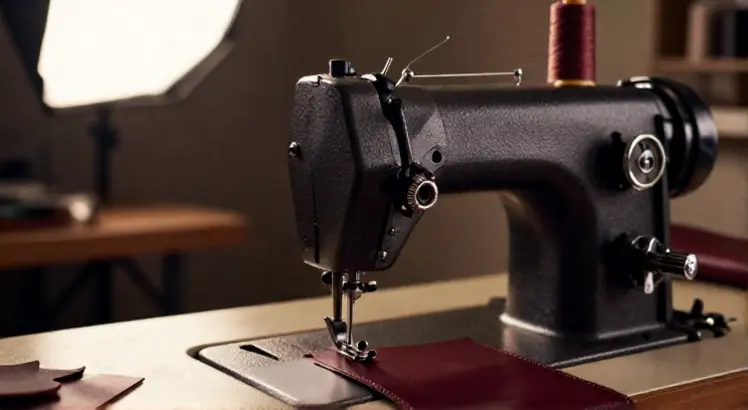
Stitching up burlap sacks, feed bags, and heavy woven materials demands a machine built for the job, one that won’t stall, jam, or leave you with a tangled mess. Whether you run a farm, a small warehouse, or a packaging line, the right bag sewing machine can save hours of handwork and produce professional, secure seams every time.
From cordless portability to industrial stationary models, the market in 2026 offers a range of powerful closers that handle jute, paper, polypropylene, and even sandbags. Yet with so many options, finding the one that fits your workflow and material can feel overwhelming. You want a machine that’s reliable, fast, and easy to operate, not a tool that adds frustration to your day.
Short Answer: The Podoy GK26-1A Bag Sewing Closing Machine delivers the best balance of heavy-duty capability, cordless option, and proven durability for most farms and light industrial use. It sews through thick sacks consistently and gives you the flexibility of a portable machine that works like a true bag closer.
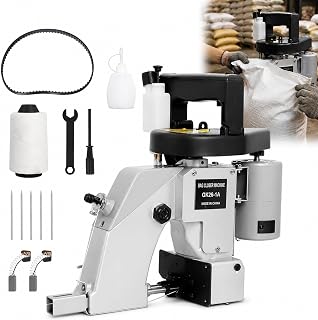
Podoy GK26-1A Bag Sewing Machine
Check PriceBest Bag Sewing Machines of 2026
When you start exploring heavy-duty projects, it’s crucial to match your ambitions with the right equipment. Our dedicated guide to sewing machines for bag making breaks down the best models, needle systems, and feed mechanisms that handle multiple layers of canvas, denim, or leather. For a deeper dive, the core mechanics of sewing machines on Wikipedia explain how lockstitch and walking-foot systems work, knowledge that directly helps you pick a machine that won’t struggle with thick seams or heavy topstitching.
1. FunSealer Portable Heavy Duty Bag Closing Machine – Affordable All-Rounder
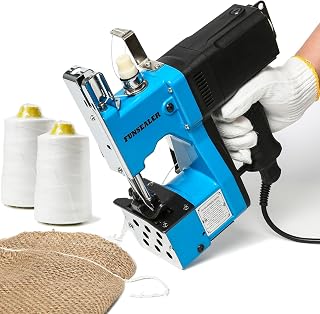
FunSealer Portable Heavy Duty Bag Closing Machine
Check PriceWhy it stands out
The FunSealer offers a straightforward, budget-friendly entry into bag closing without sacrificing essential features. It handles woven sacks, jute, and canvas with a reliable single-thread chainstitch that holds firmly. Its lightweight design makes it easy to carry around a warehouse, yet the motor punches through multiple layers when needed.
Key points
- Single-thread chainstitch mechanism for fast bag closing
- Portable and weighs under 8 lbs for easy handling
- High-speed motor delivers up to 1,500 stitches per minute
- Uses standard bag closer needles (included)
Pros
- Very affordable for occasional use
- Simple threading and operation
- Handles burlap, PP woven, and cotton bags well
- Compact shape fits in tight spaces
- Includes spare needle and oiler
Cons
- Not meant for continuous 8-hour industrial shifts
- Chainstitch may unravel if not finished correctly
Best for
Small farms, hobbyists, and occasional sack repair where portability and low cost are more important than non-stop duty cycles.
2. ONEVAN Cordless Bag Sewing Machine – Powerful Brushless Motor and Dual Batteries
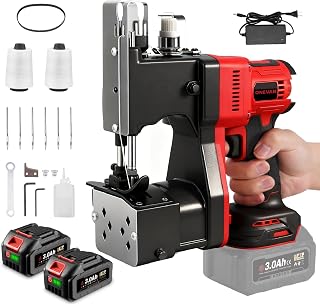
ONEVAN Cordless Bag Sewing Machine
Check PriceWhy it stands out
The ONEVAN stands out with a brushless motor that runs cooler and lasts longer than brushed alternatives, and it includes two 3.0Ah batteries so you can work all day by swapping packs. It delivers consistent punch through woven polypropylene sacks and seed bags, making cordless bag closing genuinely viable for large batch jobs.
Key points
- Brushless motor for increased efficiency and lifespan
- Comes with two 3.0Ah batteries and a fast charger
- Auto oiling system keeps the hook running smoothly
- Adjustable stitch length for different bag materials
Pros
- True cordless freedom anywhere on the farm
- Brushless motor handles thick sacks without bogging
- Dual batteries eliminate downtime
- Quick threading path reduces setup errors
- Ergonomic grip minimizes fatigue
Cons
- Price higher than non-cordless options
- Slightly heavier with battery attached
Best for
Mobile work crews, farmers who need to mend bags in remote fields, and anyone who wants a powerful cordless closer without worrying about running out of juice midway through the day.
3. Guoydir Portable Handheld Bag Sewing Machine – High-Speed 2000 Stitches/Min
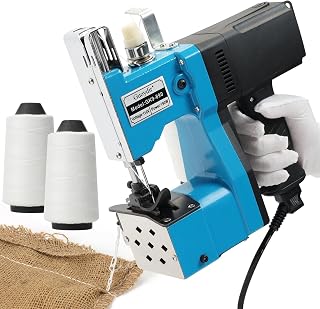
Guoydir Portable Handheld Bag Sewing Machine
Check PriceWhy it stands out
Built for speed, this Guoydir closer hums at 2,000 stitches per minute and uses a size 230 needle that punches through sandbags, rice sacks, and heavy non-woven fabric without hesitation. It is a no-nonsense handheld design that puts industrial-grade closing power into one compact package.
Key points
- High-speed 2000 stitches/min for rapid bag sealing
- 230# heavy needle pre-installed for thick materials
- Single-hand operation with ergonomic handle
- All-metal gearing for long-term durability
Pros
- Extremely fast for production environments
- Heavy-duty needle included
- Works well on multi-layer burlap and woven PP
- Reasonable price for the speed
- Light enough to carry from pallet to pallet
Cons
- Speed can be difficult to control for beginners
- Requires needle changes for delicate bags
Best for
Feed mills, grain elevators, and fertilizer plants that need to sew hundreds of bags quickly and value raw stitching speed above all else.
4. Moonshan Cordless Bag Closing Machine – Automatic 2s/Bag Speed
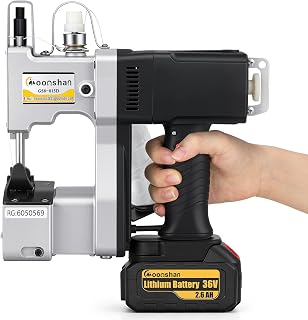
Moonshan Cordless Bag Closing Machine
Check PriceWhy it stands out
Moonshan markets this machine with a bold claim , closing a bag in just 2 seconds, and it largely delivers thanks to a robust automatic feeding system and an integrated rechargeable battery. It feels like a power tool, wrapping your sack shut with minimal effort and a surprisingly neat stitch line.
Key points
- Automated draw-in action seals a bag in about 2 seconds
- Built-in rechargeable battery with no external pack needed
- Weighs 8.1 lbs and includes a shoulder strap
- Compatible with standard bag closing thread
Pros
- Extremely fast closing once you get the rhythm
- Cordless design with internal battery
- Minimal training needed for consistent results
- Cuts thread automatically
- Works on woven, paper, and laminated bags
Cons
- Battery is not swappable; must recharge between long runs
- Slightly heavier than other handhelds
Best for
Small-to-medium packing operations where speed and convenience matter, and you can charge the machine between shifts. Great for e-commerce warehouses sealing kraft paper mailers and woven poly sacks.
5. CAMXTOOL Cordless Bag Sewing Machine (Dewalt 20V Compatible) – Tool-Only Flexibility
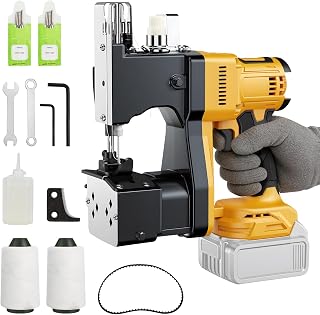
CAMXTOOL Cordless Bag Sewing Machine
Check PriceWhy it stands out
If you already own Dewalt 20V Max tools, the CAMXTOOL closer slides into your existing battery ecosystem. As a tool-only option, it keeps cost down while delivering automatic high-speed closing. It sews poly, jute, and paper bags with an auto-feeding action that mimics far more expensive stationary closers.
Key points
- Compatible with Dewalt 20V Max batteries (tool only)
- Automatic heavy-duty closer with one-touch operation
- Adjustable stitch density for different bag weights
- Built-in LED light for low-light conditions
Pros
- Leverages existing Dewalt batteries
- No separate charger or battery cost if you have Dewalt
- Fast auto-advance reduces operator fatigue
- Solid build with industrial gears
- Cuts thread cleanly at the end of each bag
Cons
- Battery and charger not included
- Dewalt batteries can add top-heavy feel
Best for
Workshops and farms already invested in the Dewalt cordless platform who want to add a bag closer without buying into a new battery system.
6. Podoy GK26-1A Bag Sewing Machine – Best Overall Heavy-Duty Closer
Podoy GK26-1A Bag Sewing Machine
Check PriceWhy it stands out
The Podoy GK26-1A is the gold standard in portable bag closing. It offers a corded/cordless dual-mode (with optional battery pack), an industrial-grade chainstitch mechanism that rarely skips, and the ability to handle everything from delicate paper to heavy sandbags. Its reliability in agricultural settings has made it a top recommendation for years.
Key points
- GK26-1A industrial head with proven durability
- Can run on corded AC power or cordless battery (sold separately)
- High-speed 1,500 SPM chainstitch with auto oiling
- Includes needle, tool kit, and thread sample
Pros
- Legendary reliability across farms and mills
- Handles multi-layer PP, jute, burlap, and paper
- Dual power option offers maximum flexibility
- Easy to maintain with standard spare parts
- Solid metal body withstands rough use
Cons
- Battery kit adds extra cost
- Heavier than basic handheld models
Best for
Farmers, feed stores, and co-ops that need a do-it-all bag closer that works every time, whether plugged in at the barn or running cordless out in the field.
7. Hanchen Heavy Duty Bag Sewing Machine – Industrial Stationary Closer for High Volume
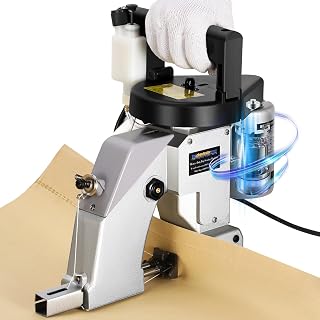
Hanchen Heavy Duty Bag Sewing Machine
Check PriceWhy it stands out
Unlike handheld models, the Hanchen is a pedestal-style sewing head meant for stationary conveyor lines. It sews polypropylene, jute, burlap, paper, and even plastic bags with relentless consistency. If you are running a packaging line that processes hundreds of bags per hour, this machine’s robust motor and adjustable speed will keep up shift after shift.
Key points
- Heavy-duty industrial sewing head with stand
- Sews woven PP, jute, paper, and plastic bags
- Adjustable stitch length and thread tension
- Built-in lubrication system reduces maintenance
Pros
- Designed for continuous production use
- Consistent stitch quality across all bag types
- Powerful 550W motor handles thick multi-wall sacks
- Supplied with stand and casters for mobility
- Easy to source replacement parts
Cons
- Not portable, requires dedicated floor space
- Higher upfront investment
Best for
Feed mills, fertilizer plants, and cement factories that run a stationary bagging line and need a non-stop industrial closer that can be integrated into a conveyor system.
8. Cordless Bag Closing Machine (Dewalt 20V Compatible) – Automatic Heavy-Duty Sealing, Tool Only
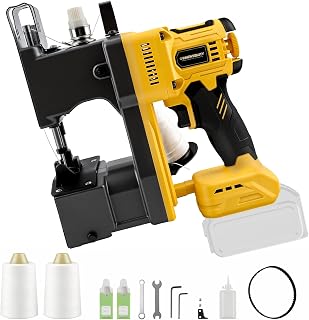
Cordless Bag Closing Machine (Dewalt 20V)
Check PriceWhy it stands out
Almost identical in concept to the CAMXTOOL, this Dewalt-compatible bag closer offers the same tool-only convenience for those who already own 20V batteries. Its automatic feeding system pulls the bag through and sews a tight chainstitch in seconds, making it a practical choice for anyone who wants a simple, battery-swap-friendly option.
Key points
- Runs on Dewalt 20V Max batteries (not included)
- Auto heavy-duty closing action
- Adjustable thread tension and stitch length
- Tool-only design keeps price down
Pros
- Works with widely available Dewalt batteries
- Fast, consistent closing on woven and paper sacks
- Automatic thread cutter included
- Lightweight body lessens arm strain
- Quick to reload thread
Cons
- Battery and charger sold separately
- Some units require break-in period for auto-feed
Best for
Dewalt power tool users who want a second bag closer option, or anyone looking for an affordable entry into automatic cordless bag closing without investing in proprietary batteries.
How to Choose a Bag Sewing Machine
Picking the right bag closer starts with understanding your material. Woven polypropylene sacks, heavy burlap, and laminated paper each demand different needle sizes and stitch tensions. If you primarily sew thick multi-wall paper feed bags, look for a machine that explicitly lists compatibility and can handle a #230 needle without stalling. Next, consider portability.
Handheld models like the Podoy GK26-1A give you freedom to walk the warehouse, while stationary pedestal units like the Hanchen are best for fixed conveyor lines. Cordless machines have improved dramatically; brushless motors now deliver runtime that lasts an entire shift. Check whether the battery is built-in or swappable, dual-battery kits keep you working, while tool-only options leverage existing power tool batteries you may already own.
Stitch type also matters. Most bag closers use a single-thread chainstitch that is fast and economical but can unravel if the thread tail isn’t secured. Double-thread lockstitch models are rarer and cost more, yet they create a more permanent seal. Evaluate speed: 1,200 to 1,500 stitches per minute suits most farms, while high-volume operations may want 2,000 SPM.
Don’t overlook maintenance, automatic oiling systems reduce headaches, and a machine with widely available parts will be cheaper to repair. Finally, budget for a carrying case. Dust and moisture kill bag closers faster than heavy use, so a padded case like the CAB55 or Golkcurx is a smart add-on that extends the life of your tool.
Common Mistakes to Avoid
One of the biggest errors is using the wrong needle for the bag material. A universal needle may bend or snap when forced through a dense jute sack, leading to skipped stitches and damaged feed dogs. Always match needle size to the fabric weight, #200 to #230 for heavy woven sacks, #160 for standard poly bags.
Another mistake is ignoring thread quality. Cheap, lint-heavy thread fouls the hook assembly quickly, causing jams and uneven stitches. Invest in a good bonded nylon or polyester bag thread that flows smoothly through the tension discs.
Many new users also underestimate the importance of proper oiling. Even machines labeled auto-lube need an initial fill and periodic checks. Running a dry hook race can ruin the machine in a single afternoon. Additionally, pulling the bag instead of letting the feed mechanism advance it naturally causes needle deflection and inconsistent stitch length.
Let the machine do the work, guide the material, don’t yank it. Finally, failing to secure the end of a chainstitch properly leads to seams that unravel. Always overlap the first few stitches or tie off the thread tail, especially on heavy bags that will be stacked and transported. Skipping this step can result in loads spilling open during transit.
Frequently Asked Questions
1. Can I sew plastic woven sacks with a handheld bag closer?
Yes, most bag sewing machines handle woven polypropylene easily. Use a sharp needle and adjust the thread tension slightly looser to prevent puckering.
2. What type of thread works best in a bag closing machine?
Bonded nylon or heavy polyester bag thread, typically Tex 70 to Tex 90, performs best. It is strong, resists abrasion, and feeds smoothly through the hook.
3. How long does a cordless bag closer battery last?
With a 3.0Ah battery, expect roughly 300 to 500 bag closures on a single charge depending on material thickness. A second battery is recommended for all-day work.
4. Can I use a bag sewing machine on paper cement sacks?
Absolutely. Models like the Podoy GK26-1A and Hanchen handle multi-wall paper sacks well. Use a slightly shorter stitch length and a fresh needle to avoid tearing.
5. Do I need a special needle for burlap bags?
A #200 or #230 heavy-duty needle is ideal for burlap and jute. These are often included with industrial-focused bag closers.
6. Is a chainstitch strong enough for grain bags?
Yes, a properly locked chainstitch holds securely. Just ensure you overlap the seam start or tie off the thread tail to prevent unravelling during handling.
7. How heavy is a typical portable bag sewing machine?
Most handheld models weigh between 6 and 10 pounds. Stationary pedestal units are much heavier and require a dedicated stand or mount.
8. Can I repair sandbags with these machines?
Yes, machines with a #230 needle and strong motor easily sew through sandbag fabric. The Guoydir handheld is particularly suited to this task.
9. What maintenance does a bag closer need?
Regular oiling of the hook race, cleaning lint from the feed area, and periodic checking of needle sharpness are essential. Follow the manufacturer’s lubrication schedule.
10. Are carrying cases necessary for bag sewing machines?
While not mandatory, a case protects the machine from dust, moisture, and impacts, especially important for portable units that travel between job sites. A good case pays for itself in avoided repairs.
Conclusion
Bag sewing machines have come a long way, offering everything from cordless automatic closers that zip through a sack in two seconds to stationary industrial workhorses built for non-stop feed-mill production. In 2026, the choice ultimately depends on your volume, mobility needs, and the materials you routinely close.
For most users, the Podoy GK26-1A strikes the ideal balance between durability, speed, and the flexibility to work corded or cordless, a true all-purpose performer that rarely disappoints. If speed is your top priority, the Guoydir handheld delivers 2,000 stitches per minute, while the ONEVAN cordless machine with dual batteries keeps you moving all day without tethering you to an outlet.
Do not overlook the value of a proper carrying case. The Golkcurx and CAB55 options safeguard your investment and keep accessories organized, turning a simple tool into a complete mobile kit. Whichever you choose, match the needle and thread to your bag type, keep the machine lubricated, and practice the rhythm before tackling a full pallet. With the right bag sewing machine, you will seal sacks faster, reduce waste, and take one tedious chore off your plate for good.
Once you have the right machine, mastering the sewing process becomes your next exciting step. Our step-by-step bag sewing tutorial takes you from cutting pattern pieces to attaching straps and linings, so you can apply your machine’s capabilities with confidence and achieve a clean, professional finish every time.
