
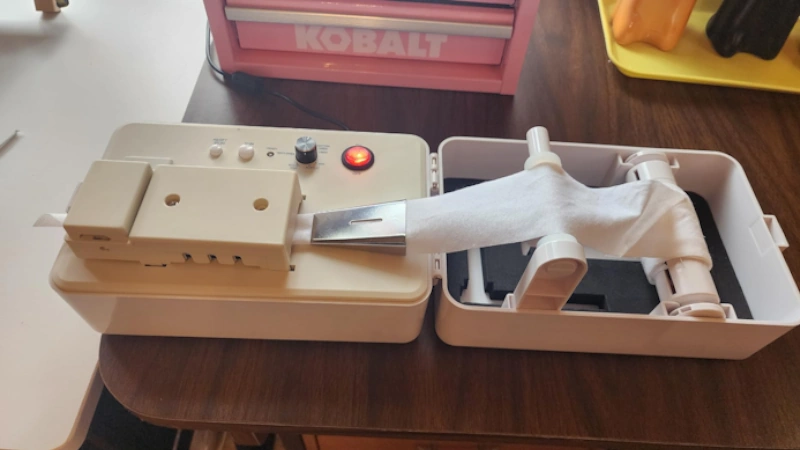
If you sew a lot of quilts, garments, or home décor projects, you know how time‑consuming it can be to make yards and yards of bias tape. The Simplicity bias tape maker is marketed as the solution: an electric machine that folds and presses your bias strips for you, producing neat, consistent tape with almost no effort.
But with a typical price between about $200–$260 for the current six‑tip version, it costs many times more than a basic manual set from Clover or generic brands. This review breaks down what the Simplicity bias tape maker actually does, its key features, heat settings, included tips, real‑world pros and cons, and how it compares to manual makers so you can decide if it’s worth the investment for your sewing room.
What Is the Simplicity Bias Tape Maker
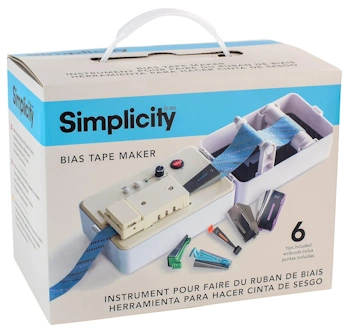
The Simplicity bias tape maker is a small powered machine that:
- Pulls a bias‑cut strip of fabric through
- Folds it into single‑fold bias tape or quilt binding (depending on the tip)
- Presses the folds flat with a built‑in heated plate
You feed the fabric in at one end, and finished bias tape comes out the other end. This automates the two most tedious parts of bias tape making:
- Keeping folds even
- Pressing long strips with a handheld iron
Earlier versions came with just a couple of tips and were later discontinued, but the current model (3881925US) is sold as the Simplicity Bias Tape Maker with Six Tips.
Key Features
Six Interchangeable Tips (Included in the Box)
The headline feature of the modern Simplicity bias tape maker is the fact that it comes with six metal tips in the box:
- Four single‑fold tips for standard bias tape
- 1/4″ (6 mm)
- 1/2″ (12 mm)
- 3/4″ (18 mm)
- 1″ (25 mm)
- Two quilt‑binding tips for wider binding
- 1″ (25 mm)
- 1‑1/4″ (31 mm)
These tips allow you to create everything from narrow decorative bias tape to wide quilt binding suitable for thick quilt sandwiches.
Each tip slots into the front of the machine. The interior of the tip folds the raw edges toward the center (single‑fold), and in the quilt‑binding configuration it produces a tape that can then be folded in half and sewn onto a quilt for binding. Because all six sizes are included, you don’t have to buy extra tips later, which is a big plus compared with some older machines or other specialty tools.
Adjustable Heat Settings
The machine includes adjustable heat settings designed to match different fabric types. While exact temperature numbers aren’t published, the knob or selector lets you choose a heat level suitable for:
- Cotton and quilting cotton
- Medium‑weight wovens
- Some blends and lighter synthetics (on lower settings)
Key points about the heat system:
- Integrated heated plate: Replaces your iron for setting folds.
- Heat control: A temperature dial or fabric‑type selector lets you avoid scorching delicate fabrics. Reviews note that you simply select the right fabric setting and let the machine warm up.
- Automatic shut‑off: The machine turns itself off after about 10 minutes of inactivity for safety.
Because the heat is constant across the plate, once you find the right setting for your fabric you get very consistent pressing along the entire strip.
Automatic Feed and One‑Pass Operation
The main appeal of the Simplicity bias tape maker is that it pulls and presses the tape for you. You insert the bias strip into the tip, start the feed, and the machine:
- Draws the strip through the metal tip, which folds the edges
- Runs the folded strip over the heated plate
- Delivers finished bias tape out the back
Users report that it can produce around 12 feet of tape in about 60 seconds once it’s running smoothly. This is much faster than pulling a manual bias tape maker by hand while following with an iron.
Compact, Portable Case
The unit is packaged in a box with a handle that doubles as a carrying case. Inside, there are custom slots for the machine, the six tips, and the power cord. This design:
- Keeps the tips organized
- Protects the machine and heating surface
- Makes it easy to carry to classes, retreats, or sewing days
Given the price, the dedicated case is a nice touch, it feels like a proper “kit” rather than a loose collection of parts.
Safety and Convenience Features
From the information available, the machine offers several user‑friendly points:
- Auto shut‑off after 10 minutes idle to reduce fire risk
- Simple on/off and heat controls, not overloaded with settings
- Lightweight construction, easy to lift and store
Overall, it’s designed to be plug‑and‑play: plug in, set heat, attach a tip, feed the strip, press the button, and go.
How It Performs in Real Use
Speed and Consistency
For anyone who has manually made bias tape for a queen‑size quilt, the speed gains with the Simplicity bias tape maker are obvious. Reports and reviews highlight that:
- You can produce long runs, several meters, of tape in a couple of minutes once you get into a rhythm.
- The folds are very consistent, because the tip geometry and constant heat reduce the human error you get with hand pulling and ironing.
This is especially valuable when you:
- Need continuous bias tape for quilts
- Are producing tape to sell or use in a small sewing business
- Want your tape width and folds to be accurate so binding goes on smoothly
Learning Curve and Setup
Most users find the Simplicity bias tape maker straightforward, but there are a few things to know:
- The cover and tip must be pushed securely into place; if not, the strip may not feed correctly.
- The fabric should be pre‑pressed and cut accurately on the bias at the width recommended for the chosen tip; otherwise, folds can be uneven.
- Very thick seams or joins in the strip can sometimes catch, though the machine generally handles joined strips well if they’re pressed open.
Once set up correctly, reviewers who initially struggled usually reported that a small adjustment, like securing the cover or checking strip width, solved their feeding issues.
Heat and Fabric Handling
The adjustable heat is a major advantage over a simple iron‑only rig. With the Simplicity bias tape maker you can:
- Use a higher setting for quilting cotton to get crisp folds
- Dial lower heat for more delicate or synthetic fabrics to avoid melting or shine
Users note that:
- For cotton, the machine typically gives a good press in one pass.
- For extremely thick or stubborn fabrics, you might want to run a quick second press with your regular iron after the tape comes out if you want a very sharp edge.
The auto shut‑off is a nice safety net if you’re distracted by cutting, pinning, or answering the phone mid‑project.
Pros and Cons
Pros
- Very fast production of bias tape compared with manual makers.
- Consistent, even folds due to precise tips and stable heat.
- Six tips included (four single‑fold, two quilt‑binding), covering 1/4″ to 1‑1/4″ widths.
- Adjustable heat settings for different fabrics.
- Auto shut‑off improves safety.
- Carrying case keeps machine and tips organized.
- Reduces hand and wrist strain, especially on long runs of binding.
Cons
- High price compared with manual tools: around $200–$260 at many retailers, although some discount sellers offer lower prices.
- Needs a power outlet, not ideal if you sometimes sew in spaces without convenient electricity.
- The heating plate, while effective, may not press as aggressively as a hot, manually applied iron on very thick or heavily starched fabrics, sometimes requiring a quick second press.
- Some users report a small learning curve to get the fabric feeding perfectly and to find the right heat level.
- Like any machine, it needs occasional cleaning to remove lint buildup in the tips and around the feed path.
How It Compares to Clover and Other Manual Bias Tape Makers
To decide if the Simplicity bias tape maker is worth the price, you need to compare it with the tools most people start with: manual bias tape makers, especially from Clover and generic kits.
Price
- Clover manual makers: Typically $8–$15 per size, or around $30–$60 for a set of multiple widths.
- Generic multi‑size kits: Often $15–$25 for 4–9 sizes plus small accessories.
- Simplicity bias tape maker: Around $200–$260 with six tips.
From a pure price standpoint, manual makers are dramatically cheaper. You can buy several full manual sets for the price of one Simplicity machine.
Speed and Effort
- Manual makers (Clover/generic):
- You feed the strip through the metal shell and pull it by hand.
- You press the folds with a regular iron as you go.
- This is fine for short runs but tiring and slow for big projects.
- Simplicity bias tape maker:
- Mechanically pulls the strip and presses it in one step.
- Easily outpaces manual methods for long lengths of tape.
For casual sewists making a few meters at a time, manual speed is acceptable. For a quilter binding multiple large quilts a year or a small business producing bias tape regularly, the time savings of the Simplicity machine can be substantial.
Finish Quality
- Clover/manual:
- With care, you can achieve extremely crisp, professional folds.
- Quality depends on your cutting and ironing skills.
- Simplicity:
- Produces very consistent folds when strip width and heat are correct.
- For most quilting cottons and medium‑weight wovens, the finish is comparable to manual pressing.
- On very thick or specialty fabrics, you may want an extra quick press with an iron for sharpness.
Overall, in typical quilting or garment fabrics, quality differences are small; the Simplicity machine’s big advantage is consistency over long lengths.
Flexibility and Learning Curve
- Manual makers:
- Simple, nearly indestructible, very little to break.
- Easy to learn, but your hands do all the work.
- Don’t depend on power or heating elements.
- Simplicity machine:
- More complex to set up initially but still straightforward.
- Offers adjustable heat and automatic feed, but needs cleaning and care.
If you like a low‑tech, low‑maintenance tool, manual Clover makers remain excellent. If you don’t mind plugging in a machine and performing occasional maintenance in exchange for speed, the Simplicity offers clear process advantages.
Who Will Get the Most Value from the Simplicity Bias Tape Maker
The Simplicity bias tape maker makes the most sense if:
- You’re a frequent quilter making large quilts several times a year and always need lots of binding.
- You run a small sewing or quilting business where time equals money, and producing bias tape is a recurring bottleneck.
- You have hand, wrist, or shoulder issues and want to minimize repetitive pressing and pulling.
- You like to use matching or custom bias tape on many projects and often make it yourself rather than buying pre‑made.
You probably do not need it if:
- You only occasionally need bias tape and are happy to buy pre‑made for big jobs.
- You make mainly small items (potholders, baby bibs, a cushion or two) where manual tools are fast enough.
- Your sewing budget is tight and you’d rather invest in a better machine, walking foot, or other more frequently used tools.
Practical Tips if You Decide to Buy
If you decide the Simplicity bias tape maker fits your workflow, a few habits will help you get the most from it:
- Cut accurately on the bias using a rotary cutter and ruler; sloppy cutting gives sloppy tape no matter what machine you use.
- Pre‑press and de‑wrinkle strips before feeding them into the tip.
- Test the heat setting on a scrap of the same fabric to avoid scorching.
- Use the right tip for the job, narrow for garments and trim, wider quilt‑binding tips for quilts and bulky layers.
- Clean tips and the feed area regularly to prevent lint buildup from affecting feed and fold quality.
These small steps make the difference between “it kind of works” and “this thing is a game‑changer.”
Final Verdict: Is the Simplicity Bias Tape Maker Worth the Price
For most casual home sewists, the answer is no, you can do perfectly good work with a Clover bias tape maker or a generic manual kit for a fraction of the price. The manual tools are reliable, low‑maintenance, and entirely adequate for occasional bias tape sewing.
However, if you:
- Make a lot of quilts,
- Produce long runs of binding regularly, or
- Have physical reasons to avoid repetitive pressing and pulling,
then the Simplicity bias tape maker absolutely can be worth its higher price. It significantly reduces labor, speeds up production, and gives consistent results across multiple tapes and projects.
In short:
- Occasional bias tape, hobby sewing → stick with Clover or another manual set.
- Frequent or high‑volume bias tape use → the Simplicity bias tape maker is a strong, time‑saving investment that can earn its keep over months and years of heavy use.
If you recognize yourself in that second group, the Simplicity machine is very likely worth the price.

Hi, I’m Safura. What are you sewing today? If you have any questions or need help with anything related to sewing, please feel free to ask. I’m always here to assist you with sewing-related issues.
Disclosure: As an Amazon Associate, we earn from qualifying purchases at no extra cost to you. Our posts are created with AI tools and human editing.