
When people ask which sewing machine is best for home use, they are usually not looking for the most expensive or industrial option. Instead, they want a sewing machine that is reliable, easy to use, suitable for common household projects, and capable of growing with their skills. Home sewing needs are very different from factory or professional tailoring environments, which is why choosing the right type of machine matters more than choosing the most powerful one.
A home sewing machine should be versatile enough to handle everyday tasks such as hemming clothes, stitching curtains, repairing garments, quilting small projects, and crafting. At the same time, it should not overwhelm the user with unnecessary complexity. Many beginners make the mistake of either buying a machine that is too basic or one that is too advanced for their actual needs.
This guide explains which sewing machine is best for home use by focusing on user needs, machine types, key features, and skill levels. It also highlights three well-known home sewing machine options only as examples, without turning this into a commercial product list.
Top 11 Sewing Machines Commonly Chosen for Home Use
Choosing the right sewing machine for home use can make everyday projects easier, faster, and more enjoyable. The machines in this list are commonly chosen for their reliability, ease of use, and versatility, making them suitable for beginners, intermediate users, and advanced home sewers. Below, we review 11 popular sewing machines that stand out for performance, features, and value for home sewing needs.
1. Brother CS7000X – Computerized Sewing & Quilting Machine
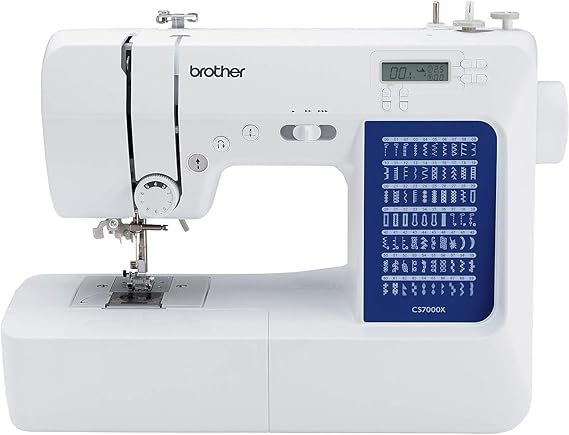
Brother CS7000X – Computerized Sewing & Quilting Machine
Popular computerized machine with 70 built‑in stitches, 7 one‑step buttonholes, easy‑to‑read LCD display, wide extension table and 10 included presser feet – a great all‑round choice for garments, quilting and home décor.
Check PriceWhy it stands out
A very popular, budget‑friendly computerized machine that combines 70 stitches, a wide table and 10 presser feet, making it one of the best all‑round choices for home users who want to sew garments and start quilting without spending a lot.
Key points
- 70 built‑in stitches (utility, stretch, decorative, quilting)
- 7 one‑step buttonholes
- LCD screen for stitch selection and settings
- Wide extension table and 10 included presser feet
- Jam‑resistant top drop‑in bobbin and automatic needle threader
- Approx. price: ≈ $280
- Rating: ≈ 4.5 / 5 from 100+ reviews [1][2]
Pros
- Excellent feature‑to‑price balance for a home machine
- Wide table and quilting stitches make it quilting ready out of the box
- Easy to thread and set up thanks to auto needle threader and drop‑in bobbin
- Light enough to move, but metal frame keeps it stable
Cons
- Not intended for constant heavy‑duty denim/canvas work
- No advanced embroidery or stitch‑memory functions
- LCD is functional but basic compared with high‑end models
Best for
Home sewists from confident beginners to intermediates who want one versatile computerized machine for garments, home décor and beginner quilting.
2. SINGER M1500 – Lightweight & Portable Sewing Machine
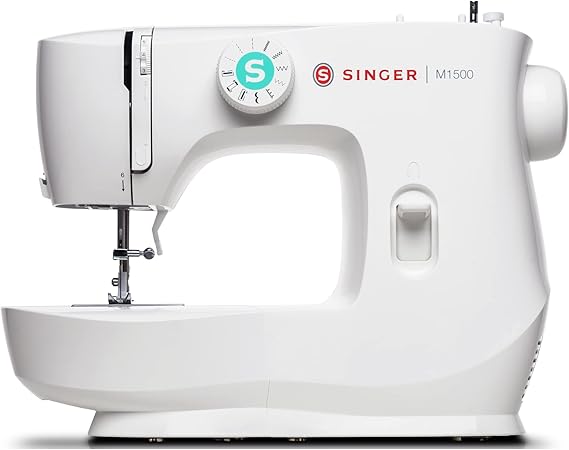
SINGER M1500 – Lightweight & Portable Sewing Machine
Beginner‑friendly mechanical sewing machine with 57 stitch applications, 4‑step buttonhole, preset settings and LED light. Lightweight, portable and ideal for everyday mending, crafts and simple garments.
Check PriceWhy it stands out
A simple, mechanical, lightweight machine with 57 stitch applications that’s easy to carry and store, ideal for beginners who mainly need basic stitches for mending, crafts and simple clothes.
Key points
- 57 stitch applications (straight, zigzag, blind hem, decorative scallop, etc.) [3]
- 4‑step buttonhole
- LED sewing light
- Lightweight and portable design
- Approx. price: ≈ $150
- Rating: ≈ 4.3–4.5 / 5 from 200+ combined reviews across retailers [3]
Pros
- Very straightforward controls for first‑time users
- Light and compact, good for small spaces or classes
- Preset stitch settings reduce confusion for beginners
- Affordable way to start sewing with a known brand
Cons
- Not built for heavy fabrics or high‑volume use
- Limited stitch variety compared with computerized models
- 4‑step buttonhole is less convenient than one‑step styles
Best for
Beginners and casual home users who want a simple, portable machine mainly for repairs, light garments and crafts.
3. Lastempa All‑in‑One Beginner Sewing Machine
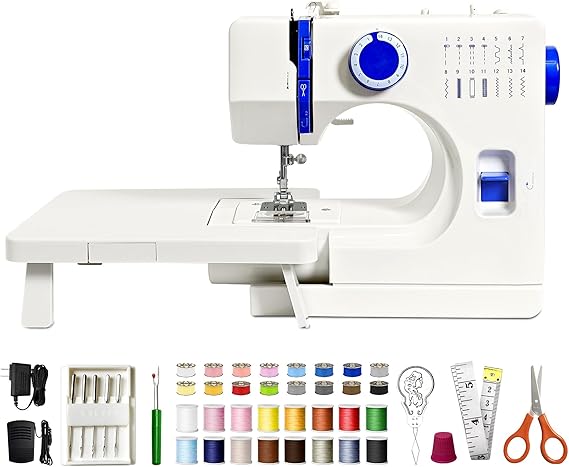
Lastempa All‑in‑One Sewing Machine for Beginners
Compact beginner machine with 16 built‑in stitches, dual speed control, auto bobbin winder, LED light and foot pedal. Best suited to light fabrics, simple mending and small crafting projects.
Check PriceWhy it stands out
A compact, budget‑friendly mini machine with 16 stitch modes and dual‑speed control, made for brand‑new sewists and small‑space living rather than heavy projects.
Key points
- ~16 built‑in stitch modes (straight, zigzag, basic decorative) [4]
- Dual‑speed control (slow for learning, fast for quick projects)
- Built‑in LED light and automatic bobbin winding
- Very compact and portable (mini form factor)
- Approx. price: ≈ $40–$60
- Rating: ≈ 4.5–4.7 / 5 from 500+ reviews on various listings [4]
Pros
- Very low cost entry into sewing
- Small and lightweight; easy to store or carry
- Dual‑speed makes it less intimidating for beginners
- Good for quick fixes and crafts on light fabrics
Cons
- Not suitable for thick fabrics, denim or big projects
- Fewer accessories and presser feet than standard machines
- Plastic, mini design feels less robust than full‑size models
Best for
Absolute beginners, teens or occasional users who want a cheap, compact machine for light mending and small crafting projects.
4.Brother XM2701 – Lightweight, Full‑Featured Sewing Machine
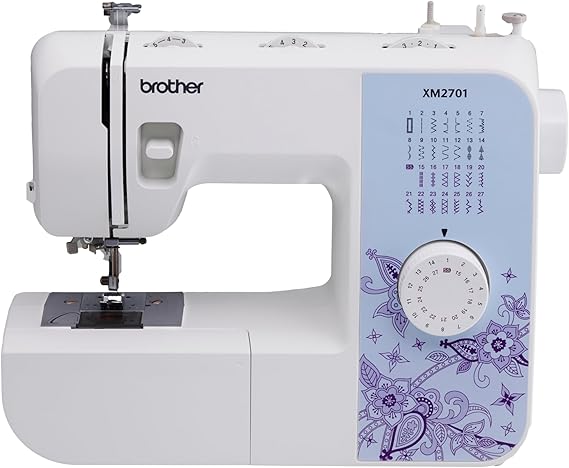
Brother XM2701 – Lightweight, Full‑Featured Sewing Machine
Lightweight home machine with 27 built‑in stitches, 1‑step auto‑size buttonhole, automatic needle threader and drop‑in top bobbin. Includes 6 presser feet for garments, alterations and basic crafts.
Check PriceWhy it stands out
A very popular starter machine that adds more stitch options and convenience features than ultra‑basic models, while still being easy and affordable.
Key points
- 27 built‑in stitches with 63 stitch functions (decorative, blind hem, stretch, etc.) [5]
- One‑step auto‑size buttonhole
- Automatic needle threader and drop‑in top bobbin
- 6 quick‑change presser feet included
- Approx. price: ≈ $140–$150
- Rating: ≈ 4.1–4.5 / 5 across retailers [5]
Pros
- Good stitch variety for a low‑priced machine
- Easy threading and jam‑resistant bobbin reduce frustration
- Lightweight but more capable than mini units
- Includes several useful feet (zipper, buttonhole, blind hem, etc.)
Cons
- Not optimized for heavy‑duty fabrics
- No wide table; quilting space is limited
- Mechanical controls only (no LCD stitch screen)
Best for
Beginners and casual sewists who want a first real sewing machine for garments, repairs and basic decor projects.
5. Janome 001LOVELY – Lovely Lilac Easy‑to‑Use Sewing Machine
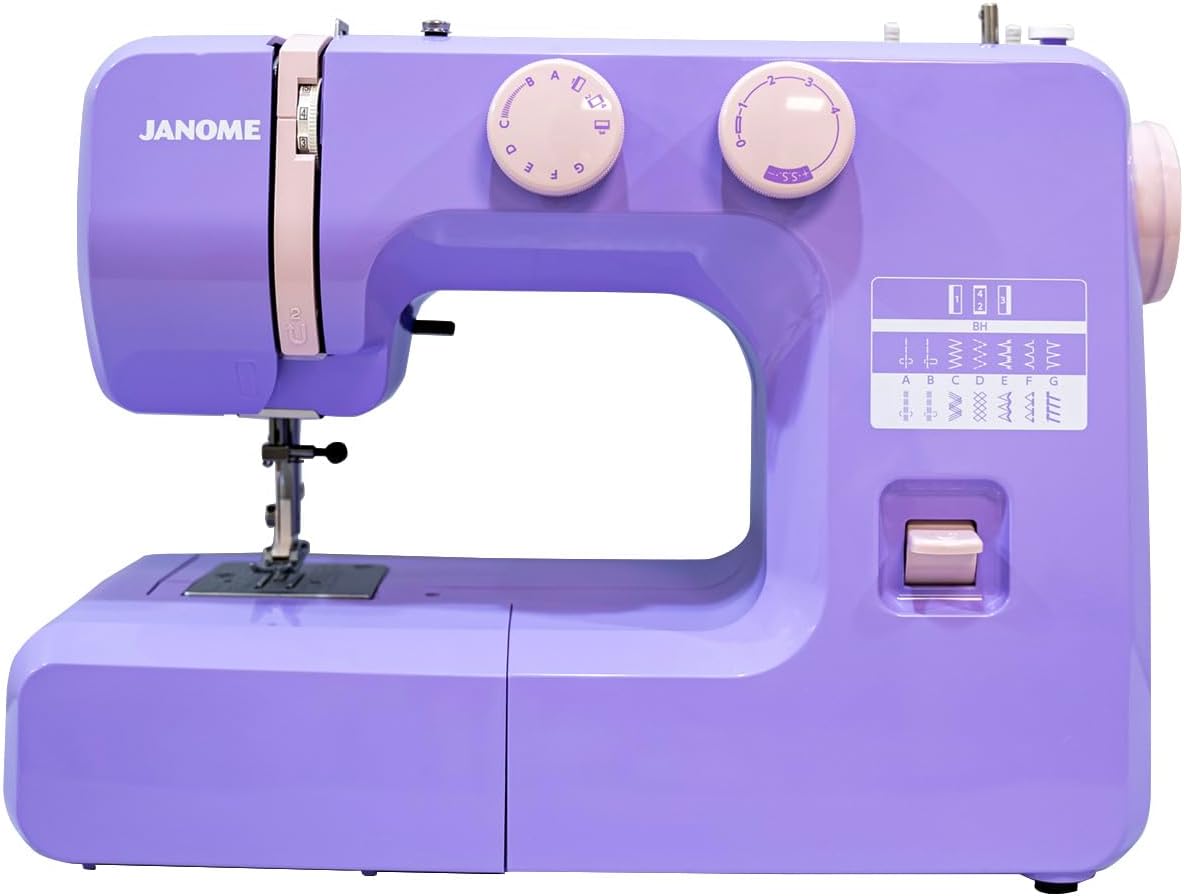
Janome 001LOVELY – Lovely Lilac Easy‑to‑Use Sewing Machine
Beginner‑friendly mechanical machine with 15 built‑in stitches, 4‑step buttonhole, adjustable stitch length and front‑loading bobbin. Designed for garments, crafts and home‑décor with a sturdy interior frame.
Check PriceWhy it stands out
A sturdy, entry‑level Janome with 15 core stitches and a front‑loading bobbin, praised for being very beginner‑friendly while feeling more solid and long‑lasting than very cheap machines.
Key points
- 15 built‑in stitches (utility and stretch) plus 4‑step buttonhole [6]
- Adjustable stitch length and front‑loading bobbin
- Metal interior frame for stability
- Approx. price: ≈ $140–$199 [6]
- Rating: ≈ 4.4–4.7 / 5 from 150+ reviews [6]
Pros
- Very sturdy for an entry‑level machine
- Clear, simple controls that beginners can grasp quickly
- Good stitch quality on light‑ to medium‑weight fabrics
- 25‑year limited warranty from a reputable brand
Cons
- Only 15 stitches, limited decorative options
- No computerized features or LCD screen
- 4‑step buttonhole, not one‑step
Best for
Beginners who want a reliable mechanical machine with a long usable life and aren’t worried about having hundreds of decorative stitches.
6. Janome Arctic Crystal – Easy‑to‑Use Sewing Machine
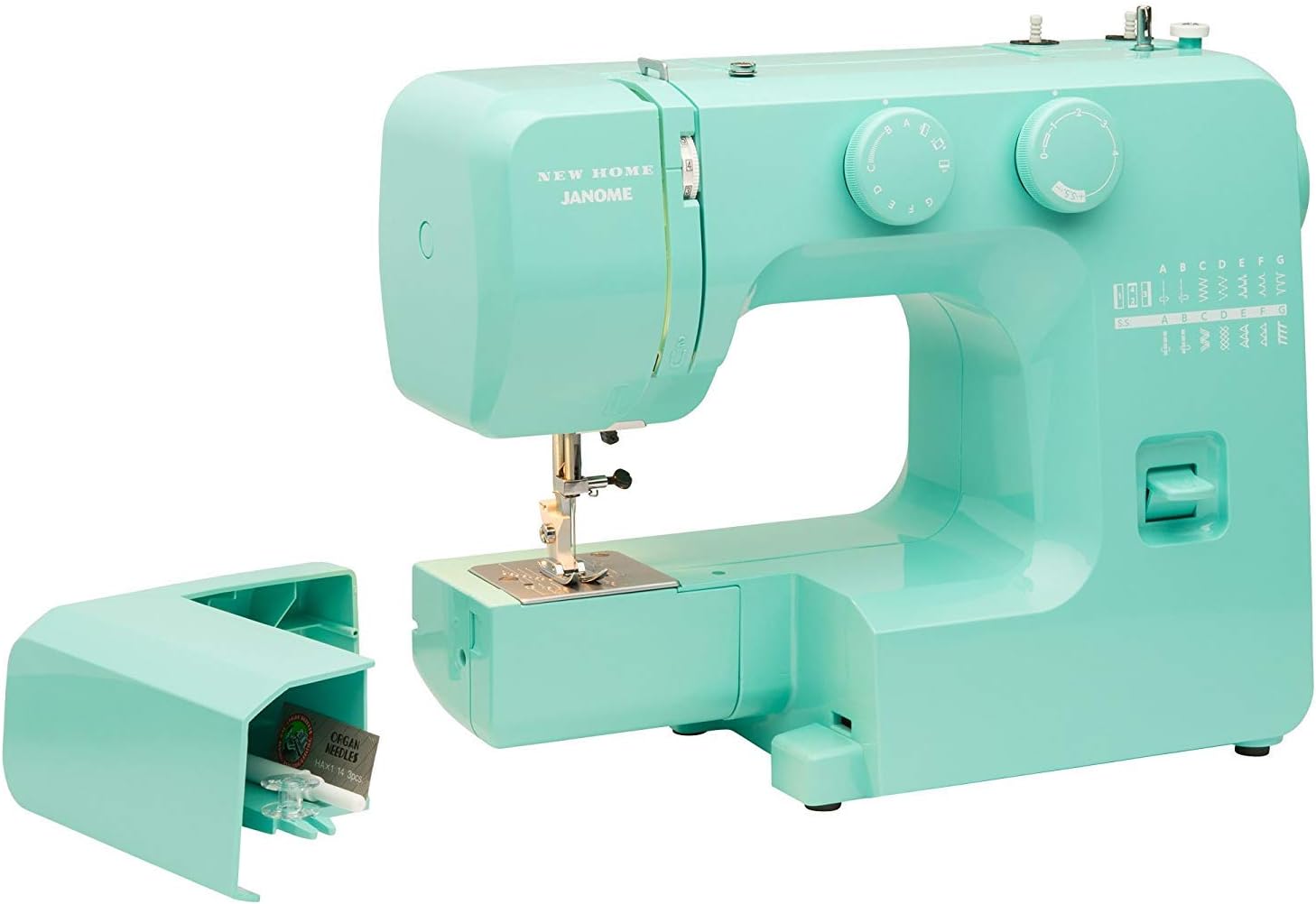
Janome Arctic Crystal – Easy‑to‑Use Sewing Machine
Colorful entry‑level Janome with 15 built‑in stitches, 4‑step buttonhole, adjustable stitch length and front‑loading bobbin. A sturdy, easy‑to‑use machine for beginners tackling garments, décor and small quilts.
Check PriceWhy it stands out
Same core machine as the Lovely Lilac but in a bold teal color. A quality entry‑level mechanical Janome that has become a favorite first machine for many new sewists.
Key points
- 15 built‑in stitches, 4‑step buttonhole, adjustable stitch length [7]
- Front‑loading bobbin and metal interior frame
- Compact and lightweight but sturdier than mini machines
- Approx. price: ≈ $140–$199 [7]
- Rating: ≈ 4.4–4.7 / 5 from 150+ reviews [7]
Pros
- Easy to use and thread, with plenty of tutorials available
- Feels solid and smooth compared with cheaper brands
- Handles garments, small quilts and home‑décor well
- Fun color can make sewing more inviting for younger users
Cons
- No computerized controls or LCD
- Limited stitch library vs. computerized models
- 4‑step buttonhole takes a bit more practice
Best for
New sewists who want a solid, simple Janome with a bit of personality and enough capability for most home projects.
7. Brother XR3774 – Sewing & Quilting Machine with Wide Table
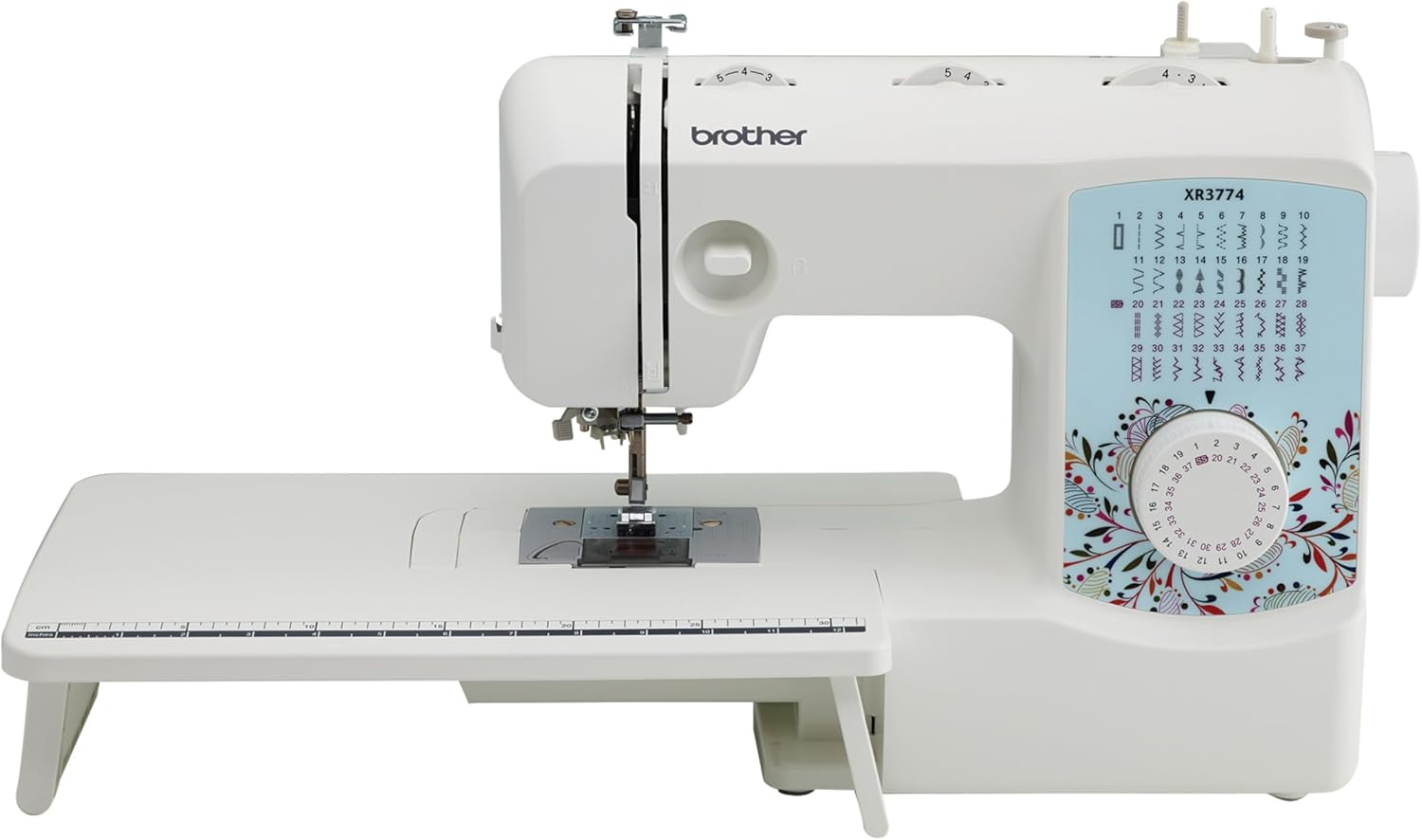
Brother XR3774 – Sewing & Quilting Machine with Wide Table
Versatile home machine with 37 built‑in stitches, 1‑step buttonhole, wide extension table and 8 included presser feet. Well suited to garments, quilting and home‑décor projects.
Check PriceWhy it stands out
An affordable bridge model between basic machines and full quilting setups, with 37 stitches and a wide table that makes larger projects much easier to manage.
Key points
- 37 built‑in stitches (decorative, blind hem, quilting) [8]
- One‑step buttonhole
- Wide extension table included
- 8 presser feet (including quilting feet)
- Approx. price: ≈ $175–$185 [8]
- Rating: ≈ 4.0–4.2 / 5 from 50+ reviews [8]
Pros
- Great value: wide table plus several feet included in the box
- Enough quilting‑oriented features for beginners to try quilting
- Straightforward, mechanical controls
- Good stitch quality for a budget machine
Cons
- No LCD or computerized stitch selection
- Not a heavy‑duty workhorse for constant thick fabrics
- Fewer stitches than fully computerized machines
Best for
Beginners and improvers who want to sew garments and dabble in quilting without investing in a high‑end quilting machine yet.
8. SINGER PRISMA Heavy Duty Sewing Machine
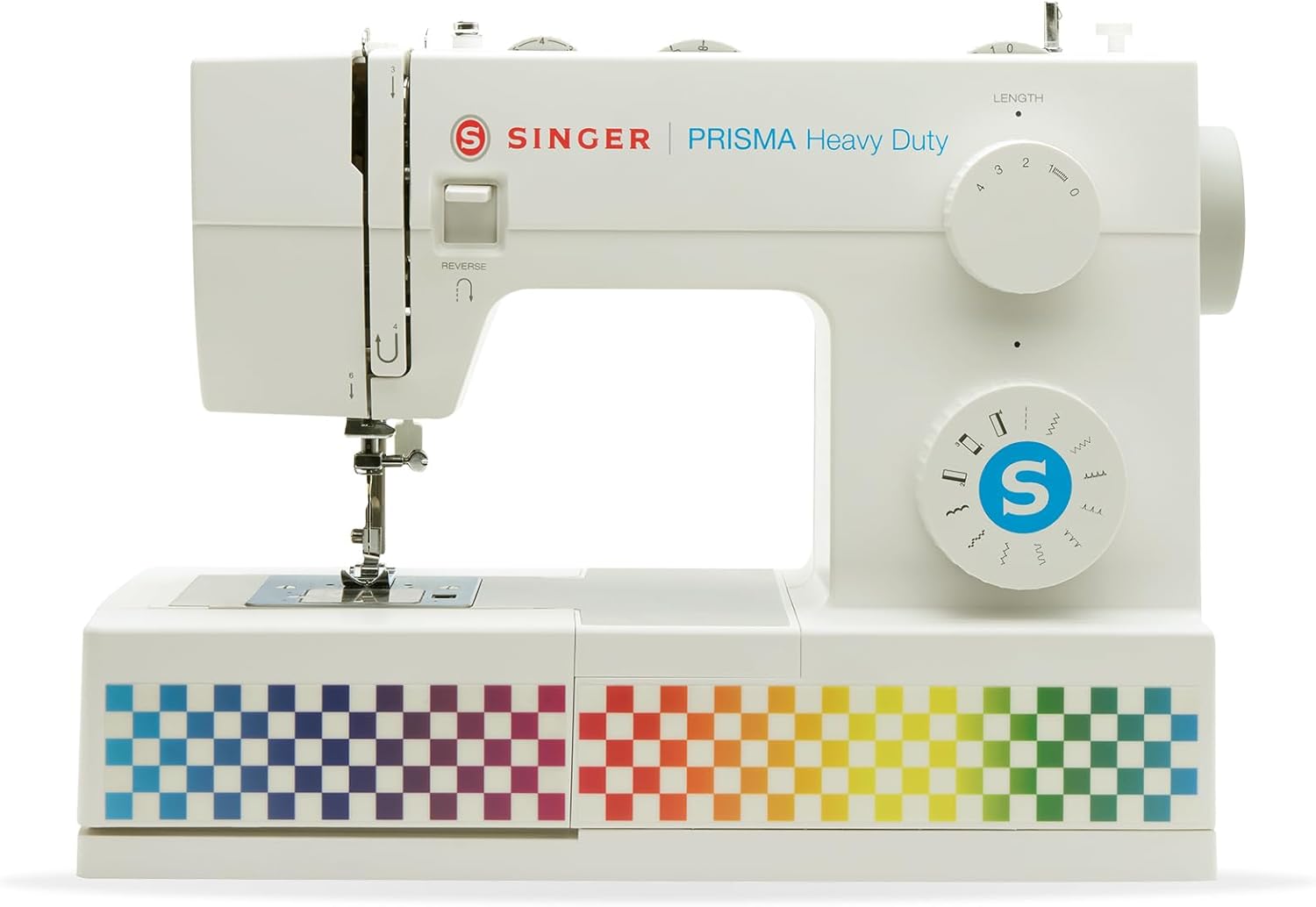
SINGER PRISMA – Heavy Duty Sewing Machine
Heavy‑duty SINGER with full metal frame, powerful motor and extra‑high sewing speed for thick fabrics and long seams. Offers essential stitches and enhanced piercing power for denim, canvas and layered projects.
Check PriceWhy it stands out
A heavy‑duty Singer with a full metal frame and powerful motor, designed to handle thicker fabrics and long seams better than basic domestic machines while keeping the controls simple.
Key points
- Heavy‑duty mechanical machine with strong piercing power [9]
- Full metal frame and rugged construction
- Multiple stitch options (around a dozen core stitches, 11 stitch patterns for PRISMA line) [9]
- Approx. price: ≈ $220
- Rating: ≈ 4.1 / 5 from 400+ reviews [9]
Pros
- Handles denim, canvas and layered fabrics better than standard light machines
- Faster sewing speed than typical beginner models
- Simple controls; no complex menus to learn
- Good value for a branded heavy‑duty machine
Cons
- Heavy‑duty is still domestic, not industrial level
- Limited decorative stitch variety
- Can feel loud or aggressive compared with basic machines
Best for
Home sewists who regularly sew thicker fabrics (jeans, bags, light upholstery) and want extra power without moving to a true industrial machine.
9. Brother XR9550 – Computerized Sewing & Quilting Machine
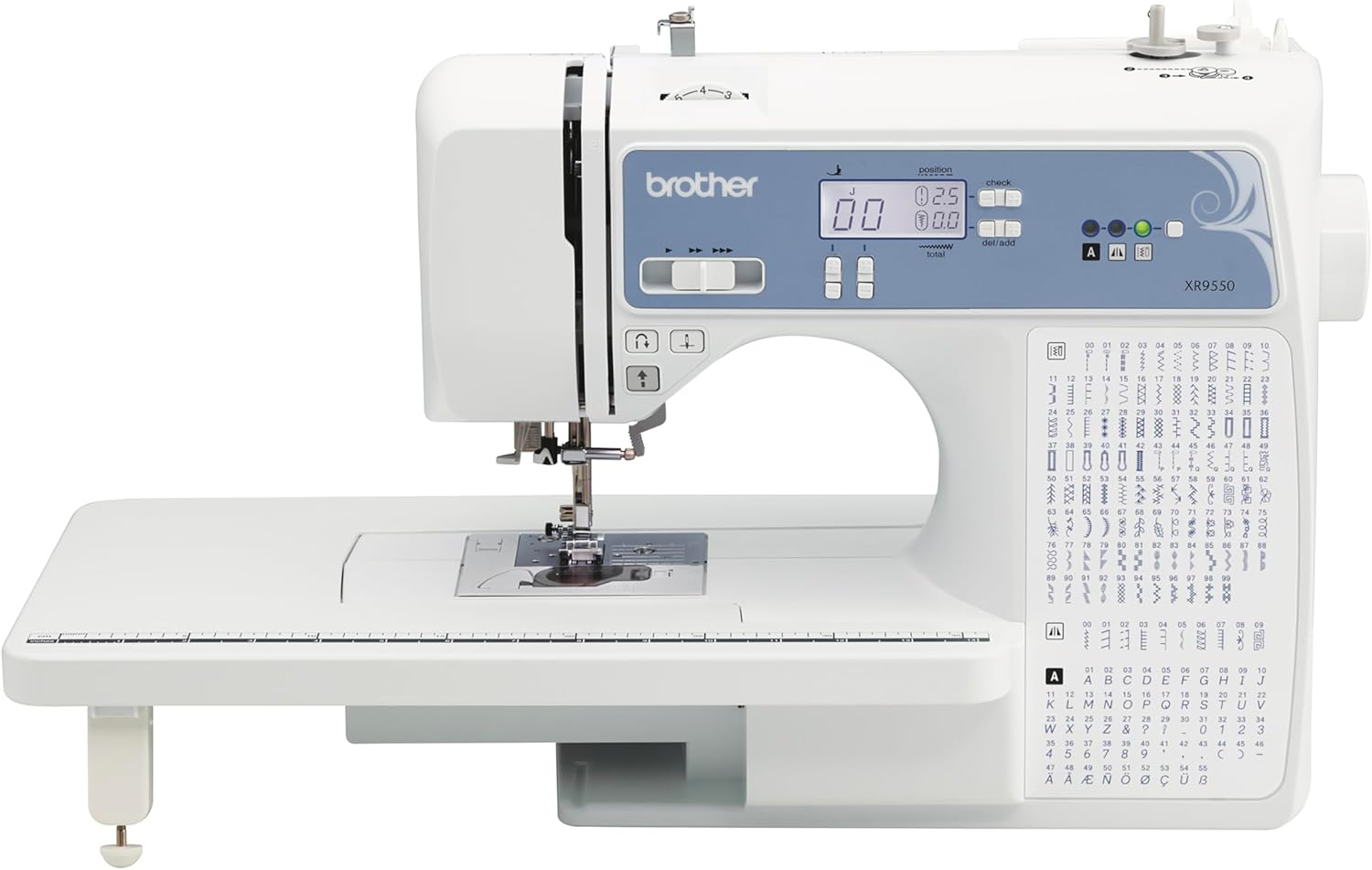
Brother XR9550 – Computerized Sewing & Quilting Machine
Computerized machine with 165 built‑in stitches, LCD display, wide table and 8 presser feet. Designed for versatile home use on garments, quilts and décor with easy stitch selection and automatic needle threading.
Check PriceWhy it stands out
A feature‑rich yet approachable computerized Brother with 165 stitches and a wide table, often recommended as a step‑up machine for serious home sewists and quilters.
Key points
- 165 built‑in stitches (utility, decorative, heirloom) [10]
- Multiple one‑step buttonholes
- LCD screen with push‑button stitch selection
- Wide table and 8 presser feet included
- Approx. price: ≈ $270–$300 [10]
- Rating: ≈ 4.5–4.6 / 5 from 150–180+ reviews [10]
Pros
- Large stitch library for creative work and decorative sewing
- Very user‑friendly LCD interface and automatic needle threader
- Wide table supports quilting and larger garments
- Strong overall value for a mid‑range computerized machine
Cons
- Overkill for users who only do basic mending
- Still a domestic machine, not designed for very heavy fabrics every day
- More settings and options mean a slightly steeper learning curve
Best for
Confident beginners to intermediate sewists who want a one‑machine solution for garments, quilts and decorative stitching at home.
10. SINGER HD0450S Heavy Duty Serger / Overlock Machine
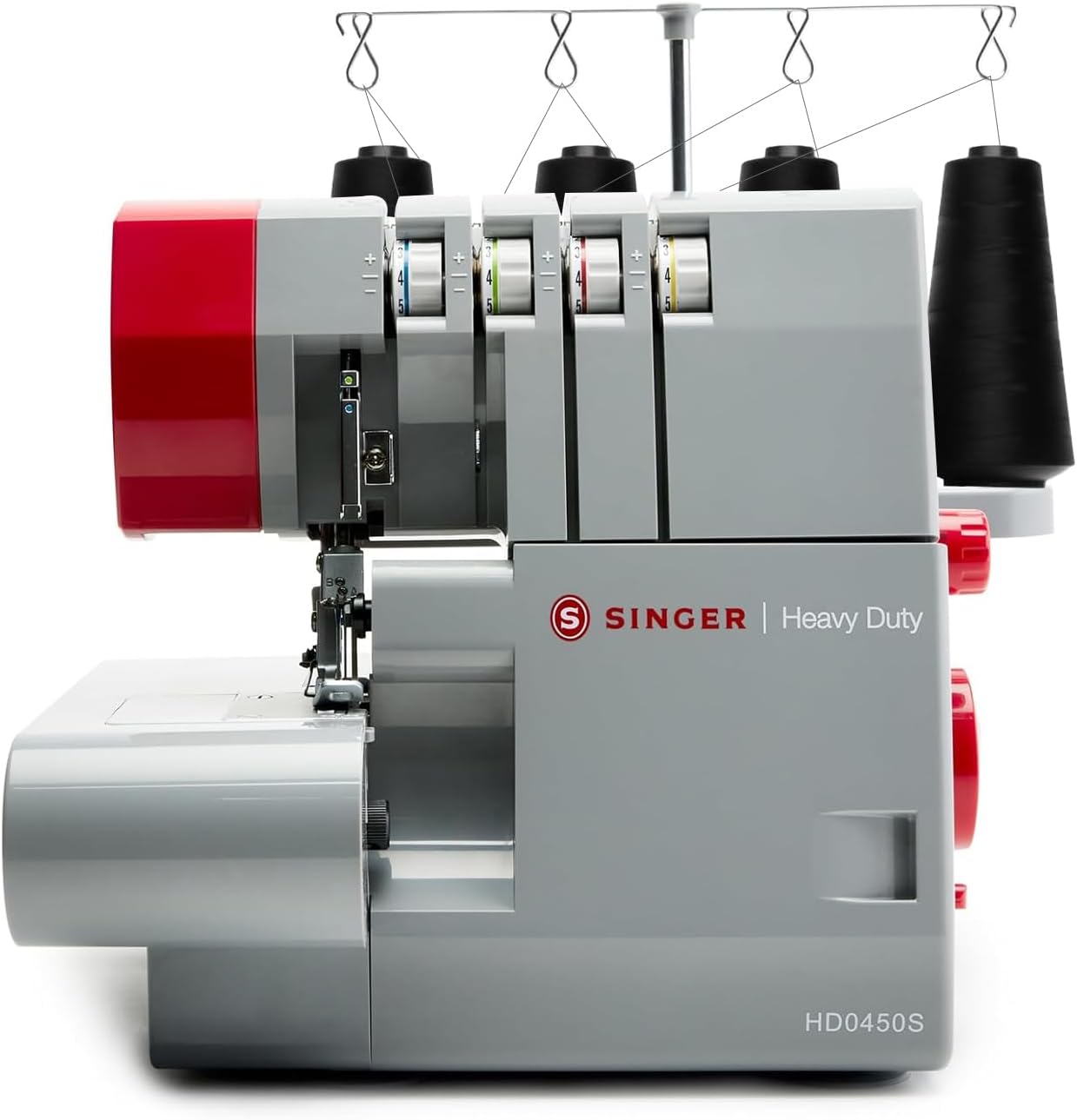
SINGER HD0450S – Heavy Duty Serger Overlock Machine
Heavy‑duty serger with 2‑3‑4 thread capability, up to 1,300 stitches per minute, 60% larger cutting knife, differential feed, full metal frame and free arm – ideal for fast, professional seam finishing and knits.
Check PriceWhy it stands out
A heavy‑duty serger that complements, rather than replaces, a regular sewing machine, ideal for finishing seams on knits and wovens quickly and professionally.
Key points
- 2‑3‑4 thread capability (multiple overlock configurations) [11]
- Up to 1,300 stitches per minute
- 60% larger cutting knife than standard SINGER sergers
- Heavy‑duty metal frame and differential feed
- Approx. price: ≈ $280
- Rating: ≈ 4.3–4.4 / 5 from 40+ reviews [11]
Pros
- Very fast seam finishing and edge‑overlocking
- Handles thicker fabrics better than basic sergers
- Differential feed helps prevent stretching on knits
- Great upgrade for serious garment sewists
Cons
- Does not replace a normal sewing machine (no straight stitch, buttonholes, etc.)
- Threading and tension on sergers have a learning curve
- Higher price than entry‑level 3‑thread sergers
Best for
Home sewists who already own a regular sewing machine and want a heavy‑duty serger for fast, professional seam finishes and knit garments.
11. SINGER Quantum Stylist 9960 – Computerized Sewing & Quilting Machine
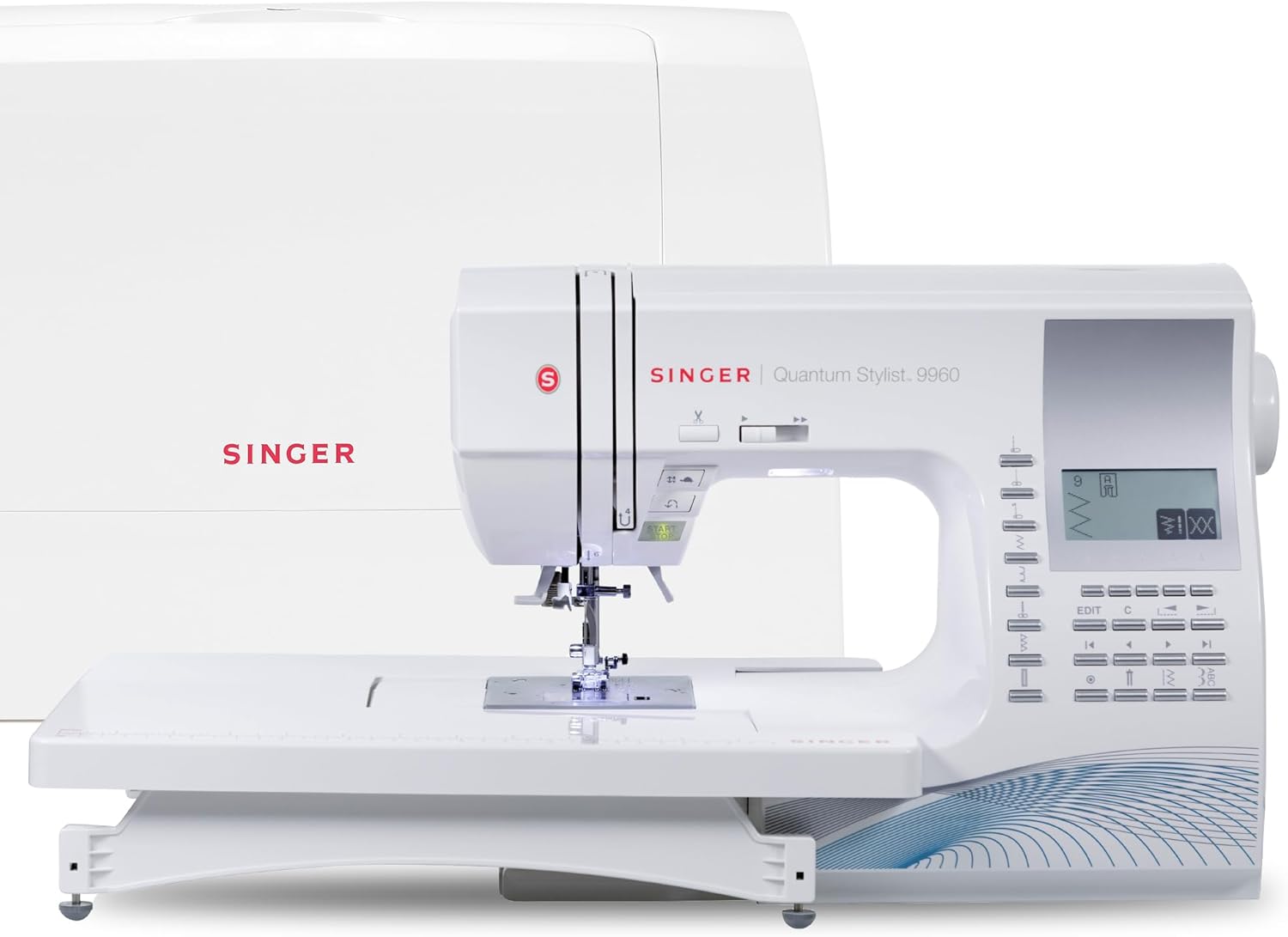
SINGER Quantum Stylist 9960 – Computerized Sewing & Quilting Machine
High‑end SINGER with 600 built‑in stitches, multiple alphabets, 13 one‑step buttonholes, large LCD screen and extensive accessory kit. Built for creative garment sewing, quilting and decorative stitching at home.
Check PriceWhy it stands out
A high‑end, feature‑packed domestic machine with 600 stitches and 1,000+ stitch applications, aimed at serious home sewists who want advanced creative options (decoratives, alphabets, mirror imaging, elongation) in one machine.
Key points
- 600 built‑in stitches and 1,172 stitch applications (utility, stretch, heirloom, decorative, alphabets) [12]
- 13 one‑step buttonholes
- Large LCD screen with advanced functions (mirror imaging, stitch elongation)
- Comes with extension table and a big accessory kit
- Approx. price: ≈ $550 [12]
- Rating: ≈ 4.5–4.6 / 5 from 1,200+ reviews [12]
Pros
- Huge stitch library for fashion sewing, quilting and embellishment
- Advanced controls give lots of creative flexibility
- Strong build quality and good stitch consistency
- Great all‑in‑one machine for experienced sewists
Cons
- Much more expensive than basic and mid‑range machines
- Overwhelming for complete beginners
- Still a domestic machine, not meant for constant heavy canvas/leather
Best for
Intermediate to advanced home sewists and quilters who want a powerful, creative computerized machine with far more features than entry‑level models.
What Best for Home Use Really Means
The term best sewing machine for home use does not refer to one single model. Instead, it describes a category of machines that balance functionality, simplicity, durability, and affordability. A home-use sewing machine should be designed for moderate daily use rather than continuous heavy-duty operation.
For home users, the best sewing machine is one that can comfortably sew light to medium fabrics such as cotton, linen, denim, knits, and basic upholstery fabrics. It should also offer essential stitches like straight stitch, zigzag, buttonhole, and a few decorative or stretch stitches. These stitches cover nearly all household sewing needs.
Another important factor is usability. Home users often sew in limited spaces and for shorter periods of time, so machines should be compact, quiet, and easy to maintain. Machines that require constant adjustments or professional servicing are usually not ideal for home environments.
Types of Sewing Machines Suitable for Home Use
Mechanical Sewing Machines
Mechanical sewing machines are controlled using dials and knobs rather than digital screens. They are often recommended for beginners and home users because they are simple, durable, and easy to repair. These machines focus on core stitching functions and do not rely on electronics.
For many households, a mechanical sewing machine is more than enough. It handles basic sewing tasks efficiently and tends to last for many years with minimal maintenance. If your goal is simple garment sewing, alterations, or mending, this type is often the best choice.
Computerized Sewing Machines
Computerized sewing machines use electronic controls and digital displays. They offer more stitch options, automatic tension adjustment, and programmable features. These machines are ideal for home users who enjoy decorative sewing, quilting, or experimenting with designs.
Although computerized machines have a learning curve, many modern models are user-friendly and include built-in tutorials. They are best for home users who sew frequently and want advanced control without moving to industrial equipment.
Key Features a Home Sewing Machine Should Have
When deciding which sewing machine is best for home use, features matter more than brand names. The most important features include stitch quality, ease of threading, and fabric handling.
A good home sewing machine should have a smooth feed system that moves fabric evenly. This prevents puckering and uneven stitches, especially on lightweight fabrics. Adjustable stitch length and width are also essential for adapting to different sewing tasks.
Another critical feature is ease of maintenance. Machines with top-loading bobbins, clear threading paths, and accessible cleaning areas save time and reduce frustration. Built-in lighting and free-arm capability also make a big difference in everyday use.
Skill Level and the Right Sewing Machine
Best Sewing Machine for Beginners at Home
For beginners, the best sewing machine is one that reduces mistakes and builds confidence. Machines with fewer stitches but consistent performance help beginners focus on learning techniques rather than troubleshooting problems.
Automatic needle threading, simple stitch selectors, and stable speed control are especially helpful for new users. Beginners should avoid machines with excessive decorative options that complicate the learning process.
Best Sewing Machine for Intermediate Home Users
Intermediate users benefit from machines that offer more stitch variety, adjustable tension, and speed control. These features allow experimentation with garment construction, quilting, and decorative sewing while still being suitable for home use.
At this level, a machine should feel responsive and strong enough to handle thicker fabrics without strain.
Best Sewing Machine for Advanced Sewers for Home Use
For advanced sewers, the best sewing machine for home use is one that delivers power, precision, and flexibility. These users often work on complex garments, quilting projects, heavy fabrics, or decorative stitching that requires advanced controls and consistent performance.
High-end or computerized sewing machines are ideal for advanced home use, offering features such as adjustable presser foot pressure, automatic thread cutting, extensive stitch libraries, and programmable settings. A strong motor and solid build quality are essential to handle frequent home sewing without losing accuracy.
Buyer’s Guide: How to Choose the Best Sewing Machine for Home Use
Choosing the best sewing machine for home use starts with understanding your sewing habits. Ask yourself how often you sew, what types of fabrics you use, and whether sewing is a hobby or a regular activity.
Next, match the machine type to your comfort level. Mechanical machines are easier to learn and maintain, while computerized machines offer convenience and precision. Neither is better, the best option depends on the user.
Budget also plays a role, but higher price does not always mean better performance for home use. A mid-range machine with good build quality and essential features often outperforms cheaper or overly complex models.
Finally, consider long-term support. Machines from established brands usually offer better manuals, spare parts, and service availability, which is important for home users.
Common Mistakes Home Users Make When Buying Sewing Machines
One common mistake is buying a machine with too many features that are never used. This increases cost and complexity without improving sewing results. Another mistake is choosing the cheapest machine available, which often leads to poor stitch quality and frustration.
Ignoring fabric type is also a problem. A lightweight machine may struggle with denim or layered fabrics, even if it works fine on cotton. Matching machine strength to fabric needs is essential.
FAQs: Which Sewing Machine Is Best for Home Use
Which Sewing Machine Is Best for Home Use?
The best sewing machine for home use depends on your skill level and sewing needs. Beginners usually do well with simple mechanical machines, while intermediate and advanced home users often prefer computerized models with more features.
Is a Mechanical or Computerized Sewing Machine Better for Home Use?
Mechanical sewing machines are great for basic home sewing and durability, while computerized machines offer convenience and advanced features for more frequent or creative home projects.
How Much Should I Spend on a Sewing Machine for Home Use?
For home use, a good sewing machine typically costs between $150 and $600. Beginners can stay on the lower end, while advanced home sewers may benefit from higher-priced models.
Are Heavy-Duty Sewing Machines Necessary for Home Use?
Heavy-duty sewing machines are only necessary for home use if you regularly sew thick fabrics like denim, canvas, or multiple layers. For light to medium fabrics, standard machines work well.
Can Beginners Use Sewing Machines Designed for Home Use?
Yes, many sewing machines for home use are beginner-friendly and include features like automatic threading, simple stitch selection, and speed control to make learning easier.
What Features Matter Most in a Home Sewing Machine?
Important features for home use include stitch variety, ease of use, speed control, strong motor performance, and easy maintenance.
Conclusion:
The best sewing machine for home use is one that matches your experience level, budget, and the types of projects you plan to sew. Whether you choose a simple mechanical model or a feature-rich computerized machine, focusing on reliability, comfort, and practicality will ensure long-term satisfaction. A well-chosen sewing machine can handle everyday home projects with ease and grow with your sewing skills over time.
