
A sewing machine is a precision tool with moving metal parts that rely on proper lubrication to function smoothly. Over time, friction, dust, and lint can build up inside the machine, leading to noise, stiffness, skipped stitches, and even long-term damage. This is where choosing the best sewing machine oil becomes essential.
The right oil reduces friction, prevents rust, protects internal components, and helps your machine maintain consistent stitch quality. However, not all oils are suitable for sewing machines. Using the wrong lubricant can attract dust, gum up moving parts, or damage delicate mechanisms. In this guide, we’ve reviewed carefully selected sewing machine oils that are designed to lubricate effectively without harming your equipment.
1. Stainless Sewing Machine Oil – Formulated for Precision
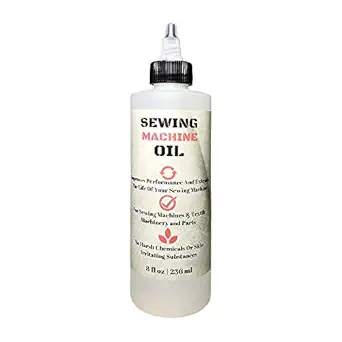
Oil Composition & Purity
This oil is specially formulated for precision machinery, including sewing machines. It has a clear, lightweight consistency that allows it to penetrate tight metal joints without leaving residue. The refined formulation helps reduce friction while preventing oxidation and corrosion.
Performance on Sewing Machines
When applied to moving parts such as the hook race, needle bar, and presser bar, this oil spreads evenly and restores smooth motion almost immediately. It reduces resistance during stitching, making the machine feel lighter and more responsive.
Longevity & Cleanliness
One of the key advantages of this oil is that it does not thicken over time. It remains stable and clean, which helps prevent dust buildup inside the machine. This makes it suitable for both regular maintenance and older machines that require gentle care.
Best Use Cases
- Routine machine maintenance
- Vintage and modern sewing machines
- Precision lubrication needs
Pros
- Lightweight and residue-free
- Reduces noise and friction effectively
- Helps prevent rust
Cons
- Small bottle size for frequent users
2. Lange König Sewing Machine Oil with Specialized Applicators
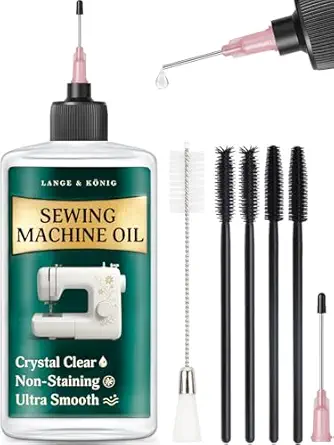
Oil Quality & Formula
This oil is designed specifically for sewing machines and other fine mechanical tools. The formula is thin enough to flow easily but strong enough to provide long-lasting lubrication.
Applicator Design & Control
What sets this option apart is the included applicators, which allow precise oil placement. This is especially useful for hard-to-reach areas where excess oil could cause problems.
Performance & Reliability
The oil reduces friction quickly and helps stabilize machine movement. It works well for both routine oiling and restoring machines that haven’t been serviced in a while.
Best Use Cases
- Detailed machine maintenance
- Tight internal components
- Controlled oil application
Pros
- Precise applicator system
- Smooth lubrication
- Suitable for frequent maintenance
Cons
- Requires careful handling to avoid over-oiling
3. SMAPHY Sewing Machine Dual-Ended Lubrication Oil
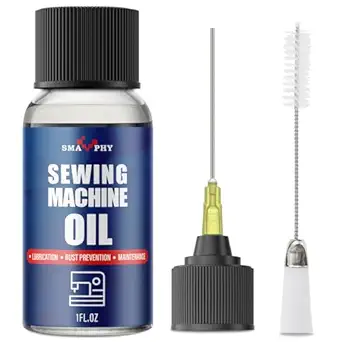
Oil Type & Consistency
This sewing machine oil features a clean, low-viscosity formula that flows easily across metal surfaces. It is designed to minimize friction without leaving sticky residue.
Dual-Ended Applicator Function
The dual-ended applicator allows both broad and pinpoint application. This is useful for lubricating larger moving parts as well as small joints and pivots.
Performance Over Time
With regular use, this oil helps maintain smooth stitching performance and reduces mechanical noise. It performs consistently even during longer sewing sessions.
Best Use Cases
- Multi-point oiling
- Machines with complex mechanisms
- Regular maintenance routines
Pros
- Versatile applicator
- Clean, smooth oil flow
- Reduces machine noise
Cons
- Applicator requires steady handling
4. Sewing Machine Universal Lubricating Oil (1 fl oz)
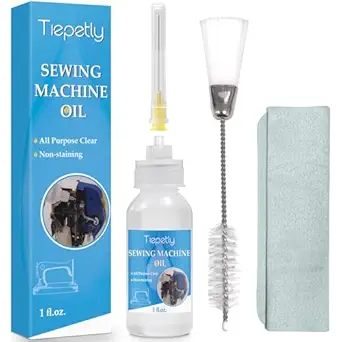
arts to feel noisy, stiff, or uneven, lubrication is usually the missing piece. This universal sewing machine oil is designed to restore smooth motion by reducing friction between internal metal parts. Its lightweight consistency allows it to flow easily into tight mechanical areas without leaving behind heavy residue or buildup.
Oil Formula & Consistency
This oil has a clear, thin formulation that closely matches what most sewing machine manufacturers recommend. Because it is not overly thick, it spreads evenly across moving parts such as the hook race, needle bar, and shuttle mechanism. This helps prevent metal-on-metal wear while maintaining consistent stitch timing.
Performance During Regular Sewing
In real sewing conditions, this oil improves machine responsiveness almost immediately. Handwheel movement becomes smoother, motor strain reduces, and stitch noise softens noticeably. It performs well for both light domestic sewing and longer sessions where heat buildup can increase friction.
Compatibility With Sewing Machines
The oil is suitable for most household and portable sewing machines, including mechanical and electric models. It works well on straight-stitch, zigzag, and multi-function machines. As with any lubricant, computerized machines should only be oiled in manufacturer-approved areas.
Ease of Application
The bottle design allows controlled application, minimizing the risk of over-oiling. A few drops are sufficient for each lubrication point, making it beginner-friendly while still practical for experienced users.
Pros
- Lightweight oil spreads evenly
- Reduces noise and vibration
- Helps extend machine lifespan
- Safe for most home sewing machines
Cons
- Small bottle size
- Requires regular reapplication with heavy use
5. Brohood Sewing Machine Oil – Precision Compatible Formula
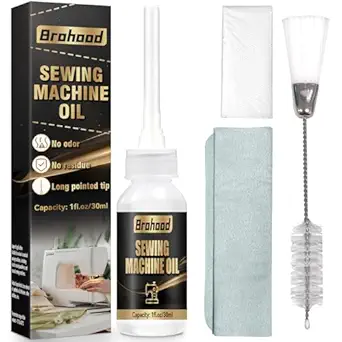
This sewing machine oil focuses on precision lubrication for users who want reliable, repeatable results. It is designed to protect internal components from friction while maintaining stitch consistency during extended sewing projects.
Lubrication Strength & Stability
The oil maintains a stable viscosity even after long sewing sessions. It does not thin excessively with heat, which helps keep moving parts properly coated. This stability is especially helpful for machines that are used frequently or run at higher speeds.
Machine Smoothness & Noise Reduction
After application, machines typically feel more responsive with quieter operation. The oil reduces resistance in high-friction areas, allowing smoother needle penetration and more consistent feed motion.
Material Safety & Clean Finish
The clear formula leaves no visible stains or discoloration when applied correctly. It does not gum up parts or attract excess lint, which is important for maintaining long-term cleanliness inside the machine.
Best Use Cases
Ideal for garment sewing, quilting, and home décor projects where consistent stitching quality matters. It supports both intermittent and daily sewing routines.
Pros
- Stable lubrication under heat
- Helps maintain stitch accuracy
- Does not attract lint buildup
- Easy to apply in small amounts
Cons
- Not intended for external plastic parts
- Bottle may require a separate applicator for tight spaces
6. All-Purpose Machine Oil (3.38 fl oz)
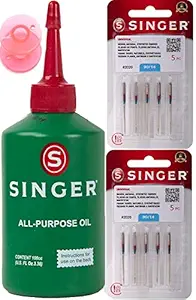
This all-purpose machine oil is suitable for users who want a slightly larger quantity for ongoing maintenance. It works across multiple machine types while still being safe for sewing equipment when applied correctly.
Oil Thickness & Coverage
The medium-light viscosity offers balanced coverage, allowing the oil to stay in place without becoming sticky. This makes it useful for machines that require lubrication in multiple areas during routine servicing.
Durability Over Time
The oil holds up well during extended sewing sessions, helping reduce wear on gears and shafts. It supports smoother startup and consistent performance, even after the machine has been idle for some time.
Versatility Beyond Sewing Machines
While effective for sewing machines, this oil can also be used on other small mechanical tools. For dedicated sewing use, it should be applied sparingly to avoid excess oil migration.
Pros
- Larger bottle for frequent maintenance
- Balanced viscosity for durability
- Helps prevent internal wear
- Cost-effective for long-term use
Cons
- Not specialized exclusively for sewing machines
- Requires careful application to avoid overuse
7. Sewing Machine Accessories Lubricant for Electric Machines
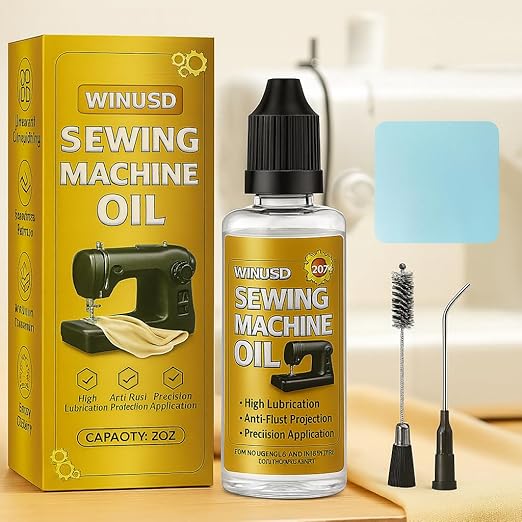
This lubricant is designed with electric sewing machines in mind, focusing on smooth mechanical motion without interfering with sensitive components.
Electric Machine Safety
The oil is formulated to minimize risk around motor-adjacent parts when applied properly. It helps reduce friction without seeping into areas where oil could cause electrical issues.
Operational Performance
Machines feel more fluid during stitching, especially at moderate to high speeds. The oil supports consistent needle movement and reduces vibration during dense or layered sewing.
Maintenance Benefits
Regular use can help extend the service life of moving parts by reducing metal fatigue and wear. It is best applied during routine cleaning intervals.
Pros
- Designed for electric sewing machines
- Improves smoothness at higher speeds
- Helps reduce internal wear
- Clean, non-sticky formula
Cons
- Not suitable for external lubrication
- Requires careful placement
8. Singer Purpose Sewing Machine Oil (3.38 FL OZ)
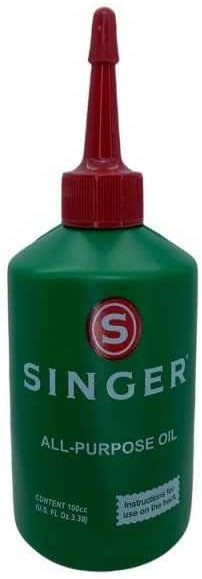
Every sewing machine benefits from periodic lubrication, and this Singer Purpose Sewing Machine Oil offers a combination of performance and reliability that many sewers have relied on for years. Designed for traditional and modern home machines, the formulation is clear and lightweight, allowing it to penetrate moving metal parts without leaving behind sticky residue or unwanted buildup.
Oil Formula & Machine Compatibility
This oil’s consistency closely matches what many sewing machine manufacturers recommend for regular maintenance. It is light enough to move freely into tight joints and bearings, yet strong enough to provide a protective layer that reduces friction during stitching. Because it is free of additives and impurities that can gum up machine internals, it’s safe for use on needle bars, bobbin cases, presser bars, shuttle hooks, and other moving metal components.
Performance in Sewing Conditions
When applied correctly, this oil smooths out machine motion almost instantly. Many users notice reduced resistance on the handwheel and quieter operation once moving parts are properly lubricated. This translates into less strain on the machine’s motor and smoother stitching performance, especially during longer or more demanding sewing sessions.
Ease of Application
The bottle is designed for controlled drops, which helps you avoid over-oiling, a common pitfall that can attract lint and gunk inside your machine. A few drops at each recommended lubrication point are generally sufficient for routine maintenance.
Best Use Cases
This oil works well for:
- Everyday garment sewing
- Quilting machines used frequently
- Seasonal maintenance before heavy sewing projects
- Machines that have sat idle for a while
Pros
- Lightweight and clean formula
- Reduces noise and drag
- Works with most home sewing machines
- Trusted solution for routine maintenance
Cons
- May require more frequent re-application with heavy use
- Not specialized for heavy industrial machines
9. Sewing Machine Oil with Dual-Ended Applicator (OAIEGSD)
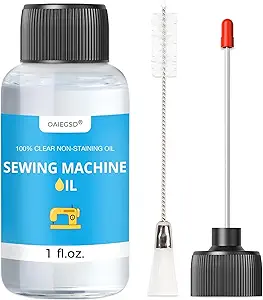
For sewists who want precision + control when oiling their machine, this dual-ended applicator oil provides an excellent balance of usability and performance. The oil itself is lightweight and designed specifically to lubricate fine metal parts without becoming sticky or attracting dust and lint.
Dual-Ended Applicator Design
The integrated applicator is what makes this product stand out. One end is designed for standard lubrication points, allowing easy oil placement into exposed metal joints. The other end is finer and reaches recessed or narrow areas that are difficult to access with regular oil bottles. This combination allows you to oil both basic and advanced machine areas without struggling.
Lubrication Performance
Once applied, the oil quickly distributes across moving parts. It reduces friction and helps maintain a smooth stitching rhythm. Machines lubricated with this product tend to exhibit quieter operation and more fluid movement from the handwheel to the feed dogs.
Ease of Use for All Skill Levels
Whether you are a beginner learning machine maintenance or an experienced sewer performing quarterly servicing, this oil’s applicator design makes the process less intimidating. The clear formula also helps prevent over-oiling because you can see exactly where the oil is going.
Best Use Cases
Ideal for:
- Detailed maintenance
- Reaching difficult internal joints
- Machines with complex component arrangements
- Sewists who like precision
Pros
- Precision applicator for tight spots
- Lightweight, non-gumming oil
- Reduces noise and resistance
- Good for home and hobby machines
Cons
- Smaller overall oil quantity
- Applicator may require careful storage
10. Liberty Oil Synthetic Lubricating Oil for Sewing Machines
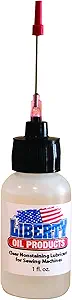
As a synthetic oil, this option offers lubrication that lasts longer and resists breakdown more effectively than many traditional mineral-based sewing machine oils. Synthetic formulations generally provide more stable performance across a wider range of temperatures and sewing conditions, making this a strong choice for frequent sewists or anyone who uses their machine for heavy tasks.
Synthetic Oil Advantages
Synthetic sewing machine oil tends to stay cleaner, resist oxidation, and maintain its viscosity longer. This means you don’t have to oil as often, and the protective layer stays effective through longer sewing sessions. For machines in regular use, this translates to smoother motion and less frequent maintenance cycles.
Performance on Moving Parts
When applied to the hook race, needle bar, and shuttle assembly, the oil forms an even barrier that reduces friction without gumming up. Its clean finish is especially important for machines that are used regularly, as it prevents buildup that can attract dust and lint.
Durability & Long-Term Protection
Because synthetic oils resist breakdown, they tend to maintain lubrication qualities longer. This results in less noise, smoother mechanical action, and better stitch consistency over time. This product is well-suited for users who sew daily or work on medium to heavy fabrics frequently.
Best Use Cases
Great for:
- Everyday sewists with frequent use
- Machines that run for long sewing periods
- Users who want long-lasting lubrication
Pros
- Synthetic durability and longevity
- Resists buildup and oxidation
- Smooth, stable lubrication
- Ideal for heavy use
Cons
- Higher price point than basic oils
- May be more than needed for occasional users
11. Premium Stainless Flexible Telescoping Machinery Oil
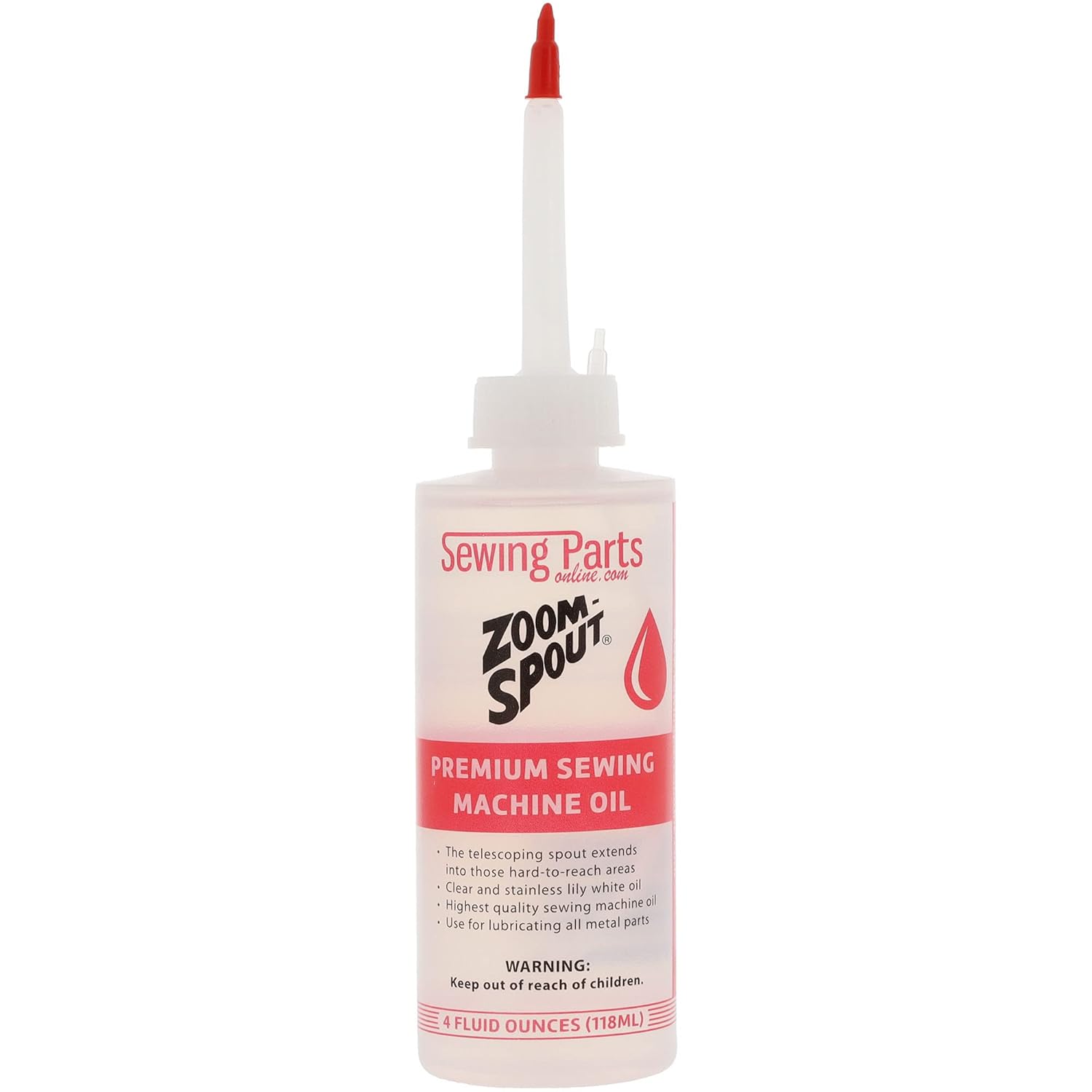
This sewing machine oil is paired with a flexible telescoping applicator, making it especially useful for reaching internal lubrication points that are otherwise hard to access. For machines with tight internal design or complex mechanism layouts, this oil applicator combination allows you to maintain performance without disassembling parts.
Flexible Applicator Design
The standout feature here is the flexible telescoping tube attached to the oil bottle. This guide allows you to reach deep or awkward points inside your machine, such as deep gear junctions or narrow pivot points, without guesswork or spilling excess oil.
Performance on Sewing Machinery
The oil itself flows smoothly and with a thin consistency that spreads evenly across metal surfaces. Once inside internal joints, it helps reduce friction and wear, making movements smoother and less resistant.
Easy Access & Precision Application
For sewists who want thorough maintenance without routine disassembly, this oil simplifies the process. Precision application reduces waste and minimizes the risk of over-oiling sensitive areas, helping you maintain a clean interior.
Best Use Cases
Ideal for:
- Complex internal maintenance
- Vintage machines with tight access points
- Sewists who perform thorough servicing
- Machines with internal pivot areas
Pros
- Flexible applicator for hard-to-reach spots
- Smooth, thin oil formula
- Helps reduce internal wear
- Useful for detailed cleaning sessions
Cons
- Requires careful handling
- May be more complex for beginners
Why Sewing Machine Oil Matters
Sewing machines rely on precise metal-to-metal movement. Inside every machine are dozens of parts, shafts, gears, bearings, and joints, that move repeatedly at high speed. Without proper lubrication, friction builds quickly, leading to noise, stiffness, skipped stitches, and long-term mechanical damage.
Sewing machine oil creates a thin protective barrier between moving parts. This barrier reduces friction, prevents heat buildup, and slows wear. Machines that are regularly oiled run smoother, stay quieter, and maintain stitch accuracy over time. Proper lubrication also reduces strain on the motor, which is especially important for electric machines used frequently or for heavy fabrics.
Another critical benefit is rust prevention. Even in dry environments, moisture from air and fabric fibers can cause corrosion. Oil protects exposed metal surfaces, extending the life of internal components.
Simply put, oiling is not optional maintenance; it is essential care that directly affects performance, longevity, and stitch quality.
How to Oil a Sewing Machine Correctly – Step-By-Step
Step 1: Turn Off and Unplug the Machine
Always unplug your machine before oiling. This prevents accidental starts and protects both you and the machine’s motor.
Step 2: Remove Lint and Dust First
Use a soft brush or lint tool to clean the bobbin area, feed dogs, and exposed metal parts. Never oil over lint-oil mixed with dust creates sticky buildup.
Step 3: Identify Oiling Points
Refer to your machine’s manual. Most machines require oiling at:
- Bobbin hook race
- Needle bar
- Shuttle mechanism
- Moving metal joints
Never oil belts, plastic gears, or electronic components.
Step 4: Apply Small Drops Only
Use 1–2 drops per point. Sewing machine oil is designed to spread; over-oiling attracts lint and causes leaks onto fabric.
Step 5: Run the Machine Briefly
After oiling, run the machine for 30–60 seconds on scrap fabric. This helps distribute the oil evenly.
Step 6: Wipe Away Excess
Use a clean cloth to remove any visible oil residue before starting a project.
Common Sewing Machine Oiling Mistakes & Simple Fixes
Mistake: Using Household Oils
Problem: Cooking oils or general lubricants gum up and damage parts.
Fix: Always use sewing-machine-specific oil only.
Mistake: Over-Oiling
Problem: Oil drips onto fabric and collects lint.
Fix: Apply fewer drops and wipe excess immediately.
Mistake: Ignoring Oiling Schedule
Problem: The machine becomes noisy or stiff over time.
Fix: Oil after every 8–10 hours of sewing or monthly with regular use.
Mistake: Oiling the Wrong Areas
Problem: Oil damages rubber or plastic components.
Fix: Only oil metal-to-metal contact points.
Comparison Table: Best Sewing Machine Oils
| Feature | Lightweight Mineral Oil | Synthetic Oil | Precision Applicator Oil | Flexible Applicator Oil |
| Best For | Routine maintenance | Heavy or frequent use | Detailed oiling | Hard-to-reach areas |
| Longevity | Moderate | Long-lasting | Moderate | Moderate |
| Residue Risk | Low | Very low | Low | Low |
| Ease of Use | Easy | Easy | Very precise | Advanced |
| Ideal User | Beginners | Frequent sewists | Detail-oriented users | Advanced maintenance |
FAQs About Sewing Machine Oil
How often should I oil my sewing machine?
For regular use, oil after every 8–10 hours of sewing. Occasional users can oil once a month.
Can I oil a computerized sewing machine?
Yes, but only in manual-approved areas. Many computerized models require minimal oiling.
What happens if I don’t oil my machine?
Friction increases, causing noise, skipped stitches, uneven tension, and eventual mechanical failure.
Is clear oil better than colored oil?
Yes. Clear oil helps prevent staining of fabric and makes excess oil easier to spot.
Can I over-oil my machine?
Yes. Over-oiling attracts lint and can leak onto projects. Less is always better.
Conclusion
Choosing the best sewing machine oil and using it correctly plays a critical role in keeping your machine smooth, quiet, and reliable. Whether you sew occasionally or daily, proper lubrication protects internal parts, improves stitch quality, and extends the life of your investment.
Lightweight oils work well for routine care, while synthetic options offer longer-lasting protection for frequent use. Precision and flexible applicator oils simplify maintenance, especially for detailed or hard-to-reach areas. By cleaning before oiling, applying small amounts, and following a regular schedule, you ensure consistent performance and fewer sewing problems over time.
A well-oiled machine isn’t just easier to use; it produces better results on every project.
