
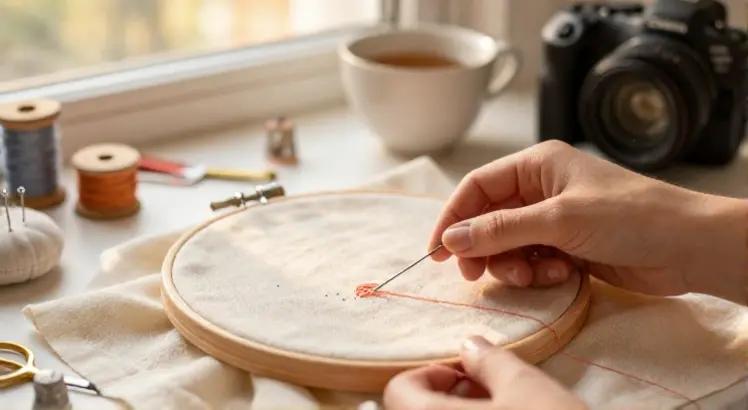
Embroidery hoops have been a staple in stitchers’ kits for centuries, yet many beginners wonder, are embroidery hoops necessary? The short answer depends entirely on your project, fabric, and personal technique. Some artists swear by them, while others produce stunning work without ever picking one up. Understanding the role this simple tool plays will help you decide when you must use a hoop and when you can safely leave it aside.
Understanding the Role of an Embroidery Hoop
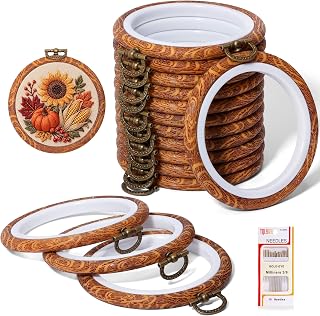
Caydo 4 Inch Embroidery Hoops Display Frame
Check PriceAn embroidery hoop is a circular or occasionally square frame used to hold fabric taut while you stitch. Keeping the material stable prevents puckering, ensures even thread tension, and helps your design remain crisp. Without this controlled surface, the weave of the fabric can shift mid stitch, distorting your final pattern.
Traditional hoops consist of an inner ring and an outer ring with a tightening mechanism. Modern versions include plastic nonslip grips, spring tension designs, and heavy beechwood models. This humble tool essentially acts as a third hand, allowing you to focus on needle placement rather than wrestling with moving cloth.
How Hoops Maintain Fabric Tension
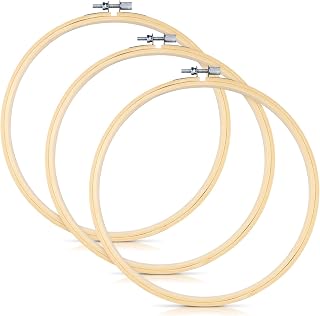
TINDTOP Bamboo Embroidery Hoops 8 Inch
Check PriceTension is the secret behind every neat satin stitch and perfectly flat French knot. When fabric is drum tight inside a hoop, each needle pass creates consistent loops without sagging. This uniformity is nearly impossible to replicate if you simply hold the cloth in your hands.
A properly hooped project keeps the warp and weft threads under equal stress. This balanced surface lets you stitch intricate details without the fabric puckering around dense areas. For heirloom quality work, that stability can make the difference between a professional finish and a lumpy, uneven texture.
Stitches That Suffer Without a Hoop
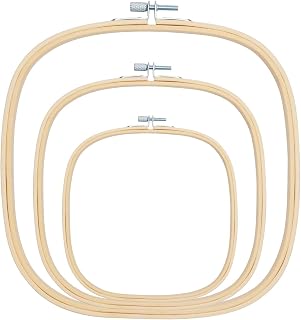
Caydo Square Embroidery Hoops Set
Check PriceNot all embroidery techniques are equally forgiving. Intricate stitches like long and short shading, satin filling, and bullion knots rely heavily on a static canvas. If the ground fabric moves even slightly, these dense stitches will pucker or overlap unevenly, ruining the smooth gradient you aim for.
Stamped cross stitch kits often instruct you to use a hoop for this very reason. Likewise, any design featuring heavy thread painting or metallic threads demands absolute control. In these scenarios, the hoop is not an accessory; it is a fundamental part of your stitching toolkit.
When exploring detailed surface embroidery, you might want to review how to do embroidery on clothes by hand for beginners to see how a hoop stabilizes fabric on garments. A wobbling needle creates uneven stitches that are hard to correct later.
Hand Embroidery Projects You Can Do Without a Hoop
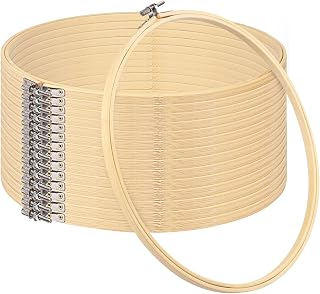
GNIEMCKIN Bamboo Embroidery Hoops 12 Inch
Check PriceSome styles of embroidery thrive without a frame. Crewel work done on sturdy linen twill often stays flat enough to manage in the hand. The thick wool yarns used in crewel provide enough body that the fabric resists distortion naturally.
Counted thread techniques like blackwork or certain pulled thread styles are frequently worked in hand. Because these methods follow the grain of the weave, they actually benefit from the slight give of unframed fabric. Stitchers simply keep a relaxed grip and allow the needle to find the holes.
When Machine Embroidery Demands a Hoop
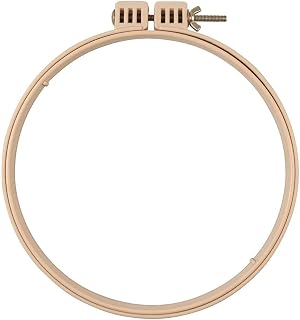
Morgan Products Plastic No-Slip Hoop 7 Inch
Check PriceIn the world of machine embroidery, the answer to are embroidery hoops necessary is a definite yes. Computerized machines rely on exact registration and a taut surface to guide the needle at high speeds. Using an embroidery field without a proper hoop typically voids warranties and produces misaligned designs.
Machine embroidery hoops often feature specialized notches and clips that lock into the machine’s arm. These engineered frames keep the backing stabilizer and fabric perfectly flat against the needle plate. Any looseness can cause thread breaks, skipped stitches, or needle deflection that damages the garment.
Comparing Bamboo, Plastic, and Spring Tension Hoops
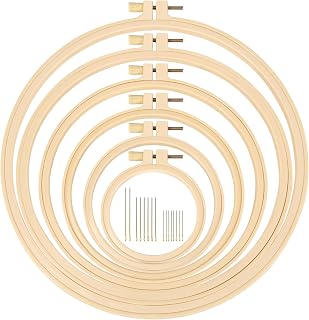
Caydo Embroidery Hoops with Needles Set
Check PriceTraditionalists love bamboo hoops for their lightweight feel and gentle grip on delicate fabrics. They are affordable and easy to sand if needed. However, bamboo can warp over time and occasionally lacks the strength to hold heavy linens completely rigid.
Plastic hoops with a ridge or lip provide an incredibly secure hold that rarely slips. Many plastic versions feature a nonslip inner ring that grips the fabric without over tightening. Spring tension hoops use a metal spring to clamp the fabric instantly, making them a favorite for quick portable projects or dabble stitching.
Hardwood hoops like beechwood represent the premium choice. They are sturdy, resist warping, and provide excellent tension. Can you embroider without a hoop? Many experts who say yes still reach for a well crafted hardwood frame to achieve the best results.
Selecting the Correct Hoop Size for Every Project
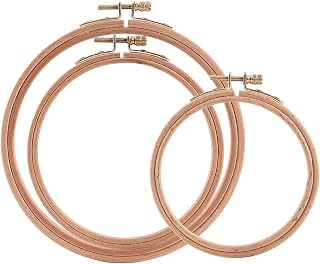
Sherbo Beech Wood Embroidery Hoops Set
Check PriceChoosing a hoop that matches the scale of your design prevents wasting time on repositioning. A 4 to 6 inch hoop suits small motifs, monograms, and patches. Medium 7 to 8 inch hoops handle most floral sprays and sampler sections comfortably.
Larger projects like embroidered table runners do not require a giant hoop. Instead, you can use an 8 to 10 inch hoop and move it across the fabric as you work. Never force fabric into a hoop that is too small; that causes permanent creases and stretches the weave.
The Anatomy of a No Slip Embroidery Hoop
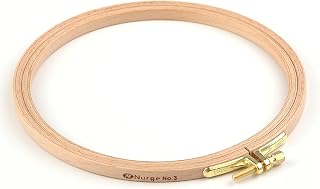
Nurge Premium Beech Wood Embroidery Hoop
Check PriceA hoop that slides can ruin an hour of intricate labor. No slip hoops solve this with a rubberized or textured ridge inside the outer ring. This added friction clamps satin, silk, and tightly woven cotton effectively without requiring immense screw pressure.
Morgan Products and similar designs often incorporate a lip that interlocks with the inner ring. When you tighten the screw, the rings nest together and the fabric is sandwiched securely. This mechanical advantage makes these frames a top recommendation for beginners learning tension control.
Step by Step: How to Secure Fabric in a Hoop
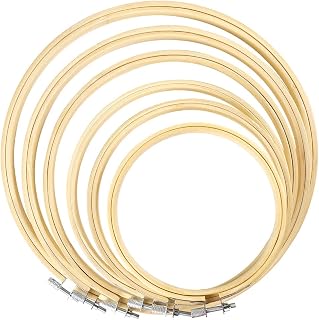
Caydo Bamboo Embroidery Hoop Set
Check PriceStart by loosening the screw and separating the rings. Lay the fabric over the inner ring, centering your design. Gently press the outer ring down over the fabric, then tighten the screw just until the cloth starts to grip.
Pull the edges of the fabric evenly to achieve a drum like surface. Tighten the screw fully while maintaining tension. Always check that the weave remains straight and not distorted. A few seconds of adjustment here prevents hours of frustration later.
Caring for Your Embroidery Hoops Properly
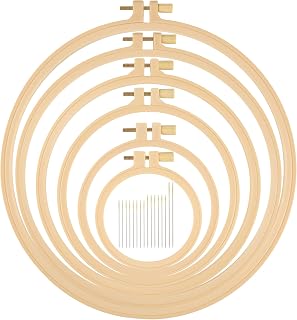
Plastic Embroidery Hoops with Needles Set
Check PriceWooden hoops benefit from occasional light sanding with fine grit paper to remove snags. A tiny bit of beeswax rubbed on the inner ring can help the fabric slide into position without catching. Never leave your project in a hoop for days or the fabric may develop permanent marks.
Plastic and spring tension hoops simply need a wipe down with a damp cloth to remove skin oils and dust. Store all hoops in a cool dry place, away from direct sunlight. This simple routine extends their life and ensures consistent performance on every project.
The Dangers of Skipping the Hoop
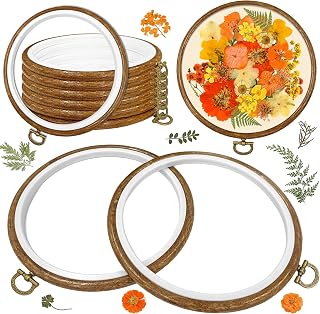
6 Pcs Circle Embroidery Hoop Frame Set
Check PriceWhen you stitch without any frame, your non needle hand naturally grips the fabric. This can introduce moisture and oils from your skin, which soil light colored grounds over time. More critically, your hold stretches the fabric unevenly, leading to a distorted final image that no amount of blocking can fully correct.
Projects worked in hand also tend to develop a cupped or drawn shape. The center of the design sinks while the edges ruffle. For any piece you intend to frame or turn into a displayed object, this structural flaw undermines the professional look you worked so hard to achieve.
Common Questions About Embroidery Hoops
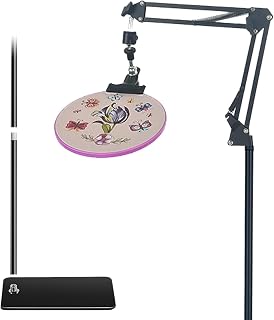
Embroidery Hoops Floor Stand
Check PriceDo I need a hoop for small felt ornaments? Usually no. Felt is a non fraying fabric with enough body to stay flat in your hand. Simple whipped stitches and blanket edges can be comfortably worked without a frame.
Can a hoop kill the nap on velvet? Yes, traditional hoops can crush delicate pile fabrics. For velvet, use a hoop only if you wrap the rings with bias tape, or consider a slate frame that holds the fabric without compression.
Is it okay to leave fabric in a hoop overnight? It is not recommended. Tension marks can set into natural fibers. Always release your work from the hoop at the end of each stitching session, a tip museums like the Victoria and Albert Museum’s textile conservation team strongly endorse.
Final Thoughts: Are Embroidery Hoops Necessary?
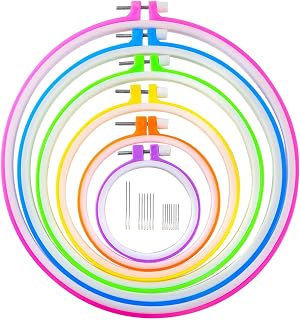
Caydo Plastic Embroidery Hoops with Needles
Check PriceAfter examining the evidence, are embroidery hoops necessary? They are not mandatory for every single stitch, but they are indispensable for achieving professional, puck free results on most projects. The hoop gives you control, consistency, and confidence whether you are a beginner or a seasoned artist.
If you want crisp satin stitches, flawless thread painting, or precise machine embroidery, always reach for a quality hoop. For relaxed counted work or robust crewel wool, you may enjoy the freedom of working in hand. Your best choice will always come from understanding the demands of your craft and selecting the tool that elevates your stitching.
