
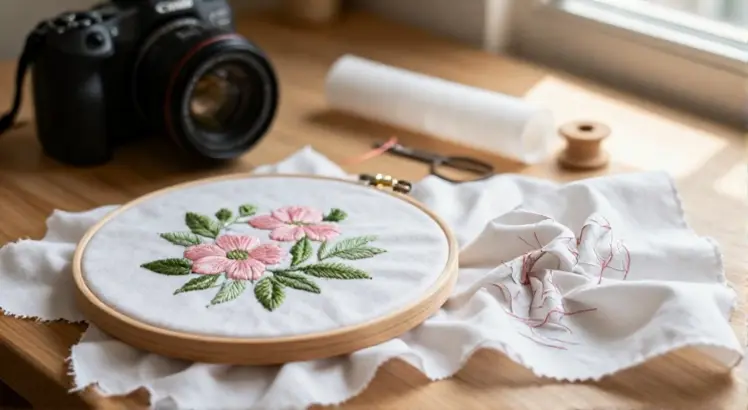
Every new embroiderer eventually asks, Is embroidery stabilizer necessary? The short answer is a resounding yes if you want professional results. Think of stabilizer as the invisible backbone that supports your stitches and keeps fabric from puckering.
Without it, even the most beautiful designs can turn into a distorted mess. This guide explains exactly why stabilizer matters, the types available, and how to choose the right one for your projects.
What Exactly Is Embroidery Stabilizer?
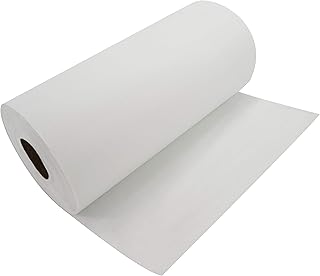
New brothread Tear Away Embroidery Stabilizer 12″ x 50 Yd Roll
Check PriceEmbroidery stabilizer is a temporary or permanent backing material placed under fabric during machine embroidery. Its primary job is to prevent fabric from shifting, stretching, or puckering under rapid needle penetrations. The stabilizer reinforces the fabric’s natural structure, creating a smooth canvas for your stitches.
You can think of it as scaffolding that holds everything in place until the design is complete. Once the embroidery is done, some stabilizers are torn away, cut away, or dissolved, while others remain permanently attached. Choosing the wrong backing is like building a house on sand, nothing will stand straight.
Why Is Embroidery Stabilizer Necessary?
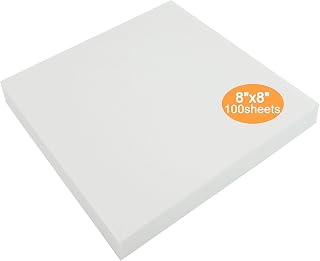
New brothread Tear Away Embroidery Stabilizer 8″x8″ – 100 Precut Sheets
Check PriceThe physics of machine embroidery demand a stabilizer. A needle punching at hundreds of stitches per minute creates intense stress that pulls on the fabric’s weave. Without a sturdy backing, delicate fabrics like chiffon can quickly distort, while thick fabrics may cause thread breaks.
Experts at the National Sewing Circle emphasize that stabilizer is not optional; it is the foundation of every successful project. Even the most stable woven cotton benefits from a lightweight tear-away backing to keep stitch registration crisp. Skipping it is the top reason for failed embroidery designs.
Exploring the Main Types of Embroidery Stabilizers
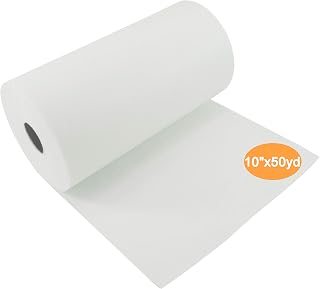
New brothread Cut Away Embroidery Stabilizer 10″ x 50 Yd Roll
Check PriceThere are four primary families of stabilizer: tear-away, cut-away, wash-away, and heat-away. Each behaves differently and suits specific project needs:
- Tear-Away: Designed for stable woven fabrics with no stretch.
- Cut-Away: Provides permanent, ongoing support for knits and stretchy materials.
- Wash-Away (Water Soluble): Vanishes completely, ideal for freestanding lace, sheer fabrics, or top toppers.
- Heat-Away: Dissolves with a hot iron for delicate items that cannot be washed.
Tear-Away Stabilizer Insights
New brothread Tear Away Embroidery Stabilizer 12″ x 50 Yd Roll
Check PriceTear-away stabilizer is the most popular choice for beginners. After stitching, you simply tear away the excess backing close to the design, leaving only what sits directly under the stitches. It works beautifully on stable woven fabrics like cotton, linen, and denim.
Because it tears easily in one direction, handle it gently to avoid distorting the embroidery. Medium to heavy-weight tear-away is excellent for dense designs on sturdy base fabrics. Avoid using it on knits or stretchy materials, where the tearing action can damage the stitches.
Cut-Away Stabilizer Essentials
Cut-away stabilizer is the gold standard for any garment that will be worn and washed repeatedly. Instead of tearing, you trim the excess backing close to the design using small, sharp scissors. The remaining stabilizer stays permanently attached, providing ongoing support to the stitches.
This type prevents sagging and puckering on unstable fabrics like T-shirts, sweatshirt fleece, and performance knits. It comes in various weights, from lightweight no-show mesh to heavy fusible options. If you’re embroidering a knit garment, cut-away is your required choice.
Water-Soluble and Wash-Away Varieties
Water-soluble stabilizer completely disappears when rinsed, leaving zero trace behind. This makes it a magical tool for freestanding lace, appliqué, and embroidery on sheer fabrics. It is also used as a topper on towels or velvets to keep surface stitches from sinking into the plush pile.
Wash-away comes in sheets, rolls, and liquid forms for stabilizing fabric edges. Because it dissolves in water, it’s perfect for projects that must have no visible backing. Using a water-soluble topper is the secret behind crisp lettering on textured fabrics like fleece.
Specialty Stabilizers: Heat-Away, Sticky, and Mesh
Beyond the basics, specialty stabilizers solve unique challenges:
- Heat-Away: Vanishes with the touch of a hot iron, ideal for non-washable projects.
- Sticky / Self-Adhesive: Holds tiny or hard-to-hoop items (like collars and cuffs) securely without slipping.
- No-Show Mesh: An ultra-light cut-away that remains soft and transparent against the skin, perfect for light-colored garments.
How Fabric Choice Influences Stabilizer Selection
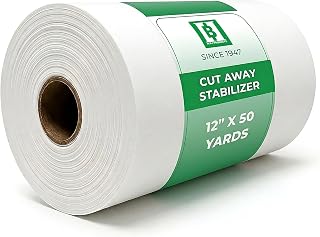
HBI Cut Away Embroidery Stabilizer Roll, 2.5 oz Medium, 12 in x 50 yd
Check PriceThe fabric you choose directly dictates the stabilizer you need:
- Woven Fabrics (Cotton, Canvas): Pair well with a medium tear-away.
- Silky/Delicate Fabrics (Chiffon): Benefit from a lightweight tear-away combined with a wash-away topper to prevent pulls and puckers.
- Stretchy Materials (Knits, Spandex, Fleece): Require cut-away stabilizer to maintain stitch integrity through wash and wear.
- Textured Surfaces (Towels, Velvets): Require a water-soluble topper alongside a stable backing.
Consequences of Skipping Stabilizer
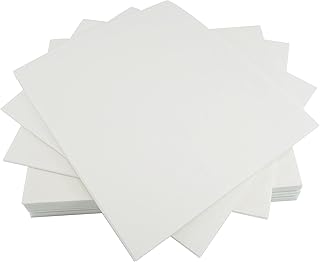
New brothread Cut Away Embroidery Stabilizer 8″x8″ – 100 Precut Sheets
Check PriceAttempting to embroider without stabilizer leads to several predictable failures:
- Fabric Puckering: Causes the design to look wrinkled and distorted.
- Sinking Stitches: Creates a tunneling effect that ruins the crispness of lettering or shapes.
- Machine Stress: Needle breaks and thread shredding increase dramatically because fabric bounces with every stitch.
- Registration Errors: Gaps appear in the design where outlines and fills fail to line up properly.
Best Practices for Hooping with Stabilizer
New brothread Cut Away Embroidery Stabilizer 15″ x 25 Yd Roll
Check PriceProper hooping technique maximizes stabilizer performance. Always hoop the fabric together with the stabilizer, keeping it taut but not over-stretched. Misalignment during hooping can cause outlines not to match fills.
If you are working with delicate or sticky stabilizer, float it beneath the hoop instead to avoid tearing. For optimal results, ensure the stabilizer extends at least one inch beyond the hoop edges so the presser foot has adequate grip and the material won’t slip mid-stitch.
Impact of Stabilizer on Embroidery Stitch Precision
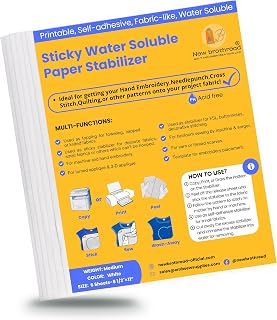
New brothread 6PCS 8.5″x11″ Sticky Water Soluble Embroidery Stabilizer
Check PriceStabilizer directly influences the accuracy and beauty of every stitch. A well-supported design has sharp, clean edges and smooth satin columns. Without proper backing, thread tension can become uneven, causing loops or bobbin thread to show on the top surface.
Dense designs rely on stabilizer to distribute the pull of thousands of stitches evenly. Even a slight shift in fabric alignment can ruin registration, making a design look amateurish. Investing in the right stabilizer is the single most effective way to elevate your stitch quality.
Frequently Asked Questions
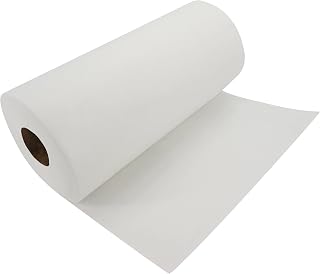
New brothread Cut Away Embroidery Stabilizer 12″ x 50 Yd Roll
Check PriceCan I use regular paper as embroidery stabilizer?
No, regular printer or craft paper lacks the strength and fiber structure to withstand dense stitching. It tears unpredictably and can damage your needle. Always use products specifically designed as machine embroidery stabilizer.
Is one layer of stabilizer enough?
For many light designs, one layer is sufficient. However, dense or heavy stitch count designs often benefit from two layers. You can also combine a backing with a topper for challenging fabrics. Always test your design on a scrap piece first.
Does stabilizer choice affect how the embroidery feels?
A heavy cut-away can make a design feel stiff, while no-show mesh stays soft and pliable. Water-soluble stabilizers leave the fabric’s natural hand completely unchanged. Choose based on the final comfort and drape required for the item.
The Verdict: Is Embroidery Stabilizer Necessary?
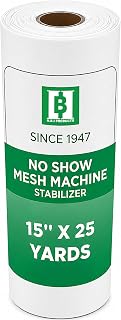
HBI No Show Mesh Embroidery Stabilizer Roll, Cut Away, 15 in x 25 yd
Check PriceAfter understanding how fabric behaves under the needle, the question becomes purely rhetorical: embroidery stabilizer is an essential component of the embroidery process. From protecting delicate knits to ensuring stitch perfection, stabilizer is the foundation of every successful project.
Start building your stash with a good tear-away, a medium cut-away, and a water-soluble topper. As you experiment, you’ll discover why skipping this step is never worth the risk. Embrace stabilizer, and your embroidery will reward you with clean, professional results every time.
