
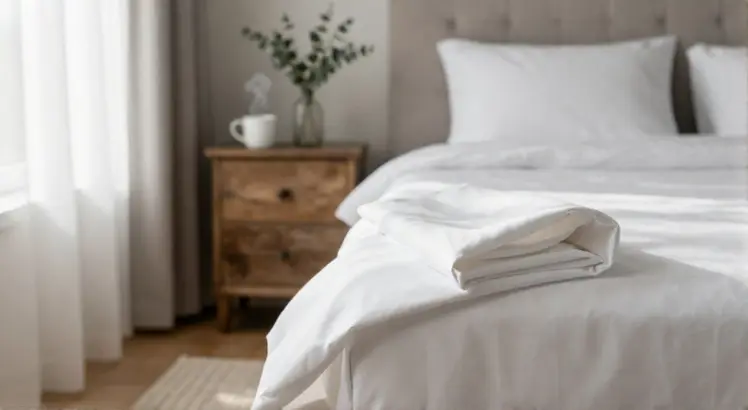
Learning how to make bed sheets is a rewarding sewing project that lets you customize the size, fabric, and style of your bedding. Instead of settling for off-the-shelf sheets that never quite fit your deep mattress or match your decor, you can create a set that is uniquely yours. This guide walks you through the entire process, from selecting materials to adding those finishing touches that make your sheets look store-bought. Whether you are a confident beginner or an experienced sewist, homemade sheets are surprisingly achievable.
Why Make Your Own Bed Sheets?
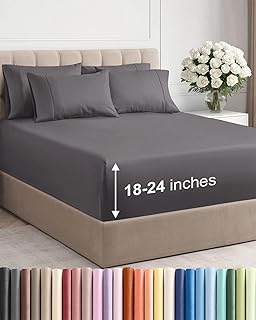
Extra Deep Queen Sheet Set – 6 Piece Breathable and Cooling Sheets
Check PriceStitching your own bedding offers more than just creative satisfaction. Standard flat sheets often come in limited sizes, and fitted sheets can slip off extra-thick or pillow-top mattresses. When you sew your own, you control every dimension. You can also choose fabrics that breathe better, last longer, and feel exactly how you like, linen for crisp coolness, cotton sateen for smooth softness, or brushed flannel for winter warmth. Making sheets at home often saves money compared to high-end brands, especially if you use quality fabric that outperforms what you find in superstores. Plus, it is a low-risk way to practice long straight seams and hemming skills.
Choosing the Right Fabric for Your Sheets
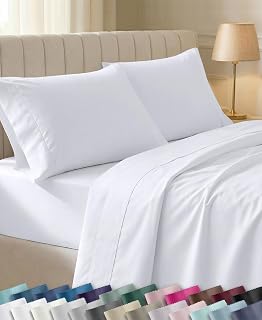
California Design Den Soft 100% Cotton Sateen Queen Bed Sheets Set
Check PriceFabric impacts comfort, durability, and ease of sewing. The most popular fibers for DIY bed sheets are 100% cotton, linen, cotton blends, and flannel. Look for fabric at least 60 inches wide, preferably 108-inch-wide backing fabric, to avoid piecing seams down the center of your flat sheet. For detailed comparisons of feel and care, read our guide to materials for bed sheets. Here is a quick overview:
- Cotton percale – Crisp, lightweight, and breathable. It resists pilling and gets softer with every wash.
- Cotton sateen – Woven with a lustrous finish that feels silky against the skin. Slightly less breathable than percale but wonderfully smooth.
- Linen – Highly absorbent and thermo-regulating. It starts stiffer but becomes incredibly soft over time. Linen is prone to deep wrinkles, which many people love for a relaxed look.
- Flannel – Brushed cotton or wool blens that trap warmth. Perfect for cold seasons.
- Bamboo rayon or Tencel – Naturally moisture-wiking and silky. These fabrics drape beautifully and are less common in mass-produced sheets.
Pre-wash and dry your fabric exactly as you will care for the finished sheets. This preshrinks the fibers before you cut, so your sheets will not warp or shrink later. Iron the fabric while it is still slightly damp to remove wrinkles and get accurate measurements. If you are still unsure which material suits your sleep style, our top fabrics for DIY bedding article breaks down the pros and cons in more depth.
Measuring Your Mattress for a Perfect Fit
Feather & Stitch 100% Cotton Sateen 500 TC Queen Size Bed Sheet Set
Check PriceAcurate measurements are the secret to well-fitting sheets. Gather a retractable tape measure and write down the following numbers for your mattress:
- Width (from left edge to right edge)
- Length (from head to foot)
- Depth or thickness (top of the mattress to the bottom edge)
If you have a mattress topper, measure with it on. For a flat sheet, add at least 16 inches to the width (8 inches per side) and 4 to 6 inches to the length for a tucked-in look. For a fitted sheet, you will need to add the depth twice plus extra for the under-mattress casing and elastic. A standard 9-inch-deep mattress with a 2-inch topper requires about 14 to 15 inches of extra fabric in each direction after accounting for the boxing and the hem. Write these finished dimensions down; they become your cutting dimensions.
How to Make Bed Sheets: Step-by-Step Sewing Instructions
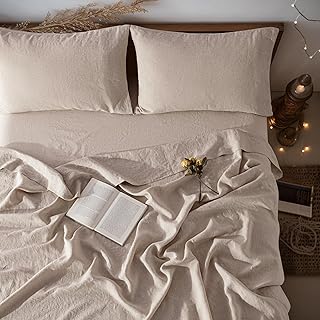
LBRO2M 100% French Organic Linen Sheet Set 4Pcs
Check PriceThis section covers both a flat sheet and a fitted sheet, because the two styles require different construction methods. You can make a set or just replace the piece you need most.
How to Sew a Flat Sheet
A flat sheet is a large rectangle with neat hems on all four sides. It is the perfect beginner project for learning how to make bed sheets.
- Cut your fabric. Using your calcuated dimensions, cut one large rectangle. If your fabric is not wide enough, you may need to join two lengths with a flat-felled seam running down the center or one-third of the width for a more balanced look.
- Press the hems. Turn the top edge down twice: first by 1/4 inch and then by 1 inch. Press. Do the same for the two side edges, but use a smaller second fold (3/8 inch) to keep the sheet airy. The bottom hem can mirror the sides. If you want a decorative top hem, fold the top edge by 3 inches and topstitch two parallel lines.
- Miter the corners. At each corner, fold the excess fabric diagonally toward the inside to reduce bulk. Press well.
- Stitch the hems. Sew close to the inner folded edge using a straight stitch. Backstitch at the beginning and end. For a professional touch, use a blind hem foot or simply sew a second line of topstitching 1/4 inch away from the first. Remove any pins as you go.
How to Sew a Fitted Sheet

Love’s cabin 4 Piece Queen Sheet Set, 100% Rayon Derived from Bamboo
Check PriceFitted sheets wrap securely around the mattress and require a bit more measuring and some elastic. The result is invisibly tucked, hotel-style bedding.
- Calculate your cut piece. Start with your mattress width plus twice the depth plus 6 inches for the casing, and length plus twice the depth plus 6 inches. For example, a 60-inch wide by 80-inch long mattress with 10-inch depth yields a fabric piece of 86 inches by 106 inches.
- Cut out the corner squares. At each corner, measure from the raw edge along the side and bottom edges a distance equal to the mattress depth plus 3 inches. Mark a square, then cut it away. You will have four identical corner cut-outs.
- Join the seam corners. Bring the newly cut edges of one square together, right sides facing, and sew a straight stitch with a 1/2-inch seam allowance, backstitching at each end. Repeat for all four corners. This creates the box shape that cups the mattress.
- Finish the seams. Trim the seam allowance to 1/4 inch and finish with a zigzag stitch or serge the edges together to prevent fraying. Press the seam to one side.
- Create the elastic casing. Fold the entire perimeter edge under 1/4 inch, press, then fold under again by 1/2 inch to form a tunnel. Press. Stitch close to the inner fold, leaving a 2-inch opening near one corner to insert elastic.
- Insert elastic. Cut 3/8-inch or 1/2-inch braided elastic to a length equal to roughly 65-70% of the perimeter of your mattress. Attach a safety pin to one end and feed it through the casing. Overlap the elastic ends by 1 inch and stitch them securely, then close the opening in the casing.
If you prefer elastic only at the corners, you can shorten the elastic to 20-inch pieces and sew them into the four corner casings instead. Many sewists find partial elastic easier to handle and just as snug.
Tips for Professional-Looking Results
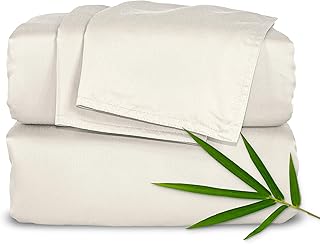
Pure Bamboo King Sheets, Genuine 100% Organic Viscose Derived from Bamboo
Check PriceSmall techniques elevate your DIY sheets from homemade to artisanal. Use French seams on all your construction seams for an immaculate finish that hides raw edges. Press every seam and hem as you work; this cannot be skipped. A tailors ham helps when pressing curved corners on fitted sheets. Use a walking foot on your sewing machine to manage bulky layers, especially when hemming wide flat sheets. For a crisp flat sheet edge, light spary starch helps fabric hold its shape while you fold and topstitch. If you are new to handling large pieces of fabric, roll the excess loosely and secure with bicycle clips to feed smoothly through the machine harp.
Common Mistakes and How to Avoid Them
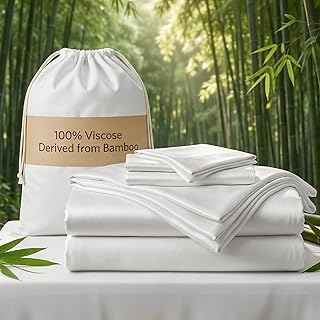
TWK Real 100% Viscose Derived from Bamboo Sheets Set King Size
Check PriceEven experienced sewists encounter pitfalls when tackling such a big project. The most frequent error is skipping the pre-wash, leading to sheets that shrink and no longer fit. Another is missmeasuring the mattress depth, causing the fitted sheet to pop off at the corners. Always measure twice and cut once. Using the wrong needle and thread can cause skipped stitches or torn fibers; a universal size 80/12 needle and all-purpose polyester thread work for most sheet fabrics, but switch to a microtex sharp needle for high-thread-count cottons. Finally, avoiding the iron leads to wonky hems. Pressing is the magic step that separates sleek sheets from frumpy ones.
Caring for Your Handmade Sheets
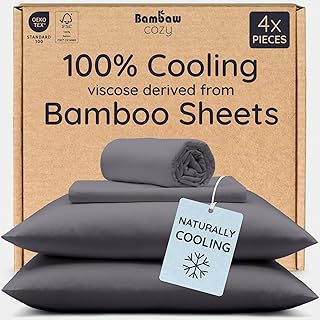
Bambaw 100% Viscose Derived from Bamboo Sheets Queen Size Set
Check PriceTreat your handcrafted sheets the same way you would fine linens. Wash in cold or warm water on a gentle cycle, and tumble dry on low heat or line dry. Remove them from the dryer while still slightly damp to reduce wrinkles. Use a mild detergent and avoid fabric softeners that coat fibers and reduce absorbency. With proper care, quality cotton or linen sheets can last a decade or more. The beauty of making your own is that if a seam ever ravels or a small tear appears, you have the skills to mend it immediately.
Frequently Asked Questions
What is the easiest sheet to make for a beginner?
A flat sheet with double-fold hems is the gentlest introduction to learning how to make bed sheets. There are no curves, no elastic, and you only need to sew straight lines. Once you are comforrable, a fitted sheet with elastic only at the corners is the next step up.
How do I stop my homemade fitted sheet from slipping off?
Use strong braided elastic that is cut to 65-70% of your mattress perimeter, and make sure the corner seams are deep enough to encase the mattress thickness plus the topper. Adding safety pins or sheet straps temporarily can help, but if slipping persists, re-check your measurements and consider sewing a deeper casing.
Can I use wide fabric to avoid a center seam?
Yes, extra-wide backing fabric (108 inches or more) is ideal for queen and king mattresses. For a king, you may still need a narrow seam, but it can be placed to one side rather than down the middle. Always buy a few extra inches for hems even with wide goods.
What is the best stitch length for sewing bed sheets?
A straight stitch length of 2.5 to 3.0 mm works well for most sheet-weight fabrics. It is strong enough to hold seams without creating perferations that could tear under tension. For topstitching, a slightly longer 3.0 to 3.5 mm gives a decorative, clean finish.
Conclusion
Mastering how to make bed sheets opens up a world of personalized comfort and creativity. With the right fabric, patient measuring, and clean seam finishes, you can craft bedding that rivals luxury brands for a fraction of the cost. Start with a simple flat sheet in a breathable cotton percale, then advance to a fully fitted version. Each time you slip into bed, you will appreciate the careful stitches and the perfect fit you designed yourself. Bookmark this guide as your reference, and check out external resources like this guide from The Spruce Crafts for more inspiration as you build your handcrafted linen closet.
