
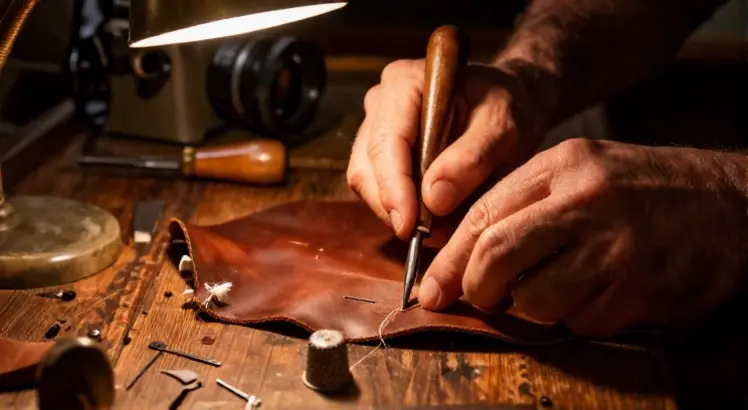
The question ‘is leather difficult to sew’ comes up often, whether you are dreaming of custom handbags, rugged wallets, or replacing a broken strap. The honest answer is that leather presents a unique set of challenges, but it is far from impossible. Unlike woven cotton or smooth silk, leather does not forgive mistakes easily. Every needle hole is permanent, and the material can shift stubbornly under a presser foot. However, with the right preparation, tools, and techniques, sewing leather becomes not just manageable but deeply rewarding.
This guide walks you through why leather behaves differently, what gear you actually need, and how to set up your machine for success. You will learn to avoid the most common pitfalls that turn a first leather project into a frustration-fest. By the end, you will have a clear roadmap from nervous beginner to confident leatherworker, including practical comparisons and expert-backed advice.
What Makes Leather Different to Sew
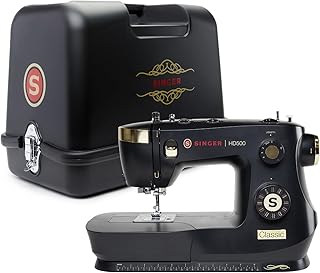
SINGER Super Bundle Heavy Duty 500 Sewing Machine with Carrying Case
Check PriceRegular fabric slides through a sewing machine because its weave allows feed dogs to grip and advance it smoothly. Leather, being a non-woven skin, acts like a dense, sticky sheet. The grain surface can have a slight drag, while the suede back can catch on the needle plate. Thicker hides resist folding, so seams do not lie flat without extra coaxing. These characteristics directly affect how you approach every step of the process.
Vegetable-Tanned vs Chrome-Tanned Leather
Vegetable-tanned leather is stiffer, burnishes beautifully, and takes tooling well, but it can be tough to pierce with a standard domestic needle. Chrome-tanned leather is softer, more pliable, and feels buttery, yet it may stretch out of shape under the feed. Understanding your material helps you anticipate the resistance you will meet under the needle. Beginners often find chrome-tanned garment leather easier to handle, while sturdy veg-tan requires a deliberate, slower pace and a stronger machine.
Beyond the tanning type, leather thickness plays a huge role. Ounce weight matters: 2-3 oz leather (about 1/32 inch thick) behaves like heavy fabric and can often be handled by a well-equipped home machine, while 7-8 oz (around 1/8 inch) demands industrial power. Matching your needle and thread size to these thicknesses is the first secret to answering ‘is leather difficult to sew’ on your own terms.
Essential Tools for Sewing Leather Successfully
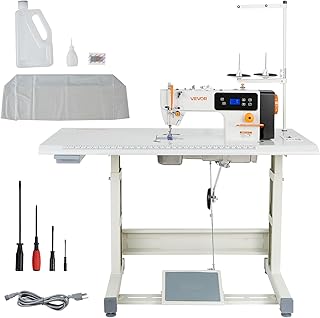
VEVOR Industrial Lockstitch Sewing Machine Commercial Set
Check PriceMany struggles with leather sewing come from using the wrong accessories. Standard universal needles bounce off the surface or break. A sharp leather needle with a cutting point is non-negotiable. These needles slice cleanly rather than push fibers aside, leaving a neat hole that allows the thread to sit correctly. Swap out your needle often because leather dulls points quickly, and a dull needle is the fastest way to torn seams and puckered leather.
Thread choice matters just as much. All-purpose polyester thread may be strong enough for cotton, but leather demands bonded nylon or heavy-weight polyester. These threads resist abrasion and won’t wick moisture into the leather. Avoid cotton thread entirely, it can rot from the tannins in the hide. Pair your thread with a slightly larger needle eye; for example, a size 90/14 leather needle handles Tex 70 bonded nylon beautifully.
Beyond needle and thread, a walking foot is a game-changer. Also called an even-feed foot, it grips the top layer of leather while the feed dogs move the bottom, preventing the ugly shifting that causes mismatched seams. Best heavy-duty machines designed for leather often include this foot, but you can add it to many domestic machines. When you explore how to sew leather with a sewing machine, our full step-by-step guide shows you exactly how to attach and adjust it for flawless results.
Hand Sewing vs Machine Sewing Leather
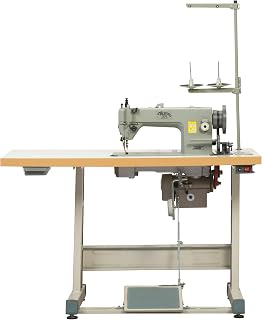
Weaver Leathercraft 303 Leather Sewing Machine
Check PriceOne major factor in determining how difficult leather is to sew is the method you choose. Hand sewing gives you absolute control, which makes it excellent for thick projects or small repairs where a machine cannot maneuver. The saddle stitch technique, using two needles and waxed thread, creates a knot inside each hole, making it stronger than a machine lockstitch. If a stitch breaks, the entire row does not unravel. It is slow, but it teaches you the rhythm of leather in a way no machine can.
Machine sewing leather is much faster and produces a precise, uniform look on bags, jackets, and upholstery. However, it requires more setup. You need to adjust tension, stitch length, and foot pressure far more deliberately than with cotton. A domestic machine can sew thin leather, but thick projects demand a compound feed walking foot machine or an industrial cylinder-bed model. Expect to go slower, using a longer stitch length of 3.5–4 mm to avoid perforating the leather so close that it tears.
Whichever method you pick, remember that leather cannot be ripped out and resewn without leaving visible holes. You must test on scraps first. This is where hand sewing can feel less intimidating because you feel the puncture resistance directly. The comparison is clear: machine sewing is efficient but less forgiving; hand sewing is methodical but harder to make truly uniform. Many crafters use a hybrid approach, machine for long straight runs and hand stitching for final assembly.
How to Set Up Your Sewing Machine for Leather
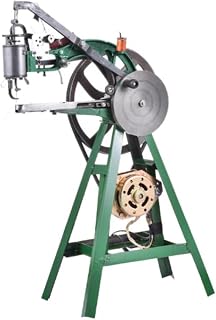
Electric Cobbler Sewing Machine Heavy Duty Hand Shoe Repair
Check PriceYour machine settings make the difference between a jumbled mess and a crisp seam. Start by lowering the presser foot pressure if your machine allows it. Too much pressure can squash and push the leather, creating a crease. Use the lowest setting that still engages the feed system. Next, increase the stitch length to at least 3.5 mm. Small stitches can weaken leather along the seam line. For decorative topstitching, some sewists go as long as 5 mm for a high-end look.
Top tension needs careful balancing. Too tight and the bobbin thread pulls up, puckering the leather; too loose and threads tangle underneath. Run a test seam on a double layer of identical leather scrap, then adjust the top tension dial until the knot between top and bobbin thread hides in the middle of the layers. A slightly looser top tension often works better than with fabric because the thread must sit on top of the dense surface without digging in.
Never pin leather. Instead, use sewing clips, double-sided leather tape, or rubber cement to hold pieces together before stitching. Pins leave permanent holes and can force the leather out of alignment. If you are sewing a long seam, apply a thin bead of water-based contact cement along the seam allowance, let it tack up, and press the layers together. This prevents shifting and gives the walking foot a stable surface to grip. You can also hammer the seam after gluing with a mallet to make it perfectly flat.
Stitching Techniques and Seam Finishes for Leather
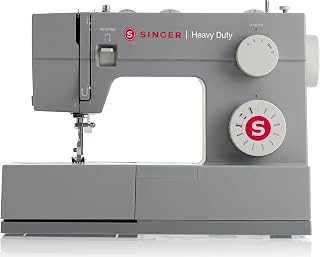
SINGER 4411 High Speed Heavy Duty Sewing Machine
Check PriceBecause leather seams cannot be pressed open with an iron, you will rely on different finishing methods. Flat seams are common in garment leather: sew the seam, then topstitch both seam allowances down from the right side using an edge guide. This not only looks professional but locks the seam flat. For bags and heavier items, a lapped seam works wonders, overlap the two pieces and sew down the middle or with two rows of stitching. It eliminates bulk and creates a clean, sturdy join.
Topstitching is your best friend. It reinforces seams, adds structure, and gives that coveted handmade aesthetic. Use a slightly heavier thread in a contrasting color, and invest in a stitch groover if you want the thread to sit flush with the leather surface. Running the groover along the edge creates a tiny channel, guiding your stitches and protecting the thread from abrasion. This technique is widely used in saddle making and turns a simple project into something that looks store-bought.
Edge finishing also sets leather apart. Raw edges can be beveled, sanded, and burnished with a slicker and gum tragacanth until they become glossy and smooth. If you do not have a burnishing tool, you can dye the edges or apply an edge paint. Whichever finish you choose, sew the seam first and finish edges second. A polished edge is often what makes a leather piece look truly expert, not beginner.
Common Mistakes When Sewing Leather (and How to Avoid Them)
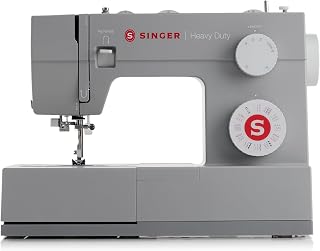
SINGER 4452 High Speed Heavy Duty Sewing Machine
Check PriceThe most common error is using insufficient foot pressure or the wrong foot. Leather needs an even feed, so if you are still using a standard zigzag foot, you are fighting an uphill battle. Switch to a walking foot, a roller foot, or a Teflon foot to reduce friction. Teflon feet glide over sticky leather coatings and stop the material from dragging. Pair this with tissue paper or tear-away stabilizer placed under the leather if your feed dogs still cannot get a grip.
Another frequent issue is skipping stitches. This usually happens because the needle is not a genuine leather point or it is too small for the thread. Leather needles have a triangular cutting tip that pierces cleanly; a denim or heavy-duty needle is not the same. If stitches continue to skip, try a size larger needle and rethread both the top thread and the bobbin with the presser foot up so the tension discs properly engage.
Tension imbalances manifest as loops on the underside or tight, puckered leather. Avoid the temptation to crank the tension dial to maximum; instead, test incrementally. The bobbin case may need a slight adjustment if you are using heavy thread. Some machines offer a separate bobbin case for heavy threads, which is worth obtaining if you sew leather regularly. Remember that leather is not fabric, it will not ease back into shape once sewn incorrectly, so slow down and treat each seam as permanent.
Leather Sewing FAQ: Answers to Your Top Questions
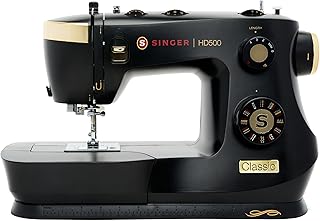
SINGER Heavy Duty 500 Classic High Speed Sewing Machine
Check PriceCan I sew leather on a regular home sewing machine?
Yes, many modern heavy-duty home machines can handle thin to medium-weight leather (up to about 3 oz) when equipped with a leather needle, bonded nylon thread, and a walking foot. Attempting thick harness leather or multiple layers may cause timing issues or needle breakage. Always consult your machine’s manual for its maximum capabilities, and sew slowly.
Why does my thread keep breaking when sewing leather?
Thread breakage often results from using lightweight general-purpose thread, a needle with a too-small eye, or excessive tension. Switch to a bonded nylon or heavy polyester thread sized for your project, ensure the needle eye is large enough for the thread to pass through freely, and lower the top tension slightly. Also check for burrs on the needle plate that may be cutting the thread.
What is the best stitch length for leather?
A stitch length between 3.5 mm and 4.5 mm is ideal for most leather sewing. Longer stitches reduce the number of puncture holes in the hide and create a stronger seam. Decorative topstitching can go up to 5 mm. Avoid short stitch lengths under 2.5 mm, as they can perforate the leather so closely that it tears along the seam line.
Is it better to hand sew or machine sew leather?
It depends on the project. Hand sewing offers superior control and strength with a saddle stitch, making it excellent for thick layers, repairs, and intricate corners. Machine sewing is faster and creates a polished, professional look on longer seams. Many leatherworkers use a combination, machine-sewing long runs and hand-stitching stress points.
Why are my leather seams puckering?
Puckering happens when the presser foot pressure is too high, the tension is too tight, or the feed system is pushing the top layer faster than the bottom. Reduce presser foot pressure, use a walking foot, and try a Teflon foot to minimize friction. Always test on a scrap sandwich identical to your project layers and adjust tension until the seam lies flat.
Final Thoughts: Is Leather Sewing Right for You?
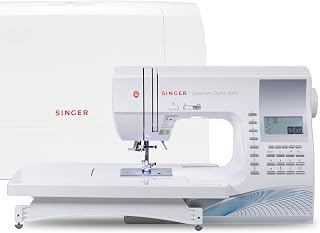
SINGER Quantum Stylist 9960 Computerized Sewing Machine
Check PriceSo, is leather difficult to sew? It demands more preparation, specific tools, and a willingness to go slower than you might with quilting cotton. Yet the rewards are enormous. The satisfaction of completing a leather tote with flawless topstitching or a hand-sewn wallet that will outlast anything store-bought is unlike any other craft. The main difficulty lies not in the material’s toughness, but in unlearning fabric habits: no pins, no ripping out, and a commitment to testing first.
If you start with thin, inexpensive leather offcuts and work your way up, you will build the muscle memory and machine intuition needed for thicker projects. For a thorough breakdown of needles, thread, and presser foot adjustments, consult an authoritative resource like this leather sewing guide. Combine that knowledge with your own practice, and you will soon find that leather is not an enemy to fear but a collaborator that respects patience and precision.
Embrace the learning curve. Each project teaches you something new about tension, feed, and edge finishing. With the proper setup and mindset, you will transform those initial doubts into pride. The door to leather sewing is wide open, and the only question left is which project you will stitch first.
