
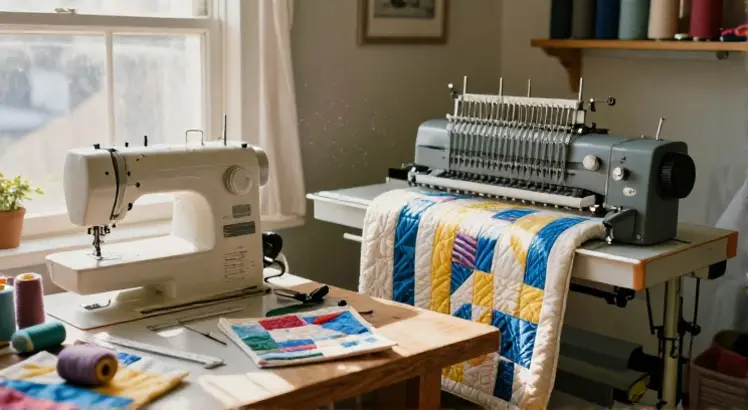
Deciding which sewing machine is better for quilting can feel like walking into a fabric store without a pattern. There are so many options, and every quilter seems to have a different opinion. The truth is, there isn’t a single best machine for everyone, but there is a best machine for your projects, workspace, and ambitions. Whether you’re piecing your first lap quilt or ready to tackle free-motion feathers on a king-size, your machine’s throat space, feed mechanism, and stitch consistency all decide how enjoyable (and cramp-free) the process will be.
In this guide, I’ll walk you through the must-have features, compare mechanical and computerized models, and highlight what separates a makeshift quilting machine from a true quilting workhorse. Along the way, you’ll find practical tips, a few brand-agnostic recommendations, and real-world advice that comes from hours hunched over a needle. Let’s find the machine that turns your quilt dreams into beautifully stitched reality.
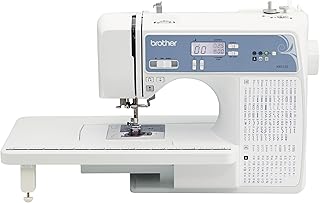
Brother XR9550 Computerized Sewing and Quilting Machine, 165 Built-in Stitches
Check PriceUnderstanding What Makes a Sewing Machine Great for Quilting
Before you compare models, it helps to know exactly what transforms an everyday sewing machine into a quilting powerhouse. Quilting isn’t just regular sewing with thicker layers, it’s about moving bulk effortlessly, keeping stitches even across different fabric weights, and having the space to steer a growing quilt sandwich under the needle.
Throat Space: The Room to Maneuver
Throat space (also called harp space) is the distance from the needle to the right side of the machine’s body. For quilting, this is arguably the non-negotiable spec. A standard sewing machine usually offers 6 to 7 inches of throat space, which is fine for piecing blocks but quickly turns into a wrestling match when you’re trying to quilt a twin-size top. You end up rolling, folding, and forcing the fabric through, adding wrinkles and a lot of frustration.
Machines designed with quilters in mind boast throat spaces of 9 inches or more. Some semi-industrial straight-stitch models give you up to 11.5 inches. That extra room lets you smooth out larger sections without constant repositioning, making free-motion quilting feel fluid instead of like trying to parallel park a semi-truck.
Feed System and Walking Foot Compatibility
The feed dogs (those little teeth under the presser foot) are what move your fabric forward. For quilting, you need a machine that either has excellent even feed built in or works seamlessly with a walking foot. A walking foot helps the top layer of fabric move at the same rate as the bottom layer, preventing puckers and shifting across your quilt sandwich.
If you’re eyeing a machine that claims to be quilting-friendly, make sure it either includes a walking foot or has an integrated even-feed system (like Bernina’s built-in dual feed). Similarly, for free-motion quilting, you’ll want a machine that lets you drop the feed dogs easily, preferably with a simple switch, not a screwdriver.
Stitch Quality and Built-In Stitches
You don’t need hundreds of decorative stitches to make a beautiful quilt, but a handful of useful stitches makes life easier. A solid straight stitch, a reliable zigzag, a blind hem stitch for binding, and maybe a serpentine stitch for organic quilting lines are more than enough. What matters most is consistency: stitches should look identical on the front and back, even when you change from quilting cotton to a thick batting layer.
High-speed straight-stitch machines (often called quilting and piecing machines) can sew up to 1,500 stitches per minute and produce perfectly tensioned straight stitches even at top speed. If precision patchwork is your goal, these machines often outperform general-purpose computers in sheer stitch quality on long seams.
Mechanical vs. Computerized Sewing Machines for Quilting
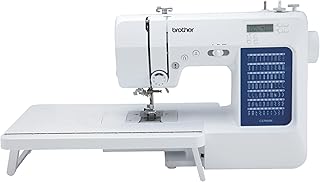
Brother CS7000X Computerized Sewing and Quilting Machine, 70 Built-in Stitches
Check PriceOne of the biggest forks in the road is choosing between a robust mechanical machine and a feature-rich computerized one. Both can piece and quilt beautifully, but they shine in different scenarios, and your preference will largely shape which sewing machine is better for quilting in your hands.
When a Mechanical Quilting Machine Wins
- Fewer electronic parts mean less that can go wrong, and maintenance is often simpler.
- Mechanical motors often deliver more punching power through thick layers, making them excellent for dense quilting over heavy batting.
- They’re typically more budget-friendly, putting high-quality quilting within reach without a screen in sight.
- Many quilters love the tactile, no-menu approach, turn a dial, sew, repeat.
A perfect example is a dedicated straight-stitch machine like the Brother PQ1500SL. It’s a no-frills workhorse engineered for speed and exceptional stitch quality, and it sits quite comfortably on many quilters’ tables. If you want to dive deeper, I’ve covered more heavy-duty options in this guide to heavy-duty quilting machines.
When a Computerized Quilting Machine Makes Sense
- Precise needle stop (needle up/down) and automatic thread cutters save tremendous time during chain piecing.
- Adjustable speed control lets you dial in a comfortable pace, priceless when free-motion quilting on a detailed motif.
- Advanced feed features like Janome’s AcuFeed Flex or Pfaff’s built-in walking foot reduce the need to swap presser feet constantly.
- Computerized machines often include helpful quilting stitches, memory functions, and pivot lights that make intricate piecing less taxing on your eyes.
If you value convenience and don’t mind a slight learning curve, a computerized machine can be a genuine joy to quilt on. Just be aware that throat space still reigns supreme, don’t get distracted by a touchscreen if the machine only offers 6.5 inches of real estate to the right of the needle.
Top Quilting Machine Types and Who They’re For
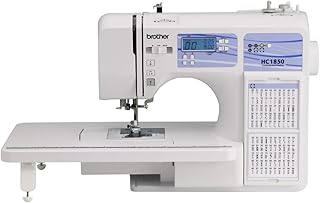
Brother HC1850 Sewing and Quilting Machine, 185 Built-in Stitches
Check PriceInstead of naming one winner, it’s more helpful to think in categories. Here are the main paths quilters take, and the pros and cons of each.
1. The High-Speed Straight-Stitch Quilting Machine
Great for: Dedicated piecers, free-motion quilters who want max throat space, and those who already own a general sewing machine for occasional zigzag needs.
Machines like the Janome 6700P or the Juki TL series are built around one incredible straight stitch. Their large throat spaces (often 9–11.5 inches) and blazing speed make assembling quilts an absolute pleasure. The downside? They don’t zigzag, so you’ll still need another machine if you sew knit garments or appliqué that requires a satin stitch.
2. The Versatile Quilting and Sewing Workstation
Great for: Quilters who also sew garments, craft, or want an all-in-one machine with generous throat space.
Models in this category, think Janome Memory Craft 9450 or Bernina 570 QE, offer a roomy throat (9 mm or wider stitch width capability, plus 8.5+ inches of harp space) plus a suite of decorative stitches. They usually come with superior feed systems, making stitch quality excellent across quilting cotton, denim, and silk. The trade-off is cost; these machines are an investment.
3. The Budget-Friendly All-Rounder
Great for: Beginner quilters on a strict budget who want to test the waters before committing to a specialty machine.
Several mechanical machines under $300 have become cult favorites among new quilters. They won’t have huge throat space, but a heavy-duty frame can still push through quilt layers with the right needle and thread. A walking foot (often sold separately) transforms these humble machines into surprisingly capable quilting tools. If you need help narrowing down which model suits your skill level, this guide to choosing a machine that fits your needs will walk you through the decision step by step.
Practical Quilting Features That Actually Matter
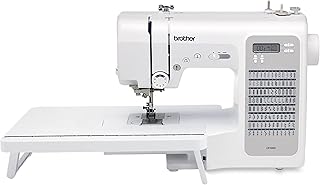
Brother CP100X Computerized Sewing and Quilting Machine
Check PriceBeyond throat space, some features fly under the radar but make a huge difference in daily quilting. Keep an eye out for these when you’re testing machines.
- Needle threader: A quality automatic threader saves your eyes and patience, especially when you’re changing thread colors often.
- Knee lever: Lifting the presser foot with your knee keeps both hands on the quilt, hugely helpful during free-motion quilting or when aligning bulky seams.
- Extension table: A custom-fit acrylic extension table expands the flatbed area and supports the weight of the quilt, reducing drag.
- Adjustable presser foot pressure: By dialing down the pressure for thick seams and quilting layers, you prevent tunneling and uneven feed.
- Bright LED lighting: Multiple, well-placed LEDs illuminate the needle area so you can see the stitching line clearly, even with dark fabrics.
When you test-drive a machine (always recommended), bring a practice quilt sandwich, top, batting, and backing, and run a few straight lines plus a free-motion swirl. Notice how the fabric moves, if the machine shakes at higher speeds, and how comfortable the controls feel. The better machine is the one that disappears beneath your hands and lets you focus on the quilting itself.
Real-World Scenarios: Which Machine Fits Your Quilting Life?
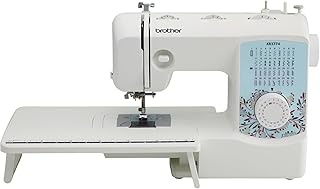
Brother XR3774 Sewing and Quilting Machine, 37 Built-in Stitches
Check PriceLet’s move from theory to your sewing room. Think about what you actually quilt, and how your answer changes the recommendation.
Mostly Piecing with Occasional Straight-Line Quilting
If you’re a topper who sends big quilts to a longarm service, you don’t need football-field throat space. A precise mechanical machine with needle up/down and a speed control slider will let you chain piece like a pro. Focus on a strong straight stitch, easy bobbin winding, and a clear 1/4-inch seam marking. A machine with a solid extension table and a good quarter-inch foot will improve accuracy more than any computer screen.
Quilting Queen-Size and Larger at Home
If you plan to quilt big throws, queens, or king-size quilts on your domestic machine, throat space becomes your best friend. You’ll want a minimum of 9 inches and ideally a machine that can sit flush inside a sewing cabinet, creating a level surface.
Machines like the Janome 9450 or the Pfaff Quilt Expression series not only offer generous throat space but also excellent feed systems that manage bulky quilts gracefully. Yes, they cost more, but they eliminate the physical struggle that can steal the joy from quilting.
Free-Motion Quilting Enthusiast
For free-motion work, you need a smooth, vibration-free machine that can run at low speeds without stalling. Look for a machine that offers a generous harp space, the ability to drop feed dogs completely, and easy tension adjustment. Some quilters prefer mechanical straight-stitch machines here because they provide direct power; others love stylus-guided or stitch-regulated computerized machines. Test both approaches if you can.
Frequently Asked Questions
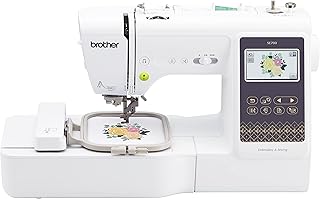
Brother SE700 Sewing and Embroidery Machine, Wireless LAN, 4″x4″ Hoop
Check PriceCan I use a regular sewing machine for quilting?
Absolutely. Many beautiful quilts are made on standard domestic machines. The key is to use a walking foot for straight-line quilting and a darning or free-motion foot for free-motion quilting. However, a regular machine’s throat space may limit you to small lap quilts or wall hangings unless you’re comfortable wrestling with bulk.
What’s the minimum throat space for quilting a queen-size quilt?
I recommend at least 9 inches of throat space for queen-size quilts. Anything smaller will require aggressive rolling and clamping, which can distort stitches. Many dedicated quilting machines offer 10–11.5 inches, making the process dramatically easier.
Is a walking foot really necessary?
If you’re doing any kind of straight-line quilting through three layers, yes, strongly recommended. A walking foot prevents the top fabric from shifting ahead of the bottom fabric, which causes puckers and uneven stitches. Some machines have built-in even-feed systems that accomplish the same thing without an extra foot.
How much should I spend on a quilting sewing machine?
You can start quilting with a $200–$300 heavy-duty machine and a walking foot. Serious quilters often invest $800–$2,500 for a dedicated straight-stitch or advanced computerized machine with generous throat space. Longarm machines are a completely different category, starting around $5,000. The right budget is the one that matches your quilting frequency, physical comfort, and long-term goals.
Is a computerized machine harder to maintain than a mechanical one?
Computerized machines contain circuit boards and sensors that, if they fail, typically require professional service. Mechanical machines are simpler to troubleshoot at home. That said, modern computerized machines are very reliable, and regular cleaning and oiling (where applicable) keep them running smoothly for years.
Find the Quilting Machine That Works With You, Not Against You
When you strip away the buzzwords and spec sheets, which sewing machine is better for quilting comes down to how the machine feels when you’re actually quilting. A spacious throat, even fabric feed, and unwavering stitch quality transform a chore into a creative flow. And the better machine is the one that fits your space, budget, and, most importantly, the kinds of quilts you dream of making.
Start by measuring the harp space you need, test the machines that meet that threshold, and don’t overlook comfort features like a knee lift or extension table. A test drive with your own fabric and batting will tell you more than any YouTube video ever can. Trust your hands, and you’ll land on a machine that’ll stitch through countless quilt stories.
