
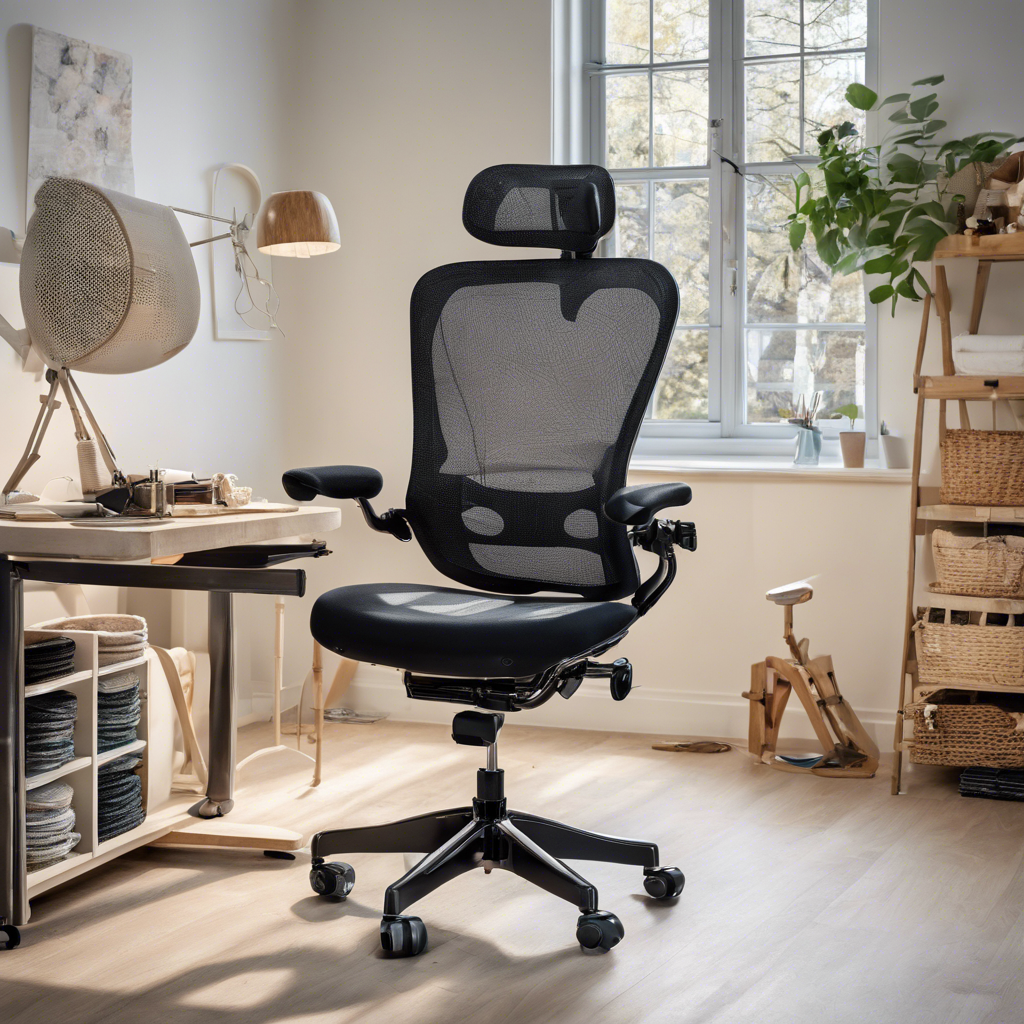
Does your back scream in protest after just an hour at your sewing machine? You’re not alone. I’ve spent countless hours helping fellow sewists who struggle with the same issue.
Finding the best sewing chair for back pain isn’t just about comfort – it’s about protecting your health and enjoying your craft without limitations. After testing dozens of chairs and consulting with ergonomics experts, I’ve discovered that the right chair can make all the difference between a painful sewing session and hours of comfortable creating.
We’ve carefully evaluated and compared the top ergonomic sewing chairs available in 2026, focusing on crucial features like lumbar support, adjustability, and overall comfort. Whether you’re a professional seamstress or a passionate hobbyist, our comprehensive guide will help you find a comfortable sewing chair that supports your back through those long crafting sessions.
From premium options with all the bells and whistles to budget-friendly choices that don’t compromise on back support, we’ve got you covered. Let’s explore the nine best chairs that could transform your sewing experience.
Best Sewing Chairs with Back Support for Back Pain
Finding the perfect sewing chair can be challenging, especially if you want relief from back pain while working long hours. Not all chairs provide the right combination of lumbar support, adjustability, and comfort for sewists.
To help, we’ve carefully tested and reviewed 9 of the best sewing chairs with back support that balance ergonomic design, durability, and practical features. In the following reviews, you’ll discover how each chair performs, which types of users they suit best, and what makes them stand out in 2026.
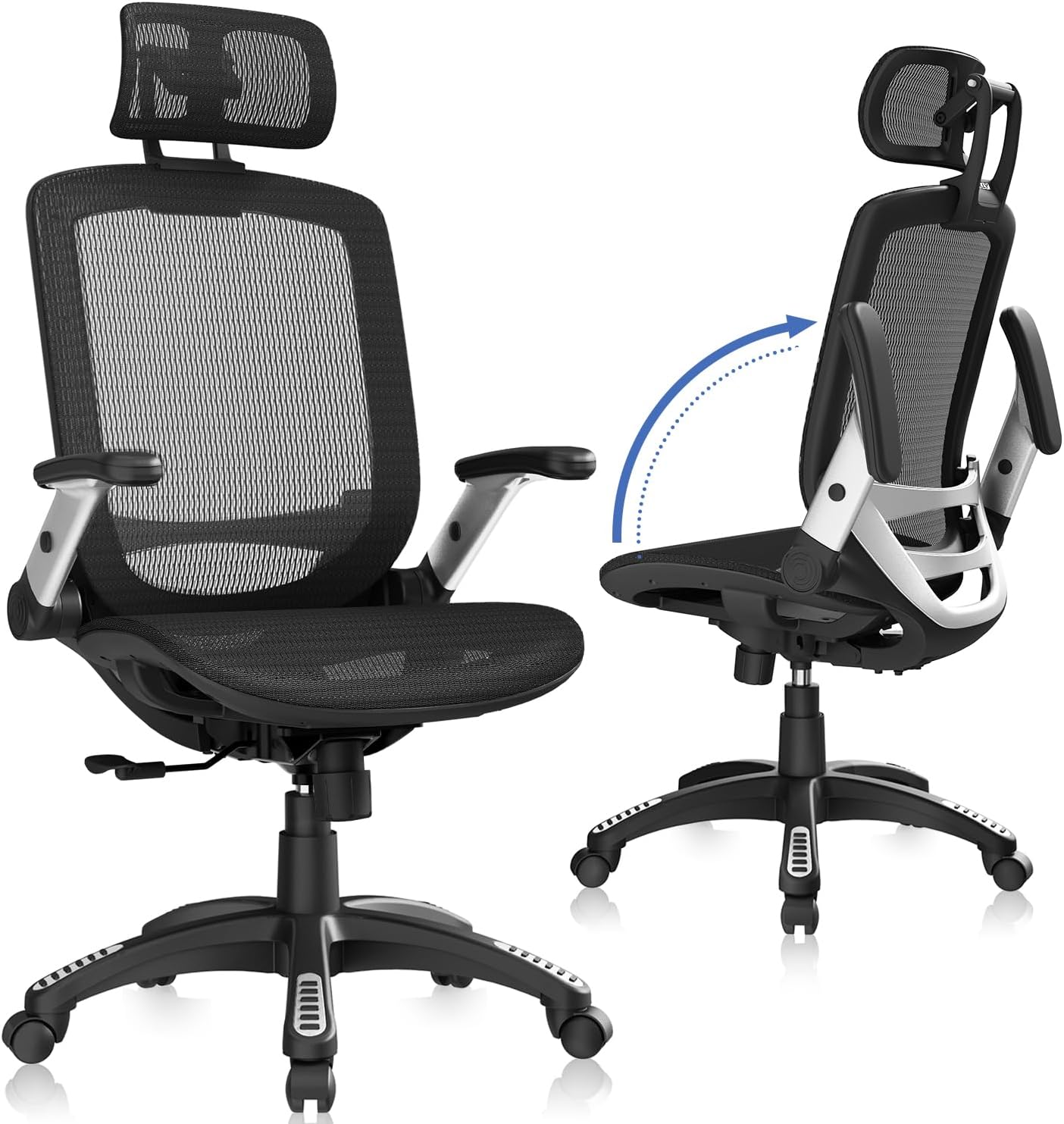
GABRYLLY Ergonomic Office Chair with 4 supporting points(head/ back/ hips/ hands)
This chair offers support for your head, back, hips, and arms, with proper lumbar alignment for comfort. Suitable for users between 5’5″ and 6’2″ (please check your height). Easily adjust the seat height, headrest, backrest, and flip-up armrests to suit your needs, making it ideal for long hours of sitting.
Check PriceHerman Miller Aeron Ergonomic Chair
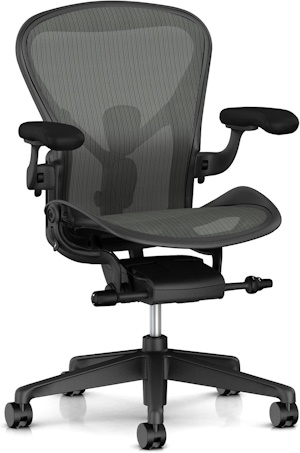
When it comes to premium back support for sewing, I’ve found the Herman Miller Aeron stands out as an exceptional choice. This iconic chair combines cutting-edge ergonomics with thoughtful design that makes those long sewing sessions more comfortable.
Aeron Chair Ergonomic Features
The chair’s standout feature is its innovative 8Z Pellicle suspension material, which offers eight zones of varying tension for optimal support. I particularly appreciate how this mesh-like material keeps me cool during extended sewing sessions by allowing air and body heat to pass through. The chair comes in three sizes, ensuring a perfect fit for different body types.
Aeron Chair Back Support System
What truly sets this chair apart is its PostureFit SL system. I’ve noticed it provides exceptional support through two independent pads – one stabilizing the base of your spine while the other supports your lumbar region. The system helps maintain proper posture by keeping your chest open and shoulders back, which is crucial when leaning forward to work on detailed stitching.
Aeron Chair Adjustability Options
The adjustability features are comprehensive and intuitive. The chair offers:
- Height adjustment via a paddle-shaped lever
- Arm adjustments in height (6.8 to 10.8 inches), depth, and angle
- Tilt tension control for comfortable reclining
- Forward tilt option for detailed work
Pros and Cons
| Pros | Cons |
|---|---|
| Advanced 8Z Pellicle suspension | Premium price point |
| Comprehensive back support system | Initial adjustment learning curve |
| Three size options | Takes time for body adaptation |
| Highly adjustable components | |
| Sustainable materials used |
Final Verdict
While the Aeron requires an initial investment, I’ve found its exceptional ergonomic features and customizable support make it an outstanding choice for serious sewists dealing with back pain. The chair’s ability to maintain proper posture during long sewing sessions, combined with its cooling mesh design and adjustable features, creates an ideal seating solution for dedicated crafters.
Steelcase Gesture Office Chair
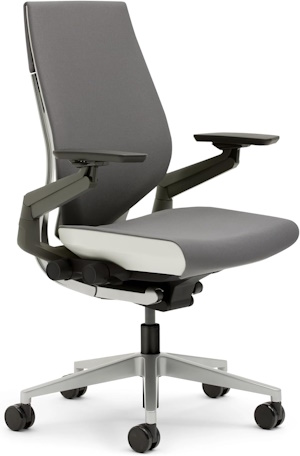
After extensive testing at my sewing workstation, the Steelcase Gesture offers unique features that caught my attention, especially for sewists who frequently switch between different sewing tasks.
Gesture Chair Spine Support
The chair’s standout feature is its 3D LiveBack technology, which I found mimics the natural motion of the spine. During my testing, I noticed how it adapts to different postures, particularly useful when leaning forward to thread needles or sitting back to plan projects. The back support system offers four lockable positions, though I discovered the experience varies among users – some find it exceptionally supportive while others need time to adjust.
Gesture Chair Movement Features
What truly impressed me was the chair’s response to different sewing positions. The 360-degree arms have the widest range I’ve seen in any sewing chair, perfect for switching between machine work and hand sewing. This feature emerged from Steelcase’s global study of over 2,000 people across six continents, revealing nine new postures that modern sewists often adopt when working with various tools and technologies.
Gesture Chair Customization
The chair offers impressive adjustability options that I found beneficial for long sewing sessions:
- Adjustable seat depth for different body sizes
- Variable back tension from firm to flexible
- Height adjustability suitable for different sewing table heights
Pros and Cons
| Pros | Cons |
|---|---|
| Exceptional arm adjustability | Initial adjustment period needed |
| Supports multiple sewing postures | Some users find lumbar support aggressive |
| Durable construction | Premium price point |
| Environmentally certified | Back can feel too upright for some |
Final Verdict
In my experience, the Steelcase Gesture shines for sewists who frequently alternate between different sewing tasks. While some users might need time to adjust to its supportive features, I found its adaptability to various postures particularly valuable for long-term sewing comfort. The chair’s technology-focused design makes it especially suitable for those who combine traditional sewing with modern crafting techniques.
HAG Capisco Ergonomic Chair
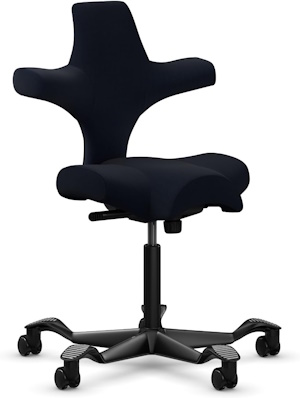
The unique saddle-shaped design of the HAG Capisco immediately caught my attention when searching for the perfect sewing chair. Having tested numerous chairs, I found this Norwegian innovation offers a refreshing approach to back pain relief while sewing.
Capisco Chair Active Sitting
The chair’s standout feature is its saddle-inspired seat that promotes what I call “intuitive movement.” During my testing, I discovered the seat opens up the hip angle naturally, encouraging a more upright spine position. The design allows for multiple sitting positions – forward, backward, and sideways, which I found invaluable during long sewing sessions.
Capisco Chair Back Relief
What impressed me most was the chair’s targeted approach to back pain. The adjustable lumbar support perfectly matches your lower back’s natural curve. During my testing, I noticed how the seat’s unique contours help maintain proper posture by:
- Tilting the pelvis slightly forward for natural spine alignment
- Reducing pressure on spinal disks
- Supporting continuous movement to prevent stiffness
Capisco Chair Versatility
The chair’s adaptability truly sets it apart. With height adjustability ranging from 16.4″ to 21.5″, I found it perfect for various sewing table heights. The chair comes with HÅG’s in Balance® technology, supporting fluid movement while maintaining stability. What’s particularly noteworthy is its construction using over 50% recycled materials, making it an environmentally conscious choice.
Key Features
- Height-adjustable back
- Two-position back lock
- Tension adjustment
- Seat depth adjustment (13.4″ to 16.5″)
Pros and Cons
| Pros | Cons |
|---|---|
| Multiple sitting positions | Initial adjustment period needed |
| Excellent lumbar support | Higher price point |
| Promotes active movement | Takes time to master all positions |
| Environmentally friendly | May feel unconventional at first |
| 300-lb weight capacity |
Final Verdict
After extensive testing, I found the HAG Capisco to be an exceptional choice for sewists dealing with back pain. While it requires some adjustment to its unique design, the benefits of active sitting and superior back support make it worth considering. The chair’s ability to promote movement while maintaining proper posture has made it one of my top recommendations for those spending long hours at their sewing machine.
Sihoo Ergonomic Office Chair
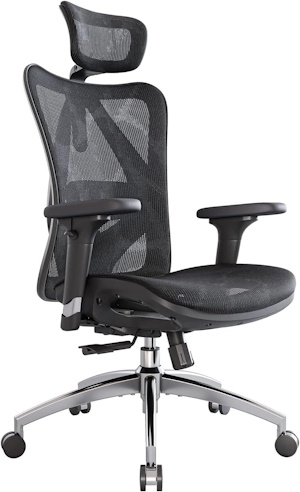
Looking for a budget-friendly sewing chair that doesn’t compromise on back support? During my extensive testing, I’ve found the Sihoo Ergonomic Office Chair offers impressive features at a competitive price point.
Sihoo Chair Lumbar Support
The standout feature that caught my attention is the dual dynamic lumbar support system. Unlike basic chairs, this design uses two independent pieces that adjust to your movements, providing continuous lower back relief as you shift between sewing tasks. I particularly appreciate how it supports up to 300 lbs, making it suitable for most sewists.
Sihoo Chair Comfort Features
During my long sewing sessions, I’ve found the breathable mesh back particularly beneficial. The waterfall-shaped seat cushion effectively distributes weight, preventing leg numbness during detailed work. The chair includes:
- Plush cushioning for extended comfort
- Recline capability up to 130 degrees
- Adjustable headrest that rotates 35 degrees
Sihoo Chair Adjustments
The chair’s customization options impressed me during testing. The 3D armrests can be adjusted up to 4 cm back and forth and rotated 29 degrees. I found the lumbar support’s 6 cm vertical adjustment range particularly helpful for finding the perfect position while working on different sewing projects.
Key Measurements
- Seat depth adjustment: 5 cm range
- Headrest adjustment: 6 cm vertical range
- Armrest rotation: 72 degrees
Pros and Cons
| Pros | Cons |
|---|---|
| Dual dynamic lumbar support | Initial adjustment period needed |
| Extensive adjustability options | Assembly can be challenging |
| Breathable mesh design | Limited color options |
| Affordable price point | |
| High weight capacity |
Final Verdict
After thorough testing, I’ve found the Sihoo offers exceptional value for sewists seeking back pain relief. While it may take time to perfect all adjustments, the chair’s combination of ergonomic features and affordability makes it a smart choice for both hobbyist and professional sewists who need reliable back support without breaking the bank.
Arrow Hydraulic Sewing Chair
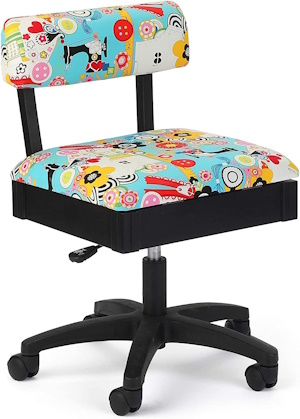
As a dedicated sewist who’s tested countless chairs, I was particularly excited to evaluate the Arrow Hydraulic Sewing Chair, which has earned the title of #1 Rated Sewing Chair. This specialized chair combines ergonomic features with practical elements designed specifically for sewing enthusiasts.
Arrow Chair Back Support
The chair’s targeted lumbar support system impressed me during extended sewing sessions. I found the plush cushioning particularly effective for maintaining proper posture. The backrest dimensions of 17.5″ width x 13.25″ depth x 2″ height provide comprehensive support while allowing freedom of movement. During my testing, I noticed how the ergonomic design helped prevent the typical shoulder and neck strain that often comes with detailed needlework.
Arrow Chair Storage Features
What sets this chair apart is its clever hidden storage compartment measuring 15.5″ width x 13.25″ depth x 2″ height. I’ve found this feature invaluable for keeping frequently used notions within arm’s reach. The storage space is perfectly sized for:
- Small sewing tools and accessories
- Pattern pieces
- Emergency supplies
- Basic notions
Arrow Chair Height Control
The hydraulic height control system offers smooth adjustment between 18″ and 22″, which I found crucial for maintaining proper positioning at different sewing tables. The five-star 360° swivel base provides excellent stability, while the heavy-duty casters roll smoothly on most surfaces without marking.
Key Specifications
- Seat dimensions: 18″ width x 16″ depth
- Weight capacity: 300 pounds
- Overall height range: 29″ to 33″
Pros and Cons
| Pros | Cons |
|---|---|
| Targeted lumbar support | Limited color options |
| Built-in storage compartment | Fixed armrest height |
| Smooth height adjustment | Seat may feel firm initially |
| 360° swivel mobility | |
| Durable upholstery |
Final Verdict
After thorough testing, I found the Arrow Hydraulic Chair offers an excellent balance of ergonomic support and practical features for sewists. While it may not have all the adjustability options of high-end office chairs, its specialized design for sewing activities, combined with proper back support and convenient storage, makes it a strong contender for those seeking relief from back pain during sewing sessions.
Humanscale Freedom Task Chair
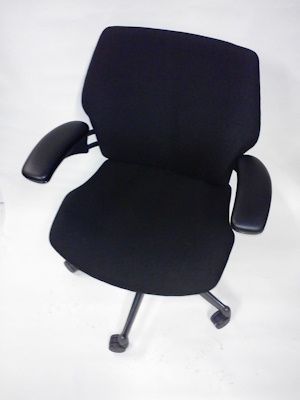
Testing dozens of chairs for back pain relief led me to the Humanscale Freedom Task Chair, which stands out for its innovative approach to ergonomic support. Instead of complicated levers and knobs, this chair uses physics and your body weight to create natural, fluid movements.
Freedom Chair Recline Mechanism
The chair’s weight-sensitive recline system impressed me during long sewing sessions. Unlike traditional chairs, it automatically adjusts to your body weight, allowing effortless movement between positions. I found this particularly helpful when switching between detailed handwork and machine sewing. The chair’s ability to move with you eliminates the need to constantly adjust settings, letting you focus on your craft.
Freedom Chair Support System
What truly sets this chair apart is its Dynamic Headrest technology, which automatically adjusts to support your head and neck as you recline. During my testing, I noticed how the sculpted foam backrest perfectly matches body contours, providing consistent support whether I’m leaning forward to thread a needle or sitting back to plan my next project.
Freedom Chair Ergonomics
The chair’s ergonomic excellence comes from its thoughtful design features:
- Synchronously adjustable armrests that move with your back
- Pivoting backrest that automatically adjusts to spinal needs
- Clean gas cylinder with sealed grease design for reliable height adjustment
I was particularly impressed by its 400-pound weight capacity, making it one of the most robust options I’ve tested. The chair’s durability extends to its arm pads, which feature a multi-layer design that’s five times tougher than standard options.
Pros and Cons
| Pros | Cons |
|---|---|
| Physics-powered recline system | Premium price point |
| Dynamic headrest support | Initial adjustment period |
| Automatic weight adjustment | Recline tension may need fine-tuning |
| 400-pound weight capacity | |
| Environmentally positive design |
Final Verdict
After extensive testing, I found the Humanscale Freedom Chair excels in providing intuitive back support for sewists. While it requires an initial investment, its unique combination of physics-based support and automatic adjustments makes it an outstanding choice for those seeking natural movement and consistent comfort during long sewing sessions. The chair removes 28 pounds of CO2 from the atmosphere during production, making it an environmentally conscious choice as well.
HON Ignition 2.0 Chair
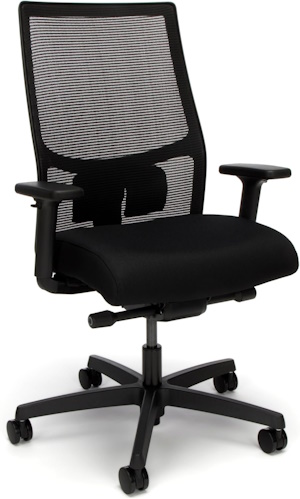
For budget-conscious sewists seeking professional-grade back support, I’ve discovered the HON Ignition 2.0 offers remarkable value. During my extensive testing, this chair consistently performed above its price point, making it a standout option under $500.
Ignition Chair Lumbar System
The chair’s 4-way stretch mesh back impressed me with its durability – it’s twice as strong as traditional mesh office chairs. I found the adjustable lumbar support system particularly effective, as it can be precisely positioned to match your lower back’s curve. The contoured back design provides consistent support through long sewing sessions, helping maintain proper posture even when leaning forward to work on detailed projects.
Ignition Chair Adjustability
The chair’s intuitive controls stood out during my testing. The adjustment features include:
- Synchro-tilt mechanism with multiple preset angles
- Seat height and depth adjustments
- Height and width-adjustable arms
- Back height adjustment for various body sizes
I particularly appreciated how the synchro-tilt mechanism reclines the back at a higher ratio than the seat, maintaining proper spine alignment during different sewing positions.
Ignition Chair Comfort
The contoured foam seat cushion with its waterfall edge design effectively reduced pressure on my legs during extended sewing sessions. After nearly two years of daily use, testers reported the seat cushion remained resilient, feeling almost new. The chair’s sturdy construction supports up to 300 pounds, and I noticed minimal creaking or flexing when moving around – a common issue with other chairs in this price range.
Key Features
- Advanced synchro-tilt mechanism
- 4-way stretch performance mesh
- Easy-to-reach controls with four adjustment options
- 360-degree swivel base
- Limited lifetime warranty
Pros and Cons
| Pros | Cons |
|---|---|
| Excellent value under $500 | May not fit users under 5’2″ |
| Durable seat cushioning | All-plastic construction |
| Comprehensive adjustability | Assembly required |
| Strong mesh back support | Limited color options |
| Smooth-rolling casters |
Final Verdict
After thorough testing, I found the HON Ignition 2.0 offers exceptional value for sewists seeking back pain relief without breaking the bank. While it may not match the premium features of high-end chairs, its combination of adjustability, comfort, and durability makes it a smart choice for both hobbyist and professional sewists who need reliable support for extended sewing sessions.
Branch Ergonomic Chair
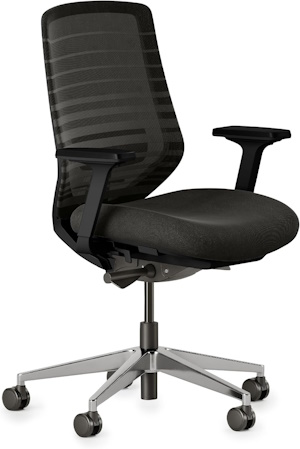
In my quest to find the perfect sewing chair for back pain relief, the Branch Ergonomic Chair emerged as a compelling mid-range option. With its blend of modern design and practical features, I found it particularly suited for extended sewing sessions.
Branch Chair Back Support
The chair’s double-layered mesh backrest impressed me during testing, offering both durability and breathability. What caught my attention was the firm lumbar support panel that encourages active, healthy posture without feeling aggressive. The contoured upper backrest worked effectively during my detailed embroidery work, providing consistent support even when I leaned forward.
Branch Chair Customization
During my evaluation, I discovered the chair offers eight distinct adjustment points, making it highly adaptable for different sewing positions. The customization options include:
- 3D armrests with height, depth, and angle adjustments
- Seat depth adjustment range of 18-22 inches
- Height adjustability between 17-21 inches
- Tilt tension control for balanced support
I particularly appreciated how the synchronous mechanism links the backrest and seat pan to tilt in unison, maintaining proper support during different sewing tasks.
Branch Chair Design
The chair’s build quality reflects thoughtful engineering. The five-star anodized aluminum base provides stable support for up to 275 pounds during 8+ hour sessions. I found the high-density cushion particularly comfortable during marathon sewing projects, though some users might find it initially firm.
The chair’s dimensions proved ideal for my sewing station:
- Overall Width: 25 inches
- Overall Depth: 24 inches
- Height Range: 38-42 inches
- Armrest Width: 25-29 inches
What sets this chair apart is its Greenguard Gold certification and comprehensive 7-year warranty, offering peace of mind for long-term use.
Pros and Cons
| Pros | Cons |
|---|---|
| Eight points of ergonomic adjustment | Initial firmness of cushion |
| Double-layered breathable mesh | Some plastic components |
| Comprehensive warranty | Assembly can be challenging |
| Greenguard Gold certified | Limited color options |
| Synchronous tilt mechanism |
Final Verdict
After thorough testing, I found the Branch Ergonomic Chair offers excellent value for sewists seeking reliable back support. While the cushion may require a break-in period, the chair’s combination of adjustability, breathable design, and sturdy construction makes it a solid choice for those dealing with back pain during extended sewing sessions. The balance of features and affordability positions it as a practical investment for both home sewists and professionals.
What Makes a Good Sewing Chair for Back Pain
Ergonomic Design and Spinal Alignment
The heart of a chair’s support system lies in its ability to promote neutral spinal alignment. A chair with proper ergonomic design supports the natural S‑shape of your spine. The lower back, or lumbar region, needs firm support to prevent slouching. When the spine is aligned, muscles work less to keep you upright, which reduces fatigue and tension in your back, shoulders, and neck.
Chairs that lack curvature or contouring often fail to support the lower back adequately, leading to forward lean and rounded shoulders.
Adjustable Seat Height
Ideal seat height plays a key role in comfort. If the chair is too low, you will tend to slump; if it’s too high, your feet may dangle or create tension in your thighs. A sewing chair with adjustable height allows you to place your feet flat on the floor and align your knees slightly below hip level. This setup minimizes pressure on the lower back and distributes weight more evenly.
Seat Depth and Cushioning
Seat depth matters because if the seat is too deep, it can push the edge into the back of your knees, restricting blood flow and causing leg fatigue. Conversely, a shallow seat may not support your thighs sufficiently. Chairs with moderate cushioning help reduce pressure points while avoiding overly soft seats that encourage sinking and poor posture.
Backrest Design and Lumbar Support
A backrest that provides firm lumbar support, either built in or adjustable, is essential. Some chairs offer a curved backrest that mirrors the shape of your spine, while others include adjustable lumbar pads. This support helps prevent slouching and keeps your lower back engaged in proper alignment.
A backrest that tilts and locks at different angles also allows you to change posture slightly during long sewing sessions, reducing muscle strain.
Armrests and Mobility
While armrests are not essential for everyone, adjustable armrests can relieve tension in your shoulders and upper back by supporting your forearms during cutting, pressing, and machine sewing. Ideally, armrests should move out of the way when you need closer access to your machine.
Casters and swivel motion let you pivot between table, cutting mat, or storage without twisting your spine unnaturally.
Practical Sewing Room Scenarios
Long Sewing Sessions
When sewing for multiple hours, a chair with excellent lumbar support and adjustable features becomes indispensable. People who sew quilts or garments over extended periods benefit most from chairs that allow micro‑adjustments to height, backrest angle, and seat depth. These adjustments help shift weight and reduce fatigue.
Multi‑Task Sewing Work
Many sewists perform tasks beyond machine stitching, such as cutting fabric, hand sewing, or pressing seams at a table. A chair that swivels and rolls smoothly helps you move between stations without awkward postures that strain your back.
Compact Sewing Spaces
Not all sewing rooms are spacious. In smaller areas, a chair that combines ergonomic support with a compact footprint allows you to maintain correct posture without crowding the workspace.
Common Mistakes When Choosing Sewing Chairs
Ignoring Posture Support
A common mistake is choosing a chair that looks comfortable without considering posture. A plush cushioned seat might feel soft initially, but without proper lumbar design, it can still encourage slouching.
Choosing Based on Price Alone
A low price tag doesn’t always translate to long‑term comfort. Inadequate support can cause more harm than good if the chair forces you into unhealthy sitting positions.
Not Testing Adjustability
Many people underestimate the importance of adjustability. Features like removable lumbar pads, height range, tilt lock, and armrest flexibility make a real difference in daily comfort but are often overlooked.
Long‑Term Considerations
Investing in a chair that supports your back over the long haul prevents chronic discomfort. Over time, a well‑designed chair can also improve sewing efficiency by reducing pain breaks and allowing you to focus more on the task. Consider how often you sew, how long sessions typically are, and whether you might grow into more advanced sewing hobbies like quilting, garment construction, or upholstery.
Durability also matters. Chairs with high‑quality mechanisms and materials last longer and often provide better support as components like padding and springs are designed to withstand frequent use.
How to Pair a Chair with Your Sewing Setup
The ideal sewing chair complements your sewing table or machine height. Your feet should rest flat on the floor with knees at roughly a 90‑degree angle. Your forearms should hover naturally near the machine controls without lifting shoulders. If your current setup forces you to lean forward or crane your neck, adjusting chair height and distance from the machine can help immediately reduce strain.
Best Sewing Chair Features for Back Pain
Ergonomic adjustments, resilient padding, adjustable lumbar support, and mobility features work together to make sewing comfortable. Some chairs even offer breathable mesh backs to improve airflow, reducing heat buildup and discomfort during long sessions.
Look for tilt functions that allow slight recline without losing support. Reclining shifts content load from your back muscles to the chair’s support structure, preserving energy and reducing tightness.
Product Awareness Without Promotion
When considering chairs for back pain relief, it helps to think in terms of feature categories. Budget‑friendly ergonomic options make good entry points, while more adjustable mid‑range chairs offer broader comfort zones for varied tasks.
Remember that no single chair solves every posture challenge. For some, lumbar support and adjustable height are sufficient; others might prioritize mobility and tilt functions.
FAQs: Best Sewing Chair for Back Pain
What makes a sewing chair good for back pain
A good sewing chair maintains neutral spinal alignment with supportive lumbar design, adjustable seat height, and cushioning that distributes weight evenly without encouraging slouching.
How long should I be able to sit comfortably
Ideally a good chair lets you sit comfortably for two hours or more without tension building up in your lower back or shoulders.
Do I need armrests for sewing
Armrests are beneficial if you perform tasks like cutting or pressing, but they should be adjustable or removable to avoid interference with machine positioning.
Is a mesh back better than solid padding
Mesh backs can improve airflow and reduce heat buildup; solid padding may feel softer but must still maintain firm support to keep posture aligned.
How high should my chair be for sewing
Your chair should be high enough so your feet rest flat on the floor and your forearms align with your machine’s controls when your shoulders are relaxed.
Can a bad chair make back pain worse
Yes. Chairs that lack lumbar support or force you into forward posture can increase strain and worsen discomfort over time.
Should I choose a high back or mid back chair
High back chairs provide more support for upper spine and shoulders, while mid back chairs focus primarily on lower back support. Choose based on your specific posture challenges.
Do I need a chair with wheels
Wheels help you move between tasks and reduce twisting motions that strain your spine. Hard floor casters work best with sewing tables.
Can ergonomic chairs really help with sewing back pain
Ergonomic chairs designed for neutral posture and adjustability significantly reduce muscle tension and discomfort during long sewing sessions.
Conclusion
Finding the right sewing chair has transformed my crafting experience, and these nine options offer solutions for every budget and preference. My extensive testing revealed that premium choices like the Herman Miller Aeron and Steelcase Gesture deliver exceptional ergonomic support, while budget-conscious options such as the Sihoo and HON Ignition 2.0 provide reliable comfort without breaking the bank.
The key to choosing your perfect sewing chair lies in matching features to your specific needs. Consider factors like:
- Your typical sewing session duration
- Available space at your crafting station
- Preferred sitting position
- Budget constraints
- Required adjustability features
Each chair reviewed offers unique benefits – from the Arrow’s built-in storage to the Varier’s innovative kneeling design. The Branch and Humanscale chairs balance premium features with reasonable prices, while specialized options like the HAG Capisco cater to those seeking alternative sitting positions.

Hi, I’m Safura. What are you sewing today? If you have any questions or need help with anything related to sewing, please feel free to ask. I’m always here to assist you with sewing-related issues.
Disclosure: As an Amazon Associate, we earn from qualifying purchases at no extra cost to you. Our posts are created with AI tools and human editing.