
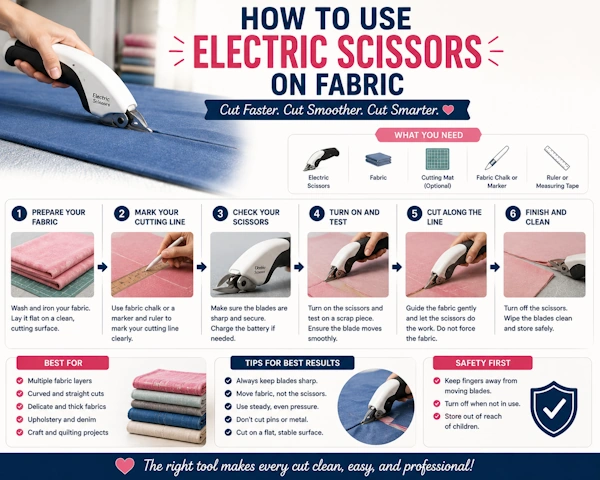
Cutting yards of fabric for a quilting project, sewing multiple pairs of denim jeans, or trimming bulky upholstery materials can leave your hands cramping and your cuts uneven if you rely on manual shears. Electric fabric scissors have become a go-to tool for sewists, upholsterers, and DIYers looking to speed up their workflow without sacrificing precision. If you’ve just unboxed a pair and are wondering how to use electric scissors on fabric safely and effectively, this guide walks you through every step, from pre-use safety checks to maintaining your tool for years of use.

Worx Zipsnip Cordless Electric Scissors, Rechargeable Cardboard Box Cutter, 4V Powerful Fabric Scissors with 2 Safety Blades & Storage Bag WX082L.2
Check PriceWhat Are Electric Scissors for Fabric?
Electric fabric scissors are battery-powered or corded cutting tools designed for slicing textiles. Unlike standard electric scissors for paper, fabric-grade models have sharper, durable blades that won’t fray or snag materials. Many sewists refer to our roundup of the best electric scissors for fabric to find a model that fits their needs.
How Do Electric Scissors Work?
Most use a small motor to power a reciprocating blade that moves against a fixed lower blade, similar to manual shears but powered. Battery-powered models are portable, while corded options offer consistent power for long sessions. High-end models include adjustable speed, ergonomic grips, and blade guards.
Electric Scissors vs. Manual Fabric Shears
Electric scissors excel at long straight cuts, thick materials, and high-volume cutting, while manual shears offer more control for small, detailed work. For traditional shears technique, check our guide to cutting fabric with manual scissors.
- Electric Scissors: Faster cutting, less hand fatigue, effortless thick layer cutting, consistent speed for even cuts. Heavier, less precise for tight curves, requires power.
- Manual Shears: Lightweight, precise for detailed work, no power needed, easier to maneuver tight corners. Causes fatigue with extended use, struggles with thick fabrics.
Safety First: Pre-Use Precautions
Electric scissors have sharp moving blades, so skipping safety steps can lead to injury or damaged fabric. Follow these guidelines every time you use your tool, and refer to sewing.org’s expert guide to cutting tools for additional industry safety standards.
Essential Safety Gear
- Cut-resistant gloves: Thin, flexible gloves protect your non-dominant hand if the blade slips while guiding fabric.
- Safety glasses: ANSI-approved glasses protect your eyes from flying fabric fibers or blade debris.
- Closed-toe shoes: Avoid bare feet or open-toed shoes in case you drop scissors or heavy fabric spools.
Workspace Setup
Use a clean, flat waist-height cutting surface to avoid back strain. Place a self-healing cutting mat under fabric to protect your table and prevent sliding. Ensure bright lighting, and keep children and pets away from the workspace during use.
Step-by-Step Guide: How to Use Electric Scissors on Fabric
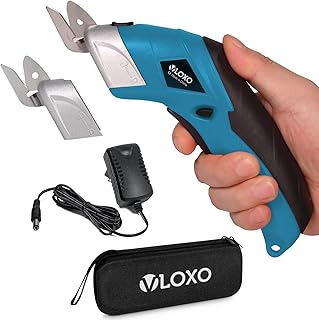
VLOXO Cordless Electric Scissors Super Scissors with 2 Type Blades Rechargeable Cardboard Cutter Powerful Cutting Tool for Fabric Cardboard Carpet Leather Felt Blue CS4001
Check PriceFollow these steps for clean, even cuts, whether working with delicate chiffon or heavy canvas.
Prepare Your Fabric and Tools
Pre-wash and press fabric to remove wrinkles, which cause uneven cuts. Lay flat on a cutting mat, smoothing all wrinkles. Use fabric weights or sewing clips to hold patterns, not pins, which damage blades. Check scissors are charged/plugged in, inspect blades for debris before use.
Test on Scrap Fabric
Always test on scrap fabric first to check blade sharpness and fabric reaction. Adjust speed: lower for delicate, higher for thick materials. If blades snag scrap fabric, clean them before proceeding.
Proper Grip and Technique
Hold with dominant hand, firm but not tight grip. Keep index finger on power trigger, use other hand to guide fabric slowly toward blades. Never push scissors through fabric: let powered blades work, guide at steady pace. Cutting too fast causes jagged edges.
Straight Lines vs. Curves
For straight lines, use a quilting ruler as a guide, lining blades against the ruler edge. For curves, slow speed and rotate fabric with non-dominant hand, not scissors, to avoid uneven edges. Switch to manual shears for tight, intricate curves.
Thick or Delicate Fabrics
For thick fabrics (denim, canvas), use highest speed, cut max 4 layers at a time. For delicate fabrics (silk, chiffon), use lowest speed, place tissue paper under fabric to prevent sliding. Cut with the grain to avoid distorting material.
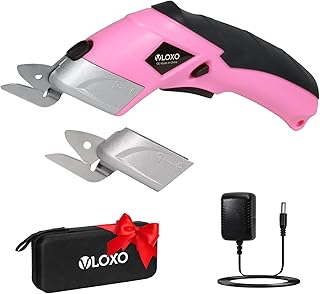
VLOXO Cordless Electric Scissors Cardboard Cutter with 2 Type Blades Rechargeable Powerful Shears Cutting Tool for Fabric Electric Box Cutter Leather Felt with Charger & Storage Box-Pink
Check PriceTips for Cutting Different Fabric Types
Lightweight Fabrics (Chiffon, Silk, Cotton)
Use fabric weights instead of pins to prevent sliding. Low speed settings avoid pulling or distorting fabric. For knits, ensure sharp blades to prevent stretching or curling at edges.
Medium-Weight Fabrics (Linen, Denim, Canvas)
Medium-weight fabrics are ideal for electric scissors. Use medium speed, cut up to 3 layers at a time. For denim, use heavy-duty blades rated for thick materials to avoid motor strain.
Heavyweight Fabrics (Leather, Wool, Upholstery)
Use high speed and sharp heavy-duty blades. Cut 1-2 layers at a time to avoid burning out the motor. For leather, use specialized leather blades to prevent rapid dulling.
Common Mistakes to Avoid
- Cutting too fast: Rushing leads to jagged edges and blade slipping. Slow, steady movement is key.
- Using dull blades: Dull blades snag fabric and strain the motor. Replace at first sign of uneven cuts.
- Cutting over pins: Pins chip or dull blades instantly. Always use fabric weights instead.
- Twisting scissors for curves: Rotate fabric, not scissors, to avoid distorted edges.
- Leaving scissors on: Turn off and unplug/remove batteries when not in use to prevent accidents.
Maintaining Your Electric Fabric Scissors
Proper maintenance extends tool life and keeps cuts clean. Follow these steps after every use.
Cleaning the Blades
Turn off and disconnect power before cleaning. Use a small brush to remove fabric fibers from between blades. Wipe with a dry microfiber cloth, avoid water or harsh chemicals that rust blades.
Oiling and Storage
Apply a small drop of sewing machine oil to the blade pivot every 10-15 uses. Store in a hard case or with a blade guard, in a cool dry place. Keep spare blades on hand for large projects.
Frequently Asked Questions
Can I use electric scissors on all fabrics?
They work on most woven and knit fabrics, but avoid beaded, sequined, or vinyl fabrics that damage blades. Use manual shears for intricate lace or very detailed patterns.
How often should I replace blades?
Blade lifespan depends on use: daily thick fabric cutting requires replacement every 3-6 months. Occasional lightweight use can last 1-2 years. Replace at first sign of snagging or uneven cuts.
Are electric scissors safe for beginners?
Yes, if you follow safety precautions, start with scrap fabric, and use low speed settings. Many beginner models have safety locks to prevent accidental activation.
Conclusion
Mastering how to use electric scissors on fabric can cut your prep time in half and reduce hand fatigue for large projects. Always prioritize safety, test on scrap fabric first, and adjust technique for different materials. Pair your electric scissors with regular maintenance and quality tools, and you’ll get clean, professional cuts every time. Whether you’re a beginner or seasoned pro, electric fabric scissors are a valuable addition to your toolkit.
