
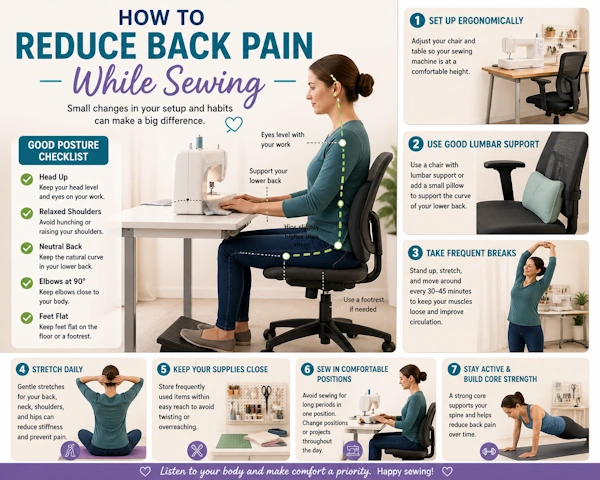
Sewing can be a relaxing and creative hobby, but long hours hunched over a sewing machine or cutting fabric can lead to back pain, stiffness, and fatigue. Whether you’re a hobbyist working from home or running a small sewing business, it’s important to take care of your back to prevent long-term problems.
Here’s a complete guide on how to reduce back pain while sewing, with practical tips, posture adjustments, and workspace ideas.
1. Set Up Your Sewing Station Correctly
A properly arranged sewing area is the first step to preventing back pain.
Desk and Chair Height
- Your sewing machine should be at elbow height when you are seated.
- Your chair should allow your feet to rest flat on the floor.
- Avoid leaning forward or hunching over your machine.
Table Space
- Make sure you have enough space to spread fabric comfortably.
- Keep tools within arm’s reach to avoid twisting or leaning.
Lighting
- Proper lighting reduces the need to lean forward to see your work clearly.
2. Use an Ergonomic Chair
Investing in a comfortable, supportive chair can make a huge difference.
Features to Look For
- Lumbar support to maintain the natural curve of your lower back.
- Adjustable height and backrest.
- Seat cushion firm enough to support your hips but soft enough to prevent pressure points.
- Armrests to support your arms while sewing.
Tip: If you don’t have an ergonomic chair, a small pillow or rolled towel placed behind your lower back can provide support.
3. Maintain Good Posture
Maintaining proper posture is critical to prevent back strain while sewing.
Posture Guidelines
- Sit upright, with shoulders relaxed and back straight.
- Keep your head aligned with your spine — avoid leaning forward.
- Avoid crossing legs for long periods; keep feet flat on the floor.
- Adjust your machine or table height to keep your elbows at a 90-degree angle.
Tip: Imagine a string pulling your head gently upwards — this helps maintain a straight spine.
4. Take Frequent Breaks
Even with perfect posture, sitting for long periods can strain your back.
Break Recommendations
- Stand up every 30–45 minutes.
- Walk around or stretch for 2–5 minutes.
- Rotate tasks, such as cutting fabric, pinning, or ironing, to reduce static posture.
Tip: Set a timer to remind yourself to take breaks — it’s easy to get absorbed in sewing and forget.
5. Stretch and Strengthen Your Back
Regular stretching and strengthening exercises improve posture and reduce back pain.

Simple Stretches
- Cat-Cow Stretch: Kneel on all fours and alternate arching and rounding your back.
- Seated Spinal Twist: Sit upright and gently twist your torso to each side.
- Hamstring Stretch: Tight hamstrings can worsen lower back pain — stretch gently.
- Shoulder Rolls: Roll shoulders forward and backward to release tension.
Strengthening Exercises
- Planks strengthen the core muscles that support your spine.
- Bridges strengthen the lower back and glutes.
- Wall Sits improve posture and endurance.
6. Use a Footrest or Adjustable Table
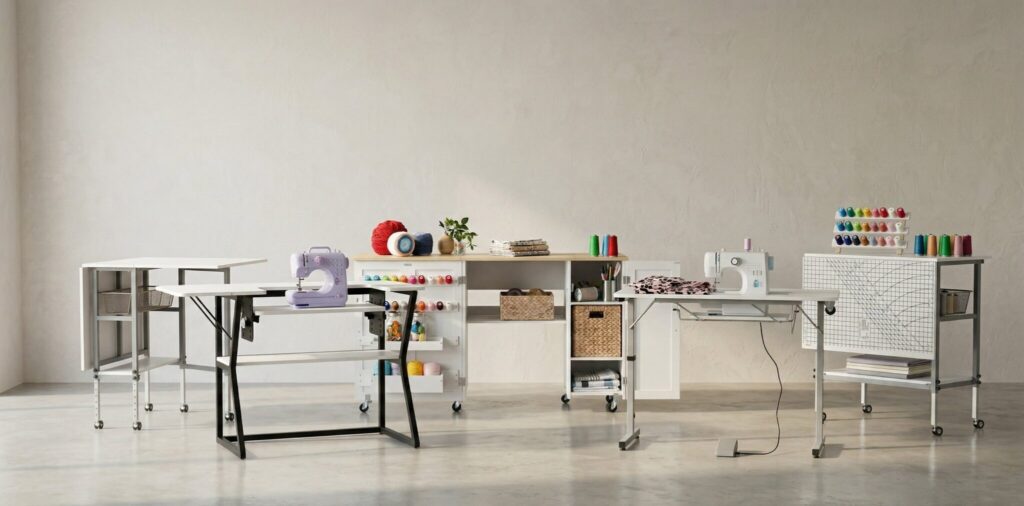
Footrest
- If your chair is too high and feet don’t touch the floor, use a footrest to maintain proper posture.
Adjustable Sewing Table
- Adjustable tables allow you to raise or lower the machine as needed, keeping elbows at the correct angle and reducing strain.
7. Organize Your Sewing Space Efficiently
A cluttered workspace can make you lean or twist unnaturally.
Tips
- Keep frequently used tools and fabrics within easy reach.
- Store heavy items on shelves instead of under your table.
- Use thread racks, bins, and containers to reduce bending or stretching.
8. Use a Supportive Seat Cushion
For added comfort, consider:
- A memory foam or gel cushion for your seat.
- Cushions that encourage a slight forward tilt to reduce pressure on the lower back.
This can improve your posture, especially during long sewing sessions.
9. Alternate Sewing Positions
- Standing sewing: If possible, alternate between sitting and standing. Some sewing tables allow adjustable height for standing work.
- Switch tasks: Rotate between sewing, cutting, ironing, and pinning to prevent continuous strain on one muscle group.
10. Pay Attention to Your Body
- Notice early signs of strain: stiffness, discomfort, or pain.
- Adjust your posture, chair, or machine immediately.
- Don’t ignore persistent pain; consider consulting a healthcare professional or physical therapist.
FAQs: Reducing Back Pain While Sewing
Q1: How long can I sew safely without hurting my back?
It is recommended to take a 2–5 minute break every 30–45 minutes and alternate tasks to reduce strain.
Q2: Can a standing desk help with sewing back pain?
Yes, standing desks or adjustable tables allow you to alternate between sitting and standing, which reduces prolonged pressure on the lower back.
Q3: What exercises are best for back pain from sewing?
Core-strengthening exercises like planks, glute bridges, and spinal stretches such as cat-cow help support your back.
Q4: Does posture really make a difference?
Absolutely. Proper posture keeps your spine aligned, distributes weight evenly, and reduces strain on muscles.
Q5: Are ergonomic chairs necessary?
While not mandatory, ergonomic chairs with lumbar support and adjustable height significantly reduce back strain and discomfort.
Conclusion
Back pain from sewing is common but preventable. By setting up your sewing space correctly, using supportive seating, maintaining good posture, taking frequent breaks, and performing regular stretches, you can enjoy longer, comfortable sewing sessions without discomfort.
Investing a little time and attention into your posture and workspace setup can save you from chronic pain and keep sewing an enjoyable and productive activity.
