
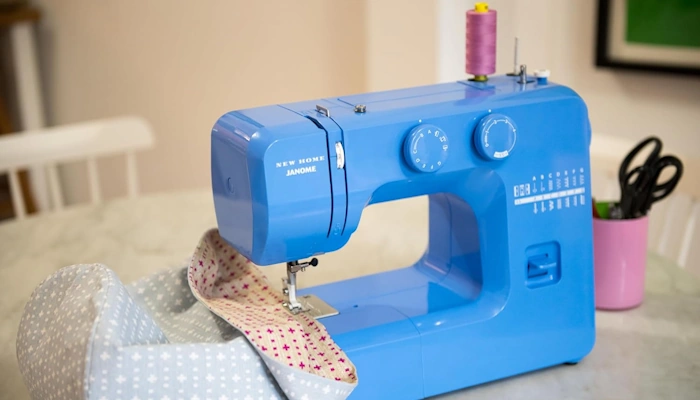
Choosing your first sewing machine can feel confusing because there are so many options, features, and price ranges available. Beginners often end up buying machines that are either too complicated or too limited for their needs.
The right sewing machine should make learning enjoyable, not frustrating or overwhelming. A good beginner machine builds confidence, encourages creativity, and allows room to grow skills over time. Understanding what truly matters helps you avoid costly mistakes and ensures long-term satisfaction.
In this guide, we’ve rounded up the 10 Best Sewing Machines for Beginners that deliver great value, ease of use, and dependable results without breaking the bank.
10 Best Sewing Machines for Beginners 2026
Starting your sewing journey doesn’t mean you have to spend a lot of money on expensive equipment. Today’s beginner sewing machines offer reliable performance, easy controls, and essential features at affordable prices. Whether you’re learning basic stitches, hemming clothes, or working on simple DIY projects, choosing the right budget-friendly sewing machine can make learning easier and more enjoyable.
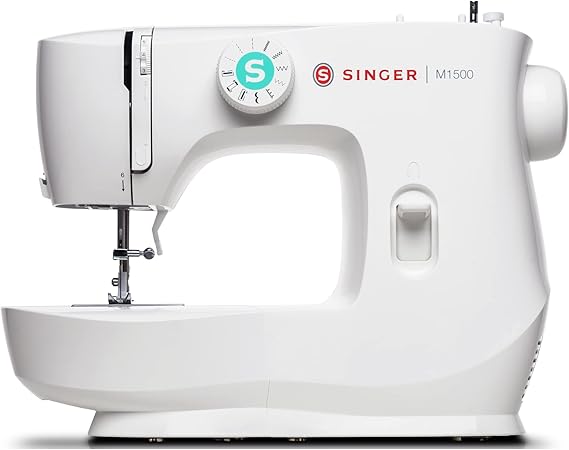
1. SINGER M1500 – Lightweight & Portable Sewing Machine
SINGER M1500 – Lightweight & Portable Sewing Machine
Beginner‑friendly mechanical sewing machine with 57 stitch applications, preset settings and LED light. Ideal for everyday mending and simple crafts.
Check PriceWhy it stands out
A true entry-level SINGER machine that keeps things simple: preset stitch settings, basic accessories, and a compact body that’s easy to store or carry to class.
Key points
- 57 stitch applications (straight, zigzag, blind hem, decorative, 4‑step buttonhole)
- Preset stitch length and width (no complex adjustments)
- Easy stitch selection dial
- LED light over the sewing area
- Accessory kit with feet, needles, bobbins, seam ripper, screwdriver, soft dust cover
- Dimensions: approx. 11.3″ D × 14.6″ W × 7.1″ H
- Weight: ~9.7 lb
- Price: about $149.99
- Rating: 4.4 / 5 (3,100+ ratings)
Pros
- Very beginner‑friendly thanks to preset stitches and clear threading guides
- Lightweight and portable for small spaces or classes
- Solid set of essential stitches for mending, crafts, and basic garments
- Comes with multiple presser feet and basic accessories out of the box
Cons
- Limited room to grow if you want many specialty stitches later
- No advanced features like automatic buttonholes or a large workspace
- More plastic than higher‑end SINGER models; not aimed at heavy daily use
Best for
Beginners who want a simple, reliable first machine for basic sewing, mending, and light craft work without a steep learning curve.
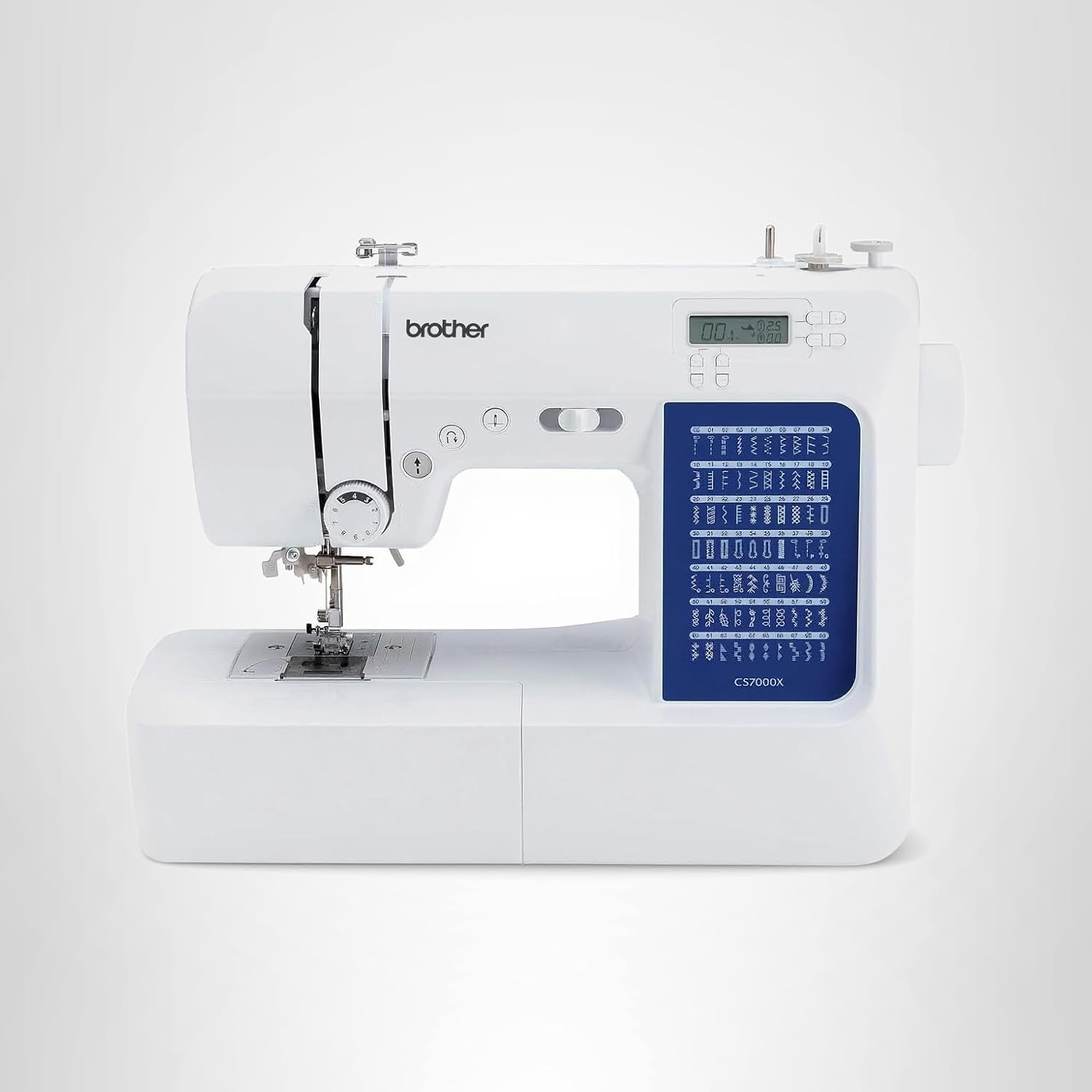
2. Brother CS7000X – Computerized Sewing & Quilting Machine
Brother CS7000X – Computerized Sewing & Quilting Machine
Feature‑rich computerized machine with 70 built‑in stitches, 7 one‑step buttonholes, wide table and multiple presser feet for growing sewists.
Check PriceWhy it stands out
A feature‑rich computerized sewing machine that still manages to be beginner‑friendly, with strong quilting support and lots of included accessories.
Key points
- 70 built‑in stitches (utility, decorative, quilting, heirloom)
- 7 styles of one‑step auto‑size buttonholes
- LCD display for stitch selection and settings
- Improved automatic needle threader
- Wide table included (excellent for quilting and larger projects)
- 10 presser feet + quilt guide + hard protective case
- Dimensions: ~16.3″ W × 6.65″ D × 12.2″ H
- Weight: ~14 lb
- Price: about $279.99
- Rating: 4.6 / 5 (3,400+ ratings)
Pros
- Great value: many stitches, feet, wide table, and hard case included
- Computerized control makes stitch selection and buttonholes easy and consistent
- Large workspace and included quilting accessories are ideal for quilting beginners
- Suitable for both new sewers and more advanced users who want room to grow
Cons
- Higher price than basic mechanical machines
- More features mean a steeper learning curve than ultra‑basic models
- Heavier and bulkier than mini machines or very compact models
Best for
Sewists who want a long‑term machine for both sewing and quilting, and beginners who are serious enough to learn a more capable computerized model.
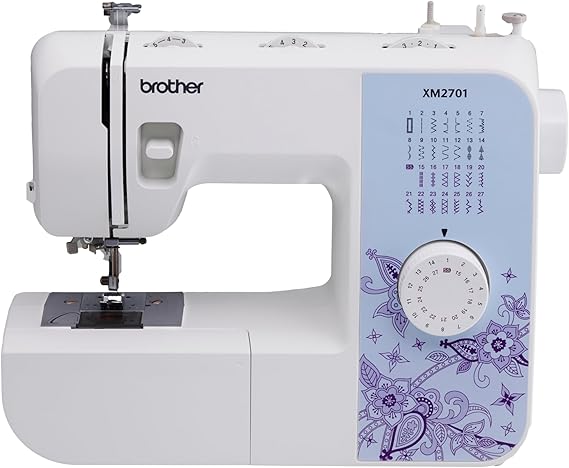
3. Brother XM2701 – Lightweight, Full‑Featured Sewing Machine
Brother XM2701 – Lightweight, Full‑Featured Sewing Machine
Popular beginner model with 27 built‑in stitches, 1‑step buttonhole, automatic needle threader and drop‑in bobbin for garments and home décor.
Check PriceWhy it stands out
A very popular mainstream beginner machine: affordable, full‑featured, and light enough to move around easily.
Key points
- 27 built‑in stitches (including blind hem, decorative, quilting)
- 1‑step automatic buttonholer
- 6 quick‑change presser feet
- Automatic needle threader and jam‑resistant drop‑in bobbin
- Free arm for cuffs, sleeves, and small items
- Dimensions: 5.9″ D × 12.1″ H × 15.3″ W
- Weight: ~12.6 lb
- Price: about $139.99
- Rating: 4.6 / 5 (18,600+ ratings)
Pros
- Excellent balance of price, features, and ease of use
- 27 stitches cover most everyday needs without overwhelming beginners
- Drop‑in bobbin and auto needle threader reduce common frustrations
- Backed by Brother’s 25‑year limited warranty
Cons
- Not designed for heavy‑duty fabrics on a regular basis
- Fewer stitches and features than higher‑end computerized models
- Primarily plastic outer body, so not for industrial‑level workloads
Best for
Beginners and casual sewists who want a dependable, easy‑to‑learn first machine with enough versatility for garments, home décor, and simple quilting.
4. Lastempa All‑in‑One Sewing Machine for Beginners
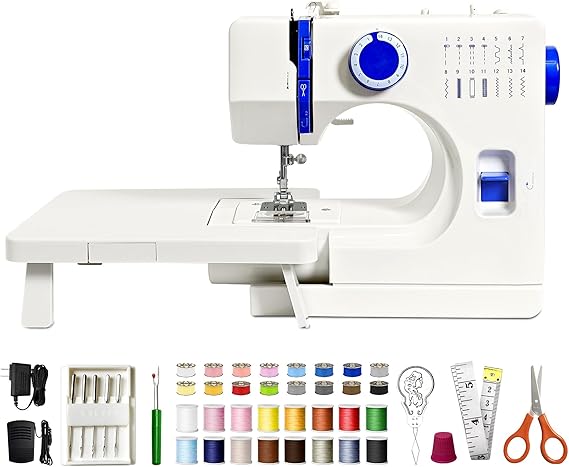
Lastempa All‑in‑One Sewing Machine for Beginners
Compact beginner machine with around 14–16 built‑in stitches, dual speed control, LED light and auto bobbin winder for light crafts and basic mending.
Check PriceWhy it stands out
A compact, lightweight machine targeted squarely at beginners, with dual speed control and a small but useful selection of built‑in stitches.
Key points
- 16 built‑in stitches (product bullets also mention 14; the page emphasizes variety for basic and decorative needs)
- Dual speed control (high/low) with foot pedal option
- Auto bobbin winder and built‑in LED light
- Weighs only about 5.49 lb
- Dimensions: 11.2″ × 5.3″ × 9.7″
- Power source: AC
- Price: about $119.98
- Rating: 4.2 / 5 (≈21 ratings)
Pros
- Very lightweight and compact—easy to store or travel with
- Dual speed and simple controls make it approachable for new sewists
- LED light and small footprint suit tight workspaces
- Good for basic mending, crafts, and learning core skills
Cons
- Far fewer user reviews than big‑brand machines (less long‑term track record)
- Limited stitches and accessories compared to mainstream models
- Not intended for heavy fabrics or intensive daily sewing
Best for
New sewists who want a small, portable machine for light projects and simple repairs, rather than a long‑term heavy‑duty workhorse.
5. SINGER M3330 – Navy/Metallic Blue Sewing Machine
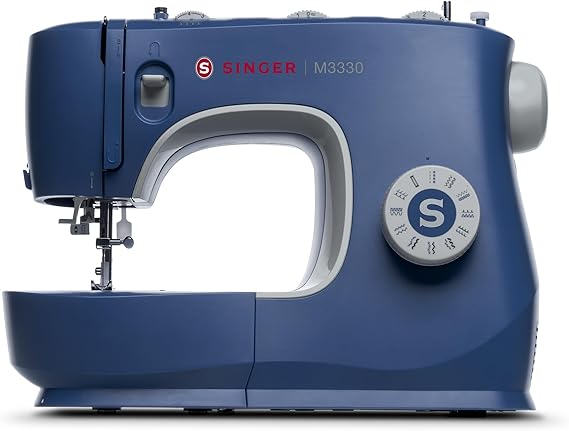
SINGER M3330 – Navy / Metallic Blue Sewing Machine
Mechanical machine with 23 built‑in stitches (97 stitch applications), 1‑step buttonhole and adjustable stitch length/width – a capable step‑up beginner option.
Check PriceWhy it stands out
A beginner‑friendly SINGER with more stitch options than the M1500, packaged in an eye‑catching blue body and accessory kit.
Key points
- 23 built‑in stitches delivering 97 stitch applications
- 1‑step buttonhole
- Adjustable stitch length and width
- Built‑in needle threader
- Free arm and LED light
- Accessory kit with multiple presser feet (general purpose, buttonhole, zipper, button sewing, etc.)
- Dimensions: 16.97″ × 8.86″ × 13.39″
- Weight: ~11.8 lb
- Price: about $189.99
- Rating: 4.3 / 5 (2,600+ ratings)
Pros
- More stitch variety and customization than very basic mechanical machines
- Simple 1‑step buttonhole adds convenience for garments
- Good mix of utility, stretch, and decorative stitches
- Designed to be straightforward for beginners but flexible enough to grow with
Cons
- Mechanical controls only—no computerized conveniences
- Mid‑range price; not the cheapest entry machine
- Still not ideal for very thick or heavy fabrics on a regular basis
Best for
Beginners who like mechanical simplicity but want more stitch options and a slightly more capable machine than the most basic SINGER models.
6. Stoigeld QEV505 – Portable Beginner Sewing Machine
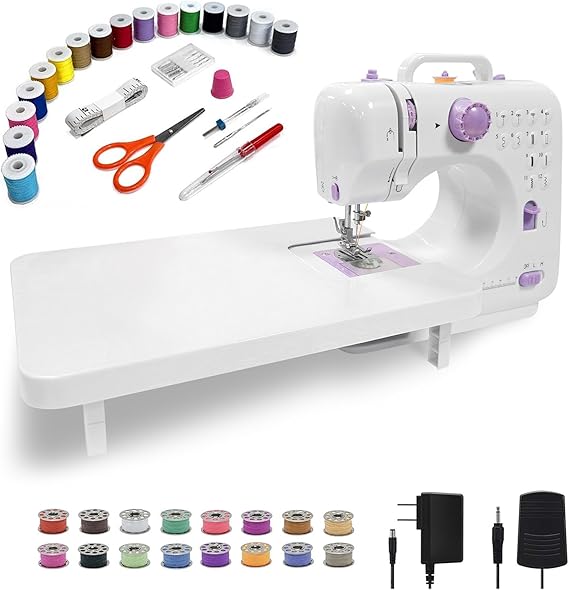
Stoigeld QEV505 – Portable Beginner Sewing Machine
Mini sewing machine with 12 stitches, dual speed, extension table and LED light, designed for kids and new sewists focusing on safety and portability.
Check PriceWhy it stands out
A mini beginner machine with a strong emphasis on kid safety, giftability, and portability, including an extension table for added stability and workspace.
Key points
- 12 built‑in stitches
- Dual speed (high/low) with DC power supply
- Designed with safety and eco‑friendly materials in mind
- Includes extension table, built‑in LED light, and thread cutter
- Mini‑size, space‑saving footprint (10.5″ × 4.7″ × 10″, ~5.5 lb)
- Marketed as ideal for children and beginners
- Price: about $64.98
- Rating: 4.7 / 5 (≈85 ratings)
Pros
- High rating with strong emphasis on safety for younger users
- Extension table and LED light improve usability on a small machine
- Very portable and easy to store in small spaces or dorms
- Comes as a gift‑ready kit with accessories and appealing packaging
Cons
- Limited stitch and feature set compared to full‑size machines
- Focused on light duty; not for heavy fabrics or big projects
- Primarily plastic construction may not handle intensive use
Best for
Children and absolute beginners who need a small, safe, gift‑style machine for learning, crafts, and very light sewing.
7. Janome Blue Couture – Easy‑to‑Use Sewing Machine
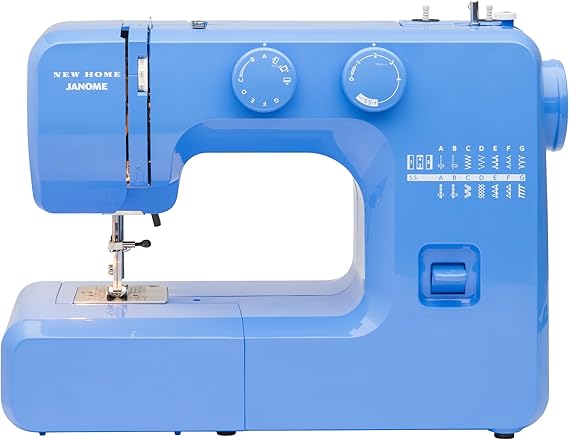
Janome Blue Couture – Easy‑to‑Use Sewing Machine
Beginner‑friendly Janome with 15 stitches, 4‑step buttonhole and interior metal frame, backed by clear manuals and tutorial videos.
Check PriceWhy it stands out
A well‑built beginner machine from a respected brand, with an interior metal frame and clear instructional support (manual, quick start guide, and videos).
Key points
- 15 built‑in stitches + 4‑step buttonhole
- Adjustable stitch length and width
- Front‑loading bobbin system with visible bobbin diagram
- Heavy‑duty interior metal frame
- LED sewing space light
- Approx. max speed 800 stitches per minute
- Dimensions: 7″ × 16″ × 12″
- Weight: ~12 lb
- Price: about $159.00
- Rating: 4.5 / 5 (1,200+ ratings)
Pros
- Sturdier interior build than many budget machines
- Simple mechanical controls with enough stitches for most starter projects
- Strong instructional support (guides + YouTube tutorials) tailored to beginners
- Suitable for garments, home décor, and light quilting
Cons
- Front‑loading bobbin can be a bit less intuitive for some beginners than drop‑in styles
- Fewer stitches than some similarly priced computerized options
- No advanced features like automatic buttonholes
Best for
Beginners who want a solid, long‑lasting machine from a major brand and who appreciate clear, structured tutorials.
8. Rxmeili Portable Mini Electric Sewing Machine
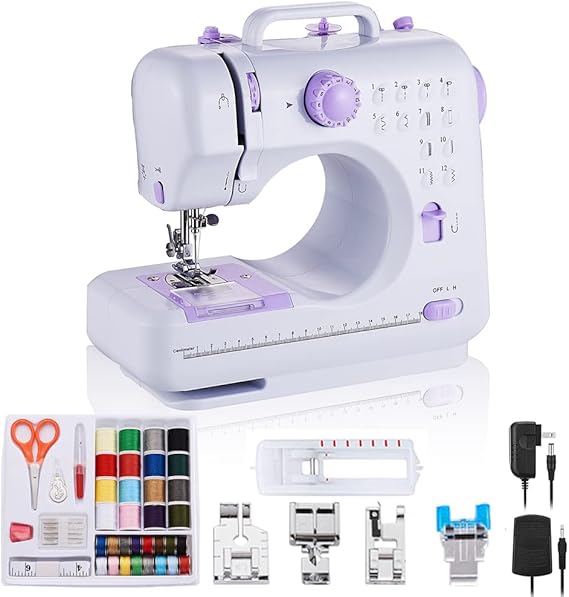
Rxmeili Portable Mini Electric Sewing Machine
Ultra‑portable 12‑stitch mini machine with 2‑speed control, foot pedal and dual power (adapter or AA batteries) for quick repairs and small projects.
Check PriceWhy it stands out
A compact, dual‑power mini machine aimed at beginners and children, offering 12 basic stitches and a very small footprint.
Key points
- 12 built‑in stitches
- 2‑speed operation
- Foot pedal plus button control
- Dual power: AC adapter or 4 AA batteries
- Built‑in light and storage drawer
- Dimensions: ~5.9″ D × 12.2″ W × 11.8″ H; ~4.98 lb
- Material: ABS plastic
- Price: varies by region, typically budget‑friendly
- Rating: around 3.8–3.9 / 5 in various listings
Pros
- Very portable and lightweight
- Dual power options make it useful for travel or spaces without easy outlets
- Simple controls suitable for kids and first‑time users
- Handy for quick repairs, crafts, and very small projects
Cons
- Mixed reviews on durability and performance over time
- Not suitable for thick fabrics or intensive sewing
- Entry‑level build quality; can feel toy‑like compared with major brands
Best for
People who want a low‑cost, ultra‑portable machine mainly for occasional mending and very light sewing, and who accept some trade‑offs in robustness.
9. Verdanika Beginner Sewing Machine – 12‑Stitch Portable
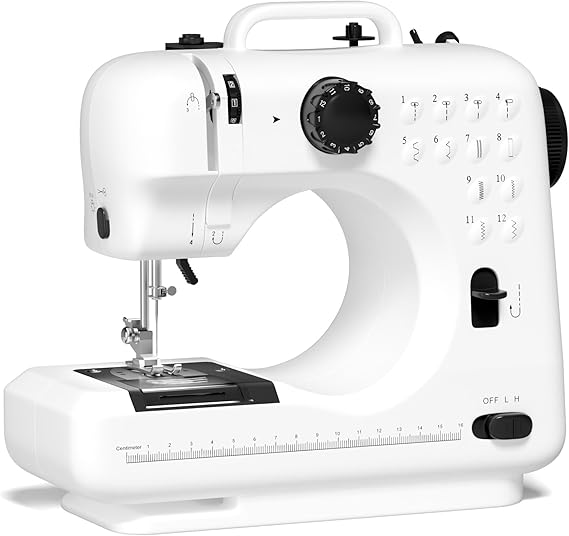
Verdanika Beginner Sewing Machine – 12‑Stitch Portable
Compact 12‑stitch machine with 2‑speed control and starter accessories, suited to beginners and hobbyists working on light projects.
Check PriceWhy it stands out
A compact, 12‑stitch mini machine marketed as powerful enough for a range of fabrics while still being simple and portable.
Key points
- 12 built‑in stitches
- 2‑speed control
- Foot pedal plus button operation
- Includes a starter kit (thread spools, scissors, needle kit, etc.)
- Dimensions: 12.2″ × 11.8″ × 5.91″
- Power source: AC, electric
- Price: about $59.99
- Rating: 4.2 / 5 (71 ratings)
Pros
- Ultra‑portable and compact for travel or small apartments
- Comes with starter accessories so you can sew out of the box
- Designed to be easy for beginners with clear guides for stitch selection and tension
- Good value price point for an all‑in‑one mini kit
Cons
- 12 stitches limit versatility vs. full‑size machines
- Not intended for heavy fabrics or frequent long sessions
- Lower brand recognition compared to Singer/Brother/Janome
Best for
Beginners and hobbyists who want a small, inexpensive machine to learn basics and handle light projects at home or on the go.
10. LoMoTive Portable Electric Mini Sewing Machine
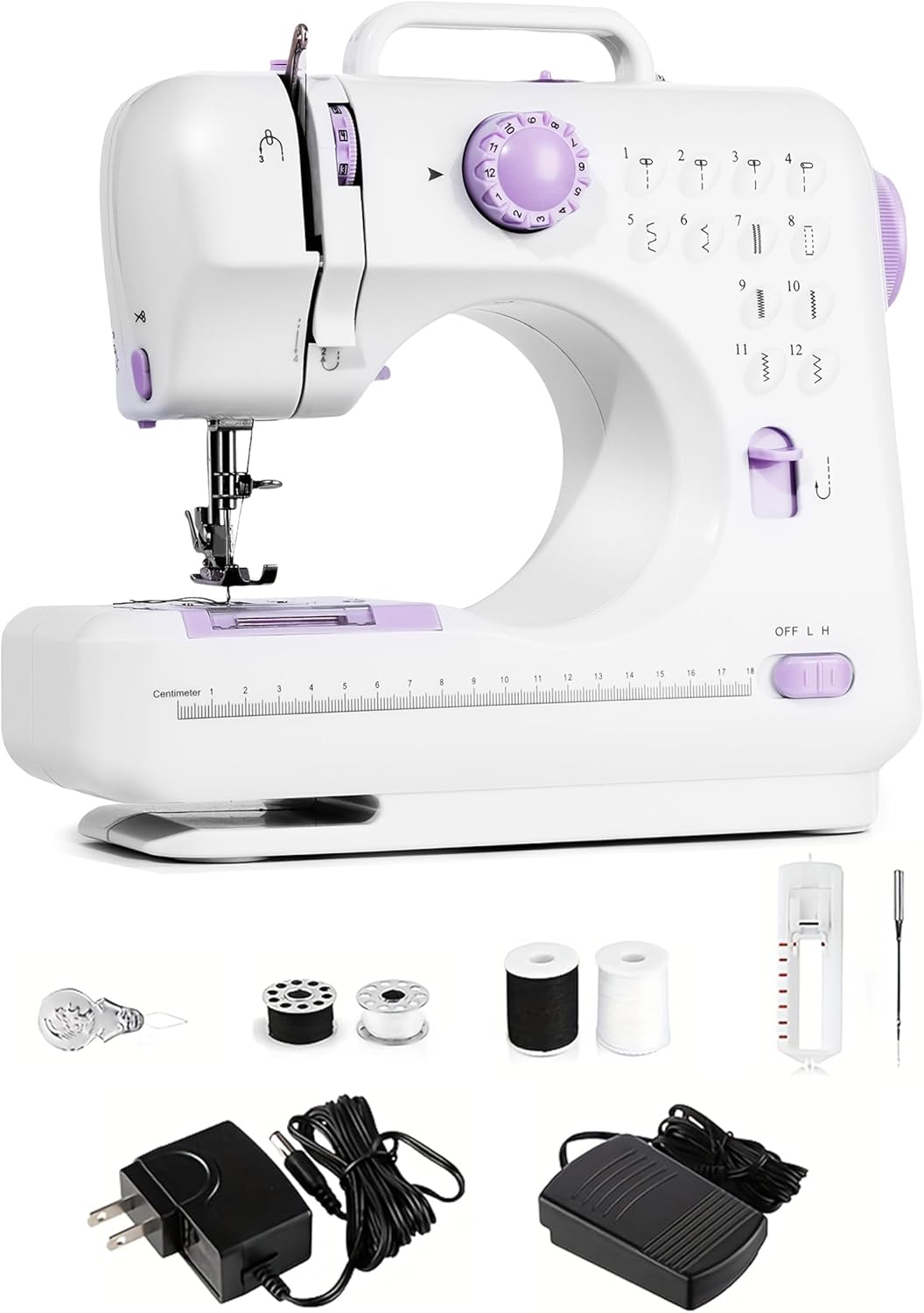
LoMoTive Portable Electric Mini Sewing Machine
Budget‑friendly 12‑stitch mini sewing machine with dual speed and foot pedal, a simple option for learning basics and quick mending.
Check PriceWhy it stands out
A budget‑friendly mini machine with 12 stitches and dual speed, positioned as a beginner‑friendly hand or tabletop machine for quick projects.
Key points
- 12 built‑in stitches
- 2‑speed settings with foot pedal
- Compact, handheld‑style design
- AC/DC power
- Dimensions: 4.76″ × 10.83″ × 10.2″; ~4.73 lb
- Color: Purple
- Price: about $39.99
- Rating: 3.9 / 5 (81 ratings)
Pros
- Very affordable entry point to machine sewing
- Small footprint; easy to carry and store
- Enough stitches for basic repairs and a few decorative options
- Good for trying sewing without a big investment
Cons
- Mid‑range rating suggests some quality or usability issues for a subset of users
- Not as durable or powerful as full‑size machines
- Limited features and accessories compared with branded beginner models
Best for
Absolute beginners or occasional users looking for a cheap, compact machine mainly for learning basics and quick fixes, not for heavy or long‑term work.
What Beginners Should Know Before Buying a Sewing Machine
1. Determine Your Sewing Goals Before Buying
Before choosing a sewing machine, it is important to understand what you plan to sew. Some beginners only want to handle basic repairs like hemming pants or fixing seams, while others want to create garments, home décor, or crafts. If quilting or embroidery interests you, you may need a machine with extra features or expandability. Buying based on future goals prevents early upgrades. A clear purpose helps narrow down options and avoids overpaying for unnecessary features.
2. Understand the Different Types of Sewing Machines
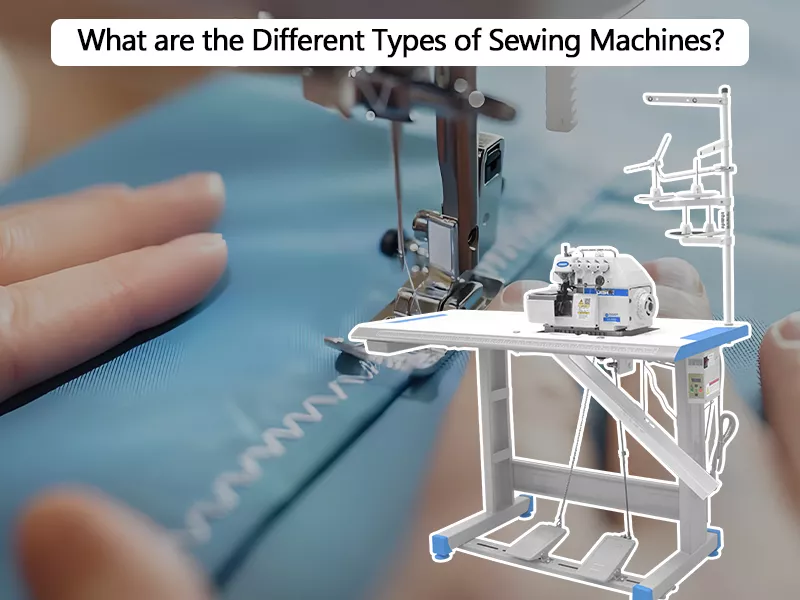
Mechanical Sewing Machines
Mechanical sewing machines are controlled using dials and knobs rather than digital screens. They are straightforward, durable, and easy to understand, making them ideal for absolute beginners. These machines usually handle basic stitches well and are less likely to malfunction. Because they lack complex electronics, repairs are often simpler and cheaper. Mechanical machines are excellent for learning the fundamentals of sewing without distractions.
Computerized Sewing Machines
Computerized machines use digital controls and push-button stitch selection. Many beginners find them easier because stitch tension, length, and width are often adjusted automatically. These machines provide smoother stitching and consistent results. While they cost more, they reduce guesswork and speed up learning. They are ideal for beginners who want convenience and plan to grow their skills.
3. Essential Features Every Beginner Should Look For
Built-In Stitches
A beginner sewing machine does not need hundreds of stitches, but basic utility stitches are essential. Straight stitch, zigzag stitch, and buttonhole stitches cover most beginner projects. Decorative stitches are nice but not mandatory at the start. Having too many stitches can confuse new users. Focus on quality and usability rather than quantity.
Easy Threading and Bobbin System
Threading frustration is one of the biggest reasons beginners give up sewing. Look for machines with clearly marked threading paths and top-loading bobbins. Automatic needle threaders save time and reduce eye strain. A smooth bobbin system prevents jamming and uneven stitching. These features make practice sessions more enjoyable and productive.
4. Ease of Use and Learning Curve
A beginner machine should feel intuitive from day one. Simple stitch selection, clear labeling, and logical controls reduce learning stress. Machines with instructional manuals, diagrams, and video tutorials are extremely helpful. Some modern machines even offer on-screen guidance. An easy learning curve keeps beginners motivated and confident as they improve their skills.
5. Durability and Build Quality
Build quality plays a major role in how long a sewing machine lasts. Machines with metal internal frames are generally more stable and durable. Lightweight plastic models may vibrate or struggle with thicker fabrics. Reputable brands often offer better warranties and customer support. Investing in solid construction ensures smoother sewing and fewer repairs over time.
6. Accessories and Expandability
Beginner sewing machines should include essential accessories such as multiple presser feet, needles, bobbins, and seam rippers. An extension table is useful for larger projects like quilts or curtains. Machines that support additional presser feet allow skill expansion later. Expandability prevents outgrowing the machine too quickly. These extras enhance versatility without needing a full upgrade.
7. Price Range and Budget Expectations
Beginner sewing machines generally range from affordable to mid-range prices. Budget models work well for simple repairs and light projects but may lack durability. Mid-range machines offer better stitch quality, stability, and convenience features. Expensive machines are usually unnecessary for beginners unless embroidery is involved. Choosing value over hype ensures long-term satisfaction.
8. Where to Buy and What to Avoid
Buying from trusted retailers ensures genuine products and warranty coverage. Avoid extremely cheap machines with poor reviews and limited support. Refurbished machines can be a good option if certified and warrantied. Check return policies in case the machine doesn’t meet expectations. Reliable sellers protect beginners from costly mistakes.
9. Common Beginner Mistakes to Avoid
Many beginners buy machines with too many advanced features they never use. Others choose overly basic machines that limit growth. Ignoring warranty details and customer support can lead to frustration later. Skipping research often results in poor stitching quality. Avoiding these mistakes ensures a smoother learning journey.
FAQs About Choosing a Sewing Machine for Beginners
What type of sewing machine is best for beginners?
A basic mechanical or entry-level computerized sewing machine is best for beginners. These machines are easy to use, affordable, and include essential stitches without overwhelming features.
Is a mechanical or computerized sewing machine better for beginners?
Mechanical machines are great for absolute beginners because they are simple and durable. Computerized machines are also beginner-friendly if you want automatic features like stitch selection and speed control.
How much should a beginner spend on a sewing machine?
Most beginners can find a good sewing machine between $100 and $300. This price range offers reliable performance and enough features to grow your skills.
What features should beginners avoid?
Beginners should avoid machines with too many advanced features, embroidery functions, or complex menus. These can be confusing and unnecessary at the start.
Which sewing machine brands are good for beginners?
Popular beginner-friendly brands include Brother, Singer, Janome, and Baby Lock. These brands are known for reliability and easy operation.
Can a beginner sew thick fabrics like denim or leather?
Yes, but beginners should choose a machine with a strong motor, adjustable presser foot pressure, and the ability to use heavier needles for thick fabrics.
Do beginners need many stitches on a sewing machine?
No, beginners only need basic stitches such as straight stitch, zigzag stitch, and a buttonhole stitch. Extra stitches are optional but not required.
Conclusion:
Choosing the best sewing machines for beginners doesn’t have to be complicated. Focus on ease of use, durability, and essential features rather than advanced options you may not need yet. A reliable beginner sewing machine will help you build confidence, learn faster, and enjoy sewing without frustration. By selecting a machine that matches your skill level and projects, you’ll set yourself up for long-term success and a more enjoyable sewing experience.
