
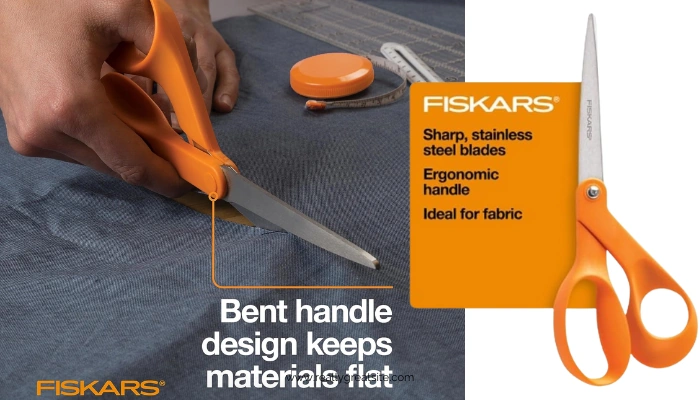
A good pair of sewing scissors is one of the most important investments you can make as a sewist. Sharp, well‑balanced shears make cleaner cuts, more accurate seams, and a far more enjoyable sewing experience. In this article, you’ll learn what to look for in sewing scissors and discover 10 of the best sewing scissors from Amazon.
Browse our top 10 recommended sewing scissors from Amazon below
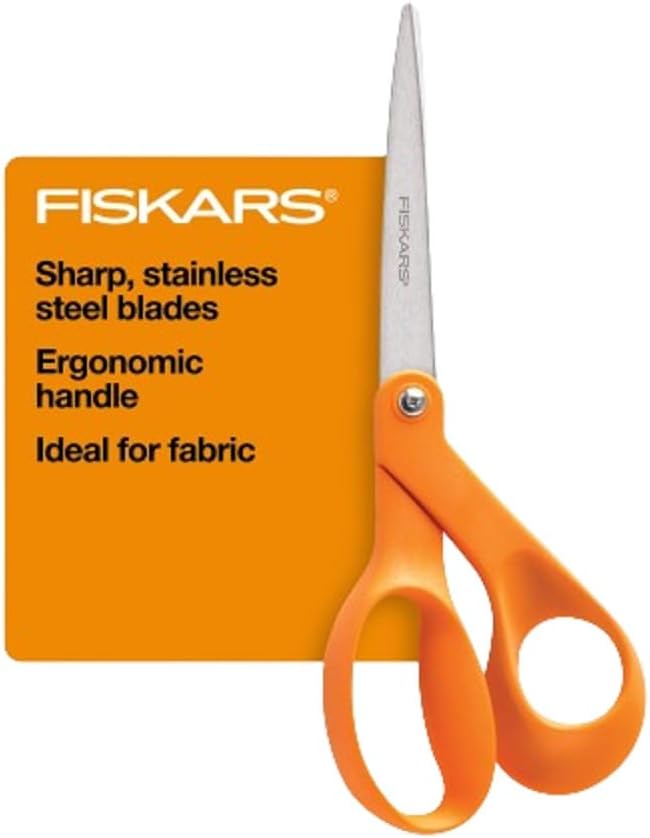
1Fiskars 8″ Original Orange‑Handled Stainless Steel Scissors
Classic, all‑purpose scissors with precision‑ground stainless steel blades and an ergonomic orange handle. Ideal for fabric, paper, and craft projects, delivering smooth, clean cuts to the tip.
Check Price
2Gingher 8″ Dressmaker’s Fabric Scissors (Alicia)
Premium forged dressmaker’s shears with long, knife‑edge blades that cut multiple fabric layers cleanly. The bent handle keeps fabric flat on the table, perfect for tailoring and dressmaking.
Check Price
3Kai 5210 8″ Dressmaking Shears
Professional dressmaking shears with hardened stainless steel blades and soft ergonomic handles. Designed to cut smoothly through multiple layers, including denim and heavier fabrics, with minimal hand fatigue.
Check Price
4SINGER ProSeries Sewing Scissors Bundle (3‑Piece Set)
Value bundle with 8.5″ heavy‑duty fabric shears, 4.5″ nano‑tip detail scissors, and 5″ thread snips. Tempered stainless blades and comfort‑grip handles cover everything from cutting yardage to precise trimming.
Check Price
5Wteehn 8″ Professional Fabric Scissors
Ultra‑sharp heavy‑duty sewing shears made from galvanized manganese steel, hand‑forged for durability. The adjustable pivot and ergonomic handle give you precise, powerful cuts through thick fabric and leather.
Check Price
6LIVINGO 10″ Multipurpose Heavy Duty Scissors
Full‑length titanium‑coated stainless blades built for strength and long‑lasting sharpness. Excellent for fabric, upholstery, cardboard, and DIY materials, with ergonomic rings for a secure, comfortable grip.
Check Price
7Kai 7250 10″ Professional Tailoring Shears
High‑carbon, hardened stainless‑steel shears designed for demanding tailoring work. The 10″ blades slice cleanly through thick, difficult fabrics and multiple layers, making them a favorite of serious sewists.
Check Price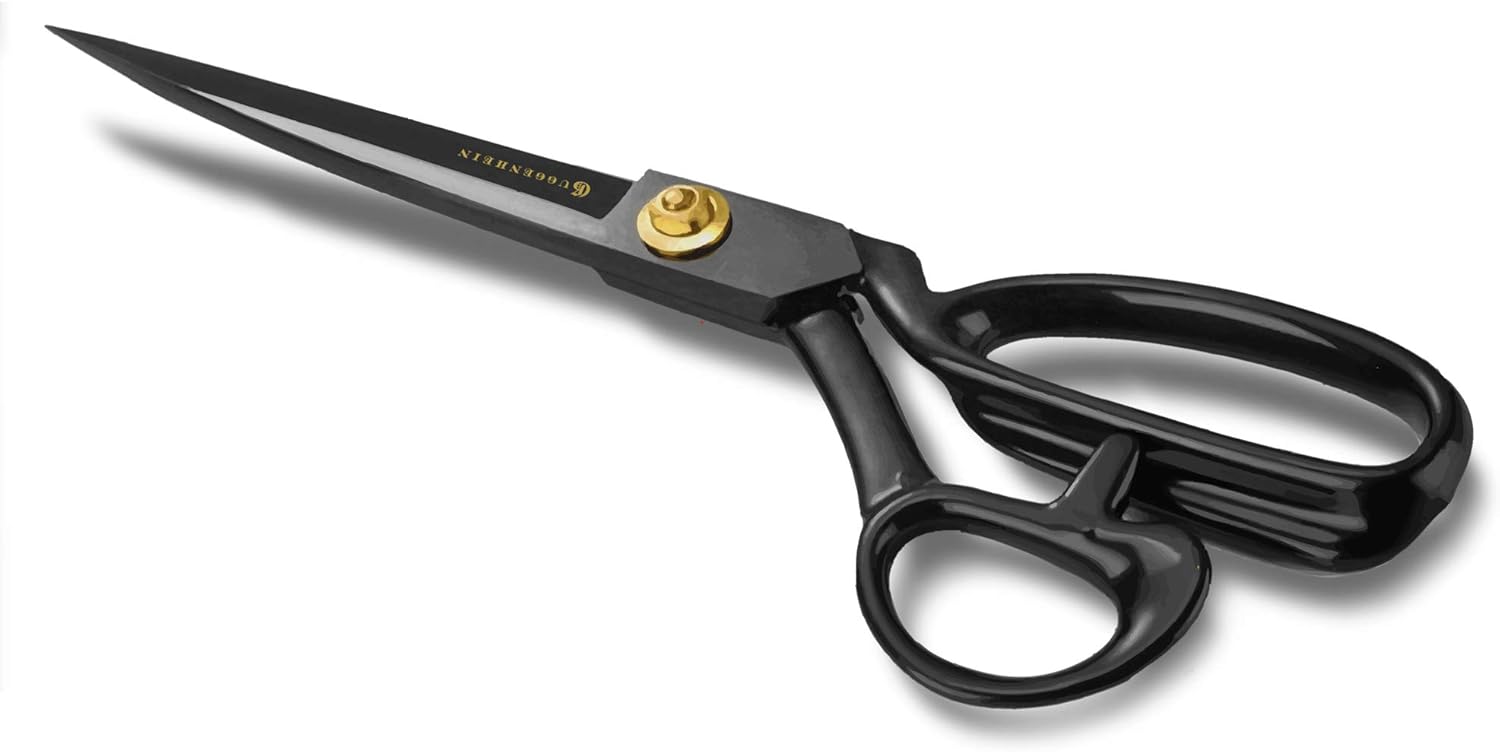
8Guggenhein IX 9″ Professional Tailor Shears
High‑carbon steel tailor shears engineered for clean, accurate cuts on all fabrics. Ergonomic handles and a tri‑sharpened edge give tailors, quilters, and serious hobbyists smooth, controlled cutting.
Check Price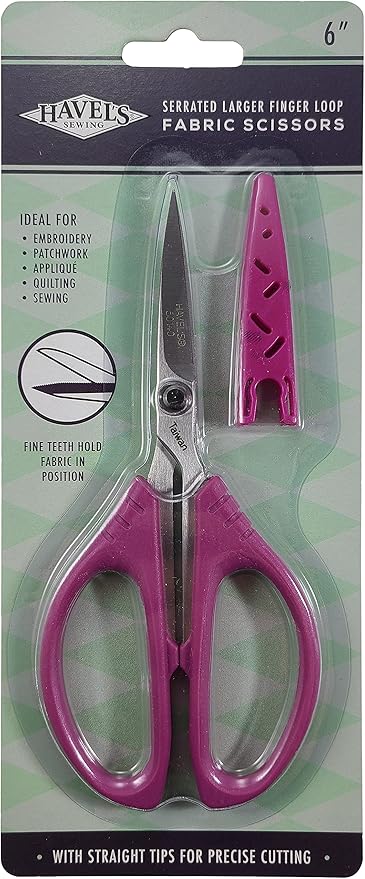
9Havel’s 6″ Serrated Large Finger Loop Fabric Scissors
Micro‑serrated blades hold fabric firmly for controlled, even cuts, while the enlarged finger loops add comfort. Excellent for applique, fine detail work, and accurate trimming on quilting and sewing projects.
Check Price
10Kai 7280 11″ Professional Tailoring Shears
Long 11″ professional shears made from high‑carbon hardened stainless steel, ideal for very thick or multiple fabric layers. Built for power and precision in tailoring, upholstery, and heavy sewing work.
Check PriceWhat Makes Sewing Scissors The Best?
When choosing the best sewing scissors, consider:
1. Blade Material
- High‑carbon or hardened stainless steel holds a sharp edge longer and resists rust.
- Titanium‑coated blades improve durability and reduce friction.
2. Blade Length
- 8″ shears – Standard for dressmaking and general sewing.
- 9–10″ shears – Better for cutting longer lengths of fabric and heavier materials.
- 11″ shears – Ideal for upholstery, canvas, or multi‑layer cutting.
- Short blades (around 6″) – Great for appliqué, trimming, and detail work.
3. Handle Design & Comfort
- Ergonomic, soft‑grip handles reduce strain on hands and wrists during long cutting sessions.
- Bent handles keep fabric flat on the table for straighter, more accurate cuts.
- Large finger loops are especially useful for precision work or larger hands.
4. Intended Use
- Everyday sewing & crafts – Lighter 8″ all‑purpose shears.
- Professional tailoring – Heavier, forged shears with longer blades.
- Detail work/appliqué – Smaller, often serrated blades for control.
- Heavy fabrics/leather – Heavy‑duty, high‑carbon or manganized steel scissors.
5. Quality & Longevity
A well‑made pair of sewing scissors should last for years if you:
- Reserve them for fabric only (no paper, cardboard, or plastic).
- Store them safely (with a sheath or in a protected drawer).
- Sharpen or service them when you notice tugging or chewing through the fabric.
How to Pick the Right Sewing Scissors for You
- Beginner / Home Sewist
Choose a reliable 8″ or 8.5″ pair with comfortable handles and good reviews. All‑purpose scissors like Fiskars or a starter set from SINGER are excellent options. - Quilter or Dressmaker
Opt for premium 8–10″ dressmaking shears (Kai or Gingher) that can handle multiple layers and precision cutting. - Professional Tailor / Upholsterer
Invest in 10–11″ high‑carbon shears that effortlessly slice through thick fabric, interfacing, and multiple layers. - Detail‑oriented Crafter
Add smaller serrated scissors to your toolkit for appliqué, snipping curves, and trimming seams.
Best Sewing Scissors: Full Reviews of 10 Top Picks
A great sewing project starts with a clean cut. That’s why a good pair of sewing scissors is one of the most important tools in any sewing room. Below you’ll find 10 carefully chosen sewing scissors from Amazon, each with a short, practical review so you can quickly decide which one is right for you.
1. Fiskars 8″ Original Orange‑Handled Stainless Steel Scissors
Fiskars 8″ Original Orange‑Handled Stainless Steel Scissors
Why they’re good: A classic for a reason. Fiskars 8″ are excellent all‑purpose scissors: sharp, comfortable, and affordable. They handle most garment fabrics easily and are perfect for beginners or casual sewists.
Check PricePros
- Reliable quality at a low price.
- Comfortable handle for left or right hand (specific models).
- Good for both fabric and light craft/paper work.
Cons
- Not ideal for very heavy fabrics or lots of layers.
- Edge will dull faster if used heavily on paper and cardboard.
Best for: Beginners and home sewists who want one main pair that can do almost everything.
2. Gingher 8″ Dressmaker’s Fabric Scissors (“Alicia”)
Gingher 8″ Dressmaker’s Fabric Scissors (Alicia)
Why they’re good: Gingher is a premium brand, and this 8″ dressmaker model has knife‑edge blades that stay sharp a long time. The bent handle keeps the fabric flat on your table for extremely accurate cuts.
Check PricePros
- Forged, high‑quality steel that holds an edge.
- Great for multiple layers, from cotton to light denim.
- Excellent control and balance for tailoring.
Cons
- Heavier than budget scissors.
- Higher price, but meant to last years.
Best for: Serious sewists, quilters, and dressmakers who value precision and longevity.
3. Kai 5210 8″ Dressmaking Shears
Kai 5210 8" Dressmaking Shears – ergonomic soft handles, durable steel
Why they’re good: These shears combine professional cutting performance with a relatively modest price. The blades are very sharp and glide through fabric, including some thicker materials.
Check PricePros
- Hardened stainless steel blades stay sharp.
- Soft, comfortable handle for extended cutting.
- Cuts smoothly through several layers.
Cons
- Handle shape may feel snug for very large hands.
- Overkill if you only sew occasionally with light cottons.
Best for: Home and semi‑pro sewists who want professional‑grade performance in an 8″ size.
4. SINGER ProSeries Sewing Scissors Bundle (3‑Piece Set)
SINGER ProSeries Sewing Scissors Bundle (3‑Piece Set)
Why they’re good: You don’t just get one pair, you get a full cutting kit: large fabric shears, small detail scissors, and thread snips. This covers almost every cutting task at a very reasonable total cost.
Check PriceIncludes
- 8.5″ heavy‑duty fabric shears.
- 4.5″ nano‑tip detail scissors.
- 5″ thread snips.
Pros
- Great value for a three‑tool bundle.
- Tempered stainless blades on all three.
- Ideal starter set for a new sewing room.
Cons
- Not as refined or long‑lasting as top‑tier brands like Gingher or Kai.
- Thread snips may feel basic compared to premium snippers.
Best for: Beginners and intermediate sewists who want a complete cutting set in one purchase.
5. Wteehn 8″ Professional Fabric Scissors
Wteehn 8" Heavy Duty Fabric Scissors – zinc manganese steel blades
Why they’re good: These are heavy‑duty sewing shears made from galvanized manganese steel. They’re designed to tackle thick fabrics and even some leather while still being manageable at 8″.
Check PricePros
- Very sharp, strong blades suitable for tough materials.
- Adjustable pivot screw to fine‑tune blade tension.
- Good upgrade if your basic scissors struggle with thickness.
Cons
- Heavier than typical 8″ scissors.
- More power than you need if you only cut thin cotton or quilting cotton.
Best for: Crafters who work with canvas, faux leather, or multiple thick layers.
6. LIVINGO 10″ Multipurpose Heavy Duty Scissors
Livingo 10" Multipurpose Heavy Duty Scissors – titanium-coated blades
Why they’re good: These 10″ scissors have titanium‑coated blades and are designed as multi‑purpose heavy‑duty tools. They’re not just for fabric; they also handle cardboard, interfacing, and more.
Check PricePros
- Long blades make cutting long, straight seams faster.
- Titanium coating improves durability and reduces friction.
- Strong enough for many household and DIY materials.
Cons
- Longer length can feel awkward for very precise small cuts.
- Overkill if you only sew small garments and never cut heavy materials.
Best for: DIY sewists and crafters who want one tough pair that can handle fabric plus other household cutting tasks.
7. Kai 7250 10″ Professional Tailoring Shears
Kai 7250 10" Professional Tailoring Shears – high-carbon hardened steel
Why they’re good: A favorite of tailors, these 10″ Kai shears are built for precision and power. They slice through thick fabrics and multiple layers without chewing or dragging.
Check PricePros
- High‑carbon hardened steel retains an excellent edge.
- Long blades are ideal for smooth, straight cuts in garment pieces.
- Very clean cutting on wool, suiting, and heavier textiles.
Cons
- Heavier and more expensive than basic shears.
- Not necessary if you only occasionally sew.
Best for: Tailors, serious dressmakers, and advanced hobbyists cutting coats, suits, and structured garments.
8. Guggenhein IX 9″ Professional Tailor Shears
Guggenhein IX Professional Tailor Shears 9" – precision fabric shears
Why they’re good: These 9″ shears offer a good middle ground: long enough for tailoring, but not as large and heavy as 10–11″ models. High‑carbon construction and a bent handle give great accuracy.
Check PricePros
- Ideal length for many quilters and dressmakers.
- Tri‑sharpened edge gives very smooth cutting.
- Good mix of price and performance.
Cons
- Not as widely known a brand as some competitors.
- Slightly heavier than many 8″ models.
Best for: Quilters and dressmakers who want a step‑up scissor without going to the largest heavy‑duty shears.
9. Havels 6″ Serrated Large Finger Loop Fabric Scissors
Havel’s 6" Serrated Large Finger Loop Scissors – applique and detail work
Why they’re good: These are specialty detail scissors. The micro‑serrated blades gently grip the fabric, which is perfect for appliqué, curves, trimming, and precise work where slippage is a problem.
Check PricePros
- Serrated edge prevents slipping on delicate fabrics.
- Large finger loops add control and comfort.
- Great for trimming seam allowances and curves.
Cons
- Too short for cutting big pattern pieces or long seams.
- Not meant to replace a full‑sized dressmaker shear.
Best for: Quilters, appliqué lovers, and anyone who needs high‑control small scissors alongside their main shears.
10. Kai 7280 11″ Professional Tailoring Shears
Kai 7280 11" Professional Tailoring Shears – heavy-duty fabric cutting
Why they’re good: These are serious heavy‑duty shears. At 11″ with high‑carbon hardened steel, they make cutting thick and multiple‑layer fabrics faster and easier, often with a single pass.
Check PricePros
- Extremely powerful long blades.
- Perfect for upholstery, canvas, and bulky fabrics.
- Built to last with professional use.
Cons
- Large and heavy; not ideal for tight spaces or detailed work.
- More expensive and more tool than casual sewists need.
Best for: Professional tailors and upholsterers cutting heavy fabrics and large pieces regularly.
FAQs: Best Sewing Scissors
What size sewing scissors should I buy first?
For most people, an 8″–8.5″ pair is the best starting point. This size is versatile enough for cutting pattern pieces, trimming seams, and general sewing work without feeling too large or heavy.
What’s the difference between regular scissors and sewing scissors?
Sewing scissors (or fabric shears) have sharper, higher‑quality blades designed specifically for fabric. Many also have bent handles so the lower blade can stay flat on the table, giving cleaner, more accurate cuts. Regular household scissors are usually softer steel, dull faster, and can snag or chew fabric.
Which blade material is best for sewing scissors?
Look for:
- Stainless or high‑carbon steel – strong, durable, and holds a sharp edge.
- Titanium‑coated blades – add extra wear resistance and a smoother glide, especially useful on thick or tough materials.
All of the recommended scissors in the article use one of these higher‑quality options.
Can I use my sewing scissors on paper?
You can, but you shouldn’t. Paper, cardboard, and plastic will dull the blades quickly. To keep your sewing scissors sharp, reserve them for fabric cutting, thread, and patterns only, and use a separate pair for paper.
Do I need more than one pair of sewing scissors?
Ideally yes:
- One main pair (8″–10″) for cutting pattern pieces and yardage – e.g., Fiskars 8″ Original, Gingher 8″, Kai 5210, or Kai 7250.
- One small/detail pair (around 6″) for trimming curves and appliqué – e.g., Havels 6″ serrated.
Bundles like the SINGER ProSeries 3‑piece set give you large shears, detail scissors, and thread snips in one purchase.
When should I choose heavy‑duty or tailor’s shears instead of regular fabric scissors?
Choose heavy‑duty or tailoring shears (9″–11″) if you:
- Often cut denim, canvas, upholstery, faux leather, or multiple layers.
- Sew structured garments like coats, suits, or tailoring projects.
Models like Kai 7250, Kai 7280, Wteehn 8″ Professional, and LIVINGO 10″ Heavy Duty are built for this type of work.
How do I keep my sewing scissors sharp?
- Use them only on fabric and thread.
- Wipe blades after use to remove lint and moisture.
- Store them in a sheath or protected drawer.
- Have them professionally sharpened or serviced when you notice dragging, chewing, or uneven cuts.
Premium brands like Gingher and Kai are designed to be sharpened and last many years if cared for properly.
What are serrated sewing scissors used for?
Serrated blades (like Havels 6″ serrated scissors) have tiny teeth that grip the fabric, preventing it from slipping. They’re ideal for:
- Appliqué
- Trimming curves and tight areas
- Slippery or delicate fabrics that tend to slide
They complement, rather than replace, your main dressmaking shears.
Which scissors are best for beginners on a budget?
Great beginner‑friendly options include:
- Fiskars 8″ Original Orange‑Handled Scissors – affordable, reliable, and versatile.
- SINGER ProSeries Bundle – gives you large shears, detail scissors, and thread snips in one value set.
Both offer good performance without the higher price of premium tailoring shears.
Which sewing scissors are best for professionals or serious hobbyists?
For serious sewists, tailors, and quilters, consider:
- Gingher 8″ Dressmaker’s Scissors (“Alicia”) – forged, long‑lasting, and very precise.
- Kai 5210 (8″), Kai 7250 (10″), or Kai 7280 (11″) – high‑carbon professional shears that excel on multiple layers and heavier fabrics.
- Guggenhein IX 9″ Tailor Shears – a strong mid‑size option for dressmaking and quilting.
Pair one of these with a Havels 6″ serrated detail scissor and you’ll have a truly professional cutting setup.
Conclusion: Choosing the Best Sewing Scissors for Your Needs
The “best” sewing scissors are the ones that match how and what you sew:
- If you’re just starting out or mainly sew light to medium‑weight fabrics, an affordable, well‑reviewed pair like the Fiskars 8″ Original or the SINGER ProSeries bundle will comfortably cover most of your projects.
- If you sew frequently, cut multiple layers, or work with denser materials, upgrading to premium dressmaking shears, such as Gingher 8″, Kai 5210, or Guggenhein IX 9“, will give you smoother cuts, better control, and longer blade life.
- For tailoring, upholstery, or heavy fabrics, longer, high‑carbon tailor’s shears like the Kai 7250 and Kai 7280, plus a strong 8″–10″ heavy‑duty pair like Wteehn 8“ or LIVINGO 10″, make cutting thick layers faster and less tiring.
- For fine work, appliqué, trimming curves, and precise seam work, adding a small serrated pair like Havels 6″ gives you accuracy you can’t get from large shears alone.
Whichever models you choose from the top 10 list, the key is to treat your sewing scissors as dedicated tools: keep them sharp, use them only on fabric, and store them safely. With even a modest amount of care, a good pair of sewing scissors will transform your cutting experience and help every project, from simple hems to tailored jackets, look cleaner and more professional.

Hi, I’m Safura. What are you sewing today? If you have any questions or need help with anything related to sewing, please feel free to ask. I’m always here to assist you with sewing-related issues.
Disclosure: As an Amazon Associate, we earn from qualifying purchases at no extra cost to you. Our posts are created with AI tools and human editing.