
Denim is one of the toughest fabrics to sew, and using the wrong thread can quickly turn a simple project into a frustrating experience. From broken stitches to uneven seams, denim demands a thread that can handle thick layers, constant friction, and long-term wear. That’s why choosing the best thread for denim is just as important as selecting the right needle or machine settings.
Whether you’re hemming jeans, repairing denim jackets, sewing bags, or working on heavy-duty DIY projects, the right thread ensures durability, clean stitches, and professional-looking results. In this guide, we’ve carefully reviewed reliable sewing threads designed to perform well on denim and other heavy fabrics. Each product below is evaluated in detail so you can confidently choose the best option for your sewing needs.
1. Gutermann Professional Jeans Denim Thread
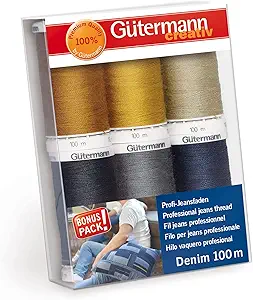
Thread Material & Strength
This thread is made from high-quality polyester, engineered specifically for denim and heavy fabrics. Polyester offers excellent tensile strength, meaning it can withstand the stress that thick denim seams create without snapping or fraying.
Performance on Denim Fabric
In practical use, this thread handles multiple denim layers with ease. It glides smoothly through the fabric, even when sewing seams, hems, and reinforced areas such as pockets. The thread maintains consistent tension, which helps prevent skipped or uneven stitches.
Stitch Appearance & Durability
The stitches look clean, balanced, and slightly raised, ideal for both construction seams and visible topstitching. Once sewn, the thread holds up well against repeated washing and daily wear, making it a strong choice for garments.
Best Use Cases
- Jeans construction and repairs
- Denim jackets and skirts
- Heavy seams and stress points
Pros
- Strong polyester construction
- Designed specifically for denim
- Smooth stitching with minimal breakage
Cons
- Limited color options compared to general-purpose threads
2. Coats & Clark S976-4665 Thread (125 Yards)
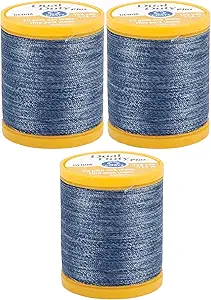
Thread Material & Strength
This thread is a durable polyester option suitable for medium to heavy fabrics. It balances strength with flexibility, allowing it to perform well under the pressure of denim seams.
Performance on Denim Fabric
The thread feeds evenly through most sewing machines and handles standard denim layers without excessive tension adjustments. It performs best for seams, repairs, and reinforcement stitching rather than heavy decorative topstitching.
Stitch Appearance & Durability
Stitches remain smooth and uniform, even after extended use. The thread resists abrasion well, which is important when sewing denim that experiences constant friction.
Best Use Cases
- Denim alterations and hemming
- Reinforcing seams
- Everyday denim sewing projects
Pros
- Reliable strength for denim
- Smooth machine performance
- Suitable for frequent sewing
Cons
- Not as thick as specialty topstitch threads
3. Connimonet Colors Strength Polyester Threads
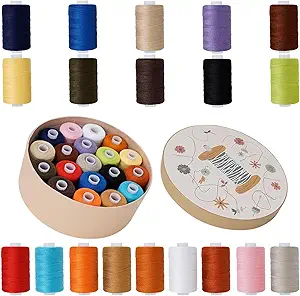
Thread Material & Strength
This polyester thread set focuses on strength and color variety. The material provides good resistance against breakage when working with heavier fabrics like denim.
Performance on Denim Fabric
It performs well for seams and layered denim projects. The thread maintains consistent feeding and works smoothly with properly sized denim needles.
Stitch Appearance & Durability
Stitches appear neat and even, with colors that hold well over time. The polyester construction helps the thread withstand repeated washing without weakening.
Best Use Cases
- Denim crafts and accessories
- Medium-weight denim projects
- Sewing where color matching matters
Pros
- Strong polyester build
- Multiple color options
- Good for layered seams
Cons
- Slightly thinner than dedicated jeans threads
4. Gutermann Thread Set – Assorted Shades
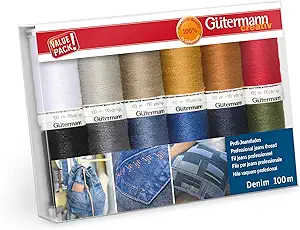
Thread Material & Overall Quality
This thread set is made from premium polyester, known for its balance of strength, flexibility, and long-term durability. The fibers are tightly spun, which helps the thread maintain consistent thickness throughout stitching. For denim projects, this consistency is essential because uneven thread can lead to skipped stitches or tension problems.
Performance on Denim Fabric
When used on denim, this thread performs reliably across single and multiple layers. It handles seams, hems, and reinforced areas smoothly when paired with the correct needle size (90/14 or above). While it is not a dedicated topstitch thread, it still manages standard denim seams without fraying or snapping under pressure.
Stitch Quality & Wear Resistance
The stitches appear clean and balanced, with good seam integrity even after repeated movement and washing. Polyester’s resistance to abrasion makes this thread suitable for denim garments that experience frequent wear, such as jeans and jackets.
Best Use Cases
- Denim garments and alterations
- Medium-weight jeans and skirts
- Sewing projects requiring color flexibility
Pros
- Consistent thread thickness
- Strong enough for regular denim sewing
- Wide range of usable colors
Cons
- Not thick enough for bold decorative topstitching
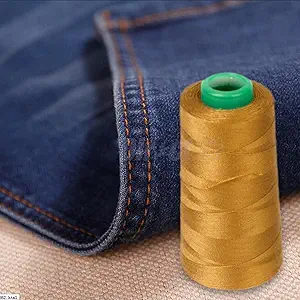
5. WellieSTR Polyester Sewing Thread for Canvas
Thread Material & Strength
This is a heavy-duty polyester thread designed for thick fabrics such as canvas and denim. The thread is noticeably stronger than general-purpose options and is built to handle high tension and dense seams without breaking.
Performance on Denim Fabric
On denim, this thread excels in demanding areas like waistband seams, bag handles, and layered hems. It feeds steadily through the machine and performs well even when sewing through multiple layers of thick denim.
Stitch Appearance & Durability
The stitches are firm and secure, offering excellent seam strength. Because of its durability, this thread is well-suited for denim items that will be exposed to stress, weight, or repeated use.
Best Use Cases
- Heavy denim bags and accessories
- Workwear and utility clothing
- Reinforced denim seams
Pros
- Extremely strong and durable
- Ideal for thick denim layers
- Long-lasting stitch performance
Cons
- Requires correct tension adjustment
- Slightly stiff for lightweight denim
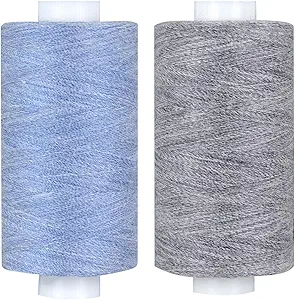
6. Simthread Denim Thread for Jeans (2-Pack)
Thread Material & Strength
This polyester thread is specifically engineered for denim sewing. It has higher tensile strength than standard sewing threads, allowing it to withstand the stress created by thick seams and rigid fabric.
Performance on Denim Fabric
It works smoothly on both straight seams and reinforced stitching. The thread maintains stability at higher sewing speeds and shows minimal lint buildup, which helps keep the machine running smoothly.
Stitch Appearance & Durability
Stitches are slightly more visible than regular thread, making it suitable for jeans-style seams. Once sewn, the thread holds firmly and maintains seam strength after washing and daily wear.
Best Use Cases
- Jeans construction and repair
- Denim hems and seams
- Medium to heavy denim projects
Pros
- Designed specifically for denim
- Strong and reliable stitching
- Good seam definition
Cons
- Limited color selection
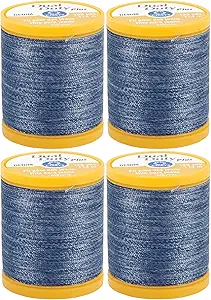
7. Coats & Clark S976-4665 Thread (Alternate Color)
Thread Material & Quality
This polyester thread offers the same dependable construction as other variants in the series, with a focus on strength and smooth feeding. The alternate color makes it useful for matching darker or washed denim tones.
Performance on Denim Fabric
It handles denim seams efficiently, especially for alterations and repairs. The thread feeds evenly and works well with standard denim needle sizes.
Stitch Appearance & Longevity
The stitches remain uniform and secure. Polyester’s resistance to abrasion helps the seams hold up over time without fraying.
Best Use Cases
- Denim repairs
- Hemming and alterations
- Everyday denim sewing
Pros
- Reliable performance
- Smooth machine compatibility
- Durable polyester fibers
Cons
- Not intended for heavy decorative stitching
8. Connecting Threads 100% Cotton Thread
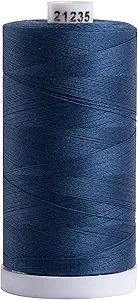
Thread Material & Characteristics
This is a high-quality cotton thread, offering a softer finish compared to polyester. Cotton threads are often chosen for natural-fiber projects and provide a traditional look.
Performance on Denim Fabric
While cotton thread is not as strong as polyester, it still performs well on medium-weight denim when used correctly. It’s best suited for projects where flexibility and a natural feel are preferred.
Stitch Appearance & Durability
Stitches blend well into denim and give a classic finish. However, cotton thread may wear faster on high-stress seams compared to polyester.
Best Use Cases
- Vintage-style denim garments
- Light to medium denim
- Projects prioritizing natural fibers
Pros
- Soft, natural finish
- Good stitch appearance
- Easy to work with
Cons
- Less durable than polyester
- Not ideal for heavy stress points
9. Blue Thread for Sewing
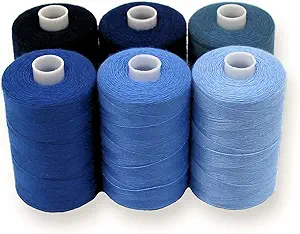
Thread Material & Strength
This polyester thread offers solid strength and color consistency, making it suitable for denim projects where color matching is important.
Performance on Denim Fabric
It handles seams and hems well and feeds smoothly through most sewing machines when paired with appropriate needles.
Stitch Appearance & Durability
The color holds well, and the stitches remain intact after repeated washing. Polyester fibers help resist fraying.
Best Use Cases
- Color-matched denim seams
- Jeans repairs
- Decorative yet functional stitching
Pros
- Strong polyester build
- Consistent color
- Smooth stitching
Cons
- Single color option
10. Connimonet Assorted Polyester Thread for Quilting
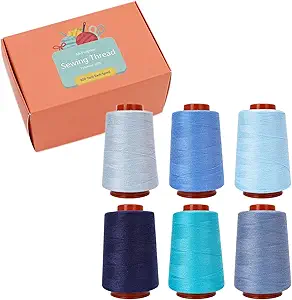
Thread Material & Strength
This polyester thread offers reliable strength and flexibility. While designed for quilting, it performs well on denim when strength and consistency are required.
Performance on Denim Fabric
It handles medium to heavy denim seams effectively, especially when tension is adjusted properly.
Stitch Appearance & Durability
Stitches are smooth and durable, with good resistance to wear and washing.
Best Use Cases
- Denim crafts
- Layered fabric projects
- Utility stitching
Pros
- Strong polyester fibers
- Smooth machine feeding
- Durable seams
Cons
- Not specialized for topstitching
Why Choosing the Right Thread for Denim Matters
Denim is a dense, tightly woven fabric that puts much more stress on thread than lightweight materials. When sewing denim, the needle repeatedly penetrates thick layers, seams often overlap, and finished garments are exposed to constant friction, stretching, and washing. Using a weak or incorrect thread can lead to broken stitches, seam failure, or uneven results that ruin the overall look and durability of the project.
The right thread for denim must offer high tensile strength, abrasion resistance, and consistent thickness. Polyester threads are often preferred because they stretch slightly under pressure instead of snapping, while still holding seams firmly in place. Cotton threads can work for lighter denim or decorative projects, but may wear down faster in high-stress areas like inseams or waistbands.
Choosing the correct thread doesn’t just improve stitch quality; it also protects your sewing machine. Strong, smooth threads reduce lint buildup, prevent tension issues, and allow the machine to run more efficiently. For garments like jeans, jackets, bags, or workwear, the right thread ensures seams stay intact even after repeated use and washing.
How to Choose the Best Thread for Denim
1. Thread Material: Polyester vs Cotton
Polyester thread is generally the best choice for denim sewing. It offers superior strength, flexibility, and resistance to wear. Cotton thread provides a softer, more natural look but lacks the durability needed for heavy seams. For most denim projects, polyester or cotton-wrapped polyester performs best.
2. Thread Weight and Thickness
Denim requires a thicker thread than standard all-purpose sewing. Threads labeled for jeans, heavy-duty sewing, or canvas usually have a higher weight and are better suited for dense fabric. Thicker threads create stronger seams and are less likely to break under tension.
3. Match Thread with Needle Size
Using a strong thread with the wrong needle can still cause problems. Denim projects typically require needle sizes like 90/14 or 100/16 to allow thicker thread to pass smoothly without shredding.
4. Project Type Matters
For construction seams, durability is key. For visible topstitching, you may want a slightly thicker thread for a bold finish. Always choose the thread based on how much stress the seam will endure.
Strong thread and proper needle size matter, but machine power is equally important. Our guide to the best sewing machines for denim explains which models handle thick seams best.
Common Denim Thread Problems & How to Fix Them
Thread Breaking While Sewing
This usually happens when the thread is too weak for the fabric or the needle eye is too small. Switching to a stronger polyester thread and using a larger needle often resolves the issue immediately.
Uneven or Skipped Stitches
Skipped stitches are often caused by inconsistent thread thickness or incorrect tension. High-quality threads with uniform structure help maintain even stitch formation on thick denim.
Fraying or Shredding Thread
Thread shredding can occur when the needle is dull or the thread rubs excessively against dense fabric. Replacing the needle and using a smoother, abrasion-resistant thread reduces friction.
Stitches Popping After Wear
If seams break after wearing the garment, the thread likely lacks elasticity or strength. Polyester threads stretch slightly and are better suited for denim garments that move with the body.
Comparison Table: Best Thread for Denim
| Product Name | Material | Strength Level | Best For | Denim Thickness |
| Gutermann Professional Jeans Thread | Polyester | Very High | Jeans & heavy seams | Heavy |
| Coats & Clark S976-4665 | Polyester | High | Repairs & alterations | Medium–Heavy |
| Connimonet Polyester Threads | Polyester | Medium–High | Crafts & layered seams | Medium |
| Gutermann Assorted Thread Set | Polyester | High | Garments & general denim | Medium |
| WellieSTR Canvas Thread | Polyester | Very High | Bags & utility items | Heavy |
| Simthread Denim Thread | Polyester | High | Jeans construction | Medium–Heavy |
| Connecting Threads Cotton | Cotton | Medium | Light denim projects | Light–Medium |
| Blue Polyester Thread | Polyester | High | Color-matched seams | Medium |
| Connimonet Quilting Thread | Polyester | Medium–High | Utility stitching | Medium |
FAQs About the Best Thread for Denim
What thread weight is best for denim?
For most denim projects, a medium to heavy thread works best. Threads designed for jeans or heavy-duty sewing provide better strength and durability than standard all-purpose thread.
Can I use regular sewing thread on denim?
Regular thread may work on light denim, but it often breaks or wears down on thicker fabric. For long-lasting results, a stronger thread is recommended.
Is polyester thread better than cotton for denim?
Yes, polyester thread is generally better for denim because it resists abrasion, stretches slightly under stress, and lasts longer in high-wear areas.
Do I need special thread for topstitching?
For decorative topstitching, a thicker thread creates a more visible seam. However, standard strong polyester thread works well for structural seams.
Conclusion
Finding the best thread for denim is essential for creating strong, long-lasting seams that hold up under daily wear and washing. Denim’s thickness and density require threads that offer durability, flexibility, and consistent performance. Polyester threads designed for heavy fabrics consistently outperform standard options, especially for garments like jeans, jackets, and workwear.
By choosing the right thread material, matching it with the correct needle size, and adjusting machine tension properly, you can achieve clean stitches and professional-quality results on denim projects. Whether you’re repairing old jeans or sewing new garments from scratch, investing in a strong, reliable thread makes every project smoother, sturdier, and more satisfying.
