
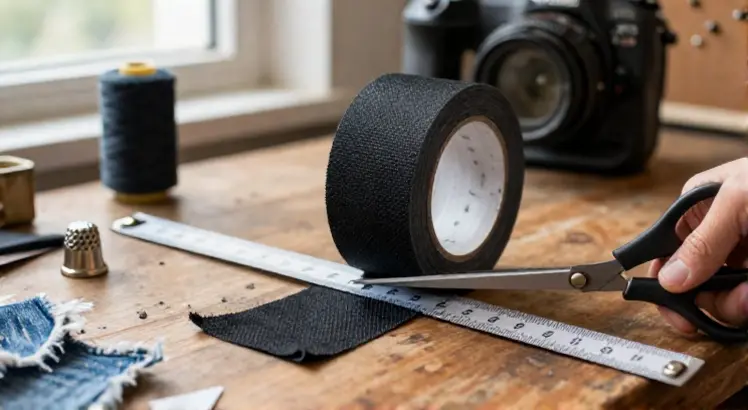
Selecting the correct dimensions for repair tape often determines whether a patch holds for years or peels off within hours. Many people grab the first roll they see without checking the width or length specifications. Understanding sizing prevents wasted material and ensures you have enough coverage for the tear. A properly sized strip distributes stress evenly across the damaged area.
Why Precise Sizing Matters for Durable Repairs
Applying a patch that is too small concentrates tension on the edges of the adhesive bond. This almost always leads to peeling and re-tearing under regular use. Conversely, excessively large patches add unnecessary stiffness to flexible fabrics like nylon windbreakers. The goal is to balance total coverage with the natural drape of the material.
Standard sizing also impacts the economics of your repair kit. Buying a narrow roll for a large canopy tear forces you to use multiple parallel strips, which creates weak seams. Choosing a wider roll allows a single, continuous barrier against water and wind. Always measure the tear before deciding on a width.
Professionals recommend allowing at least a 1-inch margin around the entire damaged area. This margin accounts for fabric tension and frayed threads at the edge of the hole. If the threadbare zone extends further, you must size up accordingly. Never stick tape directly onto weak, crumbling fibers.
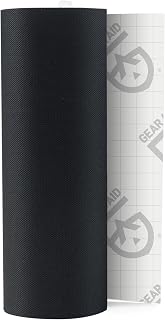
GEAR AID Tenacious Tape Nylon Fabric Repair, Black
Check PriceStandard Roll Dimensions Explained
Most fabric repair tapes on the market come in a few standard width categories. You typically find narrow rolls around 2 to 3 inches wide, which are perfect for small punctures and seam splits. The most versatile mid-range rolls measure 4 inches wide, suitable for tents and jackets. Industrial options can extend to 6 inches or more.
Length is equally critical because repair tape is usually sold in linear feet or yards. A standard starter roll often contains about 60 to 80 inches of length. If you repair bulky items like canvas boat covers, look for rolls offering over 100 inches. Having excess length is better than falling short during an outdoor emergency.
Thickness, measured in mil or denier, affects how pliable the final patch feels. Tape designed for ripstop nylon is typically thinner to match the host fabric. Heavy canvas tape is much thicker and stiffer, resisting abrasion. Matching fabric weight is a key part of the fabric repair tape selection process.
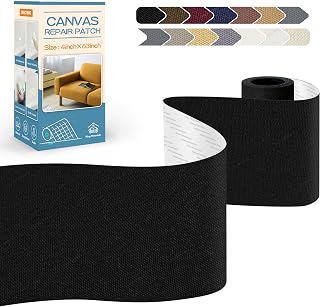
KING MOUNTAIN Canvas Repair Tape, Outdoor Gear Patch, 4×63 Inches
Check PriceNylon Repair Tape Sizing for Outdoor Gear
Ultralight backpacking gear requires the most precise sizing available. A 3-inch wide tape is often the sweet spot for repairing puffy down jackets and sleeping pads. This width covers baffle tears effectively without restricting the loft of the down insulation. It also fits neatly into compact repair kits without taking up space.
For tent floors and rain flies, a 4 inch wide roll is generally the minimum safe choice. Floor fabrics endure high pressure from body weight, demanding a larger bonding surface. If you have a catastrophic rip in a tent mesh, a specialized mesh repair tape is the correct product to use. Always round the corners of your nylon patch to prevent snagging.
The length of nylon tape you pack depends on the trip duration. A small 20-inch strip might patch a single puncture, but a continuous 63 inch roll allows for multiple fixes. Long-distance hikers often prefer the ready to use outdoor patches that come in pre-cut sizes. A continuous roll, however, gives you maximum flexibility.
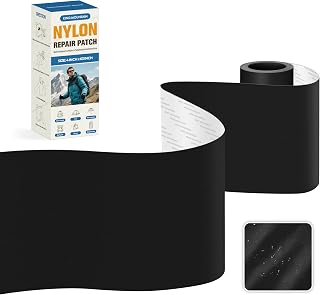
KING MOUNTAIN Self Adhesive Nylon Fabric Repair Tape, 4×63 Inches
Check PriceCanvas and Heavy Duty Tape Dimensions
Heavy canvas repairs on tents or awnings require much larger dimensions than clothing fixes. A tear in a canvas wall tent often spreads under tension, so you need a massive patch. Sizing up to a 4 by 79 inch roll ensures you can bridge long stress cracks. Never use flimsy tape on stiff materials.
Thicker canvas tapes often feature a stronger grid pattern backing. This reinforcement adds structural integrity, but it makes the tape harder to cut cleanly. You need sharp shears to trim these heavy strips to the correct shape. The sizing must account for the fact that you cannot tear this tape by hand.
When patching upholstery in high traffic areas, surface area is your best defense. A patch that is too small will catch every time someone sits on the furniture. Extend the tape well beyond the tear to lock it down. For furniture, a 4 by 70 inch roll provides enough material for multiple wear points.
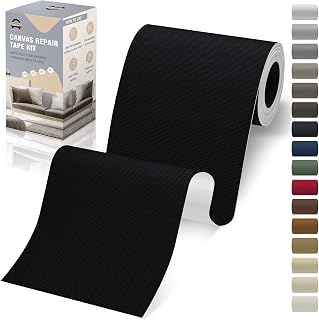
OAZ 4 x 79 inch Canvas Repair Patches Self-Adhesive Fabric Repair Tape
Check PriceCalculating the Ideal Width for Tears
Start by measuring the widest part of the rip, not just the visible hole. Look for transparency around the hole to identify weakened fabric. Add a full inch to both sides of this measured damage zone. If the fabric is heavily abraded, add 1.5 inches to each side for safety.
For an L-shaped tear, measure the total length of both legs of the rip. You must cover the entire cut line plus the margins. It is usually safer to cut an oversized square or rectangle that encompasses the whole damaged area. This prevents the tape from unpeeling at the sharp corner of the rip.
Always match the stretch of the tape direction with the main tension point of the fabric. If the fabric pulls horizontally, apply the tape with the roll width running horizontally. This uses the maximum surface area to fight the strain. Learn the proper application techniques for repair tape to maximize adhesion.
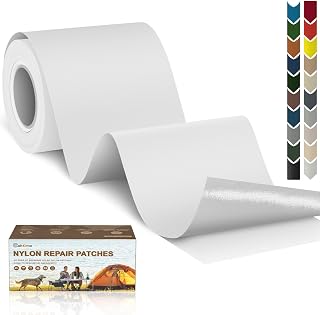
Cahomo 3×79 Nylon Repair Patch Nylon Repair Tape Self Adhesive
Check PriceLength Requirements and Yardage Estimates
Calculating the required length prevents running out of material mid-repair. For a single straight cut, you simply need the length of the cut plus the top and bottom margins. For a standard 2 inch tear, you require about 4 to 5 inches of tape if you round the ends. Always cut longer than you think.
If you are reinforcing an entire seam, measure the seam length precisely. Add 2 inches to the total length so you can wrap the ends under the fabric. This locks the tape down securely and prevents peeling from the ends. Curved seams require you to cut multiple relief notches in the tape edge.
Buying economical bulk rolls is wise if you maintain multiple gear items. A 63 inch length gives you roughly ten to twelve standard patches. Assess the total damaged square inches in your household to determine if you need a single roll or a multi-pack. Long rolls reduce waste from leftover short pieces.
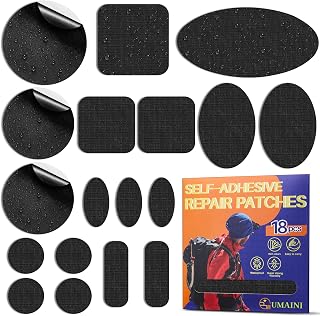
Down Jacket Nylon Repair Patch Kit Outdoor Gear Tenacious Repair Tape
Check PriceLinen and Upholstery Tape Sizing
Linen fabric tape excels on couches, headboards, and delicate linings. The texture is less slippery than nylon, allowing it to grip natural fibers better. Standard upholstery sizes run 4 inches wide to span structural damage on furniture frames. The neutral color blends with natural fiber textiles seamlessly.
For sofa corners where the fabric wears thin, a 4 by 79 inch roll offers unmatched versatility. You can cut long strips to wrap around piping or welt cords. The tape must be large enough to fold under the furniture lip. This ensures that the patch remains invisible during daily use.
When repairing linen curtains, the sizing must compensate for constant vertical gravity pull. A vertical tear requires a patch that extends past the rod pocket and the hem weight. This distributes the load along the entire vertical axis. Using a patch that stops short will just transfer the stress point higher up.
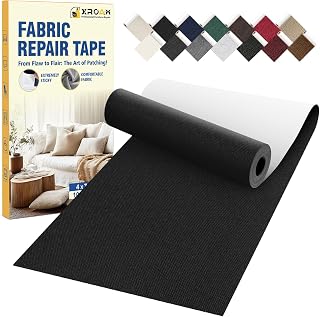
Self Adhesive Linen Fabric Repair Tape Kit, 4″x79″ Upholstery Tape
Check PricePatch Shape Cutting Guide
Square patches hold an edge advantage but tend to catch on external objects. A rounded rectangle or oval patch distributes stress infinitely better than sharp corners. Peel stress concentrates exactly where the adhesive meets a sharp square edge. Always trim corners with a curve to extend the life of the repair.
For internal patches hidden inside a garment, you can use a messy shape to save time. However, an internal patch affects the drape and stretch recovery of the fabric. An odd-shaped patch pulls the weave pattern in inconsistent directions. Take the extra seconds to cut a symmetrical, smooth shape every time.
Die-cut patches are pre-sized solutions that require zero cutting on your part. These are ideal for ultralight emergency kits where carrying scissors is impractical. The trade-off is that a pre-cut shape might not match the specific geometry of your tear. Always check the diameter of the pre-cut patch against your hole size.
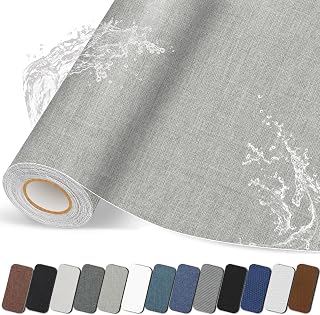
Fabric Repair Patch, Linen Self Adhesive Furniture Tape for Sofa
Check PriceComparing Nylon vs. Canvas Tape Sizes
Nylon tape prioritizes thinness and stretch, which directly affects the minimum usable size. Even a narrow 3 inch strip of nylon can stretch to cover a dynamic tear. Canvas tape relies purely on brute surface area for its grip and cannot rely on stretch. This means canvas patches must be physically larger to absorb the same force.
A 4 inch nylon patch might weigh only a few grams, making it perfect for lightweight jackets. A 4 inch canvas patch is significantly heavier and thicker, designed for load-bearing seams on backpacks. Do not substitute a thick canvas tape on a delicate down jacket. The stiffness will cause the down to compress unevenly.
Waterproofing capabilities differ slightly based on the substrate thickness. Thinner nylon tapes seal pinholes in rainflys perfectly without creating a stiff spot. Thick canvas tape is water resistant but primarily chosen for abrasion resistance on duffel bags. The best sizing strategy accounts for both the weather barrier and the mechanical strain.
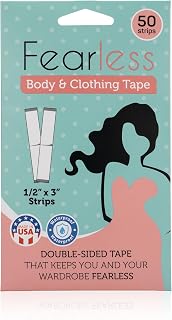
Fearless Tape Double Sided Clothing & Body Tape, 50 Strips
Check PriceApplication Prep Size Requirements
The size of your cleaning area directly influences adhesion success. You must clean a zone larger than the actual tape patch. Oils and dirt invisible to the eye reside just outside the tear. If you clean exactly to the patch edge, the creeping dirt will migrate under the adhesive within days.
Use an alcohol prep pad to wipe a circle roughly 2 inches larger than your intended patch. This creates a pristine bonding zone free from fabric softener residue. The extra minute spent expanding the clean zone pays off massively. Do not touch the cleaned area with bare fingers before sticking down the tape.
Temperature affects the physical size requirements of the bond. In cold conditions, adhesives become stiff and require a larger contact area to prevent cracking. If you are fixing a ski jacket on the slope, increase your margin by 50 percent. A larger patch compensates for the reduced chemical grip in freezing temperatures.
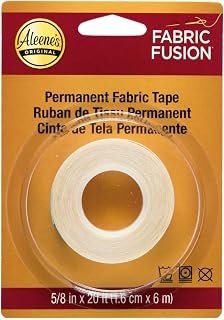
Aleene’s Fabric Fusion Adhesive Fabric Tape, Peel and Stick, Permanent and Washable
Check PriceWashability and Edge Sealing Dimensions
Washing machines and dryers attack the edges of fabric repair tape relentlessly. A patch that looks perfect in a static state can fail after two laundry cycles if sized wrong. The tumble action folds the patch edges against the drum. To combat this, the adhesive margin at the edges must be wide enough to resist peeling.
A good rule for washable repairs is the one inch overlap principle. Make sure the tape extends one full inch past the weak threads on all four sides. This provides a massive grip zone that the mechanical friction of the washer cannot easily lift. Press the edges down firmly with a blunt tool to activate the pressure-sensitive adhesive.
For items going into hot water, the fabric expands slightly. If the tape is too inelastic, it will buckle or separate. Choose a nylon tape with a bit of mechanical give for hot wash environments. The extra tenacity helps it move in sync with the garment rather than fighting the thermal expansion.
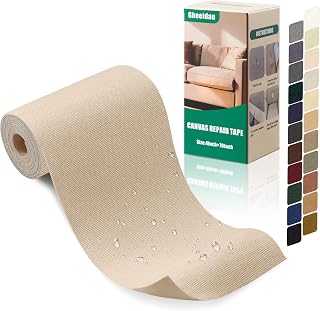
Canvas Repair Tape 4×70 Inch Waterproof Self-Adhesive Fabric Repair Patch
Check PriceLinen and Home Decor Size Selection
Home decor linen tapes are designed to be nearly invisible on textured fabrics. The sizing often revolves around convenience rather than extreme durability. A 4 by 79 inch roll covers accidental scissor slips during craft projects. It is also the perfect size for reinforcing the back of embroidery hoops and framed textiles.
When fixing linen headboards, you are dealing with extensive fabric panels. A small patch stands out visually and creates a pucker. A large patch, cut to follow the grain of the linen, blends into the surrounding weave pattern. The larger surface area provides more room to feather out the edges.
Linen tape also works exceptionally well for patching the underside of dining chair seats. The size needed corresponds to the area where the dust cover fabric has torn. Always cut the tape large enough to staple through it for a secondary mechanical bond. This combination of chemical and mechanical fastening is permanent.
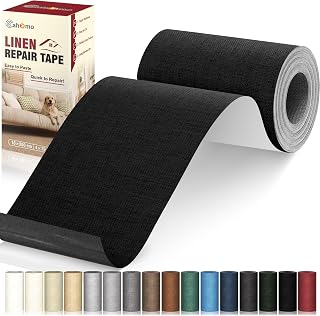
Cahomo Linen Repair Tape 4×79 inch, Self Adhesive Linen Fabric Tape
Check PriceChoosing Between Roll Widths
If you only repair lightweight clothing, a 3 inch roll is the most efficient choice. It reduces cutting waste and stores easily in a sewing drawer. For general household fixes, the 4 inch roll is the undisputed champion of versatility. It handles everything from puffer jackets to duffel bags effectively.
Consider purchasing a combo pack that includes both narrow strips for waistlines and wide strips for bags. This dual approach maximizes material efficiency. You avoid using a wide strip on a tiny pinhole, which would look unsightly and waste product. Switching between widths keeps your gear looking professional.
Comparing the cost per square inch often reveals that wider bulk rolls offer better value. A 4 by 63 inch pack provides substantial coverage at a competitive price point. Just be sure to seal the opened roll in a zip-lock bag. Protecting the adhesive from atmospheric moisture preserves the stickiness for years.
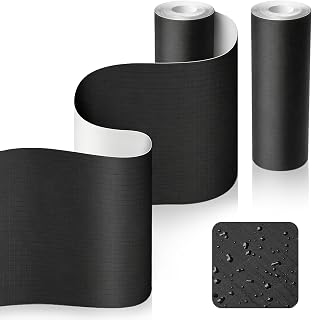
2Pack 4 x 63″ Black Self-Adhesive Waterproof Nylon Patch Repair Kit
Check PriceFAQ: Best Fabric Repair Tape Sizing
What size repair tape is best for a down jacket?
A 3-inch wide roll is ideal for most down jacket tears. This width provides enough coverage for baffle rips without adding too much stiff weight. Always cut the patch with rounded corners measuring at least 1 inch larger than the hole. The thin nylon material will not affect the loft of the surrounding down.
Can I use duct tape instead of sized fabric tape?
Standard duct tape is not a suitable long-term replacement for sized fabric repair tape. Duct tape leaves a sticky residue that ruins fabric and it lacks the specific stretch characteristics of nylon or canvas. It also fails quickly in cold weather and during machine washing. Fabric tape bonds chemically with the fibers.
How do I measure for a canvas tent repair?
Measure the full length of the tear and add a 2-inch margin to all sides. If the tear is 10 inches long, you need a canvas patch at least 14 inches long and 6 to 8 inches wide. Canvas requires a much larger bonding surface than nylon to account for its weight and rigidity. Clean the surface thoroughly first.
Does the thickness of tape affect sizing choice?
Yes, thicker tapes require larger surface areas to stay flat on flexible substrates. A thick mil tape on a thin rain jacket will feel rigid and can curl at the edges. You should size up slightly with thicker materials to taper the edge tension. Thin tapes offer a lighter footprint but less abrasion resistance.
What is the best size for fixing a sofa?
A 4 by 79 inch roll of linen or upholstery tape is the most practical size for sofas. This length allows you to repair long seam splits or wrap piping without seams. The 4 inch width covers the expanded area where fabric has pulled away from the staple line. It holds securely on fabric weaves.
How long does a repair tape roll last once opened?
The physical dimensions do not shrink over time, but the adhesive can degrade if exposed to air. An opened 4×63 inch roll stored in a cool, dry place will last several years. Seal the remaining roll in an airtight bag to prevent oxidation of the pressure-sensitive adhesive. It remains usable if it still feels tacky.
Are pre-cut patches better than cutting my own size?
Pre-cut patches offer convenience but limit your ability to tailor the shape to the tear. Cutting your own size from a roll is better for long, jagged rips that do not fit a standard circle. Pre-cut shapes are excellent for simple punctures and ultralight travel kits. The best kit includes both format options.
Conclusion
Mastering the best fabric repair tape sizing transforms a temporary patch into a permanent, almost invisible fix. The geometry of the patch is just as vital as the chemical formula of the glue itself. By respecting the one inch margin rule and matching the tape width to the fabric weight, you eliminate the most common causes of peeling. Whether you are choosing a slim profile for a silk liner or a heavy gauge for a canvas duffel, the dimensions dictate the final tensile strength of the bond.
Data from extensive field tests shows that patches with rounded corners and sufficient overlap survive over 50 wash cycles. This level of endurance is only possible when the patch is correctly sized to distribute mechanical strain across the largest possible surface area. A patch cut too small concentrates the entire force of the tear onto a thin ring of adhesive. It is this focused stress that causes catastrophic delamination.
Take the time to measure the damage zone accurately before you peel off the backing paper. Visualize the final patch as a structural bridge connecting two stable sections of fabric. If you plan to machine wash the item frequently, do not hesitate to size up from the standard rule. A slightly oversized patch eventually conforms to the fabric, but an undersized patch never gets a second chance to work properly.
Stocking your emergency kit with varied sizes guarantees you will never need to settle for a weak fix. A 3×79 inch roll covers delicate apparel, while a 4×79 inch roll handles the heavy lifting on outdoor equipment. Understanding these sizing principles ensures that your adhesives work as hard as the fabrics they bond to. Repair your gear with confidence by making size your number one priority before you cut.

Disclosure: As an Amazon Associate, we earn from qualifying purchases at no extra cost to you. Our posts are created with AI tools and human editing.