
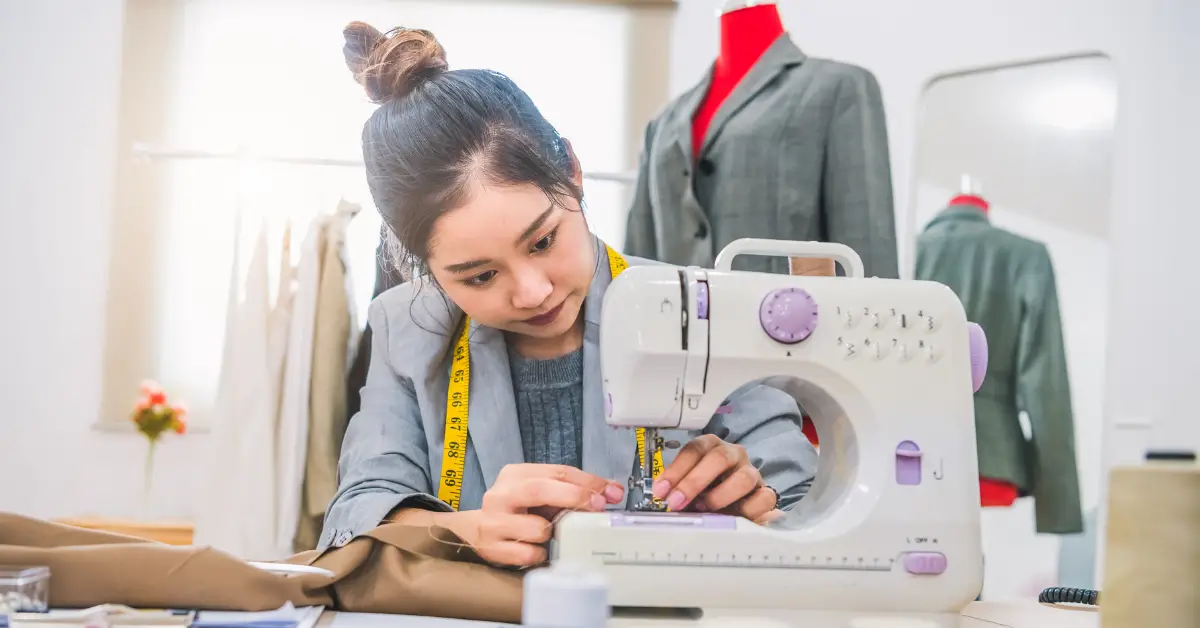
Finding a reliable sewing machine under 100$ can feel overwhelming. Many beginners start with this budget because it seems affordable, but the options range widely in quality, capability, and real‑world usefulness. When someone searches for the best sewing machine under 100$ they’re often looking for a machine that does more than just stitch once or twice. They want something that will help them learn, complete everyday mending, handle basic projects, and last long enough to justify the purchase.
Unlike expensive professional machines, budget models may not offer advanced features, but with the right expectations and context they can still be valuable tools. This guide explains what under‑100$ machines can realistically do, what limitations they have, how to choose wisely based on actual sewing needs, common mistakes buyers make, and how to care for these machines so they last longer.
Let’s explore the top-rated budget models of 2026.
⚠️ Availability Note: This best sewing machine under $100 may sometimes be listed as Currently Unavailable due to demand. Check similar affordable models from Singer or Brother for the same great value.
Brother Sewing Machine
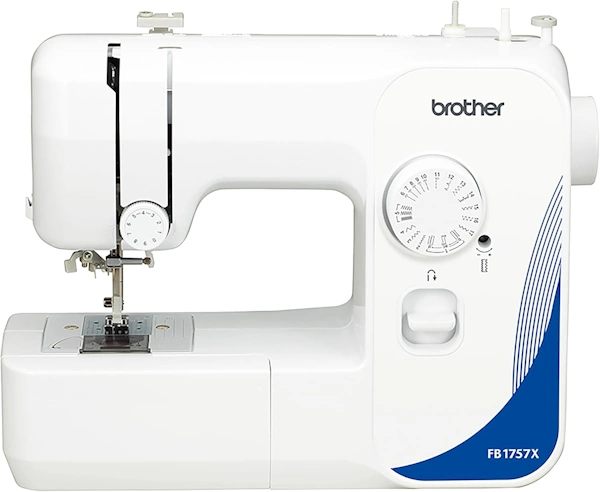
Brother FB1757X Mechanical Sewing Machine
Check Price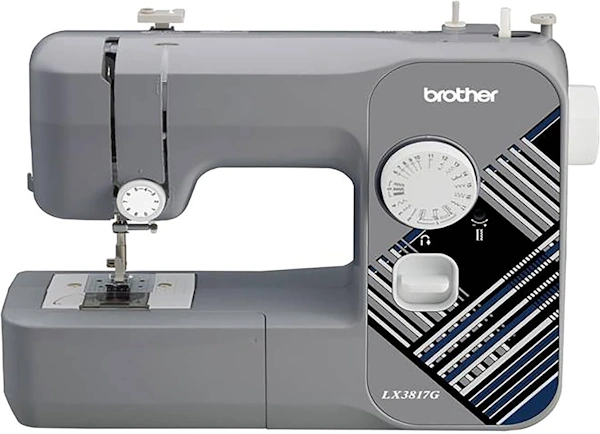
Brother RLX3817G 17-Stitch Sewing Machine
Check PriceSINGER Sewing Machine
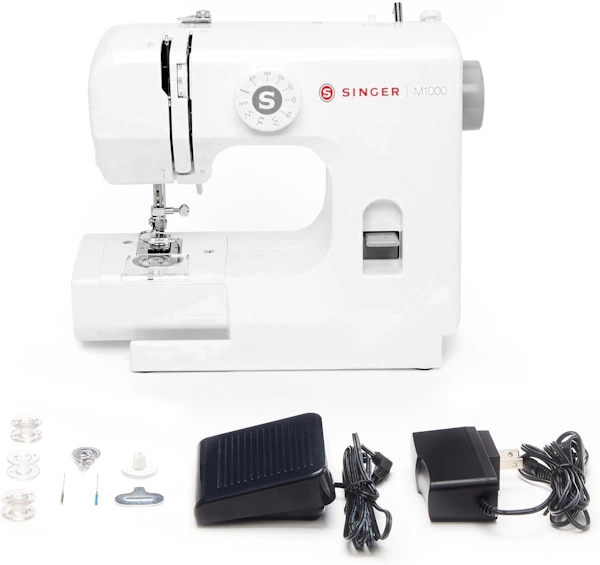
SINGER M1000 Mending Machine Sewing
Check Price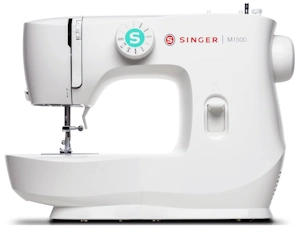
Singer M1500 Essential Sewing Machine
Check PriceWhat You Can Expect from a Sewing Machine Under 100$
A sewing machine under 100$ is typically designed for simple and occasional sewing tasks. These machines are often either compact tabletop models or basic mechanical models with essential stitches. You should expect straightforward operation and limited stitch variety, usually enough for everyday repairs, simple garments, and basic crafting.
In this price range, features like automatic needle threading, adjustable stitch length, and built‑in lighting vary by model. Some machines perform better on lightweight fabrics like cotton or linen, while handling thicker fabrics like denim might require multiple passes or slow stitching. It’s important to match expectations with actual capabilities rather than assume low cost equals low value.
7 Best Sewing Machines Under 100$
1. Singer M1500 Essential Sewing Machine
Best Overall Sewing Machine Under $100
The Singer M1500 brings modern reliability and simplicity at an unbeatable price. It’s perfect for beginners who want essential functions without unnecessary complexity.
Key Features:
- 57 stitch applications for versatile sewing
- LED lighting for bright, shadow-free visibility
- Durable full metal frame
- 4-step buttonhole system
- Front-loading bobbin system
- Compact 5.6-inch workspace
Performance Review
This lightweight yet sturdy model performs best with light to medium fabrics. The preset stitch settings make it incredibly beginner-friendly. It’s quiet, stable, and consistent in stitch quality.
| Feature | Performance Note |
|---|---|
| Stitch Quality | Very consistent |
| Stability | Excellent (metal frame) |
| Ease of Use | Beginner-friendly |
| Lighting | Bright LED illumination |
Value
You’ll also receive around $30 worth of accessories, including multiple presser feet and bobbins. The free arm design is handy for sewing cuffs and collars, and its portability makes it great for small spaces or classes.
✅ Ideal for: Beginners who want a reliable and sturdy starter machine.
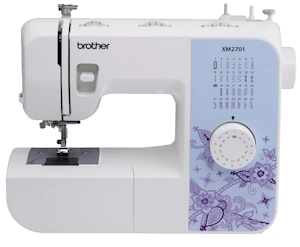
2. Brother XM2701 Sewing Machine
Best for Beginners and Everyday Projects
The Brother XM2701 offers premium features at a budget-friendly price, making it one of the best sewing machines under $100 in 2025.
Key Features:
- 27 built-in stitches with 63 stitch functions
- Automatic needle threader
- Jam-resistant Quick-Set drop-in bobbin
- LED work area
- 6 quick-change presser feet
- 800 stitches per minute
Ease of Use
The automatic threading and simple dial controls make it a dream for beginners. The instructional DVD helps you get started quickly, and the clear bobbin cover lets you easily monitor your thread supply.
Value
You get 3 bobbins, a twin needle, an extra spool pin, and a 25-year limited warranty, rare at this price point.
✅ Ideal for: Beginners who want more stitch options and automated features.
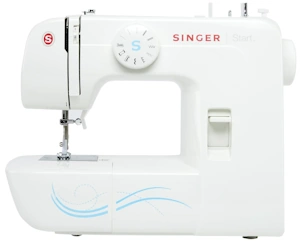
3. Singer 1304 Start Basic Sewing Machine
Best Simple Sewing Machine for Beginners
The Singer 1304 Start focuses on simplicity, offering essential stitches with hassle-free operation, perfect for those learning the basics.
Key Features:
- 6 built-in stitches (57 applications)
- Dual spool pins for twin needle sewing
- Automatic tension adjustment
- 4-step buttonhole
- LED lighting
Performance
Quiet, stable, and compact. The automatic tension delivers consistent stitch quality, while the free arm makes cuffs and sleeves easy to handle.
✅ Ideal for: Beginners who want a no-frills, easy-to-learn machine.
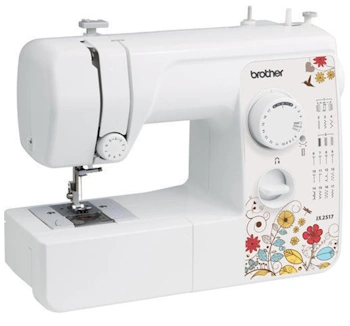
4. Brother JX2517 Lightweight Sewing Machine
Best Portable Sewing Machine Under $100
The Brother JX2517 proves that compact can still mean powerful.
Key Features:
- 17 built-in stitches with 38 stitch functions
- Quick-set top drop-in bobbin
- LED-lit work area
- Free arm for sleeves and cuffs
- Automatic 4-step buttonhole
At just 12 pounds, it’s easy to carry and store. Despite its small size, it handles everyday sewing smoothly.
✅ Ideal for: Sewists needing a lightweight, portable option for travel or classes.
5. Singer 2259 Tradition Sewing Machine
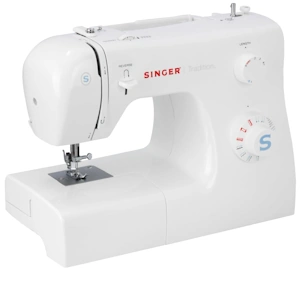
Best Full-Size Option Under $100
The Singer 2259 Tradition offers a sturdy metal frame and full-size design, ideal for users who want durability and control.
Key Features:
- 19 built-in stitches
- Adjustable stitch length and width
- 4-step buttonhole
- Free arm for small projects
- Automatic bobbin winding
Its metal frame adds stability for consistent results, even with thicker fabrics like denim.
✅ Ideal for: Beginners who prefer a durable, traditional sewing machine.
6. Brother SM1400 Mechanical Sewing Machine
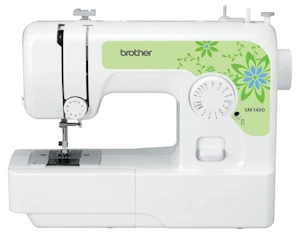
Best Fast-Stitch Sewing Machine
The Brother SM1400 stands out with its 900 stitches per minute speed and impressive build quality.
Key Features:
- 14 built-in stitches (35 functions)
- LED-lit work area
- Quick-set bobbin system
- Free arm for cuffs
- 25-year limited warranty
Lightweight at 12 lbs but sturdy enough for consistent performance, this machine handles both lightweight fabrics and denim smoothly.
✅ Ideal for: Hobbyists who value speed and reliability.
7. Brother XM1010 Compact Sewing Machine
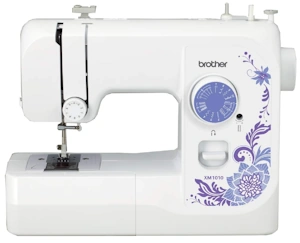
Best Compact & Budget-Friendly Pick
For those seeking simplicity, the Brother XM1010 is a great entry-level model.
Key Features:
- 10 built-in stitches
- 750 stitches per minute
- Quick-set drop-in bobbin
- Free arm for sleeves
- LED lighting
It’s compact (12″ x 15″) and lightweight (10.8 lbs), making it perfect for tight spaces or casual sewists.
✅ Ideal for: Beginners who want a simple, portable, and dependable machine.
Comparison Table: Best Sewing Machine Under 100$
| Model | Built-in Stitches | Weight | Speed | Notable Features | Warranty |
|---|---|---|---|---|---|
| Brother XM2701 | 27 | 12.6 lbs | 800 SPM | Auto needle threader, LED light | 25 years |
| Singer 1304 Start | 6 | — | 350–400 SPM | Dual spool pins, Auto tension | 25 years |
| Brother JX2517 | 17 | 12 lbs | — | Quick-Set bobbin, Free arm | — |
| Singer 2259 | 19 | 16 lbs | — | Metal frame, Free arm | — |
| Brother SM1400 | 14 | 12.1 lbs | 900 SPM | Quick-Set bobbin, LED light | 25 years |
| Brother XM1010 | 10 | 10.8 lbs | 750 SPM | Compact, Free arm | 25 years |
| Singer M1500 | 57 applications | — | — | Metal frame, LED light | — |
Who These Machines Are Good For
Machines under 100$ are most useful for beginners, casual sewists, students learning basic sewing skills, and anyone needing a portable or secondary machine. For example, if you want to hem pants, fix torn seams, or make small alterations, a low‑cost machine can save time and frustration compared to hand sewing.
This price bracket also suits occasional crafters who only sew small home decor items or kids’ costumes. Because these machines are lighter and more compact, they are easier to store and move than larger, more expensive machines.
Internal Mechanics and Typical Features
Budget machines under 100$ are usually mechanical rather than computerized. Mechanical models rely on simple controls like knobs or dials for stitch selection and tension settings. These parts tend to be easier to repair or troubleshoot for beginners who don’t need complex digital interfaces.
Most models in this range come with a limited number of stitch patterns, straight stitch, zigzag, and a few decorative options are common. Some include a free arm, which lets you sew cylindrical items like sleeves or cuffs more easily. Many budget machines also come with built‑in LED lights to help illuminate the stitching area.
Although automatic features such as needle threaders or buttonhole makers are less common at this price point, some models include them, which can significantly ease the learning process.
Practical Use Cases
A sewing machine under $100 is generally reliable for:
- Repairing small tears, seams, and hems on everyday clothing
- Altering garments slightly to improve fit
- Creating simple home decor like cushion covers or table runners
- Learning basic sewing fundamentals before upgrading to a larger machine
- Teaching kids or complete beginners how to sew
These machines are not ideal for heavy fabrics, multi‑layer stitching, or complex garment construction. Trying to force them into tasks beyond their design can result in skipped stitches, thread breakage, or motor strain.
Common Mistakes When Choosing Cheap Sewing Machines
One major mistake is buying based purely on price without considering actual sewing needs. A machine priced under 100$ that has only one stitch type and no adjustable features may seem inexpensive, but if it cannot handle the fabric types you want to sew it becomes frustrating quickly.
Another common error is assuming that a portable or mini machine performs like a full‑size model. Many portable units operate with simpler mechanisms that can cause uneven stitch quality, difficulty with thicker fabrics, or problems with tension.
Buyers also underestimate the importance of accessories. Machines that include basic presser feet, spare bobbins, and user‑friendly manuals tend to be more useful, even if the machine itself is inexpensive.
Long‑Term Considerations for Budget Machines
While under‑100$ machines are inherently more limited than higher‑end models, they can last several years with proper maintenance. Regular tasks like cleaning lint from the bobbin area, changing needles frequently, and using the right thread quality help extend machine life.
It’s also wise to consider the cost of potential repairs versus buying a slightly better machine if you plan to sew regularly. Some budget machines are not designed to be taken apart or repaired easily, so treating them gently and knowing their limits is important.
How to Choose the Right Model Under 100$
Rather than focusing solely on price, consider:
- The number of built‑in stitches and whether they cover basic needs
- Ease of threading and bobbin system design
- Whether a free arm is included
- Presence of an LED light to help see stitching
- Portability and weight if you plan to move the machine often
Machines that balance ease of use with useful features tend to perform better for beginners and occasional sewists alike.
Comparison with Higher‑Priced Entry‑Level Machines
Sewing machines priced above $100 often include more stitch options, automatic features, stronger motors, and better build quality. For example, automatic needle threaders and multi‑step buttonhole functions are standard on midrange machines but rare in the under‑100$ segment. If your sewing ambitions grow beyond simple repairs, saving a bit more for a more robust entry‑level sewing machine can be a worthwhile investment.
However, under‑100$ machines are still valuable as secondary machines, teaching tools, or for lightweight sewing tasks.
Real‑World Scenarios
In real life, many sewists use inexpensive machines as backups. They might keep one in a small apartment, give one to a family member learning to sew, or use one in a craft room dedicated to small projects. For someone who travels often or teaches sewing basics, an affordable machine that offers simple functionality and portability can be a practical choice.
Individuals on very tight budgets sometimes opt for second‑hand machines in this price range to get better mechanical performance than many brand‑new low‑cost models. This approach comes with its own considerations, such as a lack of warranty and potential need for service.
Frequently Asked Questions (FAQ)
1. Are cheap sewing machines under $100 worth it?
Yes, if you’re a beginner or hobby crafter, many sewing machines under $100 offer all the essential features you need to start sewing. Models like the Brother XM2701 or Singer M1500 deliver great stitch quality, durability, and ease of use for their price.
2. Can I sew denim or thick fabrics with a $100 sewing machine?
You can sew light to medium-weight denim on most budget machines, but it’s best to use a heavy-duty needle and sew slowly. For thicker layers, choose a model with a metal frame, like the Singer 2259 Tradition, which provides extra stability.
3. What’s the best sewing machine under $100 for beginners?
The Brother XM2701 and Singer 1304 Start are top beginner-friendly options. They feature automatic threading, simple dial stitch selection, and free-arm designs that make learning easy.
4. Do budget sewing machines come with a warranty?
Yes. Many affordable models, especially Brother machines, include a 25-year limited warranty, which is a huge plus for long-term peace of mind.
5. Are computerized sewing machines available under $100?
Not usually. Most sewing machines under 100$ are mechanical, not computerized. However, they still offer essential stitches, buttonholes, and adjustable tension controls that are perfect for everyday sewing projects.
6. How long do cheap sewing machines last?
With proper care, like cleaning lint, oiling parts, and using the right needles, even a budget sewing machine can last 5 to 10 years. Models with metal interiors, such as the Singer M1500, tend to last longer.
7. Where can I buy the best sewing machines under $100?
You can find these affordable sewing machines on Amazon, Walmart, or Brother’s official website. Always compare prices and check if the product is available. Some popular models may show as Currently Unavailable due to high demand.
Conclusion: The Best Cheap Sewing Machines for 2026
A sewing machine under 100$ can be a valuable tool for beginners, occasional sewists, and quick fixes. While these machines have limitations in power, stitch variety, and advanced features, they offer accessibility and simplicity that can help you get started with sewing without a large upfront cost. Choosing the right model based on your expected use, understanding its limitations, and keeping realistic expectations will make the difference between a machine you use regularly and one that ends up unused.
If sewing becomes a long‑term hobby, consider pairing your budget machine with a more capable model later, but for basic needs under 100$, the right choice can be surprisingly effective.

Hi, I’m Safura. What are you sewing today? If you have any questions or need help with anything related to sewing, please feel free to ask. I’m always here to assist you with sewing-related issues.
1 thought on “7 Best Sewing Machine Under 100$ for Budget Crafters – 2026”